
 Daniel Carter
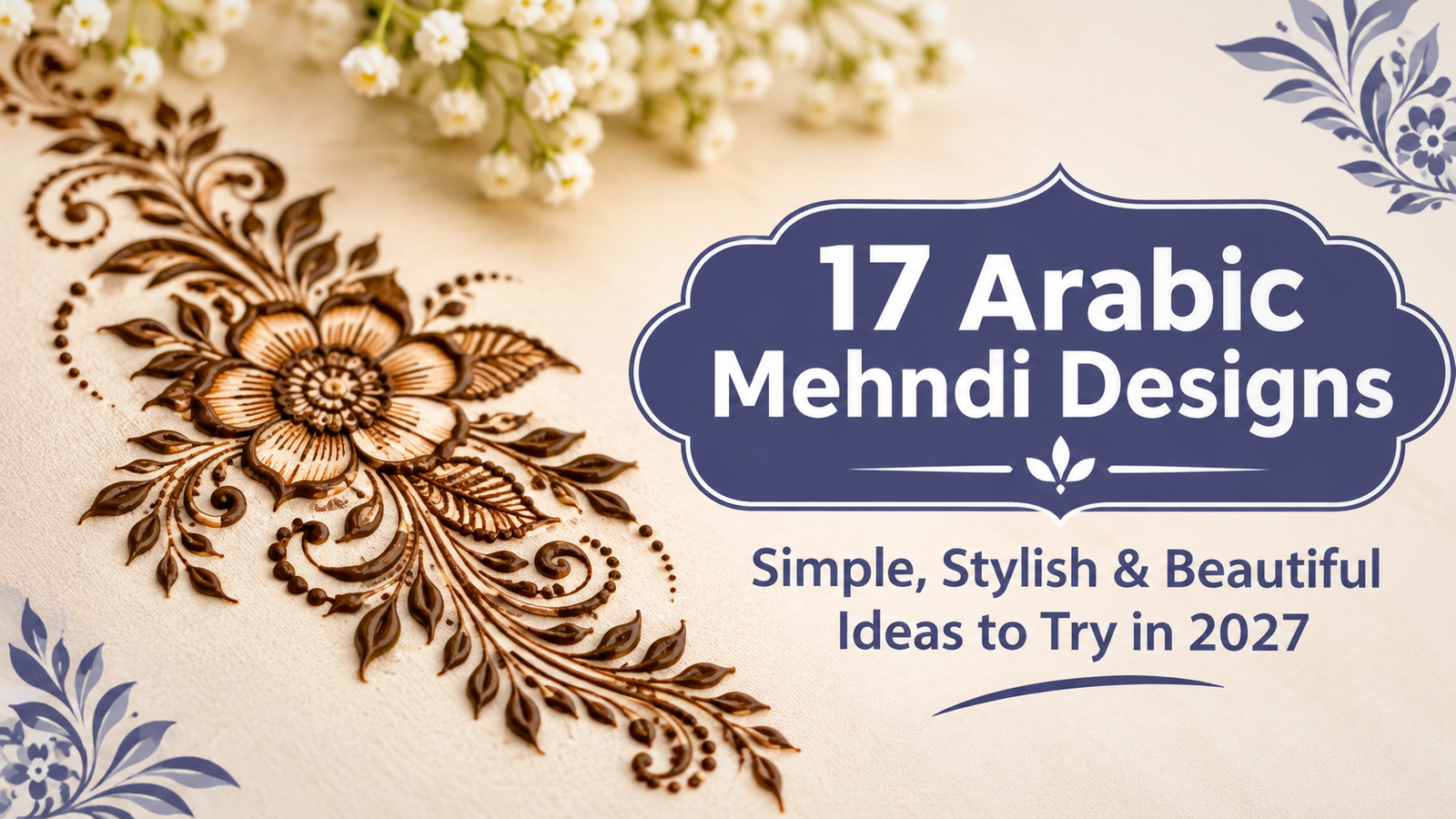
Arabic mehndi designs are known for their flowing floral trails, curved lines, leafy vines, paisley details, and attractive spaces between patterns. Whether you prefer a simple flower on the back of your hand or an intricate design for a wedding, these 17 Arabic mehndi ideas at Daily Idea Book offer inspiration for different styles, skill levels, and occasions.
Unlike designs that cover nearly every part of the skin, many Arabic patterns use open spaces to make individual motifs stand out. You can choose a delicate finger design, a diagonal floral trail, or a more detailed pattern extending from the wrist toward the fingertips.
17 Arabic Mehndi Designs to Inspire Your Next Look
1. Simple Arabic Mehndi Design
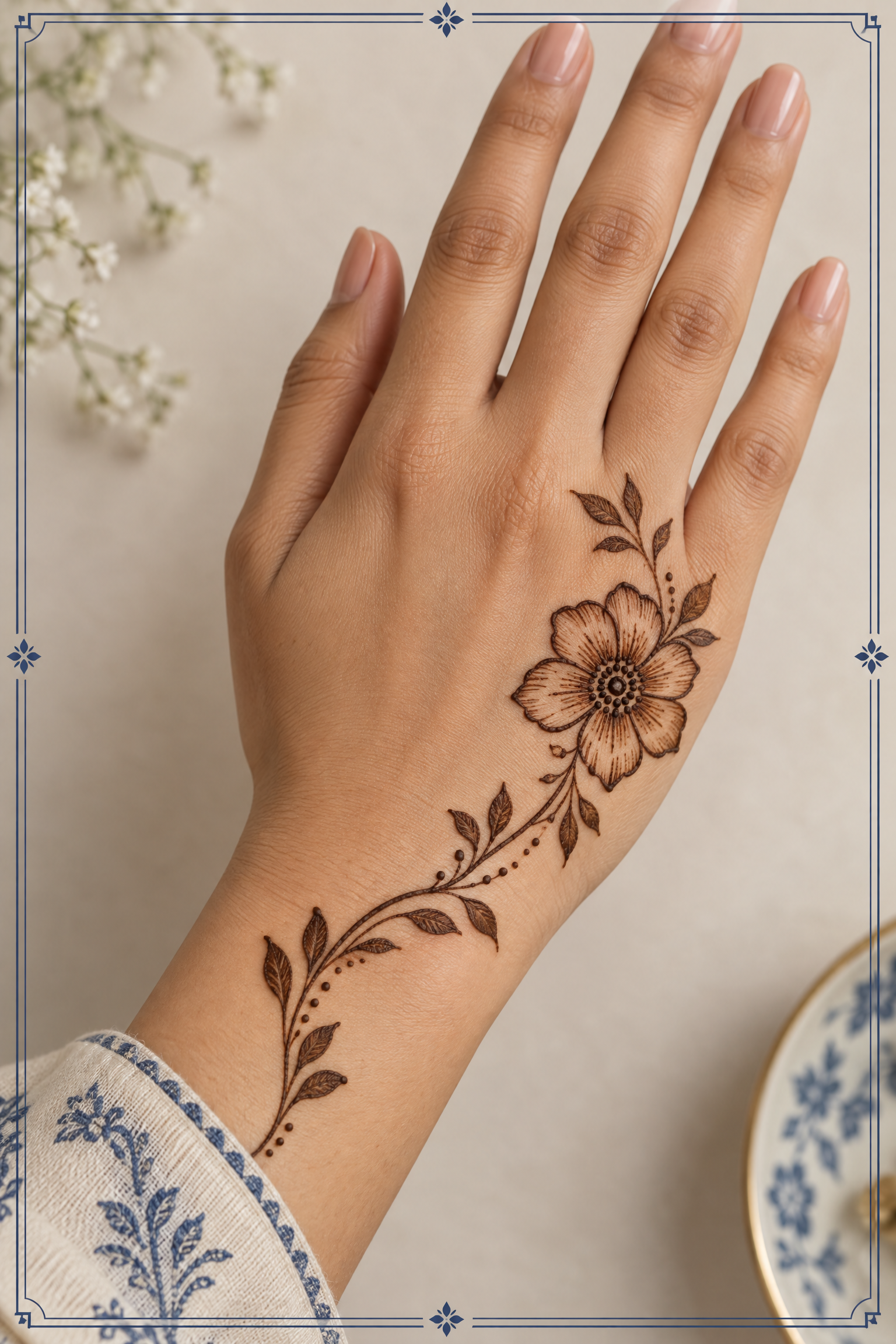
A simple Arabic mehndi design is a great choice if you love clean lines, small flowers, and an elegant look without too much detail. Start with one medium-sized flower near the side of your palm or the back of your hand, then extend a curved vine toward your wrist or index finger.
Keep the leaves small and leave visible spaces between the motifs. This creates the flowing appearance associated with Arabic mehndi while keeping the design manageable for beginners.
Best for: Casual gatherings, family celebrations, and anyone who prefers minimal decoration.
Design tip: Use a fine-tipped applicator to create consistent lines, and practice the main flower and vine on paper before applying the pattern to your skin.
2. Elegant Floral Arabic Mehndi Design
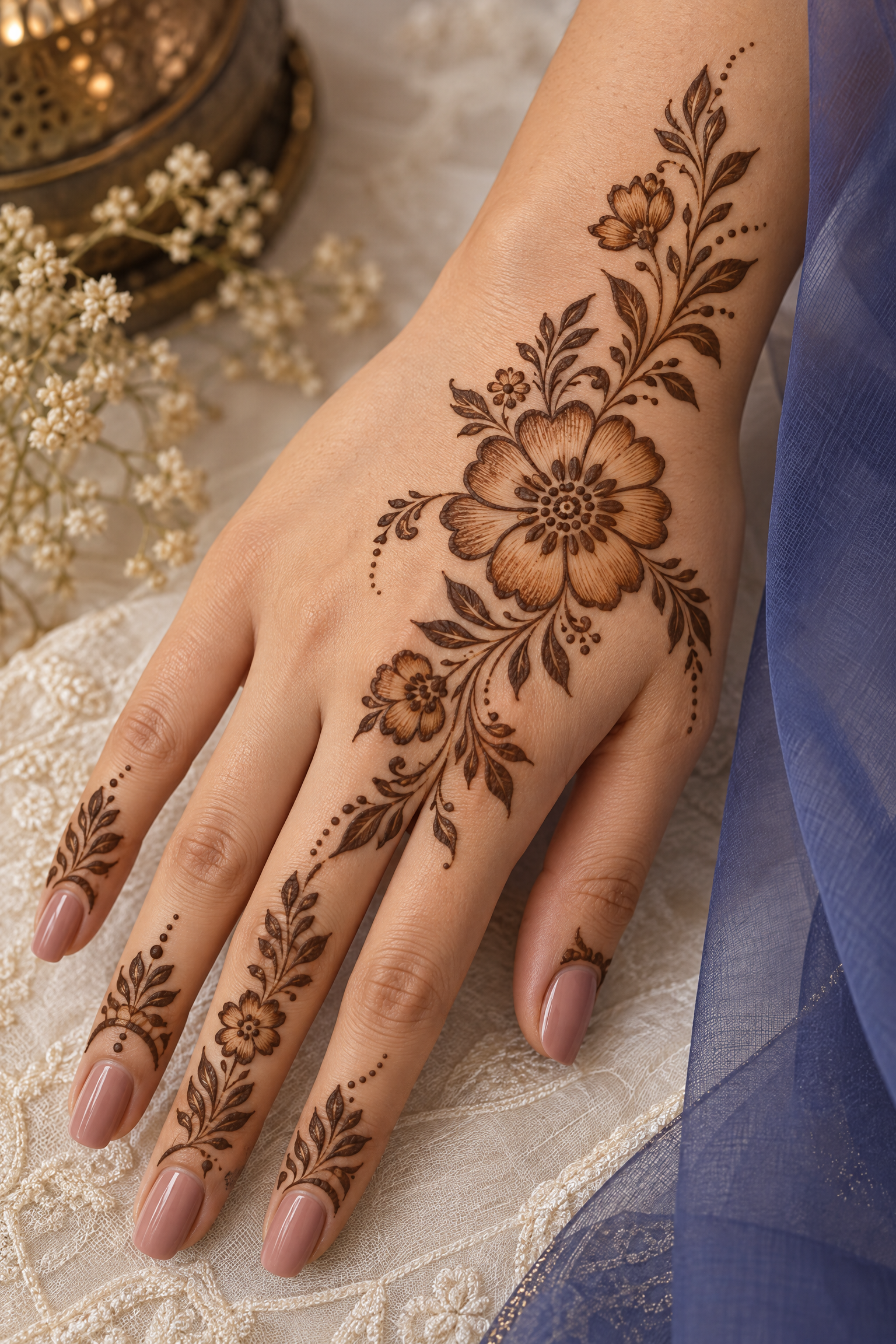
Floral Arabic mehndi combines rounded blossoms with curved stems and delicate leaves. The flowers can vary in size, giving the design a natural flow instead of a rigid, symmetrical appearance.
Place a larger flower near the center of the back of your hand and connect it to smaller blossoms along a diagonal trail. A few fine dots around the petals can add detail without making the design look crowded.
This style works particularly well when you want a feminine, graceful pattern that remains easy to appreciate from a distance.
Best for: Engagement parties, Eid celebrations, and festive family occasions.
3. Arabic Mehndi Design with a Beautiful Flower Trail
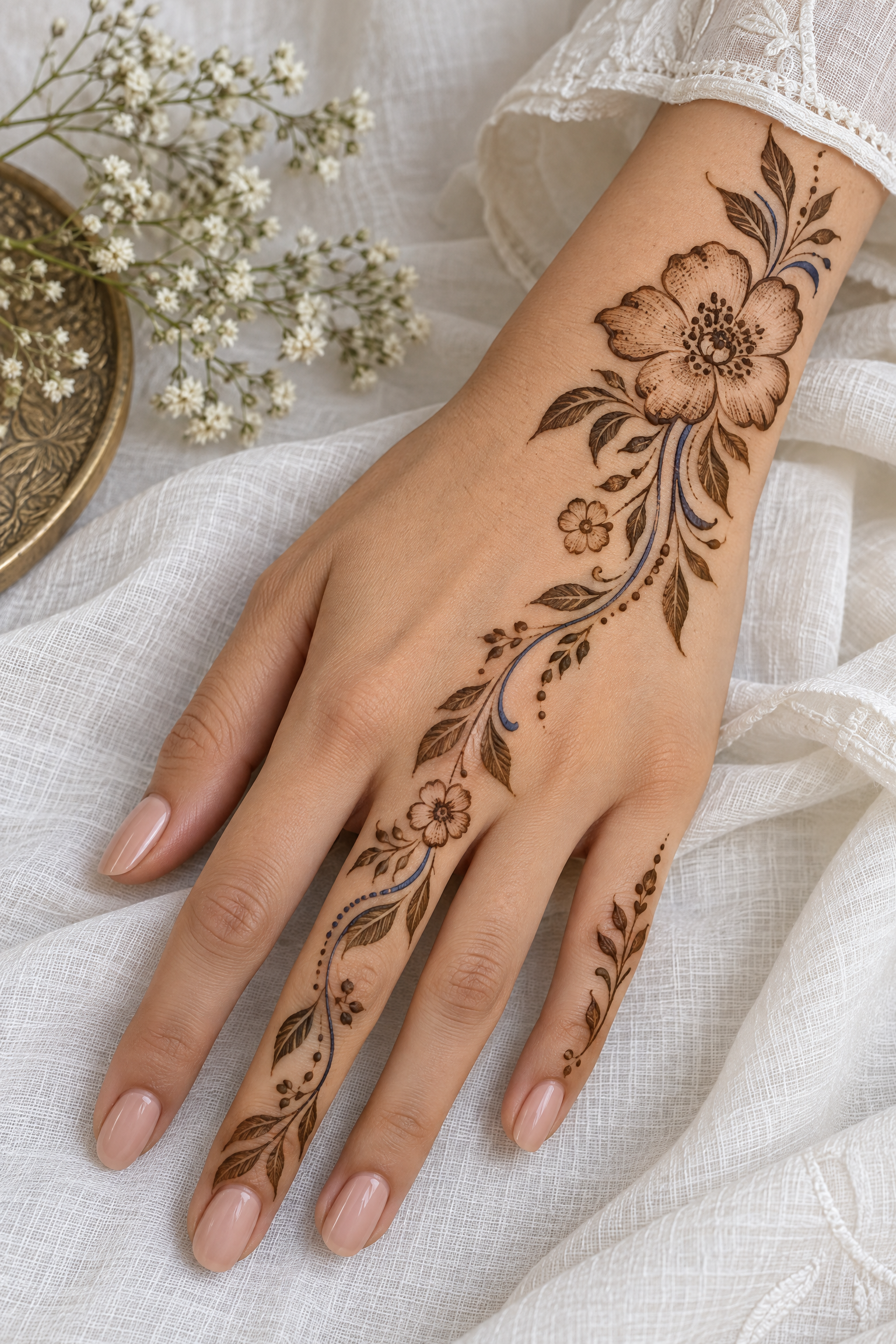
A flower trail is one of the most versatile Arabic mehndi patterns because it follows the natural direction of the hand. Instead of covering the entire surface, the design moves diagonally from the wrist toward one or two fingers.
Use one prominent flower as the focal point, then add smaller flowers, curved stems, and pointed leaves along the trail. Leave some areas of skin uncovered so the design feels light and balanced.
You can make the trail short for a minimalist look or extend it farther up the forearm for a more decorative finish.
Best for: People who want a distinctive design without full-hand coverage.
4. Minimal Arabic Mehndi Design for Fingers
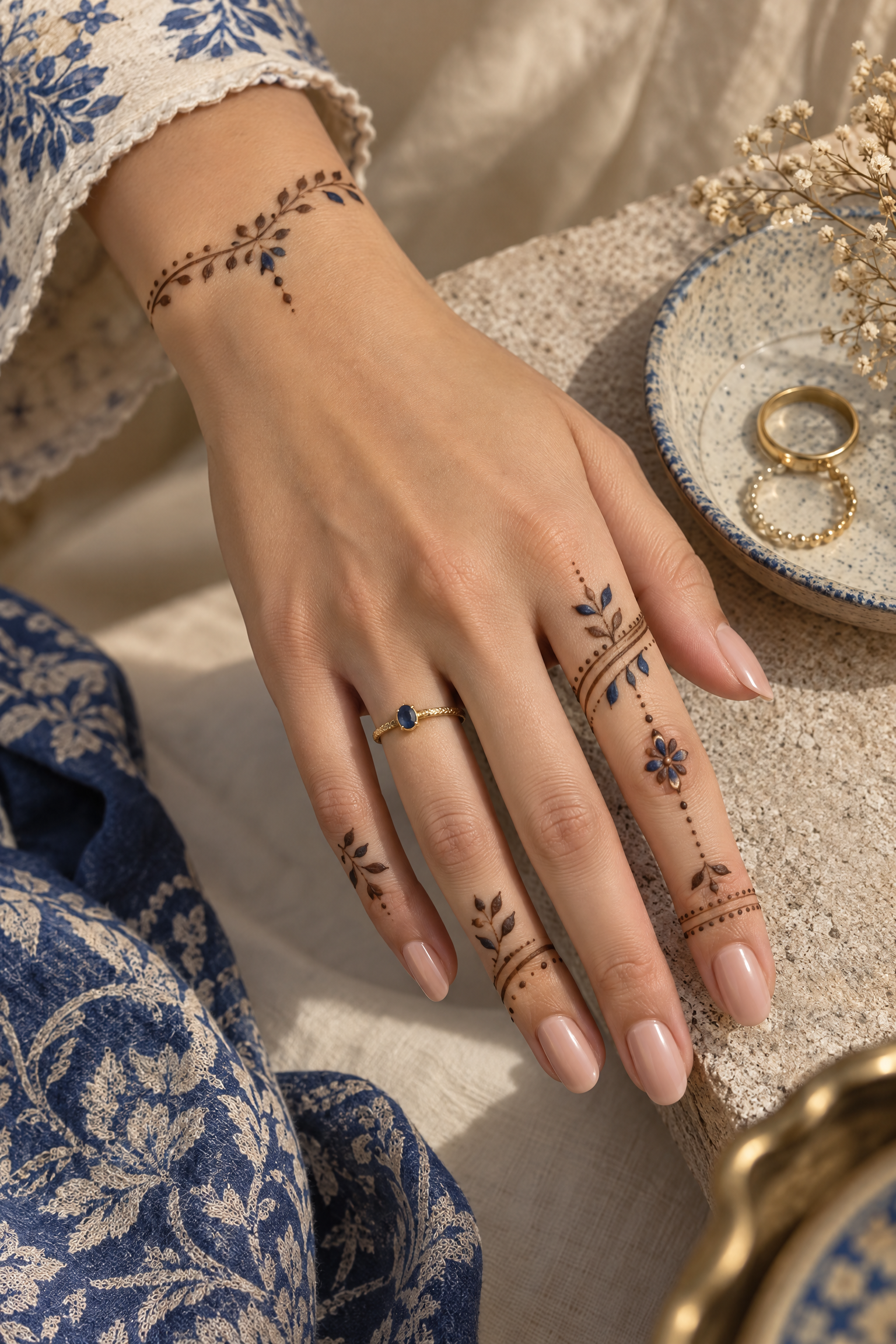
Finger-focused Arabic mehndi is ideal if you prefer small details over a large palm or back-hand pattern. A design might include tiny flowers, curved bands, leafy lines, or a delicate chain of dots along one or two fingers.
For a balanced appearance, decorate selected fingers rather than covering every finger with the same pattern. You can add a small motif near the wrist to connect the details without making the design too busy.
This approach is also useful when you want your hand decoration to complement rings or a festive outfit.
Best for: Minimalist styles, casual occasions, and quick designs.
Related: 50+ Team Building Activities for Every Occasion: Indoor, Outdoor, and Virtual
5. Easy Arabic Mehendi Design for Beginners
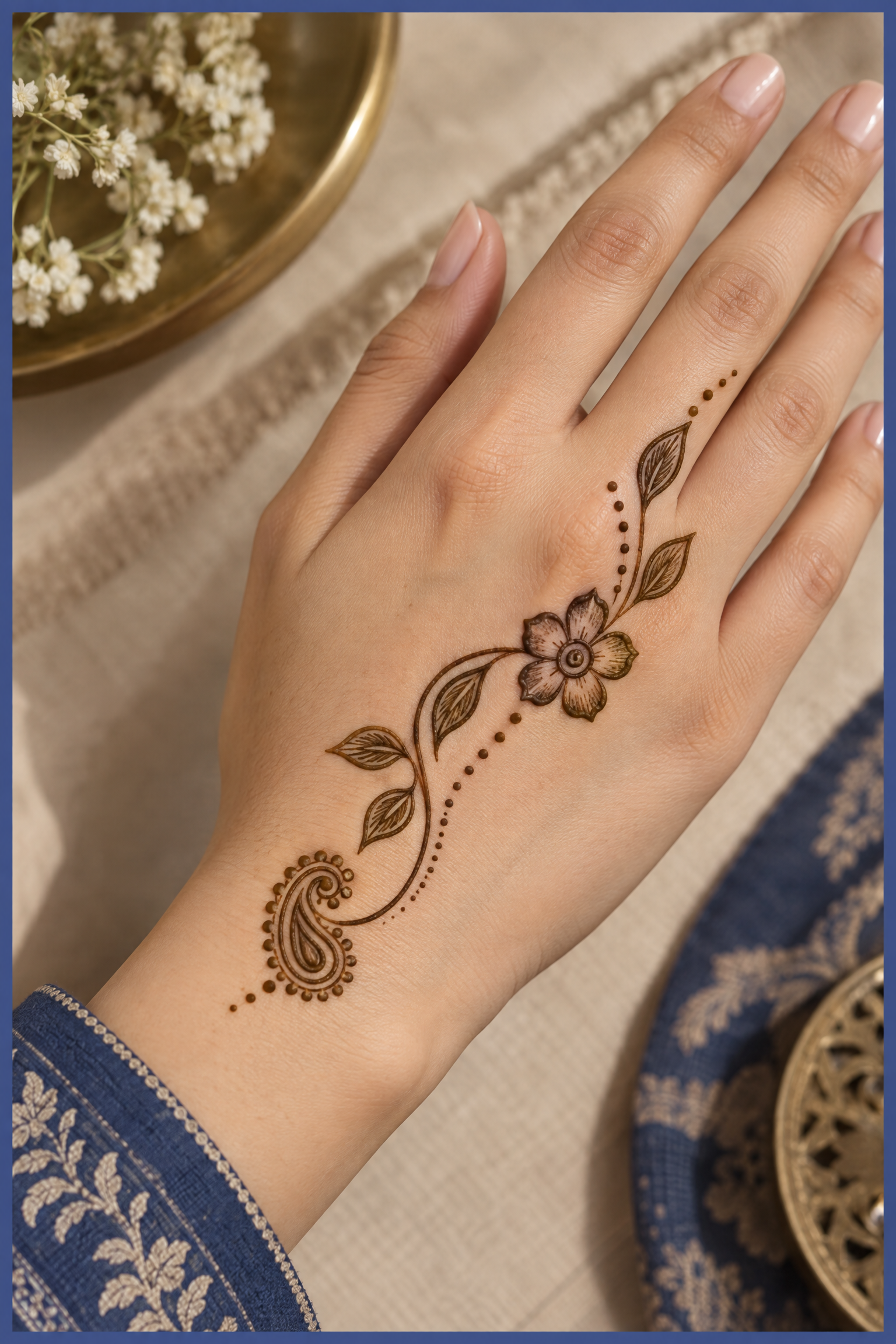
An easy Arabic mehendi design usually relies on a few basic shapes instead of many intricate details. A curved line, three or four leaves, and a simple flower can form an attractive pattern with relatively little drawing.
Begin with the main curved trail, then add leaves on alternating sides. Finish with a small flower or paisley motif near the end. Avoid trying to make every leaf identical; concentrate on keeping the overall design balanced.
If you’re applying mehndi yourself, practice controlling the paste flow and keeping the line thickness consistent before attempting a larger pattern.
Best for: First-time learners, children under appropriate adult supervision, and anyone who wants a quick, uncomplicated design.
6. Stylish Arabic Mehndi Design with Leaf Patterns
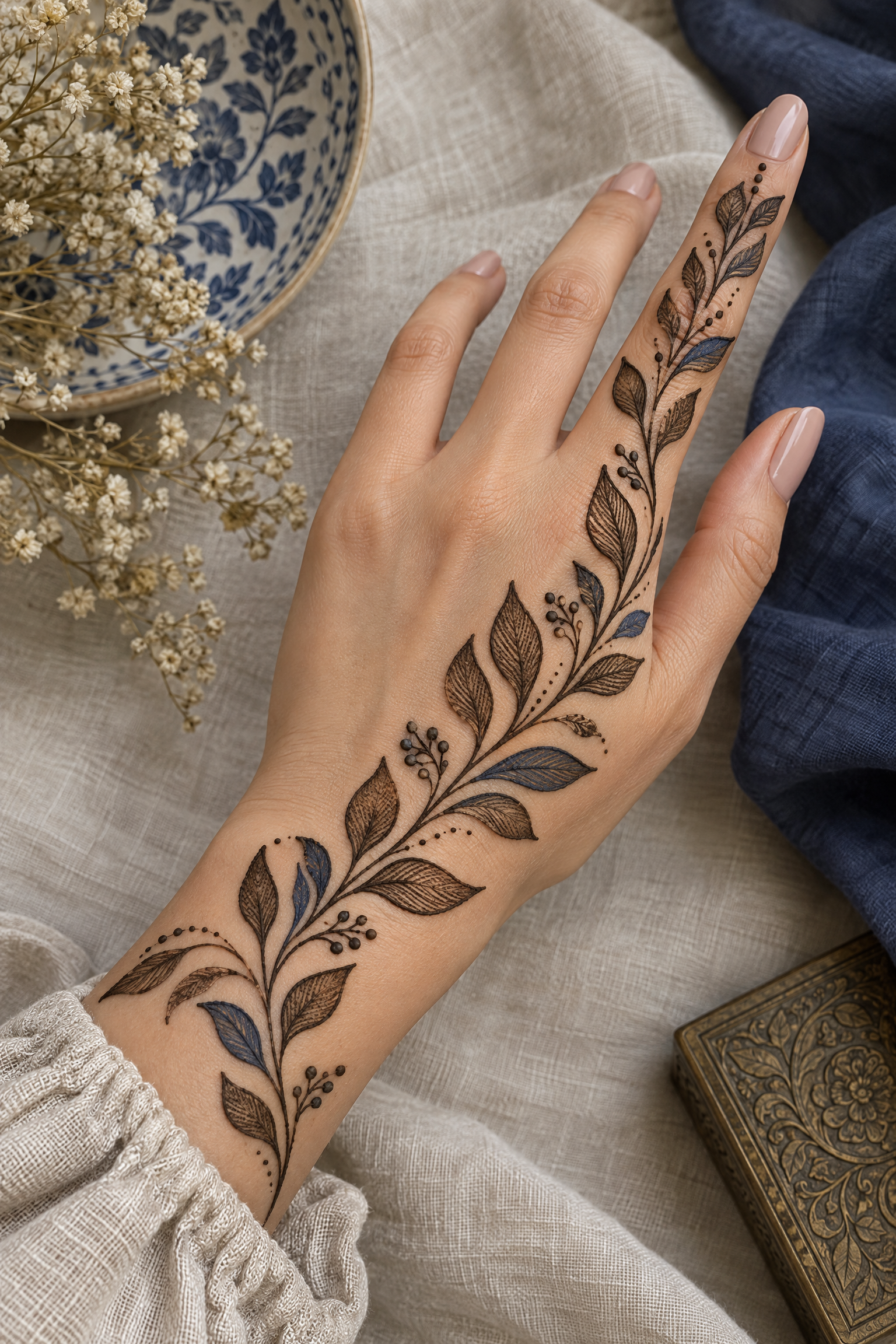
Leaf-based Arabic mehndi is a stylish alternative to flower-heavy designs. It uses elongated leaves, curved branches, fine stems, and small dots to create movement across the hand.
Try placing a sweeping vine from the lower wrist toward the index finger, with alternating leaves along the stem. A few shaded leaves or tiny floral accents can add contrast while preserving the simple outline.
The key is to vary the leaf sizes slightly while keeping the direction of the vine consistent.
Best for: Modern festive looks and people who prefer botanical patterns.
7. Arabic Mehndi Design with a Bracelet Pattern
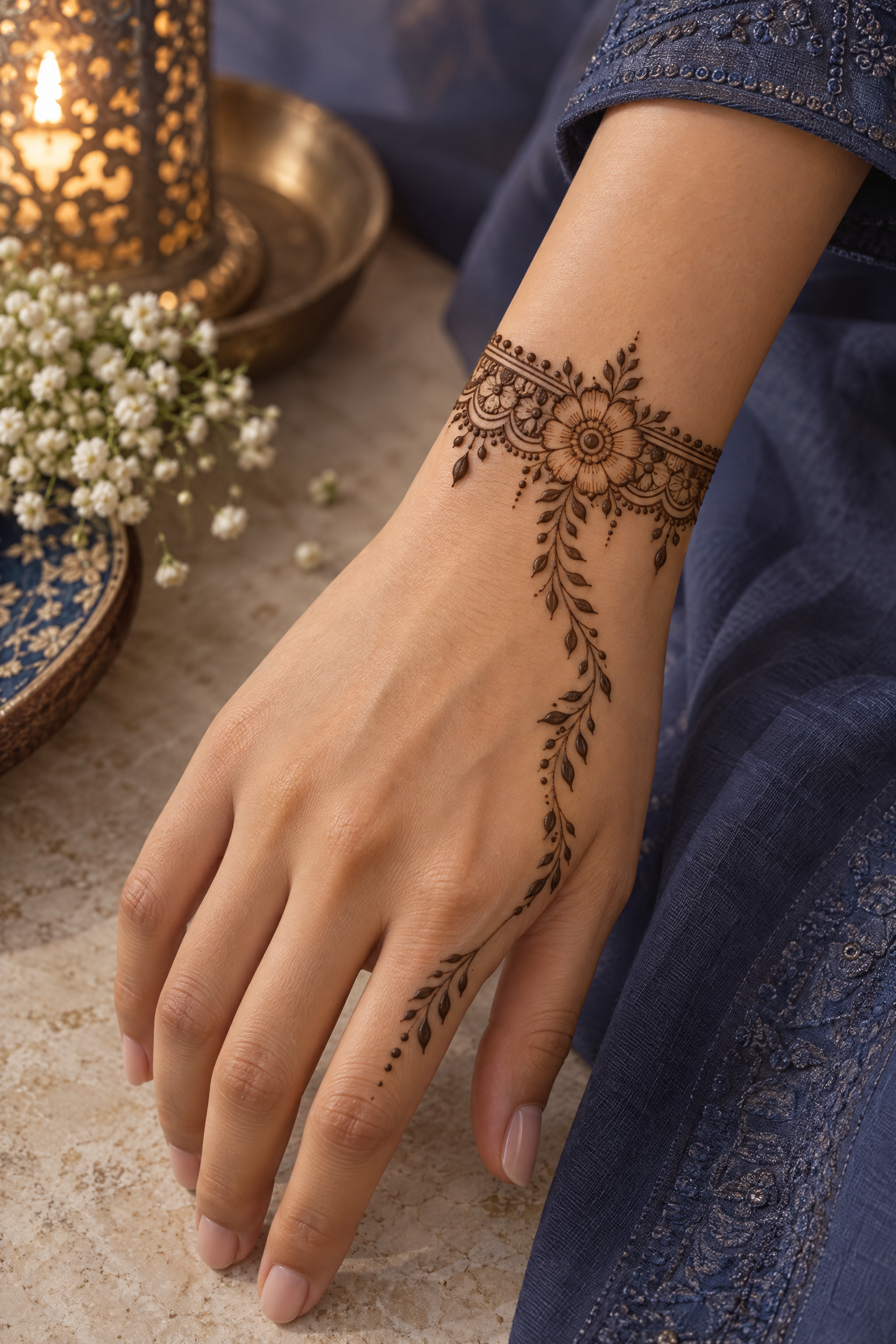
A bracelet-style Arabic mehndi design creates the appearance of decorative jewelry around the wrist. It can feature a central floral motif, curved bands, small scallops, and dangling leaf or teardrop shapes.
For a delicate finish, keep the wrist band relatively narrow and extend a fine vine toward the back of the hand. Alternatively, use a more detailed central flower with tiny dots along the band.
The design can complement bangles, but leaving some space around the wrist helps prevent the overall look from becoming crowded.
Best for: Weddings, Eid, and traditional celebrations.
8. Simple Arabic Mehndi Design for the Palm
A simple palm design can look beautiful without filling the entire hand. Choose a small central flower, a curved paisley, or a half-mandala motif, then extend a few leafy lines toward the fingers.
If you want a more open look, decorate one side of the palm and leave the opposite side mostly clear. This asymmetrical approach works well with Arabic-inspired patterns and gives the central motif more visual attention.
Remember that the final stain may appear different from the wet paste, so allow the pattern to develop naturally rather than judging its color immediately.
Best for: Small celebrations, everyday festive wear, and people who prefer moderate coverage.
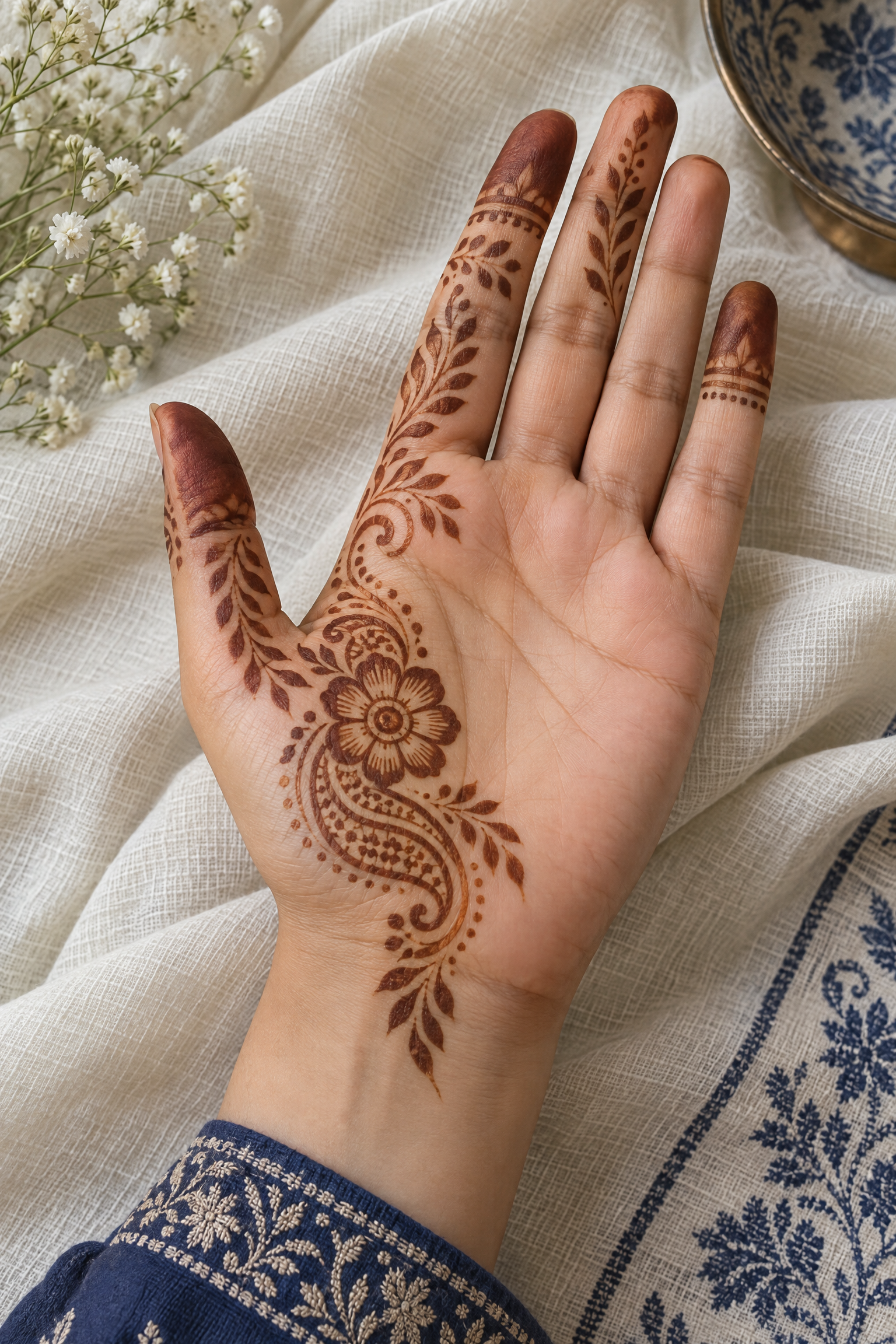
9. Arabic Mehndi Designs for Back Hand
Arabic mehndi designs for the back hand are popular choices when you want a pattern that is easy to display in photographs. A diagonal arrangement of flowers, vines, leaves, and paisley shapes can follow the natural length of the hand.
Start near the wrist and let the pattern move toward the index or middle finger. You can add a small floral cluster near the knuckles, but avoid filling every gap simply to make the design look more elaborate.
For a more balanced result, keep one main focal point and use smaller motifs to guide the eye toward the fingertips.
Best for: Weddings, engagement celebrations, Eid, and party outfits.
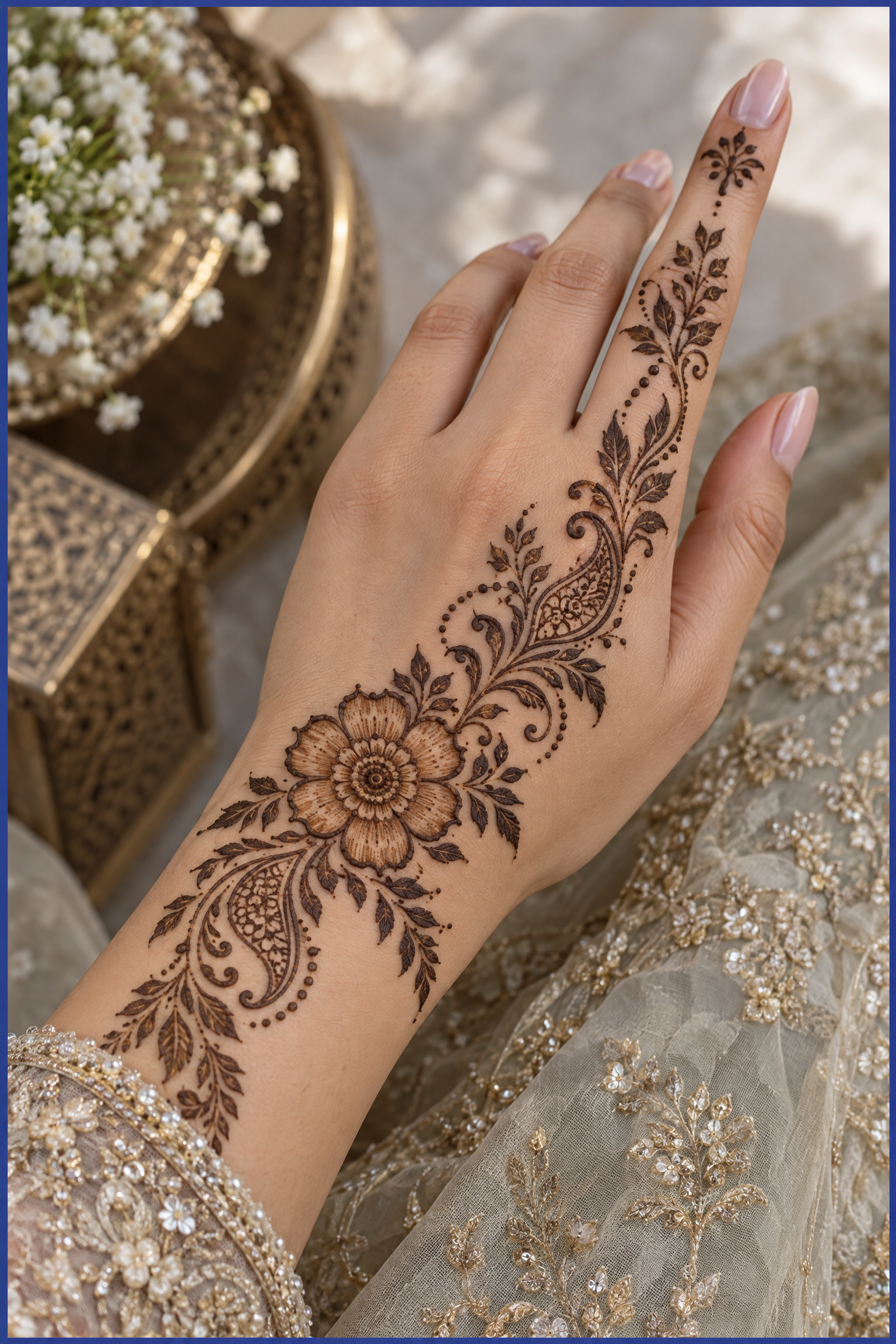
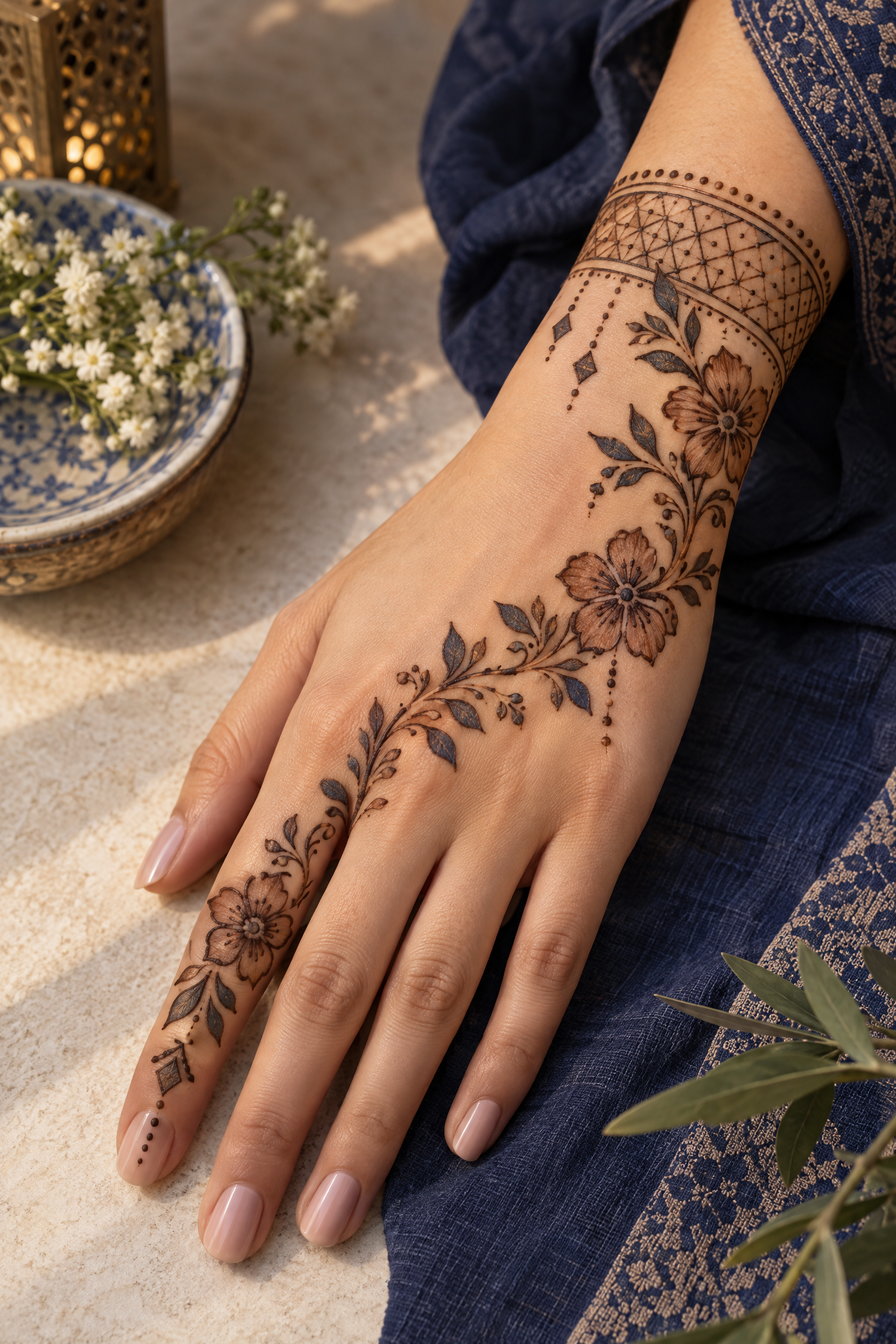
10. Unique Arabic Mehndi Design with Geometric Details
For a unique Arabic mehndi look, combine flowing vines with a few geometric details. Small diamonds, fine grids, curved bands, and dotted borders can add contrast to the softer floral elements.
Keep the geometric section limited to one area, such as the wrist or the center of the back of the hand. Connect it to a curved floral trail so the design still feels cohesive rather than like two unrelated patterns.
This style is a good option if you want something more distinctive than a traditional flower-and-leaf arrangement.
Best for: Contemporary celebrations and anyone who enjoys mixing structured and organic patterns.
Related: 20+ Holiday Party Ideas for Every Celebration (Work, Family & Friends) (2026)
11. Arabic Mehndi Design with Paisley Patterns
Paisley motifs bring a traditional decorative element to Arabic mehndi designs. Their curved teardrop shape works especially well alongside flowers, leafy vines, and fine dotted borders.
Use one larger paisley as the main motif, with a smaller flower or a few leaves inside it. Add a curved trail extending toward the wrist or fingers to create movement.
For a lighter appearance, leave some open space inside and around the paisley. For a more detailed style, add fine lines and dots without overcrowding the outline.
Best for: Traditional outfits, festive gatherings, and people who enjoy classic motifs.
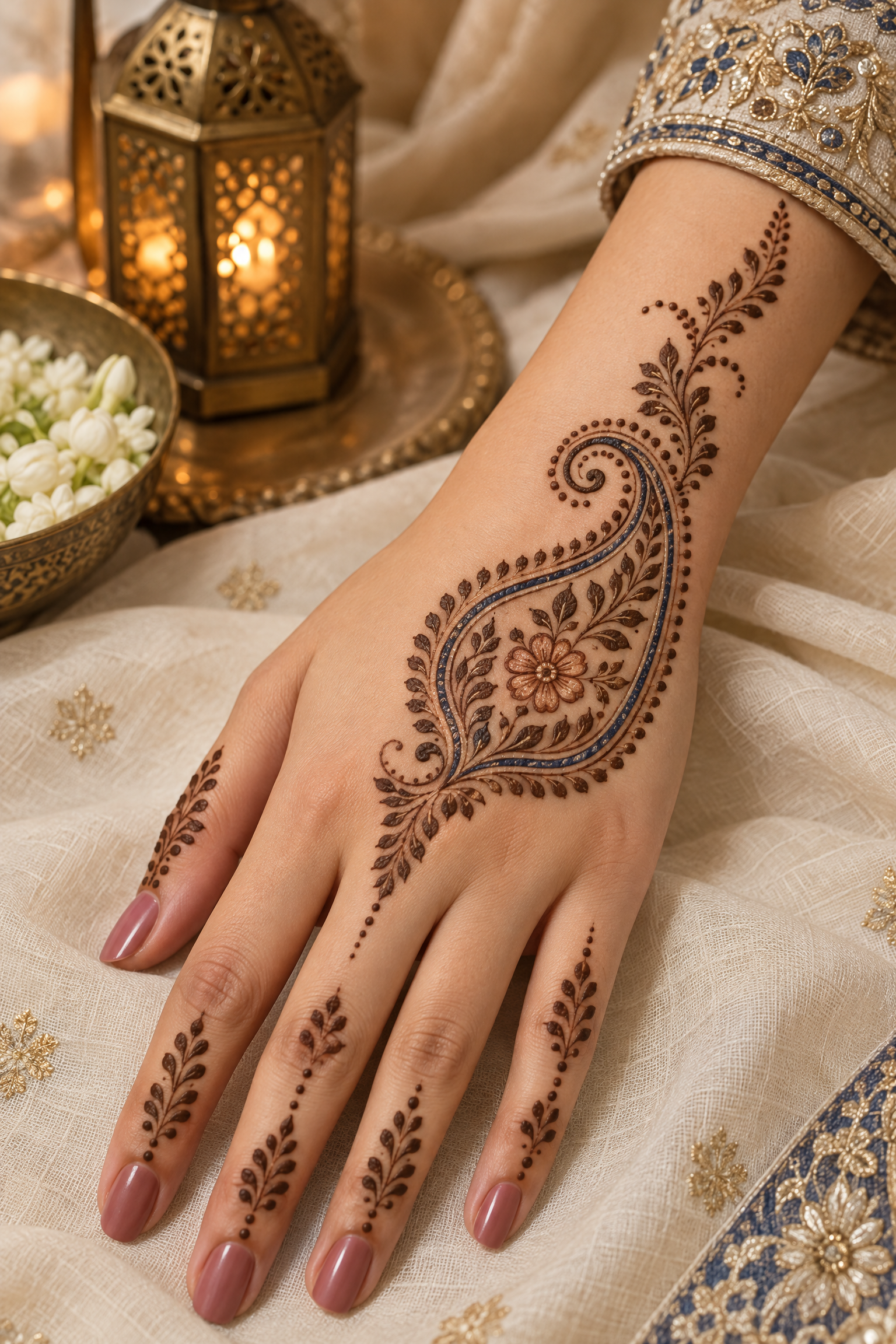
12. Arabic Mehndi Designs for Front Hand
Arabic mehndi designs for the front hand can range from a small palm flower to a flowing pattern that connects the palm, wrist, and fingers. The best option depends on how much coverage you prefer.
For a simple look, place a floral motif near the center of the palm and extend a leafy trail toward the base of one finger. If you want more detail, add a few curved lines and small blossoms around the central design while keeping the fingertips relatively open.
A front-hand pattern is also easy to adapt: you can enlarge the flower, extend the vine, or add finger details without changing the basic layout.
Best for: Festive events, family functions, and people who prefer palm-centered designs.
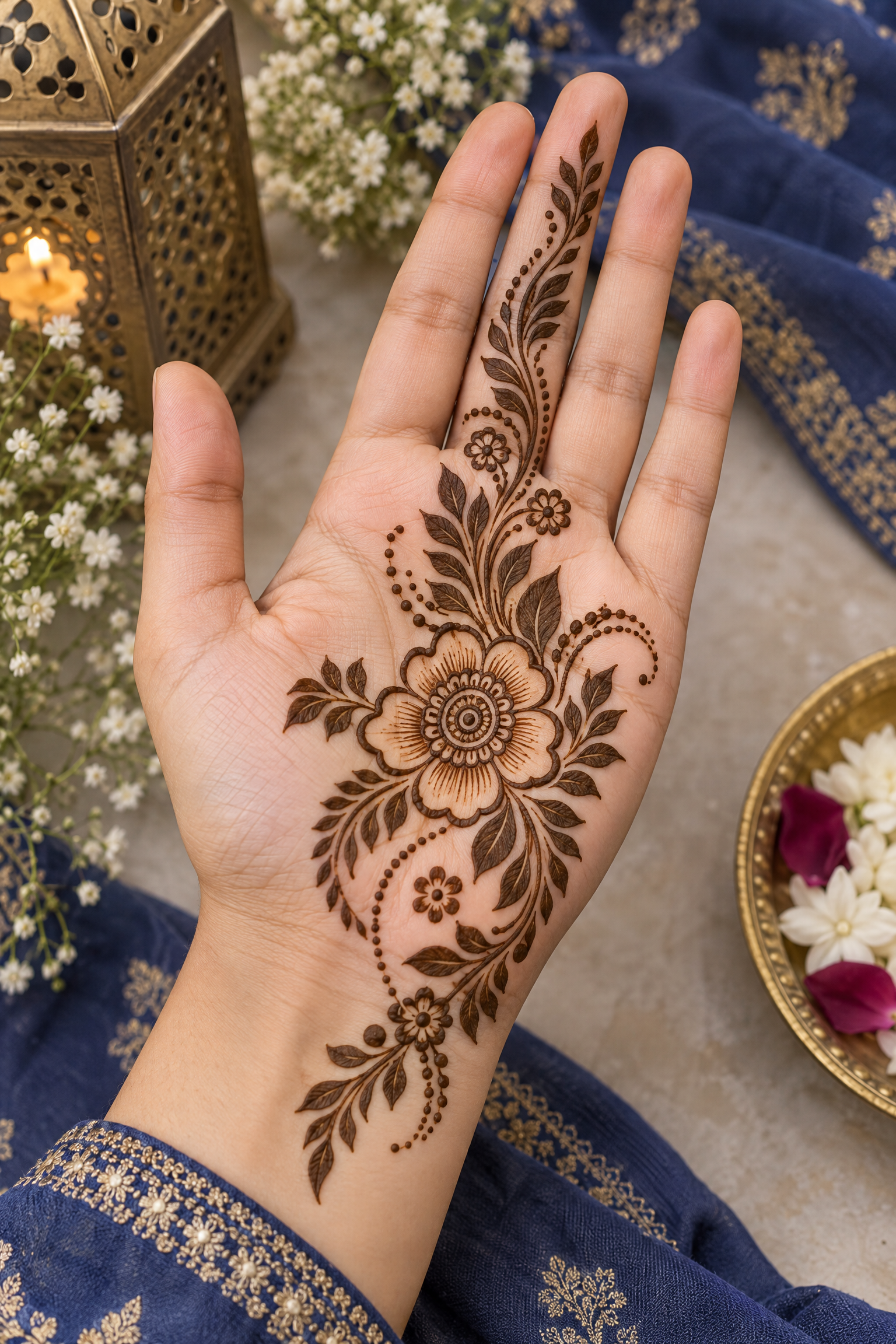
13. Latest Arabic Mehndi Design with Modern Patterns
Modern Arabic mehndi designs often reinterpret familiar flowers, vines, and paisley shapes with more open space, asymmetrical placement, and fine decorative details. Rather than following a strict traditional layout, you can choose one main motif and let the rest of the pattern flow around it.
Try a bold central flower connected to a slim vine, with tiny dots and a small geometric accent. Another option is to keep most of the hand clear and concentrate the design around the wrist and two fingers.
There is no single design that defines the latest style everywhere. Choose a pattern that suits your outfit, comfort level, and personal taste rather than relying on a trend label alone.
Best for: Contemporary wedding guests, parties, and anyone seeking a fresh variation on a classic style.
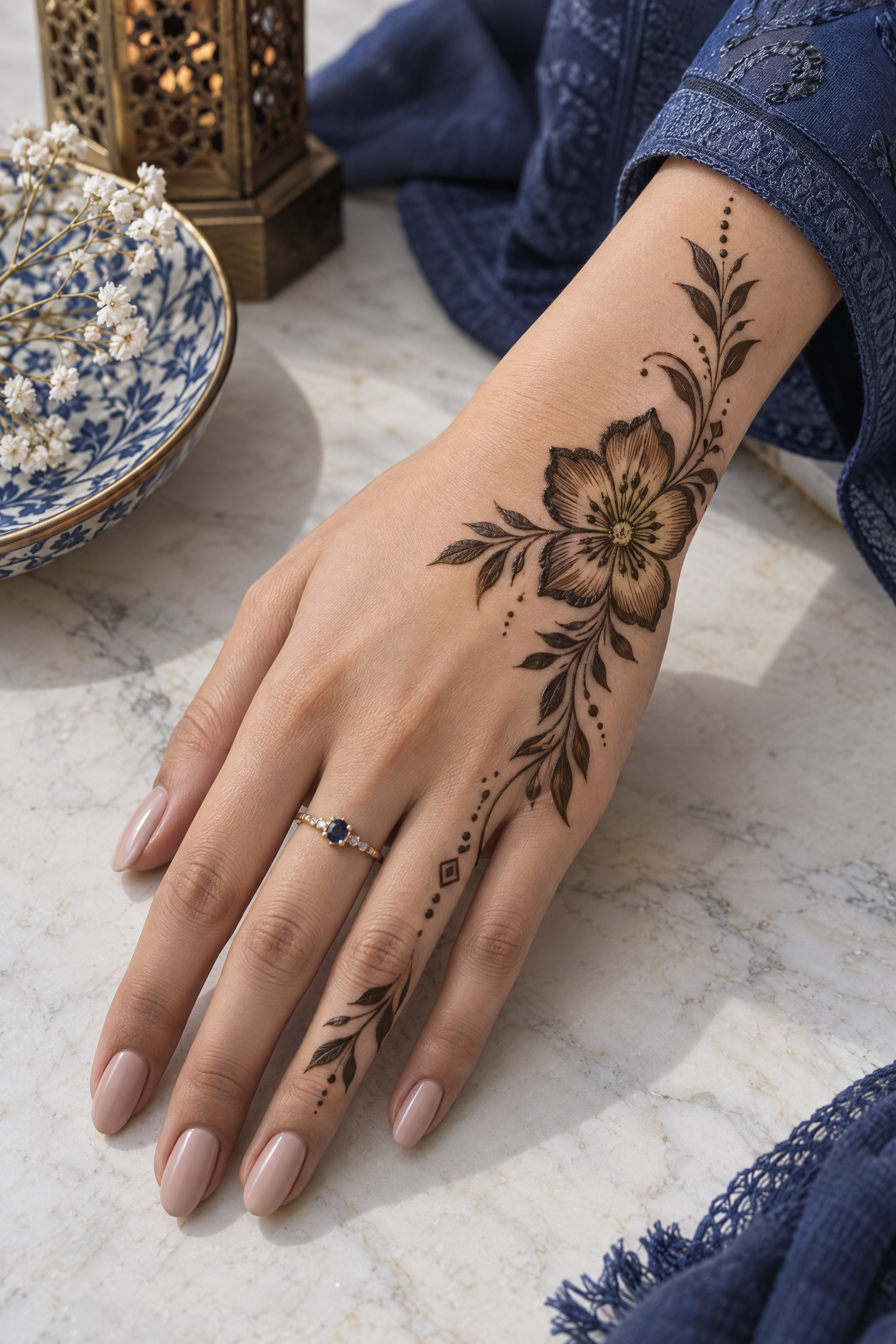
14. Arabic Mehndi Design with Mandala and Floral Details
A mandala-inspired Arabic mehndi design combines a circular focal point with flowing floral elements. Place a small mandala on the back of the hand or in the center of the palm, then connect it to a curved vine or a few leaves.
To preserve the Arabic-inspired feel, avoid filling the entire hand with dense concentric patterns. Instead, let the circular motif stand out against open skin and use the floral trail to carry the design toward the wrist or fingers.
The combination gives you a pattern that feels structured at the center but soft around the edges.
Best for: Festive occasions and people who like balanced, decorative designs.
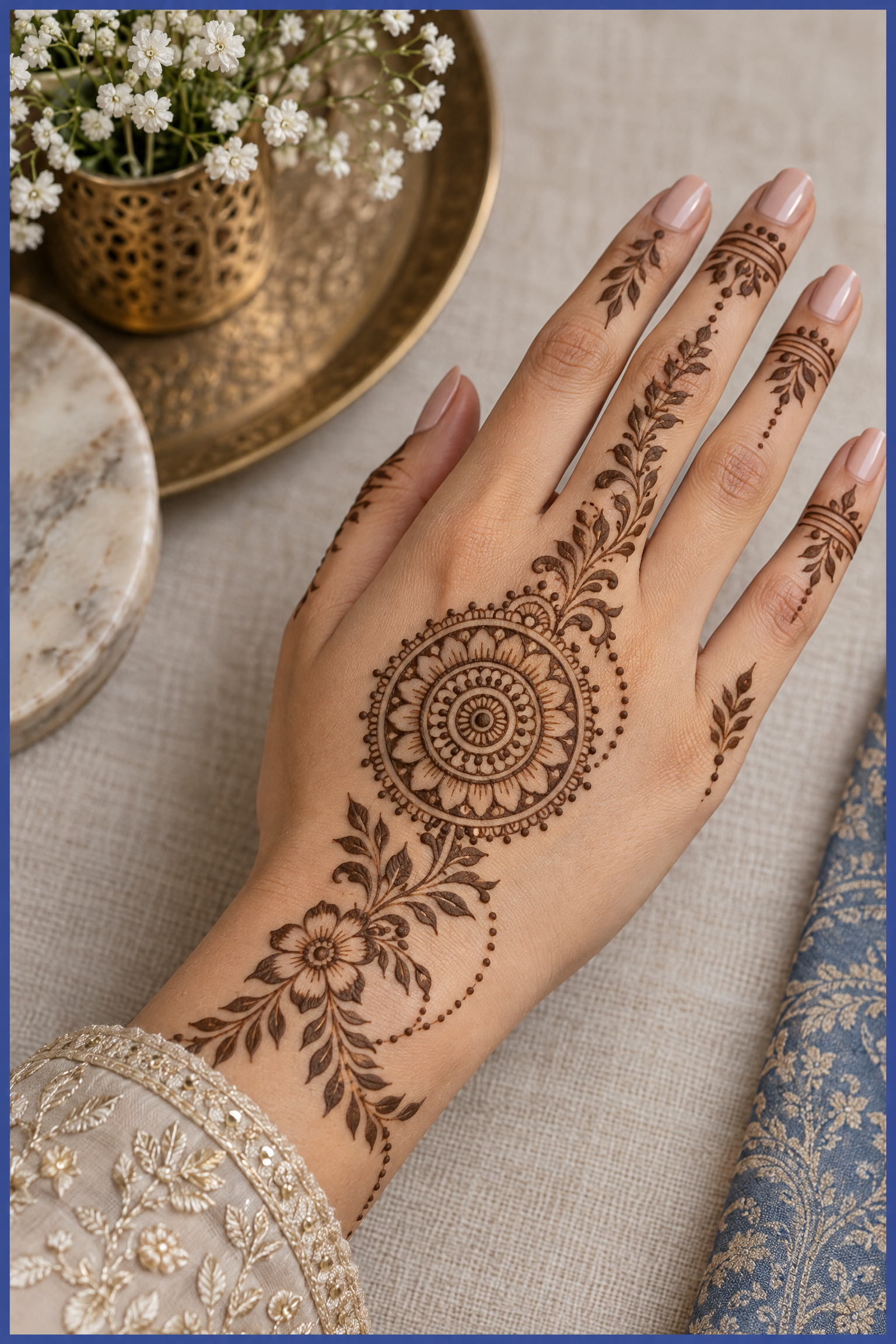
15. Full Hand Arabic Mehndi Design
A full-hand Arabic mehndi design is a good choice when you want a more elaborate pattern for a major celebration. It can extend from the fingertips toward the wrist or forearm, using connected flowers, leaves, paisley motifs, and curved trails.
Even with fuller coverage, the design does not need to be equally dense everywhere. Combine detailed sections with open areas to preserve movement and make the individual motifs easier to distinguish.
Before choosing a full-hand pattern, consider how long the application may take and whether you can sit comfortably while the design is completed.
Best for: Brides, wedding guests, and people who enjoy detailed mehndi.
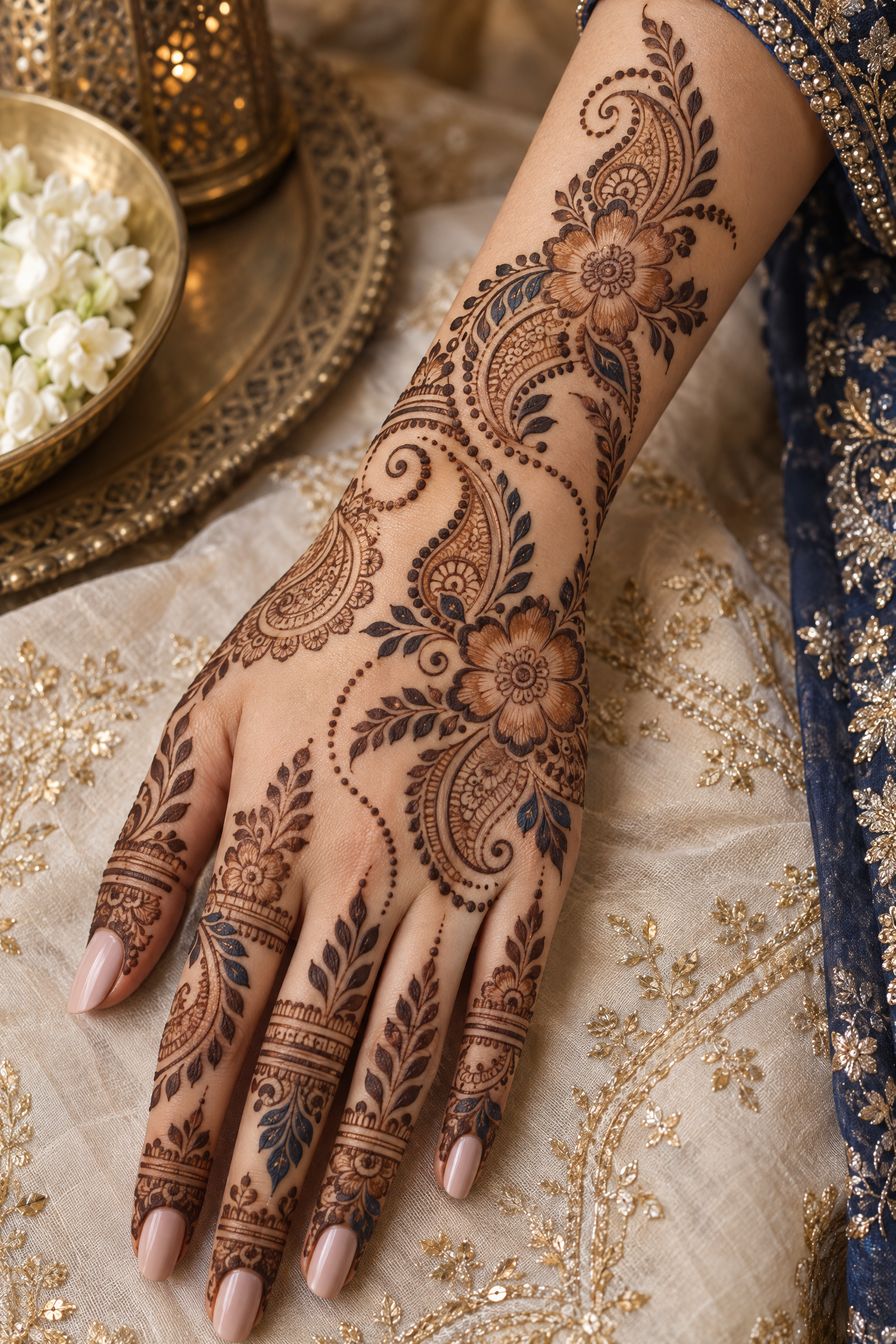
16. Arabic Mehndi Design for Feet
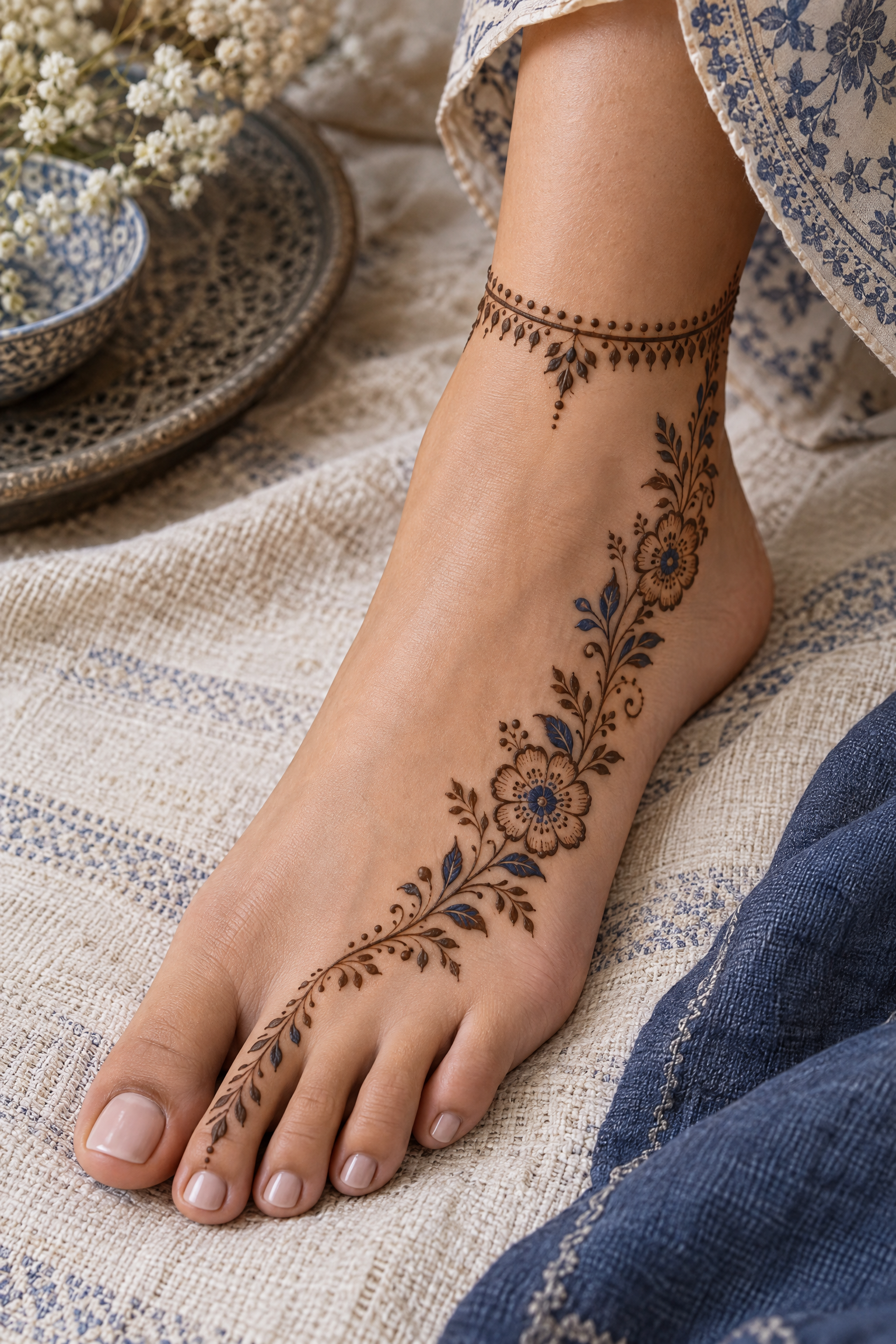
Arabic mehndi designs for feet often use floral trails, leafy vines, and decorative bands around the ankle. A pattern can begin near the toes and move diagonally toward the side of the foot, or form a light anklet-style arrangement above the ankle.
Keep the design proportionate to the available space. A small flower with a curved vine can look attractive on the top of the foot, while a longer trail works well when you want more coverage.
Because feet move and come into contact with footwear, consider the occasion and allow the paste to dry without rubbing against shoes or fabric.
Best for: Weddings, traditional celebrations, and occasions when feet are visible.
Related: 50+ Date Night Ideas for Every Couple & Every Budget (2026)
17. Traditional Arabic Mehndi Design with a Modern Touch
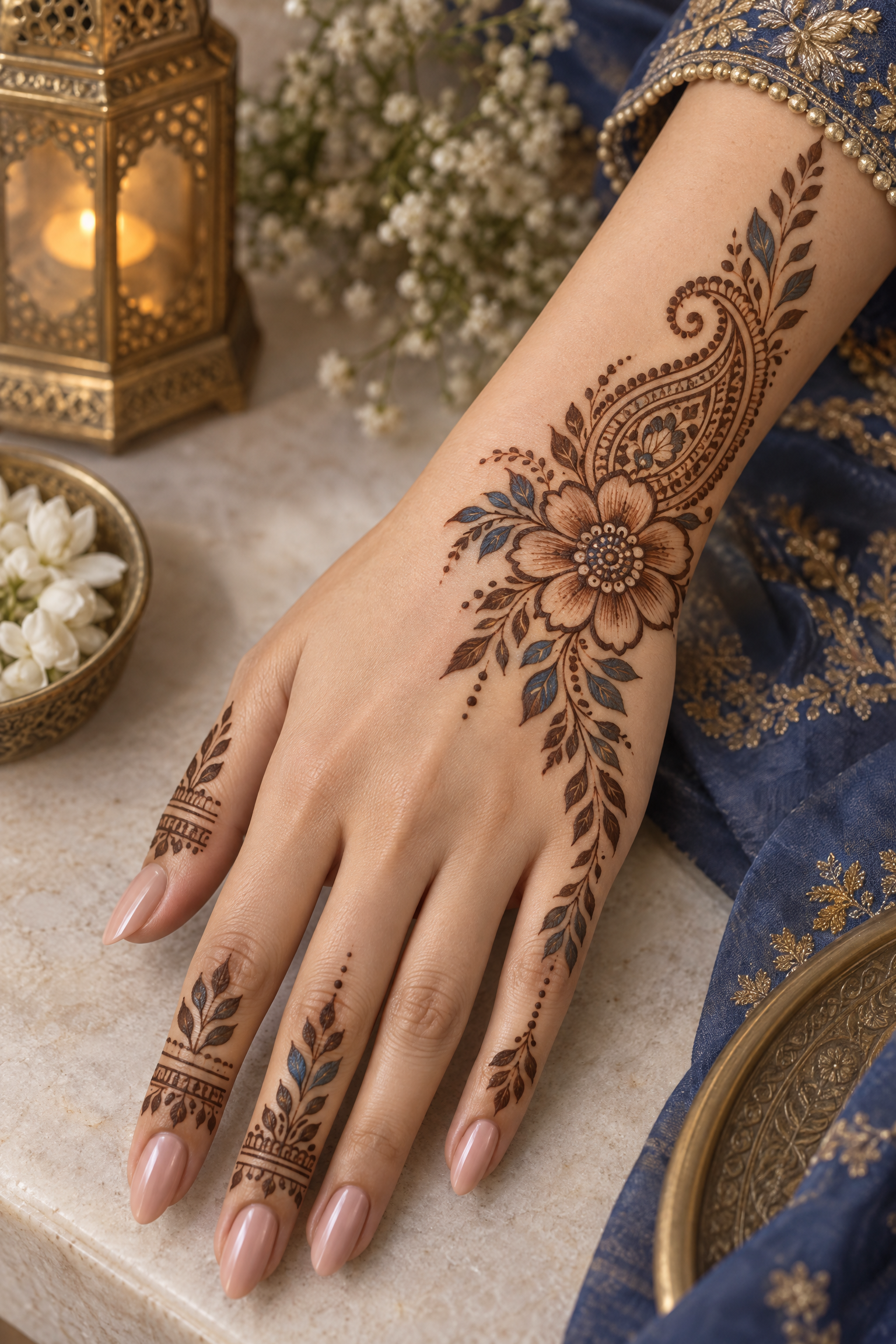
A traditional Arabic mehndi design with a modern touch combines familiar motifs with a cleaner layout. You might use a classic paisley, a bold flower, and leafy branches, but arrange them in a diagonal trail with generous open spaces.
For an elegant result, keep one motif larger than the others and use fine lines to connect the different elements. You can also adapt the design to one side of the hand instead of covering the entire surface.
This style is versatile because it preserves the character of traditional mehndi while allowing you to personalize the amount of detail and coverage.
Best for: Weddings, Eid, family celebrations, and people who want a timeless design that does not feel overly crowded.
How to Choose the Right Arabic Mehndi Design
The right Arabic mehndi design is one that suits your occasion, preferred coverage, and comfort with detailed patterns. Before choosing an image to show your mehndi artist, consider these practical points.
- For beginners: Choose a simple flower, a short vine, or a small finger pattern.
- For the back hand: Look for a diagonal layout that follows the shape of the hand.
- For the front hand: Consider a palm-centered flower or a design that extends toward selected fingers.
- For weddings: Choose a fuller pattern if you enjoy detailed coverage and have enough time for application.
- For everyday celebrations: A small floral trail or bracelet-style design may be easier to manage.
- For a modern look: Try asymmetrical placement, fine lines, and a combination of floral and geometric details.
Save a clear reference image before your appointment. If you want to combine two designs, show your artist which parts you like rather than expecting every detail to fit into one pattern.
Tips for a Neat and Beautiful Mehndi Design
A beautiful mehndi result depends on the pattern, the quality of the application, and the way you care for your skin. These practical tips can help you prepare.
- Choose a design that matches your skill level. Fine details can be difficult to apply evenly if you are still learning.
- Practice the layout first. Draw the main flower and curved trail on paper before applying paste to your hand.
- Keep the pattern balanced. Use one main motif and let smaller details support it.
- Leave intentional open spaces. Gaps between motifs help the design look clean rather than crowded.
- Check the ingredients. Do not assume that a product is safe simply because it is labelled as mehndi or henna.
- Follow the product instructions. Avoid adding unverified chemicals or using products intended for hair dye on your skin.
A Note About Mehndi Safety
Be cautious with products marketed as “black henna.” The U.S. Food and Drug Administration warns that some products marketed as black henna contain p-phenylenediamine (PPD), a hair-dye ingredient that can cause dangerous skin reactions when applied directly to the skin. The FDA also notes that it has received reports of adverse reactions to products marketed as henna. Read the ingredient information where available, ask the artist what is in the paste, and avoid products with undisclosed ingredients. Read the FDA’s guidance on henna and black henna.
If a product causes burning, swelling, blistering, or a rash, stop using it and seek appropriate medical advice. Do not apply a product to irritated or broken skin.
Final Thoughts
The best Arabic mehndi design is one that fits your personal style and the occasion. A simple flower trail may be perfect for a casual celebration, while a fuller back-hand or front-hand pattern can suit a wedding or festive gathering.
Use these 17 ideas as a starting point, save the pattern you like most, and adapt its flowers, vines, and level of detail to create a look that feels right for you. A thoughtful design does not have to be complicated to be beautiful.
Frequently Asked Questions
What makes Arabic mehndi designs different?
Arabic mehndi designs are commonly recognized by flowing lines, floral trails, leaves, paisley motifs, and open spaces between patterns. Individual designs vary, but many emphasize movement and clearly defined motifs rather than dense coverage across the whole hand.
Which Arabic mehndi design is easiest for beginners?
A small flower connected to a curved vine is a practical starting point. Add a few leaves and dots, and keep the pattern short until you become more comfortable controlling the applicator.
Which Arabic mehndi design looks best on the back hand?
A diagonal floral trail is a versatile choice because it follows the length of the hand. You can make it simple with a single flower and leaves or add paisley and finger details for a more decorative look.
Can I choose a simple Arabic mehndi design for a wedding?
Yes. A simple design can suit a wedding if you prefer minimal decoration. A floral trail, bracelet-style pattern, or small palm motif can look elegant without requiring full-hand coverage.
How do I choose between front-hand and back-hand designs?
Choose a front-hand design if you prefer a pattern centered on the palm, and a back-hand design if you want a pattern that is easy to display on the outer hand. You can also use complementary designs on both sides.
How can I make my mehndi stain darker?
The final color depends on the product, application, skin, and time allowed for the stain to develop. Follow the product’s directions and avoid harsh additives or chemicals intended to darken the stain quickly. Never use black henna or hair dye on your skin to achieve a darker result.