
Yes, carnations are toxic to cats, but they are considered only mildly toxic. If your cat chews on or eats any part of a carnation, it may develop symptoms like vomiting, diarrhea, drooling, or skin irritation. While most cases are not life-threatening, it is still important to monitor your cat closely and contact your veterinarian if symptoms appear or become severe.
Fresh flowers can brighten up your home, but not every flower is safe for curious pets. Cats naturally explore their surroundings by sniffing, chewing, and playing with plants, which can sometimes lead to accidental poisoning. Knowing which flowers are safe and which are harmful helps you create a pet-friendly home without unnecessary risks.
Carnations are one of the most popular flowers for birthdays, weddings, Mother’s Day, and home decorations. Because they are so common, many cat owners wonder whether these colorful blooms are safe to keep around their pets.
In this guide, you’ll learn why carnations are toxic to cats, the symptoms to watch for, what to do if your cat eats one, how serious the poisoning can be, and safer flower alternatives for cat-friendly homes.
If you enjoy learning about pet care and keeping your furry friends safe, explore our collection of helpful guides in the Pets category, where you’ll find practical tips for responsible pet ownership.
Are Carnations Toxic to Cats?
Yes, carnations are mildly toxic to cats, and even a small bite can upset your cat’s stomach.
Carnations (Dianthus caryophyllus) contain naturally occurring compounds that can irritate a cat’s digestive system. Although these flowers are not among the most dangerous plants for cats, they should never be considered pet-safe.
Many cats ignore flowers completely, but others enjoy chewing on leaves or petals out of curiosity. Even a small amount may cause digestive discomfort, especially in kittens, senior cats, or cats with sensitive stomachs.
Fortunately, most cats recover with supportive care after eating a small amount of a carnation. However, if your cat eats a large portion or continues showing symptoms, it should be examined by a veterinarian as soon as possible.
Toxicity at a Glance
Why Are Carnations Toxic to Cats?
Carnations contain natural chemicals that can irritate your cat’s stomach and digestive system after they are eaten.
Unlike humans, cats process many plant compounds differently. Their bodies are not designed to digest a wide variety of flowers and ornamental plants, making them more vulnerable to certain natural toxins.
The exact toxic substance in carnations has not been fully identified, but experts believe naturally occurring compounds called triterpenoid saponins contribute to the irritation. These compounds can affect the digestive tract and occasionally cause mild skin irritation after contact.
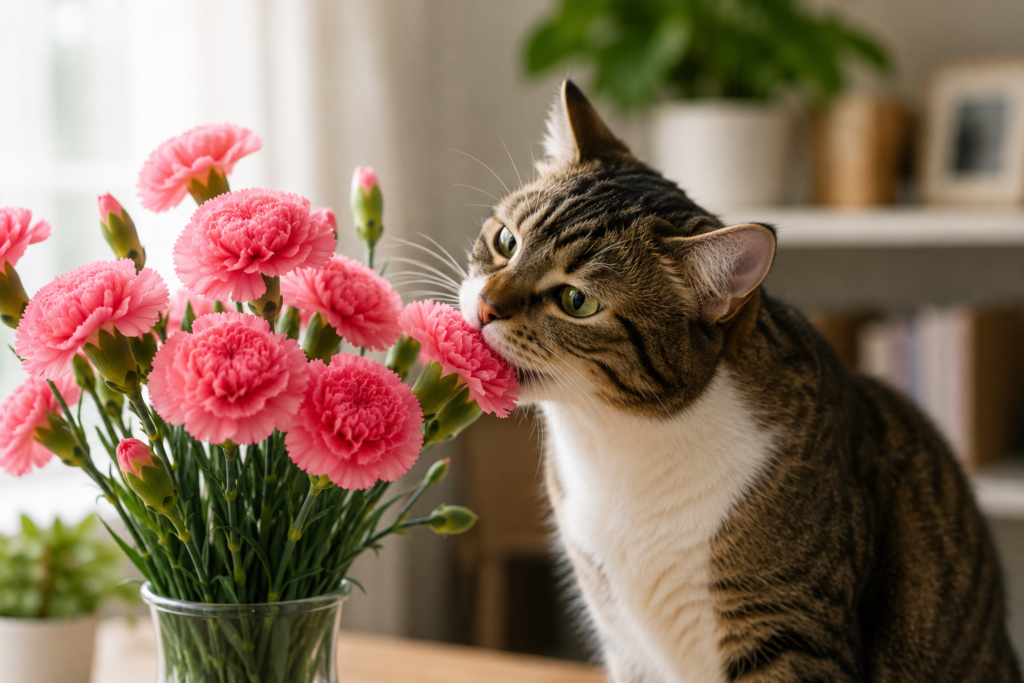
While the poisoning is generally considered mild, every cat responds differently. Factors such as age, body weight, existing health conditions, and the amount consumed all influence how severe the symptoms become.
Indoor cats are especially at risk because decorative flowers are often one of the few plants available for them to investigate.
Good to Know: Cats don’t usually eat flowers because they are hungry. Curiosity, boredom, or playful behavior often leads them to nibble on leaves or petals.
What Makes Carnations Harmful?
Carnations contain plant compounds that protect the flower from insects and environmental damage. While these chemicals are harmless to the plant itself, they may irritate a cat’s digestive tract after ingestion.
When a cat chews on petals or leaves, these compounds can trigger inflammation in the stomach and intestines. This irritation often leads to vomiting, diarrhea, loss of appetite, or excessive drooling.
Some cats may also develop mild skin irritation after rubbing against the plant or coming into contact with its sap. This is less common than digestive symptoms but can still happen.
Fortunately, carnations do not usually cause severe organ damage like some highly toxic plants. However, repeated vomiting or diarrhea can lead to dehydration if left untreated.
Common factors that affect how your cat reacts include:
- The amount of the plant eaten
- Your cat’s age
- Overall health condition
- Existing digestive problems
- Whether other toxic plants were eaten at the same time
Which Parts of the Carnation Are Toxic?
Every part of a carnation should be treated as potentially harmful to cats.
Many people believe only the colorful petals are toxic, but that’s not true. Cats can develop symptoms after chewing on almost any part of the plant.
The following parts may cause digestive irritation:
- Petals
- Leaves
- Stems
- Flower buds
- Pollen
- Plant sap
Fresh carnations are the most common source of accidental poisoning, but dried flowers can also cause stomach upset if eaten.
If carnations are part of a floral arrangement, remember that other flowers inside the bouquet may be far more dangerous. For example, lilies are extremely toxic to cats and require immediate emergency treatment even if only a small amount is consumed.
Another thing many pet owners overlook is the chemicals added after harvesting. Florists often use preservatives, fertilizers, floral foam, dyes, or pesticides to keep bouquets looking fresh. These substances can sometimes be even more irritating than the carnation itself.
Safety Reminder: If your cat has chewed on a bouquet, don’t assume the carnation is the only concern. Check every flower in the arrangement because some popular flowers are significantly more toxic than carnations.
Creating a safe environment for your pets doesn’t mean giving up beautiful home décor. With the right knowledge, you can choose flowers and plants that allow both your home and your cat to thrive safely.
Symptoms of Carnation Poisoning in Cats
The most common signs of carnation poisoning are vomiting, diarrhea, drooling, and a loss of appetite.
Most cats begin showing symptoms within a few hours after chewing or eating a carnation. In many cases, the symptoms are mild and improve within 24 to 48 hours with supportive care. However, every cat reacts differently, so it’s important to monitor your pet closely.
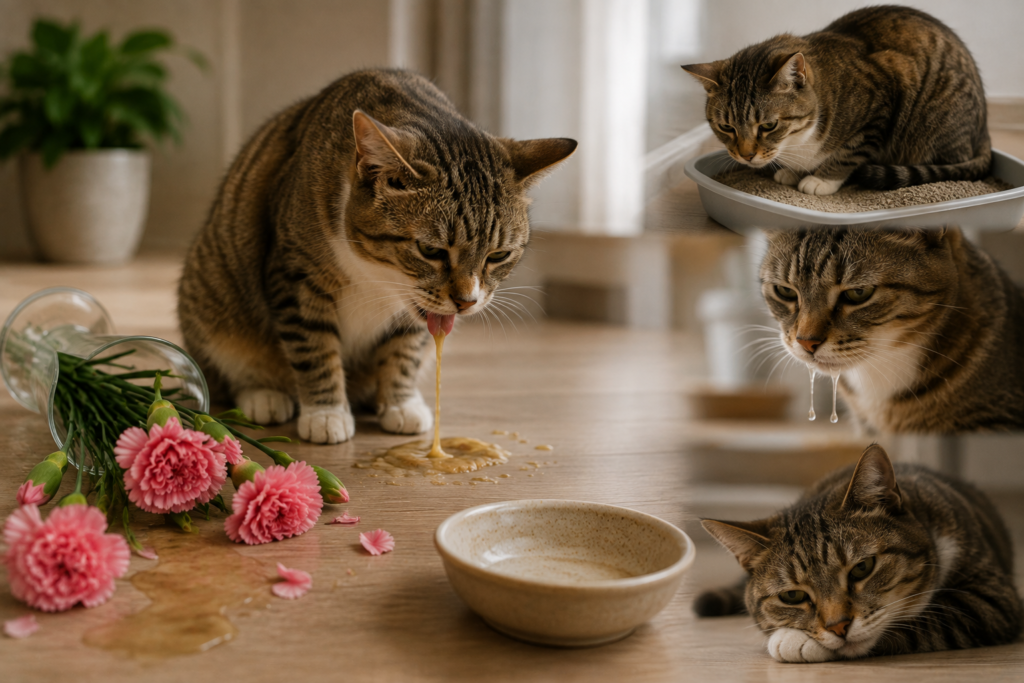
Some cats may only experience a mild stomach upset, while others may become tired, refuse food, or continue vomiting. Kittens, senior cats, and cats with existing health problems may have a harder time recovering than healthy adult cats.
The good news is that severe poisoning from carnations is uncommon. Even so, repeated vomiting or diarrhea can lead to dehydration if left untreated.
Quick Answer: If your cat chewed on a carnation but is acting normally, continue watching for symptoms over the next 24 hours. If vomiting, diarrhea, or unusual behavior develops, contact your veterinarian for advice.
Common Symptoms
Recognizing the early symptoms can help you get the right care before the condition becomes more serious.
The symptoms usually depend on how much of the plant your cat ate and how sensitive its digestive system is. While most reactions are mild, they should never be ignored.
Here are the most common symptoms of carnation poisoning in cats:
Vomiting
Vomiting is usually the first sign that something is wrong.
After eating part of a carnation, your cat’s stomach may become irritated and try to remove the plant material by vomiting. Some cats may vomit only once, while others may vomit several times over a few hours.
If your cat cannot keep water down or continues vomiting repeatedly, it should be seen by a veterinarian.
Diarrhea
Diarrhea is another common symptom caused by irritation in the digestive tract.
Your cat may have loose stools or need to use the litter box more often than usual. Mild diarrhea often improves within a day, but ongoing diarrhea can lead to dehydration, especially in smaller cats and kittens.
Always make sure your cat has access to fresh drinking water.
Excessive Drooling
Drooling may happen if the plant irritates your cat’s mouth or stomach.
Some cats drool immediately after chewing on the flower because of its unpleasant taste or mild irritation. Excessive drooling may also occur alongside nausea.
If drooling continues for several hours or is accompanied by other symptoms, veterinary advice is recommended.
Loss of Appetite
A cat with an upset stomach may stop eating for a short period.
Many cats refuse food after eating something that irritates their stomach. A temporary decrease in appetite is common, but your cat should gradually begin eating again once it feels better.
If your cat refuses food for more than 24 hours, contact your veterinarian.
Lethargy
Low energy is a sign your cat may not be feeling well.
Instead of playing or exploring, your cat may sleep more than usual or appear less interested in its surroundings.
Mild tiredness often improves as the stomach settles, but severe weakness should never be ignored.
Mild Skin Irritation
Some cats may develop skin irritation after touching the plant or its sap.
Although less common than digestive symptoms, contact with carnations can occasionally cause:
- Redness
- Mild itching
- Skin irritation
- Excessive grooming around the affected area
If you notice skin irritation, gently clean the area with water and prevent your cat from licking it excessively.
Symptoms at a Glance
Remember: Mild symptoms do not always stay mild. If your cat continues vomiting, becomes dehydrated, struggles to breathe, collapses, or behaves unusually, seek veterinary care immediately.
When to Contact a Veterinarian
You should contact a veterinarian whenever you’re unsure how much carnation your cat ate or if symptoms continue to worsen.
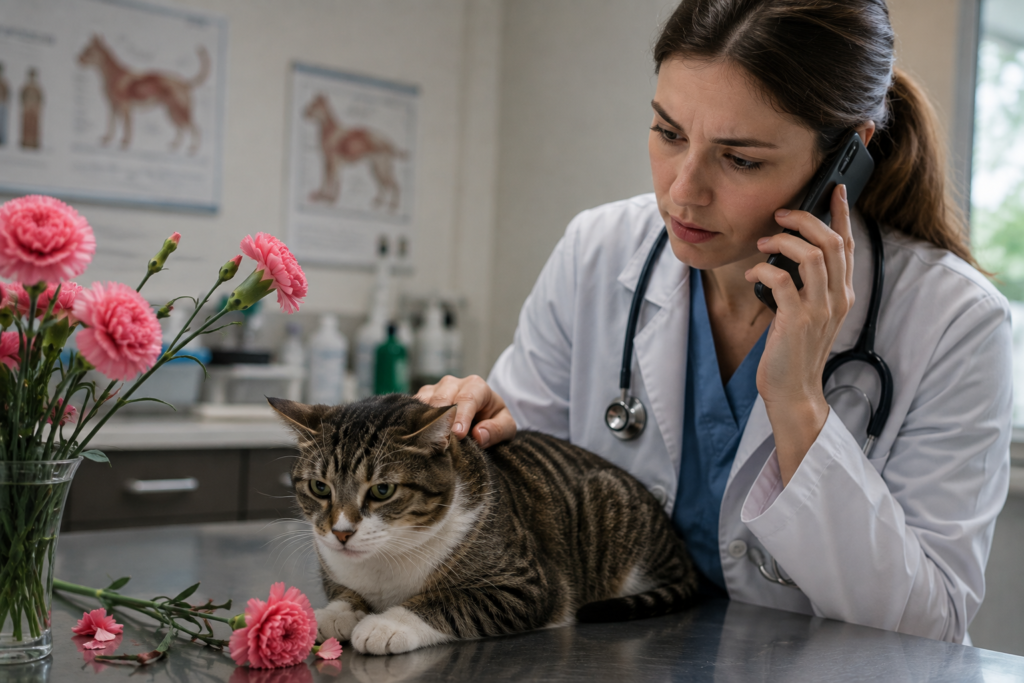
While carnations are only mildly toxic, it’s always safer to ask a veterinary professional for advice rather than guessing. Cats can hide illness very well, so even mild symptoms deserve attention.
Call your veterinarian as soon as possible if:
- Your cat ate a large amount of the plant.
- Your kitten or senior cat chewed on a carnation.
- Vomiting happens more than once.
- Diarrhea continues for several hours.
- Your cat refuses food or water.
- Your cat becomes unusually sleepy or weak.
- Drooling becomes excessive.
- You notice blood in vomit or stool.
- Your cat has other medical conditions.
- You are unsure whether the bouquet contained other toxic flowers.
The veterinarian may ask several questions, including:
- When did your cat eat the carnation?
- Approximately how much was eaten?
- Which part of the plant was consumed?
- What symptoms have you noticed?
- Has your cat eaten anything else recently?
Having this information ready helps the veterinarian decide whether your cat can be monitored at home or needs to be examined.
Helpful Tip: If possible, take a photo of the flower or bring the plant label with you to the veterinary clinic. This can help confirm the exact plant and rule out exposure to more dangerous flowers in mixed bouquets.
It’s also important to remember that many floral arrangements contain more than just carnations. Flowers such as lilies, tulips, hyacinths, and chrysanthemums may also be included, and some of these are far more toxic to cats. If you’re not sure what was in the bouquet, tell your veterinarian immediately.
Keeping your home safe for pets starts with making informed choices about the plants and flowers you bring indoors. If you’re looking for more practical tips for caring for your furry companion, explore our growing collection of pet guides in the Pets section on Daily Idea Book.
What to Do If Your Cat Eats a Carnation
If your cat eats a carnation, stay calm, remove the plant, and contact your veterinarian if any symptoms develop.
Finding out that your cat has chewed on a flower can be stressful, but acting quickly can make a big difference. Since carnations are only mildly toxic, many cats recover without serious complications. However, the safest approach is to monitor your cat closely and seek professional advice if you notice anything unusual.
Avoid trying home remedies that you find online. Some well-meaning suggestions, such as giving milk or making your cat vomit, can do more harm than good.
Instead, follow a few simple steps to keep your cat safe.
Quick Action: Remove any remaining pieces of the carnation from your cat’s reach, check for symptoms, and call your veterinarian if you’re concerned. Do not wait for severe symptoms before asking for professional advice.
Immediate Steps to Take at Home
The first few minutes after your cat eats a carnation are the most important.
Following these simple steps can help reduce the risk of complications while you monitor your cat.
Remove the Plant
Take away the carnation and any other flowers your cat can reach.
If the bouquet contains different flowers, keep it somewhere your cat cannot access. Mixed bouquets sometimes contain highly toxic flowers that require emergency treatment.
Remove Plant Pieces from Your Cat’s Mouth
If you can safely do so, gently remove any visible petals or leaves from your cat’s mouth.
Do not force your cat’s mouth open if it becomes frightened or aggressive. Your safety is important too.
Offer Fresh Water
Fresh drinking water helps keep your cat hydrated, especially if vomiting or diarrhea develops.
Do not force your cat to drink. Simply make clean water available at all times.
Watch for Symptoms
Observe your cat carefully for the next 24 to 48 hours.
Keep an eye out for:
- Vomiting
- Diarrhea
- Drooling
- Loss of appetite
- Low energy
- Hiding more than usual
- Unusual behavior
Writing down when symptoms begin can be helpful if your veterinarian needs additional information.
Keep Your Cat Indoors
If your cat normally goes outside, keep it indoors while you monitor its condition.
This makes it much easier to observe changes in behavior and prevents your cat from eating other potentially harmful plants.
Save the Flower or Plant Label
If possible, keep part of the carnation or the bouquet packaging.
This helps your veterinarian identify exactly what your cat was exposed to, especially if the bouquet contained multiple flower varieties.
What You Should NOT Do
Some common home remedies can actually make the situation worse.
Avoid doing any of the following unless your veterinarian specifically tells you to:
- Do not make your cat vomit.
- Do not give hydrogen peroxide.
- Do not give milk.
- Do not offer human medications.
- Do not wait several days if symptoms continue.
- Do not assume your cat is fine just because it only took one bite.
Cats have very sensitive digestive systems, and treatments that work for people or dogs are not always safe for them.
Safety Tip: Never give your cat medicine without veterinary advice. Even common over-the-counter medications made for humans can be dangerous or life-threatening for cats.
What a Veterinarian May Do
Most cats with mild carnation poisoning only need supportive care, but treatment depends on their symptoms.
Your veterinarian will begin by asking questions about what happened and examining your cat. In many cases, the symptoms remain mild, and your cat can recover with simple treatment and monitoring.
Depending on your cat’s condition, the veterinarian may recommend one or more of the following.
Physical Examination
The veterinarian will check:
- Heart rate
- Body temperature
- Hydration level
- Mouth irritation
- Stomach discomfort
- Overall alertness
This helps determine whether your cat has only mild stomach irritation or needs additional treatment.
Fluid Therapy
If your cat becomes dehydrated, fluids may be recommended.
Repeated vomiting or diarrhea can cause dehydration, especially in kittens and older cats.
Your veterinarian may provide fluids under the skin or through an intravenous (IV) drip if needed.
Medications
Depending on the symptoms, your veterinarian may prescribe medications to:
- Reduce nausea
- Control vomiting
- Protect the stomach
- Treat diarrhea if necessary
Only use medications that are prescribed specifically for your cat.
Observation
Many cats simply need rest and monitoring.
Your veterinarian may advise you to:
- Offer small amounts of food
- Encourage drinking water
- Monitor litter box habits
- Watch energy levels
- Return if symptoms worsen
Following these instructions carefully usually leads to a smooth recovery.
How Serious Is Carnation Poisoning?
Carnation poisoning is usually mild, and most cats recover fully with proper care.
This is reassuring news for cat owners. Compared with highly toxic plants such as lilies, carnations rarely cause life-threatening poisoning.
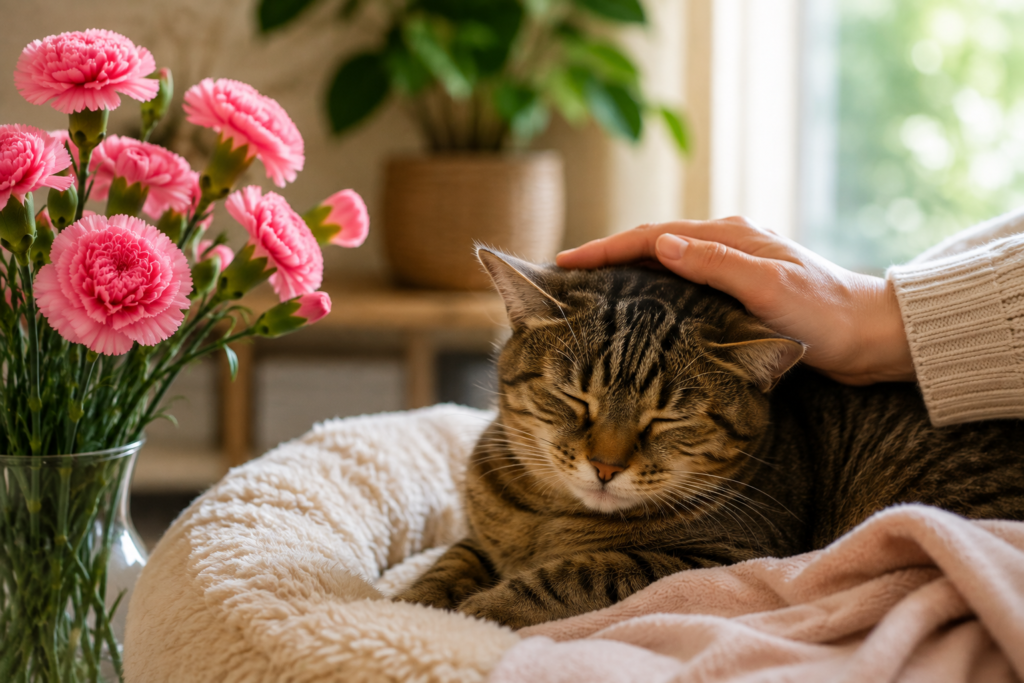
Most healthy adult cats recover within one or two days after experiencing mild digestive upset. However, recovery depends on several factors.
These include:
- How much of the plant was eaten
- Your cat’s age
- Existing health conditions
- Whether another toxic plant was also consumed
- How quickly treatment began
Cats that receive prompt veterinary advice generally recover faster than those whose symptoms are ignored.
When Poisoning May Become More Serious
Although uncommon, complications can develop if symptoms are severe or continue for an extended period.
Potential complications include:
- Dehydration from repeated vomiting
- Dehydration from ongoing diarrhea
- Loss of appetite lasting more than a day
- Weakness caused by fluid loss
- Exposure to more toxic flowers in mixed bouquets
These situations require prompt veterinary attention.
Important: If you know your cat has eaten flowers but you’re not certain they were only carnations, treat the situation as more urgent. Some flowers that look similar or are commonly sold in bouquets can be much more toxic than carnations.
Recovery Timeline
Most cats follow a predictable recovery pattern when only a small amount of carnation has been eaten.
Key Takeaway: Carnations are considered mildly toxic to cats, but they should never be treated as harmless. Early monitoring and timely veterinary advice are the best ways to protect your pet and ensure a quick recovery.
As you make your home safer for both family members and pets, you may also enjoy browsing other helpful lifestyle content on Daily Idea Book, where you’ll find practical guides and creative ideas for everyday living.
How to Prevent Carnation Poisoning
The best way to protect your cat is to keep carnations and other toxic flowers out of its reach.
Prevention is always easier than dealing with an emergency. Cats are naturally curious animals, and even well-behaved pets may decide to chew on a flower one day. By making a few simple changes around your home, you can greatly reduce the risk of accidental poisoning.
You don’t have to stop decorating your home with flowers. Instead, choose pet-safe options and place any potentially harmful plants where your cat cannot reach them.
Quick Tip: The safest home for a cat is one where every indoor plant has been checked for pet safety before bringing it inside.
Keep Flowers Out of Reach
Keeping toxic flowers away from your cat is the simplest and most effective form of prevention.
Place bouquets on high shelves, inside closed rooms, or in areas your cat cannot access. Remember that many cats are excellent climbers, so a high countertop may not always be enough.
If someone gives you flowers as a gift, identify each flower before displaying the bouquet. Mixed arrangements often contain several different flowers, and some may be much more dangerous than carnations.
Good safety habits include:
- Keep bouquets in cat-free rooms whenever possible.
- Remove fallen petals and leaves from the floor.
- Never let your cat play with flower stems.
- Dispose of wilted flowers promptly.
- Tell family members and visitors not to leave flowers within your cat’s reach.
These simple habits can prevent many accidental poisonings.
Learn Which Plants Are Toxic
Knowing which plants are unsafe helps you make better choices when decorating your home or garden.
Carnations are only one of many plants that may cause problems for cats. Before buying a new houseplant or bouquet, spend a few minutes checking whether it is considered pet-safe.
Some flowers can cause only mild stomach upset, while others may damage important organs or become life-threatening.
Getting into the habit of checking plant safety can save you from a stressful emergency later.
Give Your Cat Safe Alternatives
Providing safe plants and enrichment may reduce your cat’s interest in chewing decorative flowers.
Cats often nibble on plants out of curiosity or boredom rather than hunger. Giving them safe alternatives can satisfy that natural behavior.
You can offer:
- Cat grass
- Catnip
- Interactive toys
- Scratching posts
- Puzzle feeders
- Regular play sessions
A mentally stimulated cat is generally less likely to chew on household decorations.
Watch Curious Kittens
Kittens need extra supervision because they explore almost everything with their mouths.
Young cats are naturally playful and may chew leaves, petals, ribbons, or decorative plants without realizing the danger.
If you recently adopted a kitten, consider avoiding toxic flowers altogether until it learns what it can and cannot play with.
Safe Alternatives to Carnations for Cat Owners
You don’t have to give up fresh flowers—you simply need to choose pet-friendly options.
Many beautiful flowers are considered safer for cats and can brighten your home without the same level of concern. While no plant should be treated as food for pets, these options are generally regarded as better choices than carnations.
Cat-Friendly Flower Alternatives
Flowers to Avoid Around Cats
Some flowers are far more dangerous than carnations and should never be kept where cats can reach them.
The following plants are widely recognized as being highly toxic to cats:
Helpful Reminder: Florists often combine several flower varieties in one bouquet. Always identify every flower—not just the carnations—before placing the arrangement where your cat can access it.
Final Thoughts
Carnations are mildly toxic to cats, so it’s best to keep them out of your pet’s reach.
Most cats that chew on a carnation experience only mild digestive problems, such as vomiting, diarrhea, drooling, or a temporary loss of appetite. With prompt attention and proper care, the majority recover within a day or two.
Even though carnations are not among the most dangerous flowers for cats, they should never be considered safe. Every cat reacts differently, and what causes mild discomfort in one pet may lead to a more serious reaction in another. Monitoring your cat closely and contacting a veterinarian if symptoms appear is always the safest decision.
The easiest way to prevent accidental poisoning is to choose pet-friendly flowers, store bouquets where curious cats cannot reach them, and learn which common plants are toxic before bringing them into your home. A little planning can help you enjoy beautiful floral arrangements while keeping your feline companion healthy and safe.
If you enjoy discovering practical tips for everyday living beyond pet care, you may also like our guides on holiday party ideas for festive celebrations and team building activities for work, school, and group events.
If you’re wondering, “Are carnations toxic to cats?” the answer is yes—but they are generally only mildly toxic. Keep carnations away from your cat, watch for symptoms if accidental exposure happens, and don’t hesitate to contact your veterinarian if you’re concerned. Choosing pet-safe flowers is one of the easiest ways to create a home that’s both beautiful and safe for your furry companion.
Editorial Policy & Medical Disclaimer
This article is intended for educational and informational purposes only. Every effort has been made to ensure the information is accurate, up to date, and based on trusted veterinary resources available at the time of writing. However, it should not replace professional veterinary advice, diagnosis, or treatment.
Every cat can react differently after eating a carnation depending on its age, overall health, the amount consumed, and any underlying medical conditions. If you believe your cat has eaten carnations or another potentially toxic plant, or if your cat develops persistent vomiting, diarrhea, weakness, difficulty breathing, or any other concerning symptoms, contact your veterinarian or an animal poison control service immediately.
At Daily Idea Book, our goal is to create practical, well-researched, and easy-to-understand guides that help pet owners make informed decisions while encouraging professional veterinary care whenever it is needed.
Trusted Sources & References
This guide was researched using information from recognized veterinary organizations and animal poison resources. If you would like to learn more about plant toxicity in cats, the following references provide additional evidence-based information:
- ASPCA Animal Poison Control – Carnation (Dianthus caryophyllus)
- Merck Veterinary Manual – Houseplants and Ornamentals Toxic to Animals
- Cornell University College of Veterinary Medicine – Small Animal Toxins
These references are provided for educational purposes and may be updated by their respective organizations over time.
Frequently Asked Questions
Are carnations poisonous to cats or just mildly toxic?
Carnations are mildly toxic to cats, not highly poisonous. If a cat chews on or eats part of a carnation, it may develop symptoms like vomiting, diarrhea, drooling, or a loss of appetite. Most cats recover with supportive care, but it’s still a good idea to contact your veterinarian if symptoms appear or your cat eats a large amount.
What happens if a cat eats a carnation?
If a cat eats a carnation, it may experience mild stomach upset within a few hours. Common symptoms include vomiting, diarrhea, drooling, reduced appetite, and tiredness. Most cases are not serious and improve within 24 to 48 hours. However, if your cat keeps vomiting, becomes weak, or shows severe symptoms, seek veterinary care right away.
Are carnations toxic to cats if they smell them?
No, simply smelling carnations is not usually harmful to cats. The risk comes when a cat chews on or eats the flowers, leaves, or stems. Even so, it’s best to keep carnations out of your cat’s reach because curious cats may decide to nibble on them after sniffing.
Are carnations safe for pets?
Carnations are not considered completely safe for pets. They are mildly toxic to cats and dogs and can cause digestive upset if eaten. If you have pets at home, it’s safer to choose pet-friendly flowers or place carnations where your pets cannot reach them.
Which flowers are toxic to cats?
Many common flowers can be toxic to cats. Some of the most well-known include lilies, tulips, daffodils, hyacinths, chrysanthemums, autumn crocus, and carnations. Lilies are especially dangerous because even a small amount can cause severe kidney damage. Always check whether a flower is pet-safe before bringing it into your home.
Are carnations safe around kittens?
No, carnations are not safe around kittens. Kittens are naturally curious and are more likely to chew on flowers while exploring. Because their smaller bodies can be more sensitive to toxins, it’s best to keep carnations and other potentially harmful plants out of their reach. Choosing pet-safe flowers is the safest option for homes with young cats.