
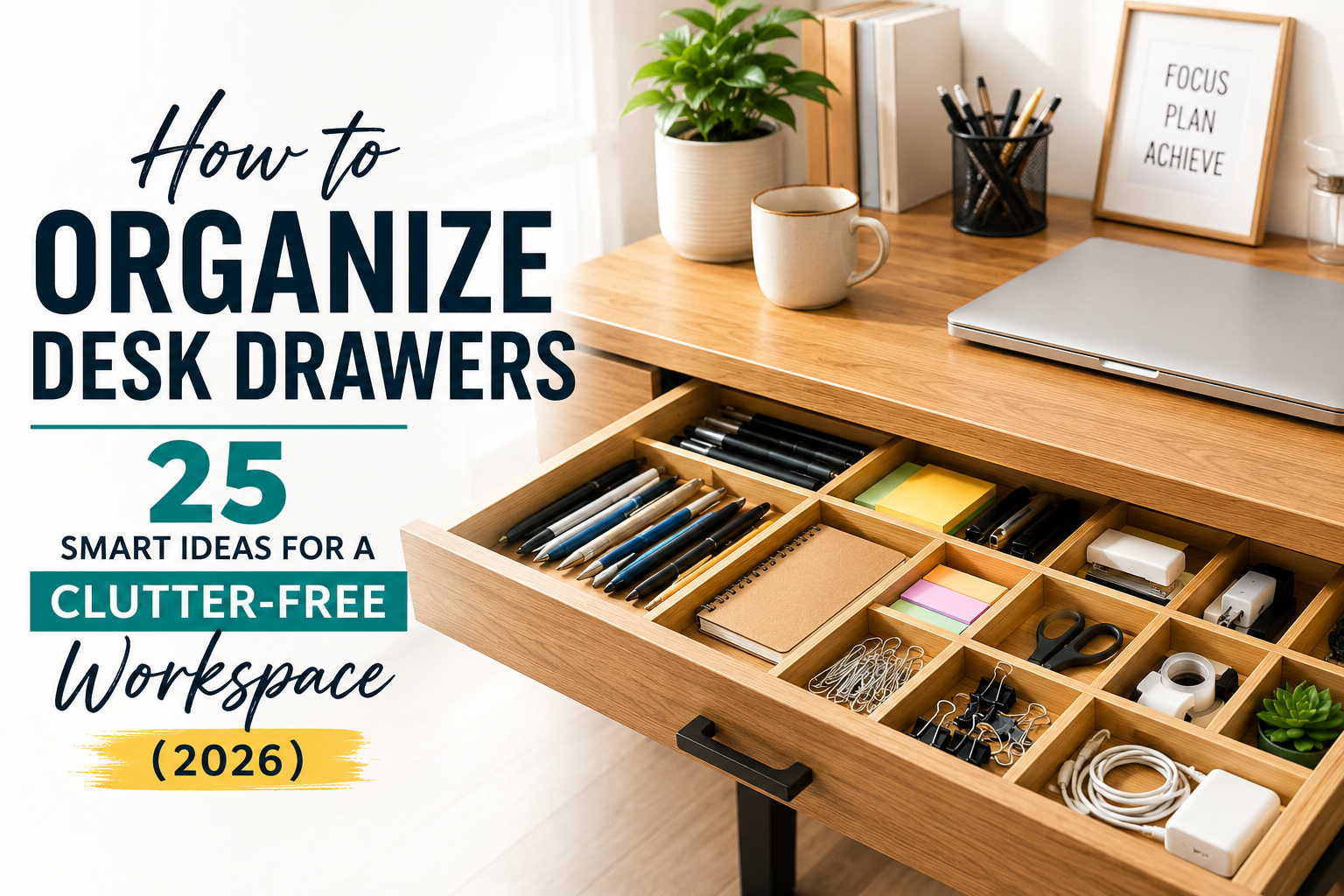
A well-organized desk drawer saves time, reduces stress, and helps you stay focused throughout the day. Whether you work from home, study for exams, or manage household tasks, a tidy workspace makes everyday activities feel easier. Instead of searching for a missing pen or tangled charging cable, you’ll know exactly where everything belongs.
A cluttered drawer often becomes a place where random items pile up over time. This not only wastes valuable space but can also slow down your workflow. Organizing your desk drawers helps you find important items faster, keep your workspace cleaner, and create a more productive environment.
A clean workspace can also improve your daily habits. When every item has a designated place, it’s easier to maintain order instead of letting clutter build up again. Small improvements in organization often lead to better productivity and a more enjoyable work or study experience.
If you enjoy organizing different areas of your home, you may also find our guide on how to organize a bathroom cabinet helpful for creating clutter-free storage throughout your home.
Before You Start Organizing Your Desk Drawers
Taking a few minutes to prepare before organizing will make the entire process easier and more effective. Instead of moving items around randomly, following a simple plan helps you create a system that lasts.
These four preparation steps will help you organize your desk drawers without missing anything important.
Empty Every Drawer
Start with a completely empty drawer so you can see exactly what you own.
Remove every item from each drawer and place everything on your desk or another flat surface. This gives you a clear view of what’s inside and prevents hidden clutter from staying behind.
While the drawer is empty, wipe away dust, crumbs, and dirt using a microfiber cloth or a gentle cleaning wipe. Beginning with a clean drawer creates a fresh start for your new organization system.
Sort Items into Categories
Grouping similar items together makes organizing much easier.
Separate everything into simple categories such as:
- Pens and pencils
- Markers and highlighters
- Sticky notes
- Chargers and cables
- Office supplies
- Important documents
- Electronics
- Personal items
Creating categories helps you understand how much storage each group actually needs. It also prevents similar items from ending up in different places.
Remove Unnecessary Items
Decluttering before organizing prevents your drawers from filling up with things you never use.
Ask yourself these simple questions:
- Have I used this in the last year?
- Is it broken?
- Do I have duplicates?
- Does it belong somewhere else?
Recycle old papers, throw away dried-out pens, remove damaged office supplies, and relocate items that don’t belong in your desk drawer.
Remember, organizing works best when you keep only the items you actually use.
Measure Your Drawers (for Organizers)
Measuring your drawers first helps you choose organizers that actually fit.
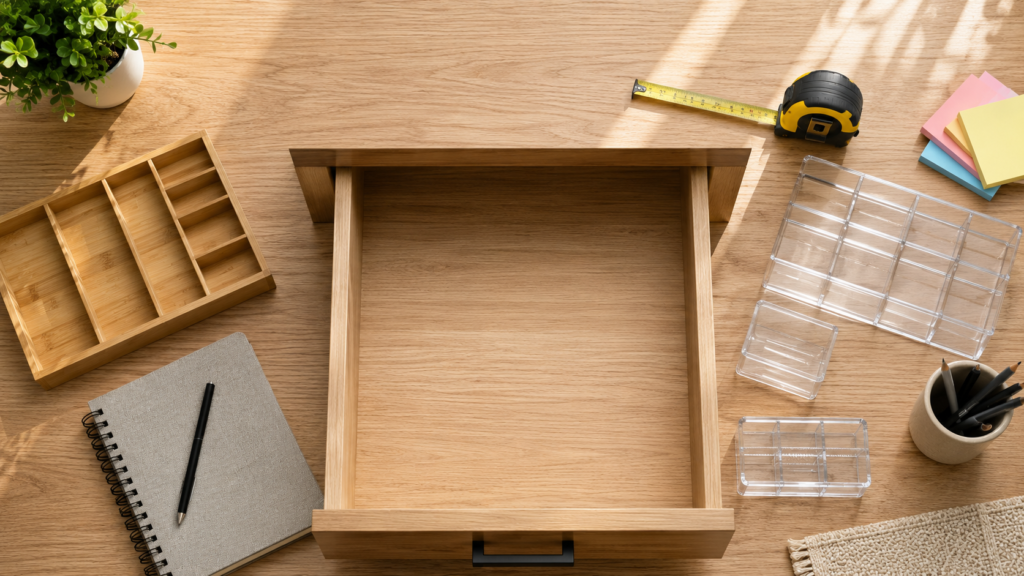
Before buying drawer dividers, trays, or storage boxes, measure the drawer’s:
- Width
- Length
- Depth
Even a small difference in size can prevent an organizer from fitting properly. If you already have small containers at home, test them before purchasing new storage products. This simple step can save both money and frustration.
25 Smart Desk Drawer Organization Ideas
Small changes can completely transform messy desk drawers into organized, easy-to-use storage spaces. The following ideas are practical, affordable, and suitable for home offices, workplaces, study desks, and student workstations.
You don’t need to use every suggestion. Choose the ideas that match your available space, daily routine, and the supplies you use most often.
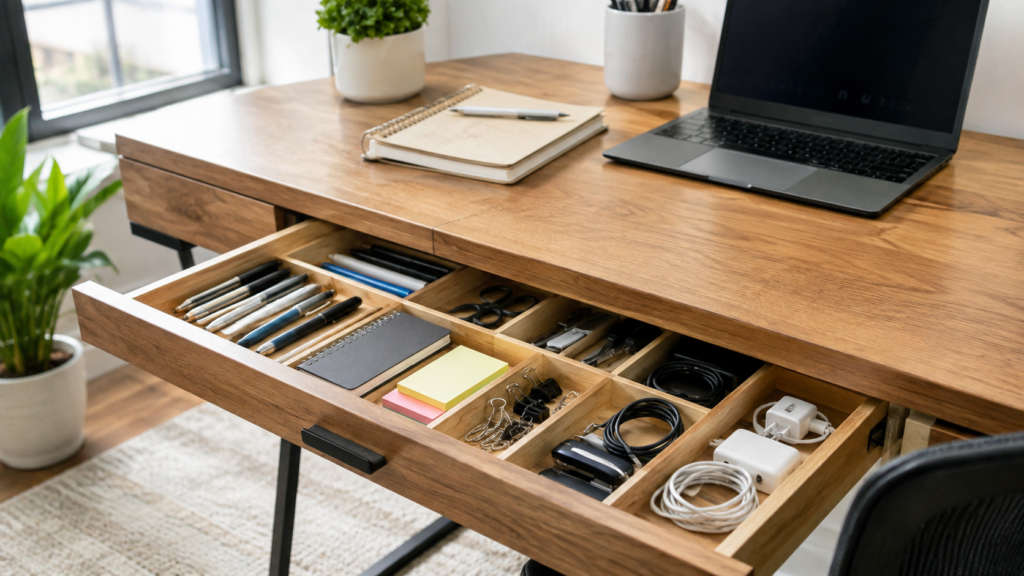
1. Use Drawer Dividers
Drawer dividers instantly create separate spaces for different office supplies.
Instead of letting everything slide around inside the drawer, divide the space into sections for pens, paper clips, sticky notes, scissors, and other frequently used items. Adjustable dividers work well because you can customize them as your storage needs change.
2. Store Frequently Used Items in the Top Drawer
Keep everyday essentials where they’re easiest to reach.
Place items like pens, pencils, notepads, chargers, and sticky notes in the top drawer. Less frequently used supplies can stay in lower drawers, helping you avoid unnecessary searching throughout the day.
3. Organize Pens and Pencils with a Tray
A simple tray keeps writing tools neat instead of scattered across the drawer.
Separate pens, pencils, markers, and highlighters into individual compartments. This makes it easier to grab the exact tool you need without digging through a pile of stationery.
4. Keep Cables Tangle-Free
Messy charging cables take up space and are frustrating to untangle.
Use reusable cable ties, Velcro straps, or small pouches to keep USB cables, phone chargers, headphones, and adapters organized. Storing each cable separately prevents knots and extends cable life.
5. Label Small Compartments
Simple labels help everyone know where each item belongs.
Small labels are especially useful if multiple people share the same workspace. Labeling sections like “Paper Clips,” “Batteries,” or “Sticky Notes” makes maintaining the system much easier over time.
6. Use Clear Storage Containers
Transparent containers let you see what’s inside without opening every compartment.
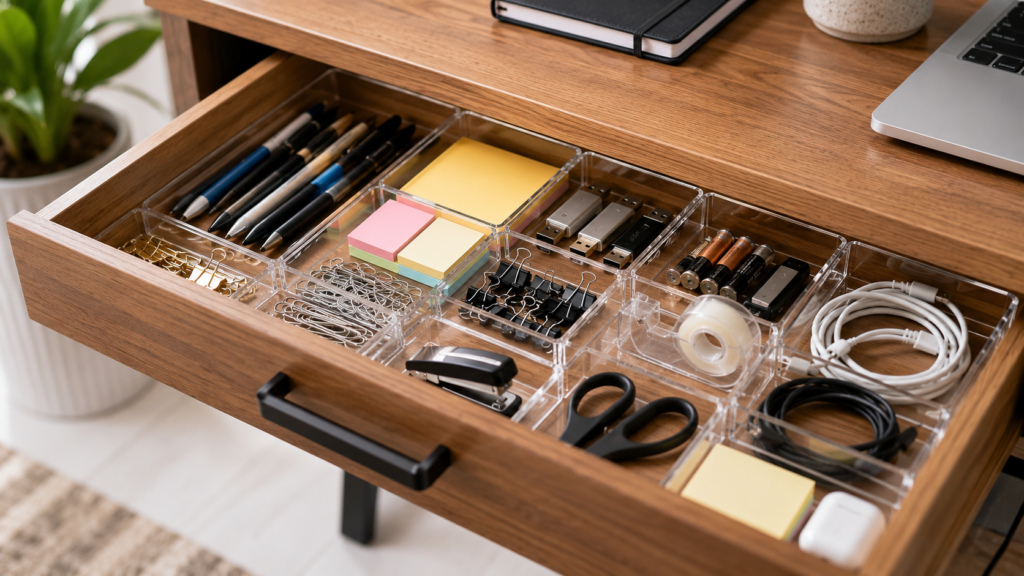
Clear acrylic bins or small plastic containers work well for organizing clips, rubber bands, thumbtacks, memory cards, USB drives, and other tiny accessories that easily get lost.
7. Create a Stationery Section
Keeping all stationery together saves time during work or study sessions.
Designate one area of the drawer for notebooks, sticky notes, correction tape, staplers, rulers, and other office essentials. Having a dedicated stationery section makes your workflow smoother and prevents unnecessary clutter.
If you’re looking for more practical ideas to organize your everyday spaces, explore our collection of helpful tips in the Home & Living category, where you’ll find guides designed to make your home more functional and organized.
8. Store Sticky Notes Together
Sticky notes are easy to lose unless they have a dedicated spot.
Keep different sizes and colors stacked together inside a small tray or compartment. This keeps them clean, prevents curled edges, and makes them easy to grab whenever you need a quick reminder.
9. Add a Small Catch-All Tray
A catch-all tray prevents small everyday items from getting lost inside the drawer.
Use a shallow container for frequently used items like keys, coins, earbuds, flash drives, or business cards. Limiting this tray to daily essentials helps prevent it from becoming another clutter zone.
10. Use Vertical Drawer Organizers
Vertical organizers make better use of deep drawers by increasing storage space.
Instead of stacking everything flat, stand notebooks, folders, envelopes, or planners upright using adjustable dividers. This keeps items visible and easier to access while maximizing every inch of available space.
11. Separate Work and Personal Items
Keeping work and personal belongings apart helps your desk stay organized and makes important items easier to find.
It’s common for desk drawers to become a mix of office supplies, receipts, headphones, medicine, keys, and other personal items. Instead of storing everything together, dedicate one section for work essentials and another for personal belongings. This simple habit reduces clutter and keeps your workspace more professional.
If you work from home, this separation also helps you switch between work time and personal time without distractions.
12. Organize Charging Accessories
Charging accessories last longer and stay easier to use when they’re stored neatly.
Phone chargers, USB cables, adapters, power banks, and memory cards often become tangled inside drawers. Use small zip pouches, cable organizers, or reusable Velcro ties to keep each accessory together.
For even better organization:
- Wrap cables loosely instead of tightly.
- Label similar charging cables if multiple devices use them.
- Store rarely used adapters in a separate compartment.
This prevents damage and saves time whenever you need to charge a device.
13. Keep Important Documents Flat
Important papers stay protected when they are stored flat instead of folded.
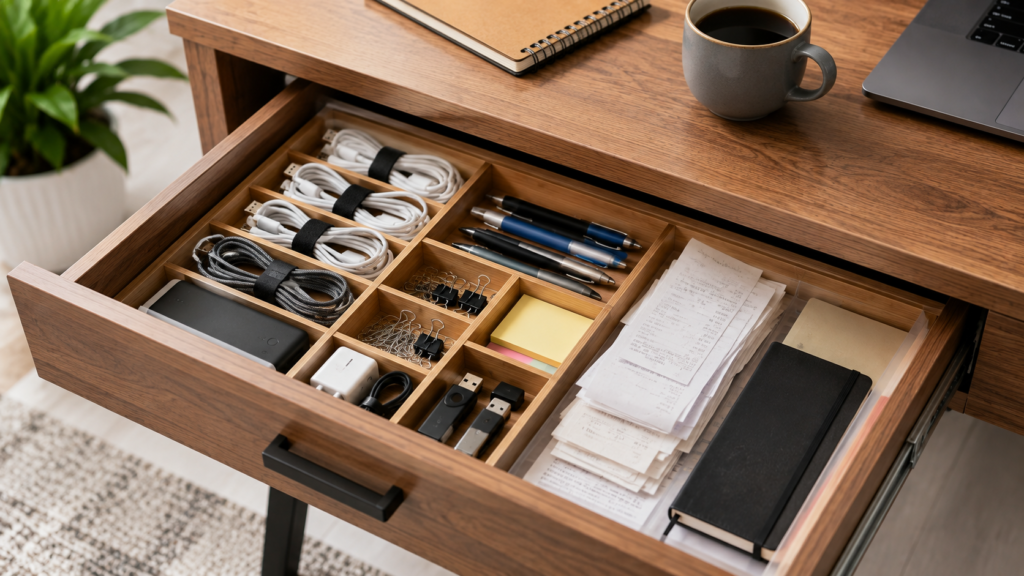
Documents such as warranties, receipts, certificates, invoices, and printed notes can easily become wrinkled if they are mixed with other supplies.
Use a slim document folder or a wide drawer tray to keep papers flat and easy to access. Avoid placing heavy office supplies on top of them.
14. Use Small Boxes for Miscellaneous Items
Small containers stop tiny items from disappearing into the back of the drawer.
Items like rubber bands, binder clips, batteries, SIM ejector tools, stamps, spare keys, and USB drives are easy to lose.
Instead of leaving them loose, place them inside small boxes or reusable containers. Even empty jewelry boxes or gift boxes can work well as budget-friendly organizers.
15. Store Office Supplies by Category
Grouping similar office supplies together makes every task faster.
Rather than storing items wherever there is empty space, organize them into categories.
For example:
- Pens and pencils
- Paper clips and binder clips
- Stapler and staples
- Sticky notes
- Highlighters
- Scissors
- Tape and glue
Once every category has its own section, your drawer stays neat with very little effort.
16. Use Expandable Drawer Organizers
Expandable organizers adjust to different drawer sizes and reduce wasted space.
Unlike fixed trays, expandable organizers can fit narrow or wide drawers without leaving empty gaps.
They’re especially useful if:
- Your drawer has unusual dimensions.
- You reorganize frequently.
- You want flexibility as your storage needs change.
Choose sturdy organizers made from bamboo, plastic, or metal depending on your style and budget.
17. Create a Tech Accessories Section
Keeping all your tech accessories together prevents unnecessary searching.
If you regularly use electronics, dedicate one compartment for:
- USB drives
- SD cards
- External hard drives
- Adapters
- Earbuds
- Stylus pens
- Cleaning cloths
This creates a dedicated “tech station” inside your drawer and prevents expensive accessories from getting misplaced.
18. Keep Emergency Supplies Handy
A small emergency section can save time when unexpected situations happen.
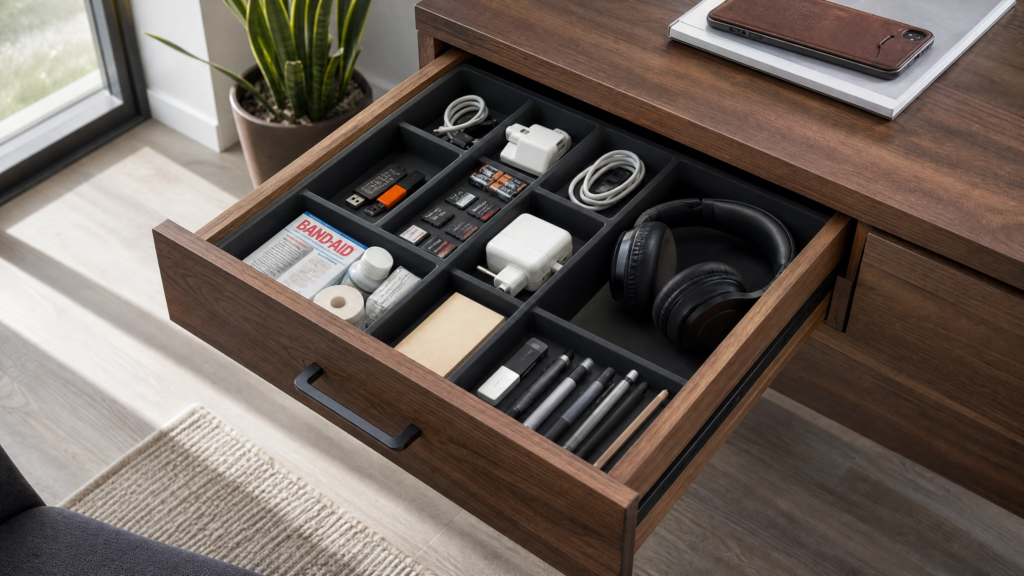
Reserve one corner of your drawer for useful emergency items such as:
- Pain relief tablets
- Bandages
- Spare batteries
- Safety pins
- Hand sanitizer
- Tissues
Keep only a few essentials instead of overfilling the drawer.
19. Maximize Deep Drawers
Deep drawers offer plenty of storage when every inch is used wisely.
Instead of stacking everything into one large pile, divide the drawer into zones using bins, dividers, or stackable trays.
For example:
- Front section: Daily office supplies
- Middle section: Electronics
- Back section: Extra supplies
This layout makes even deep drawers easy to navigate.
20. Use Non-Slip Drawer Liners
Drawer liners keep organizers and supplies from sliding around whenever you open the drawer.
A non-slip liner adds grip while also protecting the drawer from scratches and small spills.
Choose a liner that is:
- Easy to trim
- Waterproof
- Easy to clean
- Non-adhesive for simple removal
This small upgrade helps your organization system stay in place every day.
21. Organize with DIY Containers
You don’t need expensive organizers to create a tidy desk drawer.
Many household items can become excellent storage solutions, including:
- Small cardboard boxes
- Food storage containers
- Mason jar lids
- Gift boxes
- Empty smartphone boxes
Reusing containers is an affordable and environmentally friendly way to organize your workspace.
If you enjoy practical organization and DIY inspiration, you’ll find more creative ideas throughout our Daily Idea Book blog, where we regularly share simple ways to improve your home and workspace.
22. Leave Some Empty Space
An organized drawer should never be completely full.
Leaving around 15–20% of the drawer empty gives you room for future supplies and prevents everything from becoming cramped.
When drawers are packed too tightly, even organized sections quickly become messy again.
Think of empty space as part of your organization system—not wasted storage.
23. Rotate Seasonal Supplies
Only keep supplies you currently need inside your desk drawer.
Items related to holidays, seasonal projects, or occasional tasks can be stored elsewhere until needed.
For example:
- Holiday gift tags
- Greeting cards
- Decorative stickers
- Tax paperwork
- Event materials
Rotating these items throughout the year keeps your everyday workspace clean and uncluttered.
24. Declutter Weekly
Spending just a few minutes each week prevents clutter from returning.
At the end of each week:
- Return misplaced items.
- Throw away unnecessary papers.
- Refill frequently used supplies.
- Remove anything that doesn’t belong.
This simple routine often takes less than five minutes but keeps your organization system working for months.
25. Maintain Your Organization System
The best organization system is the one you can easily maintain every day.
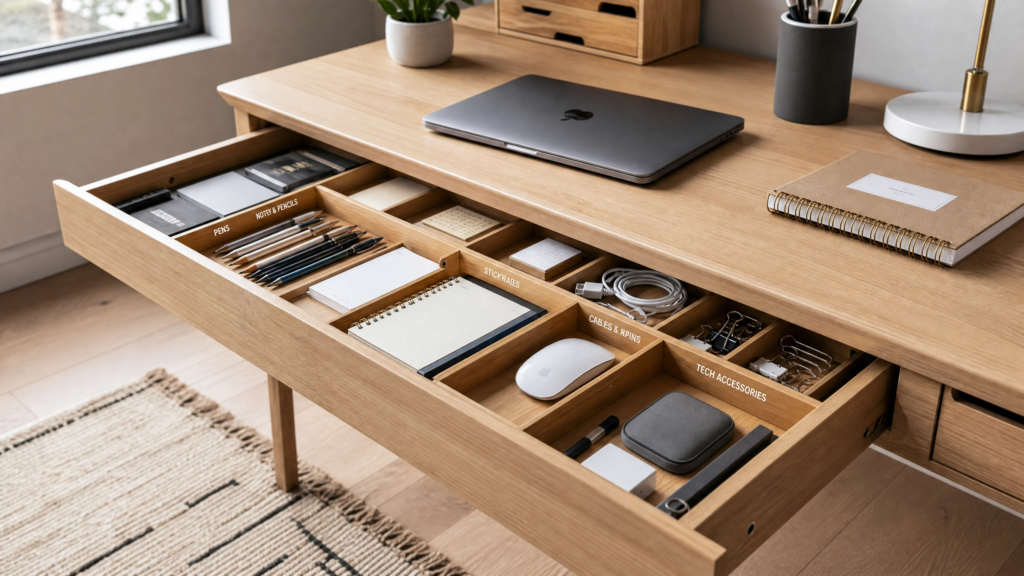
After using an item, return it to its designated place instead of leaving it on your desk. This simple habit prevents clutter from building up over time.
Review your drawer every month to remove unnecessary items and adjust the layout if your work habits change.
Remember, organization isn’t about creating a perfect drawer once—it’s about building a system that’s easy to maintain.
This organization method works well for home offices, study desks, and professional workspaces because it focuses on creating simple habits instead of relying only on storage products. By choosing the ideas that fit your daily routine, you can keep your desk drawers functional and clutter-free for the long term.
If you’re planning to organize other areas of your home after finishing your workspace, you may also enjoy our guide on how to organize a bathroom cabinet, which shares practical storage ideas for making the most of small spaces.
Best Desk Organizer Types for Every Workspace
Choosing the right desk organizer makes it much easier to keep your drawers neat and clutter-free. The best option depends on your drawer size, the items you use every day, and your personal style. Below are some of the most practical desk organizers that work well for home offices, workplaces, and study desks.
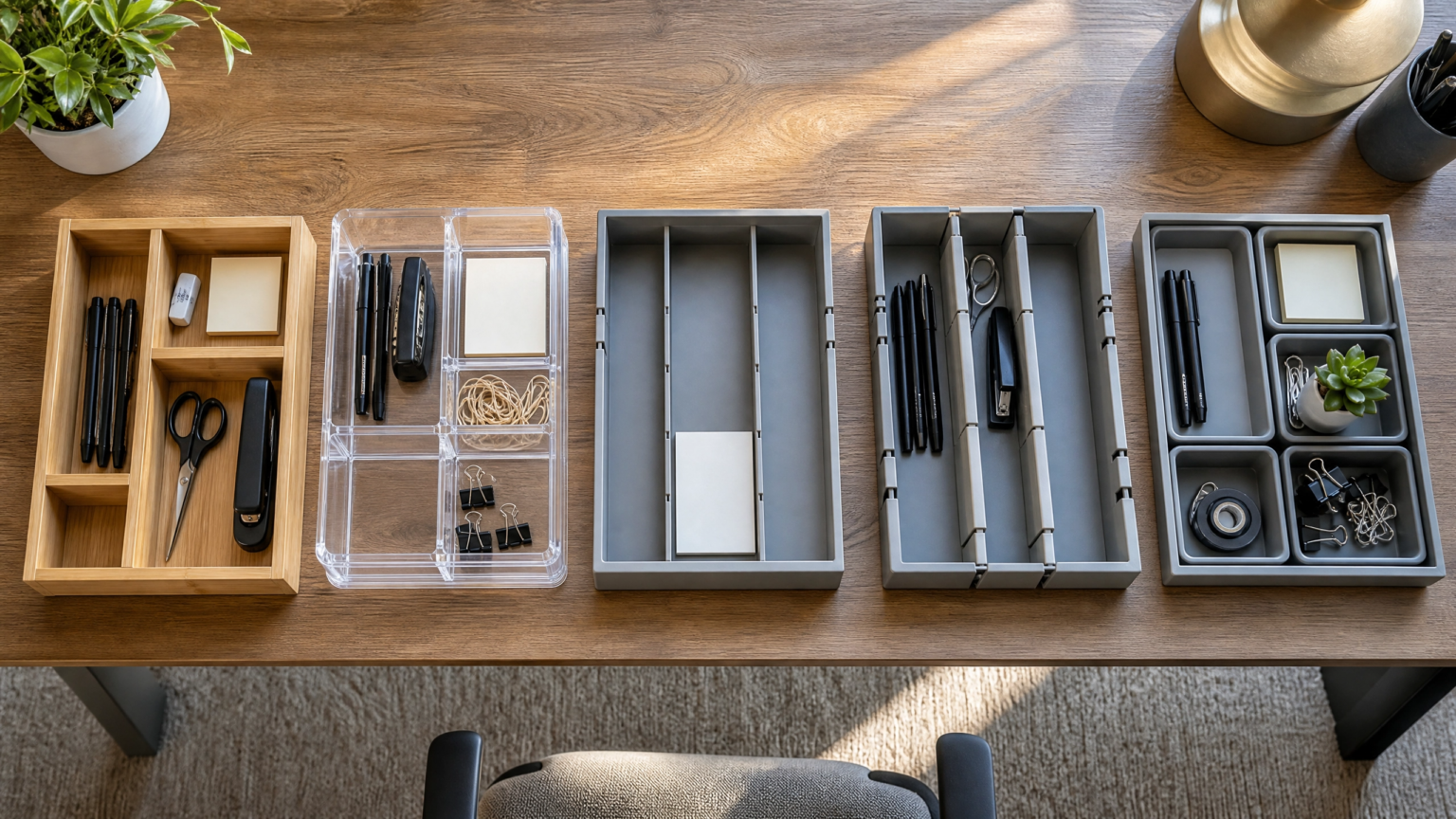
Drawer Dividers
Drawer dividers are one of the easiest ways to create a neat and organized layout.
These adjustable separators divide a large drawer into smaller sections, giving every item its own place. They’re ideal for storing pens, pencils, scissors, rulers, sticky notes, and office supplies without everything sliding together.
Best for:
- Everyday office supplies
- Home office desks
- Student study desks
- Shared workspaces
Expandable Organizers
Expandable organizers fit different drawer sizes and make better use of available space.
Unlike fixed trays, they can be adjusted to match the width of your drawer. This flexibility makes them a great choice if you rearrange your workspace or change desks in the future.
They’re available in materials like bamboo, plastic, and metal, making it easy to match your workspace style.
Bamboo Organizers
Bamboo organizers combine durability with a clean, natural appearance.
If you prefer a warm and minimalist workspace, bamboo organizers are an excellent option. They’re sturdy, environmentally friendly, and easy to clean.
Benefits include:
- Strong construction
- Natural appearance
- Long-lasting durability
- Easy maintenance
They work especially well in modern home offices and wooden desks.
Acrylic Organizers
Clear acrylic organizers make small items easy to see and access.
Because they’re transparent, you don’t need to search through different compartments to find what you need. Acrylic trays are perfect for organizing paper clips, binder clips, USB drives, sticky notes, and other small accessories.
They’re also easy to wipe clean and create a modern look inside your drawer.
Modular Storage Trays
Modular trays give you the flexibility to design your own storage layout.
Instead of one large organizer, modular trays consist of several small containers that can be arranged however you like. This allows you to customize your drawer based on your daily needs.
They’re especially useful if you store a wide variety of office supplies in one drawer.
Common Desk Drawer Organization Mistakes to Avoid
Even the best organization system won’t last if you make a few common mistakes. Avoiding these habits will help keep your workspace clean, functional, and easy to maintain.
Overfilling Drawers
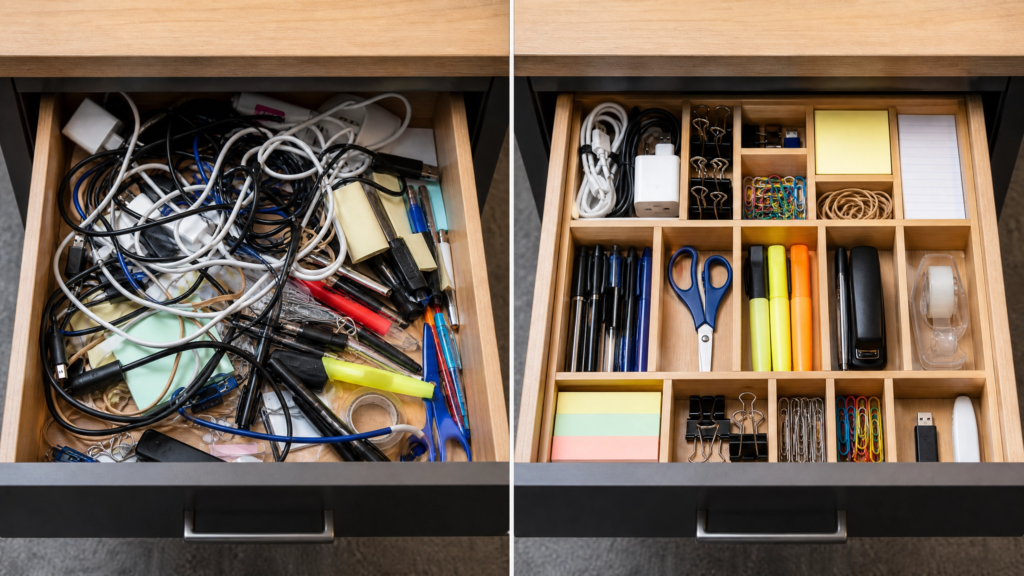
Packing every inch of your drawer makes it difficult to find what you need.
Many people assume that using all available space is a good idea, but overcrowded drawers quickly become messy. Leave a little empty space so items remain easy to access and your storage system has room to grow.
Keeping Unnecessary Items
Holding onto items you never use only creates unnecessary clutter.
Old receipts, dried-out pens, broken chargers, duplicate stationery, and random objects often stay inside desk drawers for months without being used.
Review your drawer regularly and remove anything that no longer serves a purpose.
Ignoring Drawer Measurements
Buying organizers without measuring your drawer often leads to wasted money.
An organizer that’s too large won’t fit, while one that’s too small leaves unused space. Taking a quick measurement before shopping helps you choose products that fit perfectly.
Mixing Unrelated Supplies
Storing unrelated items together makes your workspace harder to manage.
For example, avoid mixing office supplies with personal care products, electronics, snacks, or household tools.
Instead, create separate sections for different categories. This simple habit keeps your drawer organized and makes everyday tasks more efficient.
Skipping Regular Maintenance
Organization isn’t a one-time task—it requires small, consistent habits.
Even a perfectly organized drawer will become cluttered if items aren’t returned to their designated places.
Spend a few minutes each week putting things back where they belong. This small effort prevents major clean-up sessions later.
How to Keep Desk Drawers Organized Long-Term
A simple maintenance routine is the secret to keeping your desk drawers organized all year. You don’t need to reorganize everything every week. Instead, build a few easy habits into your routine.
Follow the One-Minute Rule
If putting an item back takes less than a minute, do it immediately. Returning a pen, charger, or notebook to its proper place prevents clutter from building up.
Do a Weekly Reset
Choose one day each week to quickly tidy your drawer. Throw away unnecessary papers, restock supplies, and return misplaced items. A five-minute reset is often enough to keep everything organized.
Review Your Supplies Monthly
At the end of each month, check what’s inside your drawer. Remove broken or unused items, refill essentials, and adjust your layout if your work habits have changed.
Avoid Buying Organizers You Don’t Need
Storage products can be helpful, but buying too many organizers may actually reduce usable space. Start with simple solutions and only add new organizers when they solve a real problem.
Keep Only Daily Essentials Nearby
Store only the supplies you use regularly inside your main desk drawer. Archive documents, extra stationery, and seasonal items can be kept in a cabinet or storage box instead.
- Return items after every use.
- Spend five minutes organizing each week.
- Declutter once every month.
- Replace empty or broken supplies.
- Keep only what you actually use.
Final Thoughts
Organizing your desk drawers doesn’t have to be complicated. By removing unnecessary clutter, grouping similar items together, and using simple storage solutions, you can create a workspace that is both practical and easy to maintain.
Remember, the goal isn’t to create a picture-perfect drawer—it’s to build an organization system that works for your daily routine. Small habits like returning items after use, doing a quick weekly reset, and keeping only essential supplies nearby can make a lasting difference.
Whether you’re organizing a home office, a student desk, or a workplace drawer, these ideas can help you save time, reduce distractions, and create a cleaner environment where you can focus on what matters most.
If you enjoy practical organization tips and creative lifestyle ideas, explore more helpful guides on Daily Idea Book. You may also like our collections on Home & Living and discover inspiration ranging from workspace organization to home improvement, seasonal ideas, and everyday living solutions.
Our Practical Approach
This guide was created using practical home organization methods, workspace best practices, and current storage solutions commonly used in home offices and workplaces. Every recommendation focuses on simple, realistic ideas that are easy to apply, regardless of your budget or desk size.
At Daily Idea Book, our goal is to publish practical, well-researched content that helps readers solve everyday problems with clear, actionable advice rather than unnecessary complexity.
We regularly review and update our organization guides to reflect practical storage ideas, changing home office needs, and helpful recommendations. If new solutions become available, this article may be updated to keep the information accurate and useful.
Trusted Sources & References
To help ensure this guide is accurate and practical, we reviewed recommendations from trusted home organization, productivity, and workplace resources, including:
- Apartment Therapy
- Better Homes & Gardens
- The Spruce
- National Association of Productivity & Organizing Professionals (NAPO)
These references were used to compare common organization methods alongside practical experience and everyday workspace solutions.
Why Trust Daily Idea Book?
Daily Idea Book publishes practical, easy-to-follow guides designed to help readers improve their homes, lifestyles, and everyday routines. Every article is written with a focus on helpful information, clear explanations, and solutions that readers can confidently apply in real life.
Frequently Asked Questions
Find quick answers to common questions about organizing desk drawers, creating a clutter-free workspace, and choosing the right desk organization solutions.
What is the KonMari method for desk organizing?
The KonMari method focuses on keeping only the items you truly need and use. Start by emptying your desk drawers, sort everything into categories, and remove anything that is broken, duplicated, or no longer useful. Then organize the remaining items so each one has a designated place. This approach helps reduce clutter and makes it easier to keep your desk tidy over time.
How should I layout my desk?
The best desk layout keeps your most-used items within easy reach. Place your computer or laptop in the center, keep frequently used supplies like pens and notebooks in the top drawer, and store less-used items in lower drawers. Leave enough open space on your desktop to work comfortably and avoid placing unnecessary decorations that can create clutter.
What are the 3 P’s for having a clean desk?
The three P’s are Purge, Place, and Preserve.
- Purge: Remove items you no longer need.
- Place: Give every item a specific location.
- Preserve: Build a habit of returning items to their proper place after each use.
Following these three simple steps makes it much easier to maintain a clean and organized workspace.
How to organize a desk for ADHD?
A desk for someone with ADHD should be simple, clutter-free, and easy to maintain. Keep only the supplies you use every day within reach, use drawer dividers to separate items, and label compartments if needed. Store distracting or rarely used items in another drawer or cabinet. A clean workspace with fewer distractions can make it easier to stay focused on tasks.
What is the best desk organizer for small drawers?
Adjustable drawer dividers and modular storage trays are among the best options for small drawers. They help maximize limited space by creating separate compartments for pens, sticky notes, paper clips, USB drives, and other small items. Before buying an organizer, measure your drawer to ensure it fits properly and makes the best use of the available space.
How can I organize my desk without spending much money?
You don’t need expensive organizers to create a tidy desk. Reuse small boxes, food containers, gift boxes, or empty phone boxes to separate office supplies. Declutter regularly, keep only essential items, and use simple DIY storage solutions you already have at home. These budget-friendly ideas can make your desk more organized without adding extra costs.