
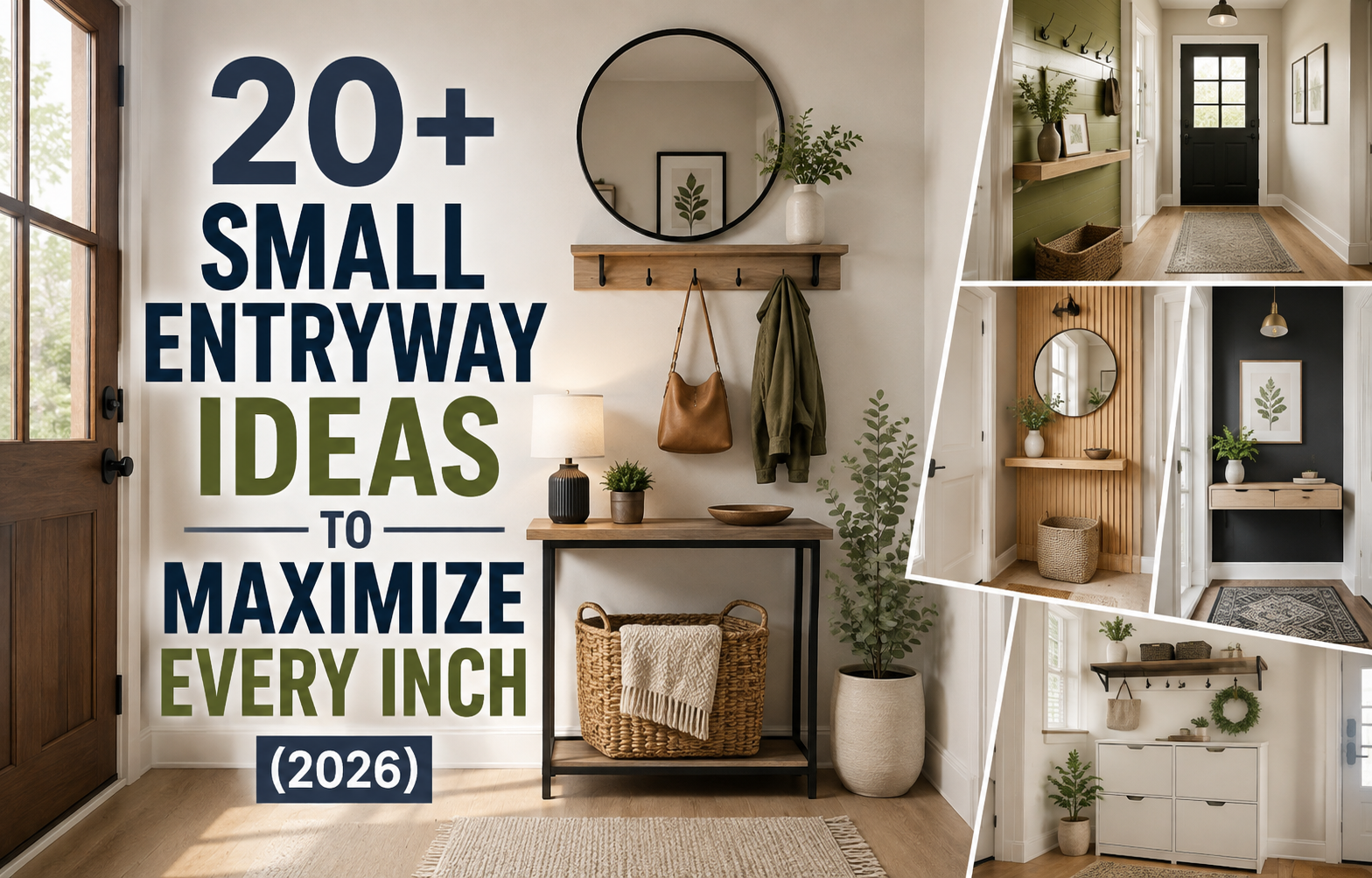
A small entryway can still feel welcoming, organized, and stylish when every inch has a purpose. The entryway is the first part of your home that you and your guests see, but limited space can make decorating it challenging. Bulky furniture, shoes, bags, and everyday items can quickly make a narrow area feel crowded.
The good news is that you do not need a large foyer to create a useful entryway. Slim furniture, vertical storage, mirrors, hooks, smart lighting, and simple decor can help you make better use of a small space without making it feel packed.
Whether you live in an apartment, have a narrow hallway, or simply have a tiny entrance, these small entryway ideas can help you create a space that looks intentional while handling the practical needs of everyday life.
Small Entryway Ideas at a Glance
The best small entryway solutions combine decoration with a practical purpose. Use this quick guide to find ideas that fit your space and needs.
| Small Entryway Idea | Best For | Main Benefit |
|---|---|---|
| Slim console table | Narrow entrances | Adds a useful surface |
| Large mirror | Tiny or dark spaces | Creates a more open feel |
| Wall hooks | Coats and bags | Saves floor space |
| Narrow bench | Shoes and seating | Adds function without bulk |
| Floating shelves | Small walls | Uses vertical space |
| Shoe storage | Cluttered entrances | Keeps footwear organized |
| Baskets | Small everyday items | Makes storage easier |
| Light colors | Dark entryways | Creates a brighter look |
| Small rug | Defining the entrance | Adds warmth and texture |
| Peg rail | Flexible storage | Uses wall space efficiently |
| Wall cabinet | Hidden storage | Keeps clutter out of sight |
| Multi-purpose furniture | Very small spaces | Combines several functions |
20+ Small Entryway Ideas for a Stylish, Functional Space
1. Add a Slim Console Table
A slim console table gives you useful surface space without taking over a narrow entryway. Look for a table with a shallow depth that leaves enough room for people to walk comfortably. A small console can hold keys, mail, a lamp, or a decorative bowl.
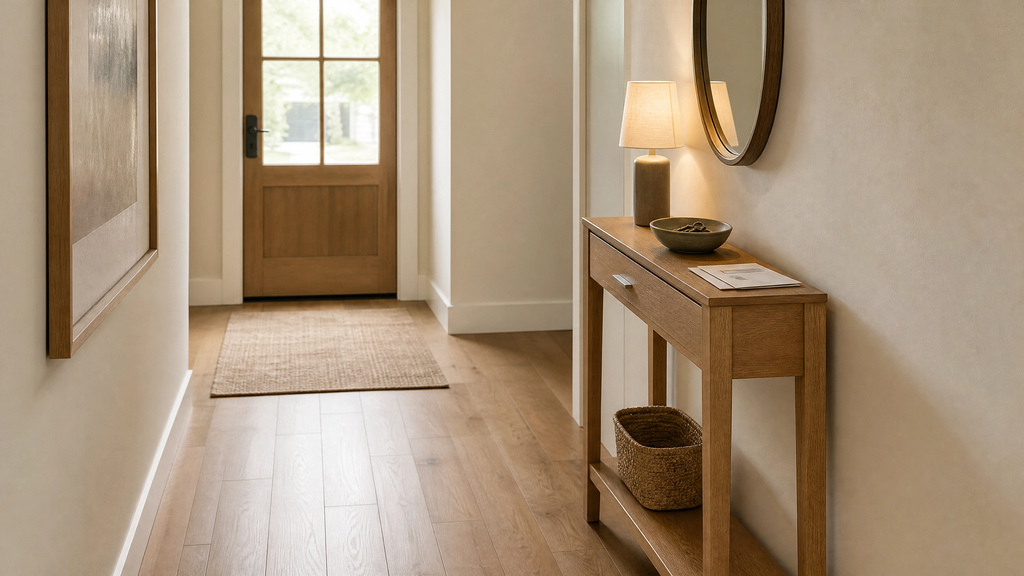
Choose a design with a lower shelf or drawer if you need additional storage. Avoid choosing a table simply because it looks attractive; its size should match the available wall and walking space.
2. Use a Large Mirror to Open Up the Space
A large mirror can make a small entryway feel brighter and more open. Place it above a console table, bench, or directly on an open wall where it can reflect light or another attractive part of the room.
A full-height mirror can be especially useful in a narrow entrance because it adds visual depth without using much floor space. It also gives you a convenient place to check your appearance before leaving home.
3. Install Wall-Mounted Hooks
Wall hooks are one of the easiest ways to add entryway storage without using valuable floor space. Use them for coats, hats, bags, umbrellas, or dog leashes.
Install hooks at a comfortable height and leave enough space between them so items do not overlap excessively. If several people use the entryway, individual hooks can give everyone a simple place for their everyday belongings.
4. Choose a Narrow Entryway Bench
A narrow bench can provide both seating and storage in a small entryway. Choose a compact bench that does not block the walking path and consider a model with a shelf underneath.
The space below the bench can hold shoes or baskets. If your entryway is extremely narrow, a wall-mounted or very shallow seat may work better than a traditional bench.
5. Make Use of Vertical Wall Space
When floor space is limited, look upward for storage and decoration. Tall wall space can hold hooks, shelves, artwork, cabinets, or a combination of these elements.
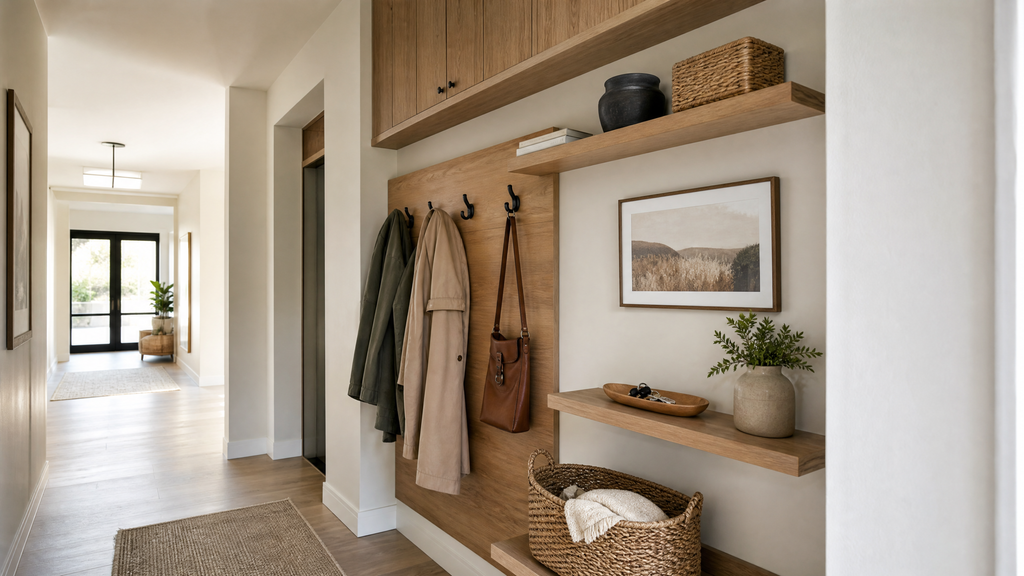
Vertical storage is particularly helpful in apartments and narrow hallways because it increases storage capacity without making the floor feel crowded. Keep frequently used items within easy reach and place less-used items higher up.
6. Add Floating Shelves
Floating shelves provide useful storage while keeping the floor completely clear. A small shelf can hold keys, sunglasses, a small plant, or a few carefully chosen decorative pieces.
Do not fill every inch of the shelf. Leaving some open space helps a small entryway look cleaner and less cluttered.
7. Create a Small Shoe Storage Area
A dedicated shoe storage spot can prevent one of the most common causes of entryway clutter. Instead of allowing shoes to collect beside the door, use a slim shoe cabinet, small rack, bench with shoe storage, or baskets.
Choose the storage method based on how many shoes your household actually uses near the entrance. Keeping only everyday footwear in this area can prevent the space from becoming overloaded.
8. Use Baskets for Everyday Essentials
Baskets make small entryways easier to organize because they hide everyday clutter in one simple place. Use them for scarves, gloves, hats, pet accessories, or other items that tend to collect near the door.
Choose baskets that fit beneath a bench or console table if possible. This lets you add storage without introducing another large piece of furniture.
9. Choose Light Colors for a Spacious Feel
Light wall and furniture colors can help a small entryway feel brighter and more open. Soft white, cream, light gray, beige, and other muted shades can reflect more available light.
You do not have to make everything the same color. Add interest with natural wood, black hardware, a patterned rug, or a small piece of artwork while keeping the overall palette simple.
10. Add a Small Entryway Rug
A small rug can make an entryway feel finished while helping define the entrance. Choose a size that fits the available floor area without interfering with doors or creating a trip hazard.
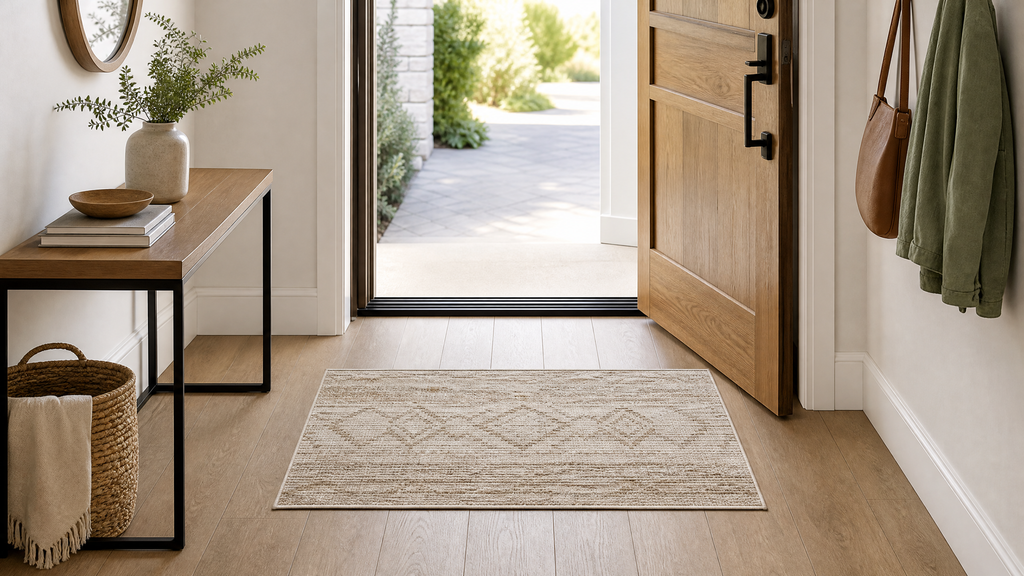
For a busy entrance, prioritize a rug that is easy to clean and suitable for the amount of foot traffic it will receive. A simple pattern can also help disguise small amounts of everyday dirt.
11. Try a Peg Rail for Flexible Storage
A peg rail gives you flexible wall storage that can change as your needs change. Use it for coats, bags, hats, keys, or small baskets.
Unlike fixed furniture, a peg rail takes up very little depth. It can be especially useful in a narrow hallway where adding a cabinet or console would reduce the walking area.
12. Use a Minimalist Entryway Design
A minimalist entryway works especially well when there is very little room to work with. Instead of filling the entrance with several decorative pieces, choose a few items that serve a clear purpose.
For example, a mirror, two or three hooks, a small shelf, and one attractive decorative item may be enough. The goal is not to remove personality but to reduce visual clutter.
13. Decorate an Empty Corner
An unused corner can become valuable storage or display space in a small entryway. A narrow plant stand, small stool, corner shelf, or compact basket can give an otherwise wasted area a purpose.
Before adding anything, make sure the corner does not interfere with door movement or the natural walking path.
14. Combine a Mirror With Hidden Storage
Combining a mirror with storage lets one wall perform two jobs. A mirrored cabinet can provide a place for keys and small essentials while keeping those items out of sight.
This approach is useful when you want a clean look but do not have enough room for both a separate mirror and storage cabinet.
15. Use a Wall-Mounted Entryway Cabinet
A shallow wall-mounted cabinet can add storage without occupying as much floor space as a freestanding unit. It can be useful for small household items that you want near the entrance but do not want visible.
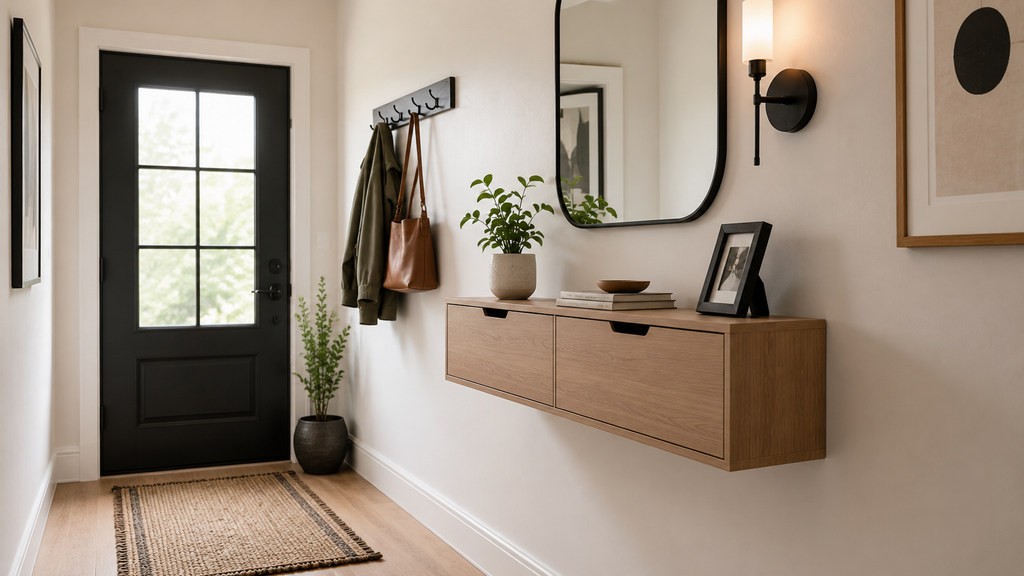
Check the cabinet’s depth and installation requirements before choosing one. A storage solution is only helpful if it still leaves the entrance comfortable to use.
16. Add Simple Artwork or Wall Decor
One well-chosen piece of wall art can give a small entryway personality without adding physical clutter. Choose artwork that complements the colors and style already used in your home.
A small gallery wall can work too, but avoid overcrowding a narrow wall. In a tiny space, one larger statement piece may look cleaner than many small decorations.
17. Create a Functional Drop Zone
A small drop zone gives everyday items a designated home as soon as you walk through the door. A wall hook, small tray, shelf, or basket can hold keys, bags, mail, and other items that would otherwise end up on nearby surfaces.
Keep the system simple enough that everyone in the household can use it consistently. A drop zone should make organization easier, not create another chore.
18. Use Multi-Purpose Furniture
Furniture that performs two or more jobs can be extremely valuable in a small entryway. A bench with shoe storage, a mirror cabinet, or a console with drawers can provide several functions while using limited space.
Measure before buying anything. A multi-purpose piece is not a smart solution if it is too large for the room.
19. Brighten a Dark or Narrow Entryway
Good lighting can dramatically improve a small entryway, especially when natural light is limited. Use an appropriate ceiling fixture, wall light, or compact lamp where practical.
Combine lighting with a mirror and lighter finishes to help distribute available light. Avoid creating dark corners that make the entryway feel smaller than it actually is.
20. Keep the Floor Clear
Keeping the floor open is one of the simplest ways to make a small entryway feel more spacious. Move as much storage as possible onto the walls and choose furniture with a shallow footprint.
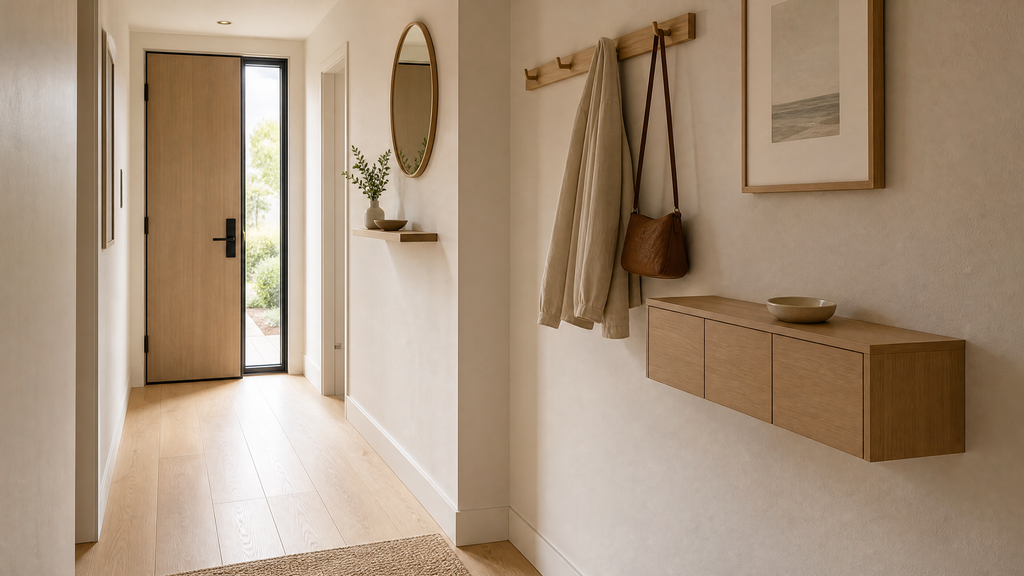
A clear walking path also makes the entrance safer and easier to use. If an item is rarely used, consider storing it somewhere else rather than allowing it to occupy valuable entryway space.
21. Use One Statement Feature
A single statement feature can make a small entryway memorable without overwhelming it. This could be a distinctive mirror, attractive light fixture, textured wall, colorful rug, or piece of artwork.
Choose one main focal point and let the rest of the entryway support it. This creates a more intentional appearance than competing decorations throughout a small area.
Small Entryway Storage Ideas for Tight Spaces
The smartest small entryway storage keeps everyday items accessible while using as little floor space as possible. Start by deciding what actually needs to stay near the door, then choose storage around those items.
Wall-mounted hooks are useful for coats and bags, while floating shelves can handle smaller belongings. Slim shoe cabinets can keep footwear contained, and baskets can collect items that do not have another obvious home.
If you have a bench, use the space underneath it. If you have a console table, look for one with drawers or a lower shelf. These small adjustments can increase storage without requiring a larger entryway.
For the best results, avoid storing everything in the entrance. Seasonal coats, extra shoes, luggage, and rarely used accessories can usually be moved to another storage area.
Small Entryway Ideas for Different Home Types
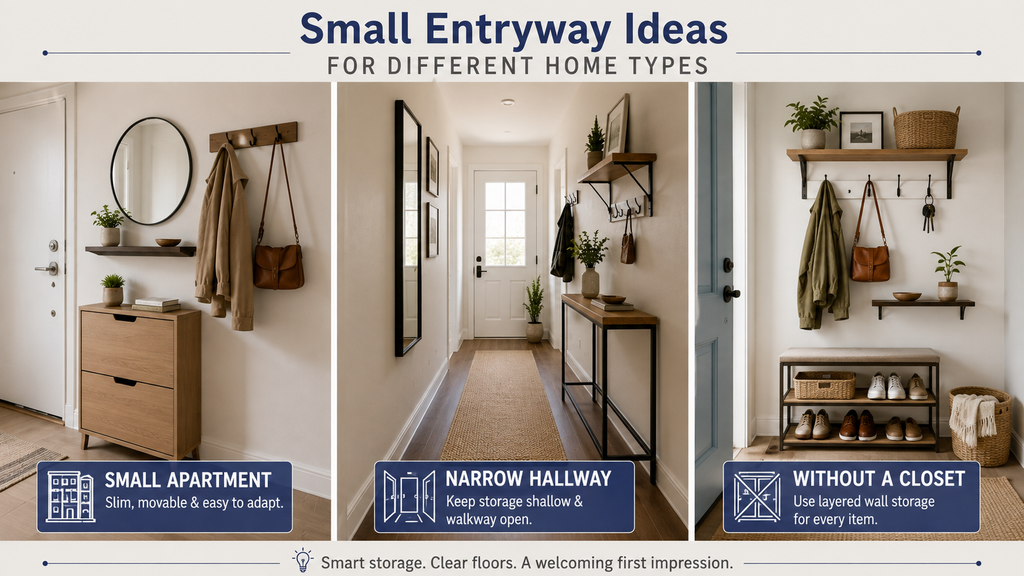
Small Apartment Entryway Ideas
Apartments often benefit from furniture that is slim, movable, and easy to adapt. A few wall hooks, a mirror, a floating shelf, and a narrow shoe cabinet may provide enough function without making the entrance feel crowded.
If you rent, choose solutions that follow your lease requirements. Removable or freestanding options can be useful when permanent wall changes are not allowed.
Narrow Hallway Entryway Ideas
A narrow hallway needs storage that stays close to the wall and leaves the walking path open. Consider shallow shelves, wall hooks, a slim console, or a narrow bench instead of deep furniture.
Mirrors can add visual depth, while lighter colors and good lighting can make the hallway feel more comfortable.
Small Entryway Ideas Without a Closet
A small entryway without a closet can still stay organized with layered wall storage. Combine hooks for coats and bags, a small shelf for keys, and a compact shoe-storage solution near the floor.
You can also use a basket for accessories and seasonal items. The key is to give each category of belongings a specific place.
How to Make a Small Entryway Look Bigger
The easiest way to make a small entryway look bigger is to reduce visual and physical clutter. Keep the walking area open, choose furniture with a small footprint, and avoid filling every wall and surface.
A mirror can create the impression of additional depth, while light colors can make the space feel brighter. Good lighting is equally important, particularly in an entrance with little natural light.
Furniture scale matters too. A large cabinet may provide storage but can make a tiny entrance feel even smaller. Measure the available area before buying furniture, including door swings and the space needed for comfortable movement.
Finally, limit the number of decorative items. A small entryway usually looks better when every item has a reason to be there.
Common Small Entryway Decorating Mistakes to Avoid
The biggest small entryway mistake is trying to fit too much into too little space. Even attractive furniture can become a problem when it blocks the walking path or makes the entrance difficult to use.
Choosing Furniture That Is Too Large
Large consoles, deep benches, and oversized cabinets can quickly overwhelm a small entrance. Measure the available space first and pay attention to furniture depth.
Creating Too Much Visual Clutter
Too many baskets, decorations, pictures, and accessories can make the entryway feel messy. Choose a few useful and attractive pieces instead.
Ignoring Storage Needs
A beautiful entryway will not stay beautiful if coats, shoes, and bags have nowhere to go. Plan storage before adding decorative elements.
Blocking Doors or Walkways
Always check door movement and walking clearance before installing furniture or storage. The entryway should remain easy to move through.
Using Poor Lighting
A dark entrance can feel smaller and less welcoming. Improve the available lighting before adding more decoration.
How to Choose the Right Furniture for a Small Entryway
The right furniture should fit your entryway measurements, storage needs, and daily routine. Before buying anything, measure the available width and depth and consider how much clear walking space you need.
Prioritize slim, functional furniture over pieces that are simply decorative. A console with drawers can be more useful than a larger table, while a bench with shoe storage can replace separate seating and shoe storage.
Think about your household too. If several people use the entrance every day, hooks and storage should be easy to access. If the entryway is rarely used, you may need less furniture and can focus more on decoration.
You can also explore practical home improvement ideas elsewhere on Daily Idea Book. For example, if you are updating several areas of your home, our guide to bathroom remodel ideas covers ways to improve style and function in another important part of the house.
For homeowners working on larger projects, our guides comparing LVP vs. laminate flooring and Sheetrock vs. drywall can also help when choosing materials for different home improvement projects.
Final Thoughts on Small Entryway Ideas
A small entryway does not need to be large to be useful, organized, and welcoming. The best approach is to make every piece work for the space instead of trying to fit too many things into it.
Start with the basics: create a clear walking path, add practical storage, use the walls, and choose furniture that matches the available space. Then add a mirror, rug, artwork, plants, or other decorative touches that reflect your style.
Most importantly, design the entryway around how you actually use it. A simple system for shoes, coats, keys, and bags will usually make a bigger difference than adding more decoration.
If you are organizing other areas of your home, you may also find our guides on organizing bathroom cabinets and organizing desk drawers useful for creating practical storage systems throughout the house.
What to Measure Before Decorating a Small Entryway
Taking a few measurements before buying furniture can prevent many small-entryway problems. Measure the available wall width, usable floor depth, doorway clearance, door swing, and walking path before choosing a console, bench, cabinet, or shoe organizer.
Also check the manufacturer’s stated dimensions and installation requirements for wall-mounted products. A piece that looks compact online may take up more space than expected once doors, drawers, or people moving through the entrance are considered.
FAQs
How do you make a small entryway look bigger?
Use a mirror, light colors, good lighting, and furniture with a small footprint. Keeping the floor and walking path clear can also make the space feel noticeably more open.
What should you put in a small entryway?
Focus on essentials such as hooks, a small shoe-storage solution, a mirror, and a compact surface or shelf. Add decoration only after the basic storage needs are covered.
How do you decorate a narrow entryway?
Use the walls instead of filling the floor with furniture. Wall hooks, floating shelves, mirrors, artwork, and shallow storage can add function and style while preserving the walking path.
What furniture works best in a small entryway?
Slim consoles, narrow benches, shallow shoe cabinets, and multi-purpose furniture are usually good choices. Always measure the space before purchasing furniture.
How do you organize shoes in a small entryway?
Choose a shoe-storage solution that matches the number of shoes used every day. A slim shoe cabinet, narrow rack, storage bench, or baskets can help keep footwear contained without taking over the entrance.
How We Created This Guide
We created this guide by focusing on practical solutions for small, narrow, and low-storage entryways. The ideas consider space, storage, furniture size, walking clearance, lighting, and everyday use. Always measure your own space and check product requirements before making changes.
Editorial & Safety Note
Entryway layouts and installation conditions vary by home. Keep walkways and exits clear, secure wall-mounted items properly, and follow manufacturer instructions. For electrical work, structural changes, or installations beyond your experience, consult a qualified professional.
Sources & References
- U.S. Consumer Product Safety Commission – Home Safety — General consumer and home safety guidance.
- National Fire Protection Association — Residential fire and home safety information.
- Manufacturer installation instructions — Always follow the instructions supplied with furniture, mirrors, shelves, hooks, and other wall-mounted products.