
This guide was reviewed for practical baseboard heater cleaning, general HVAC maintenance, and basic safety considerations. Because heater designs vary, always follow the manufacturer’s instructions for your specific model.
Baseboard heaters can quietly collect dust, hair, dirt, and other debris over time, especially when they are used throughout the colder months. That buildup can make your heaters look dirty and may restrict normal airflow.
The good news is that cleaning a baseboard heater usually does not require special equipment or complicated tools. With a vacuum, soft brush, microfiber cloth, and a little care, you can remove most everyday dust and grime yourself.
Regular cleaning is also a simple part of home maintenance. If you are already working through other household maintenance tasks, you may also find our guides on how to unclog a toilet without a plunger and what to do when a garbage disposal is not working useful.
Always turn off the heater and allow it to cool completely before cleaning. Never spray water or cleaning products directly into an electric heater.
What You’ll Need to Clean Baseboard Heaters
A few basic household tools are usually enough to clean a baseboard heater properly. You do not need expensive equipment for normal dust and dirt buildup.
You may want to gather:
- Vacuum cleaner with a brush or crevice attachment
- Soft-bristled cleaning brush
- Microfiber cloths
- Compressed air, if available
- Small bucket of warm water
- Mild dish soap
- Soft sponge
- Flashlight for checking hard-to-see areas
A vacuum is especially useful because it can remove loose dust without simply moving it around the room. A soft brush can then loosen debris that has collected around the fins and narrow spaces.
For stubborn dirt on removable exterior parts, a slightly damp microfiber cloth can help. However, avoid soaking the heater or allowing water to enter electrical components.
How to Clean Baseboard Heaters: Step by Step
The safest way to clean a baseboard heater is to work from the outside in, starting with loose dust and finishing with the heater cover and surrounding area.
1. Turn Off the Heater and Let It Cool
Safety should always come before cleaning, so turn the heater off and wait until it is completely cool.
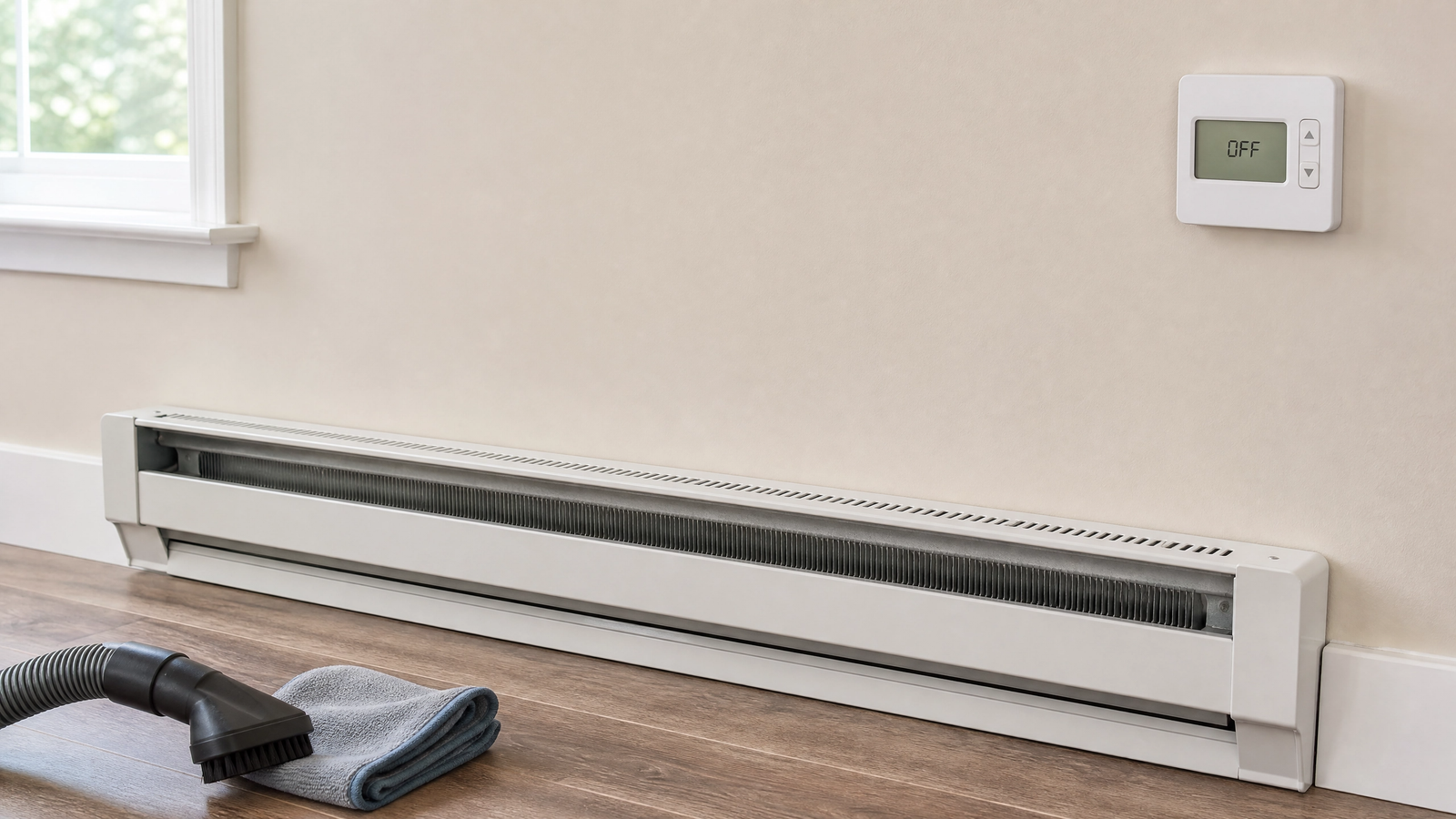
For an electric baseboard heater, switch it off using the thermostat or the appropriate control. If you are cleaning a heater that has electrical components you may need to access, follow the manufacturer’s instructions and disconnect power when required.
Do not begin cleaning while the heater is still warm. A hot surface can make cleaning uncomfortable, and using a damp cloth around electrical components can create unnecessary risk.
If you are unsure how your particular heater should be turned off or accessed, check the manufacturer’s instructions before removing any parts.
2. Remove Loose Dust and Debris
Start with dry dust removal because loose debris is much easier to vacuum before it becomes stuck to the heater.
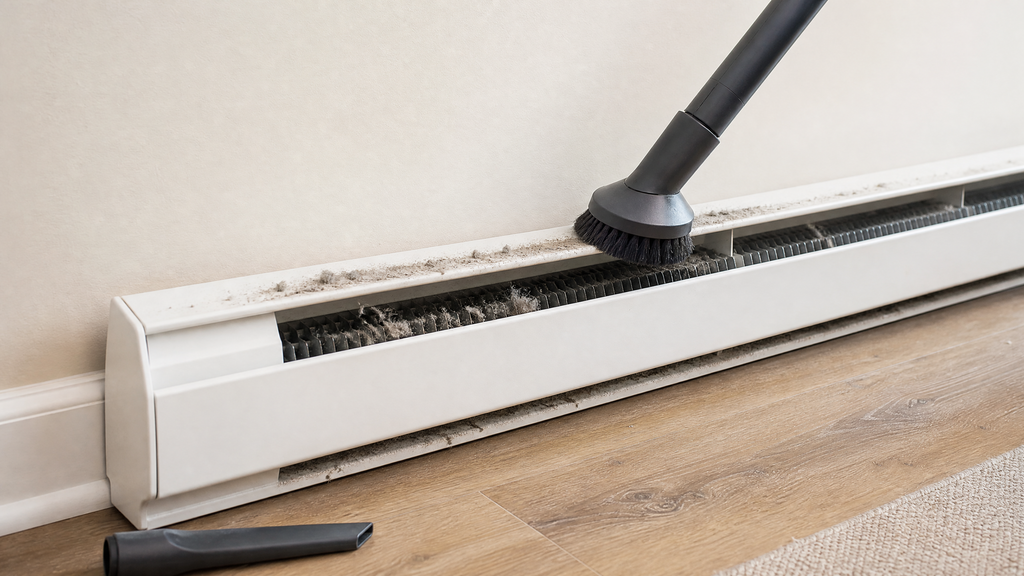
Place the vacuum brush attachment over the accessible parts of the heater and slowly remove dust from the top, front, and openings.
Pay particular attention to:
- Dust sitting along the top edge
- Hair and pet fur
- Dirt around the bottom
- Debris between openings
- Dust underneath the heater
- Lint caught around the fins
Use the vacuum gently rather than pushing the attachment hard against delicate parts.
A crevice attachment can be helpful for narrow areas, but avoid forcing it between components where it could bend or damage them.
If you have pets, you may notice a surprising amount of hair inside and around the heater. Removing this buildup regularly can make routine cleaning much easier.
3. Clean the Baseboard Heater Fins
The fins are one of the most important areas to clean because dust can collect between them and restrict normal airflow.
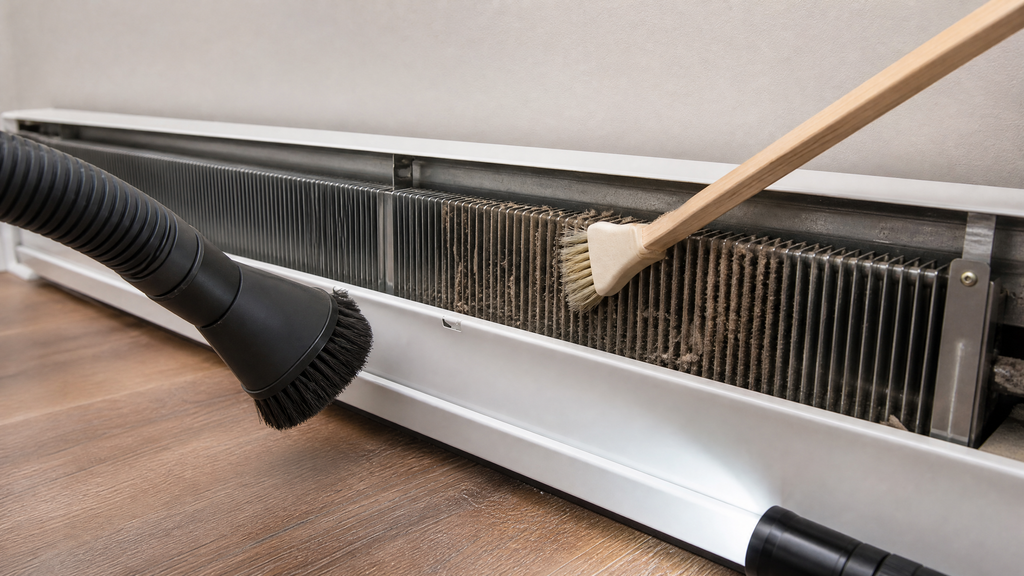
Baseboard heaters commonly use metal fins to transfer heat into the room. These fins can be delicate, so use a soft brush or vacuum brush attachment rather than a stiff tool.
Gently work from one end of the heater to the other. If dust is packed between the fins, loosen it carefully with a soft brush while holding the vacuum nearby to collect the debris.
Do not bend, crush, or scrape the fins.
Bent fins can affect the way air moves through the heater and may reduce its ability to distribute heat normally. If you notice several badly damaged fins, cleaning alone may not solve the problem.
For particularly dusty heaters, a flashlight can help you see areas that are easy to miss.
4. Clean the Heater Cover and Exterior
Once the loose dust is gone, clean the exterior cover to remove the finer layer of dirt that the vacuum may leave behind.
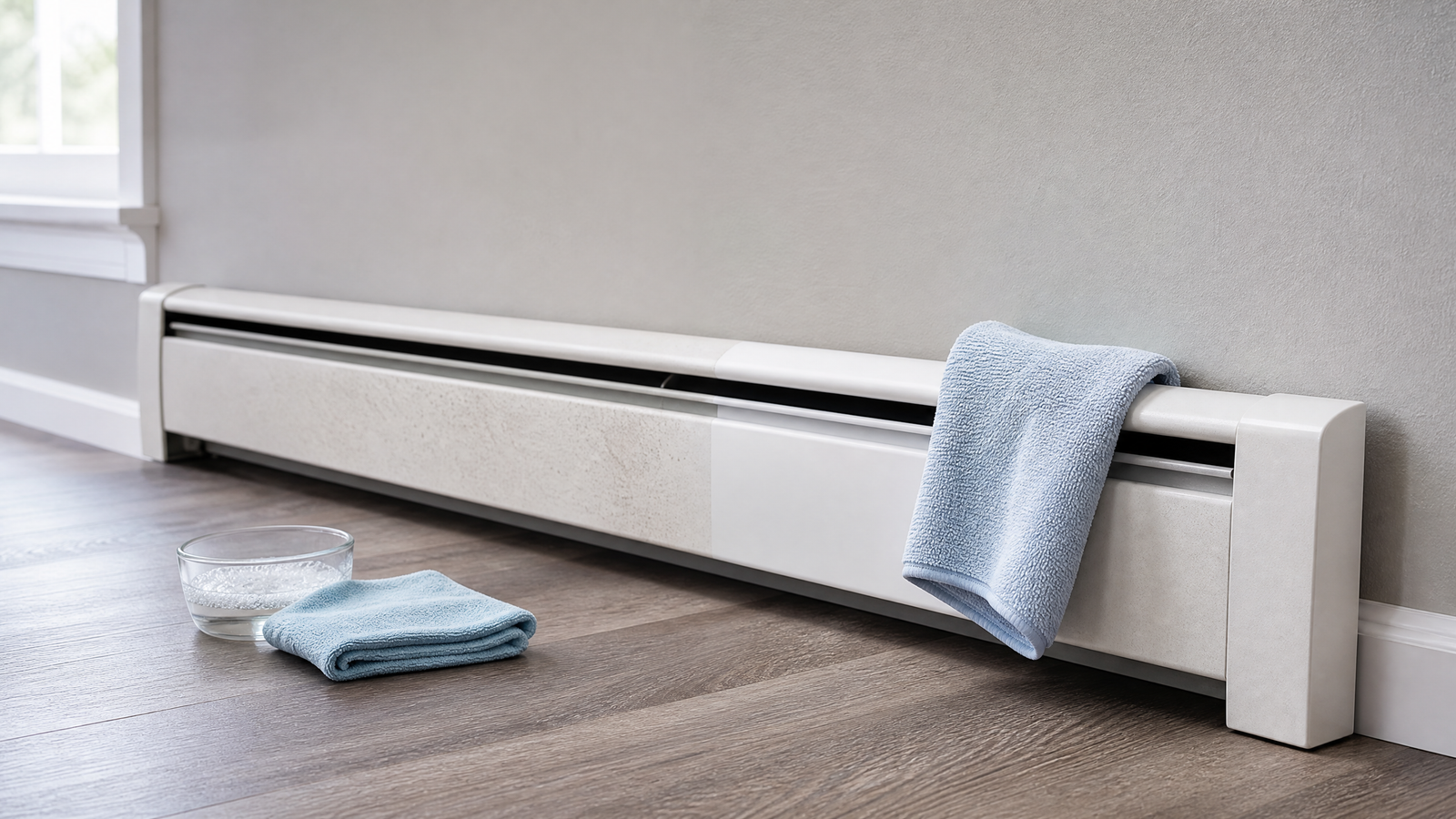
Wipe the outside of the heater with a dry microfiber cloth first. This removes remaining loose particles without spreading moisture across the surface.
For washable exterior surfaces, you can use a slightly damp cloth with a small amount of mild dish soap. Wipe gently, then use a clean damp cloth to remove soap residue.
Finally, dry the surface thoroughly.
Never pour water over a baseboard heater or spray cleaner directly into it. This is especially important for electric heaters because moisture can reach electrical components.
If the cover can be removed, only remove it if the manufacturer’s instructions allow it and you are comfortable doing so safely.
5. Remove Stubborn Dirt and Grime
Stubborn grime usually needs gentle cleaning rather than aggressive scrubbing.
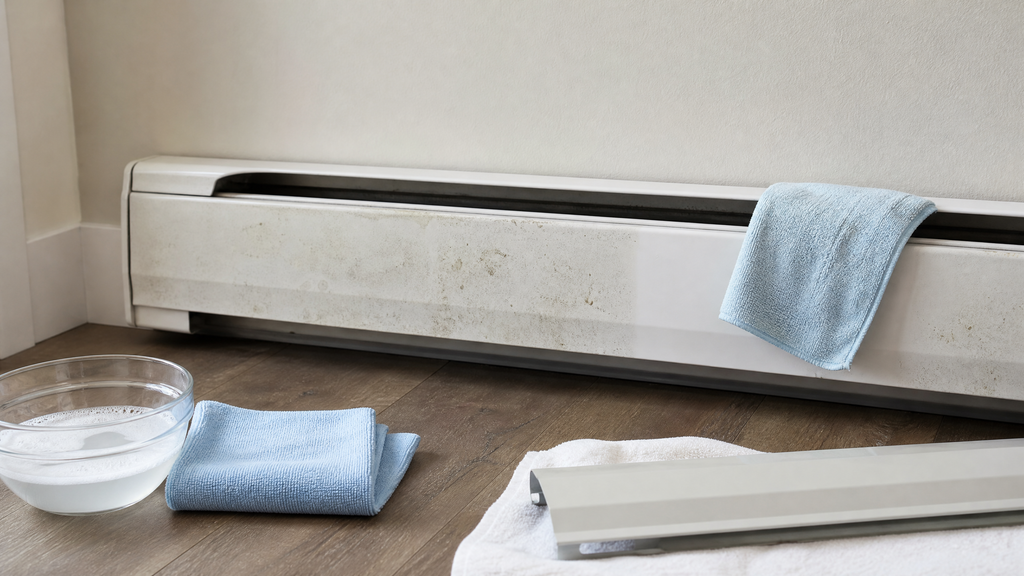
If the exterior has greasy dust or stuck-on dirt, use a microfiber cloth or soft sponge lightly dampened with warm water and mild soap.
Work in small areas and avoid excessive moisture.
For removable metal covers, cleaning them separately may make the job easier. However, make sure the part is fully dry before putting it back.
Avoid abrasive pads, harsh chemicals, and metal brushes. These can scratch painted surfaces or damage protective finishes.
If a stain will not come off with mild cleaning, it may be better to leave it alone than to damage the surface while trying to remove it.
6. Check for Blocked or Bent Fins
Cleaning is also a good opportunity to check whether anything is blocking the heater’s normal airflow.
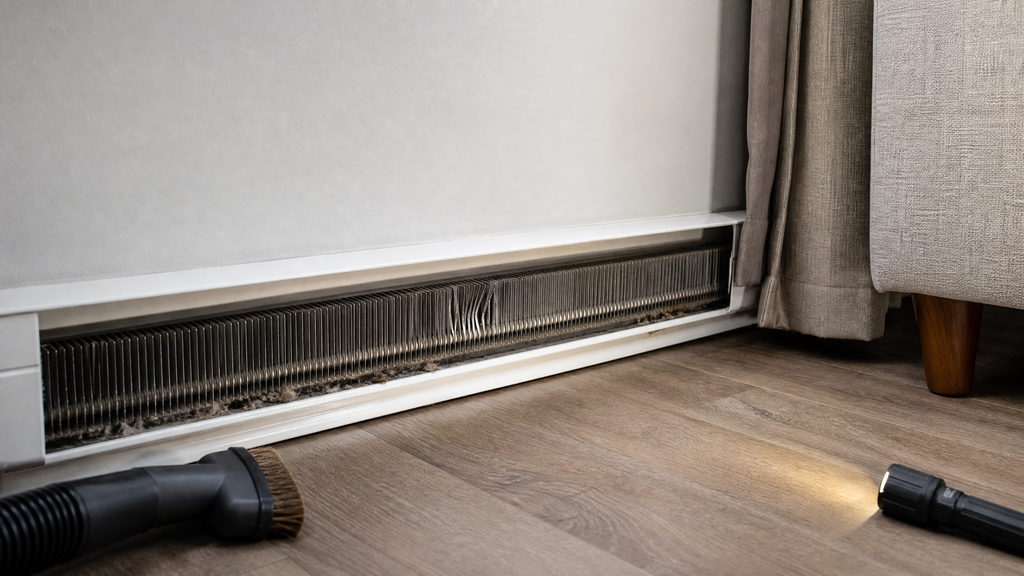
Look along the entire length of the heater for:
- Bent metal fins
- Heavy dust buildup
- Pet hair
- Toys or small objects
- Curtains covering the heater
- Furniture placed too close
- Other items restricting airflow
Baseboard heaters need enough open space around them to release heat properly. Do not use the cleaning process as a reason to rearrange components or straighten fins aggressively.
If the fins are only slightly dusty, careful vacuuming and brushing may be enough. If they are badly bent or damaged, consider getting professional advice before attempting repairs.
7. Put Everything Back and Test the Heater
A clean heater should be completely dry and correctly assembled before you turn it back on.
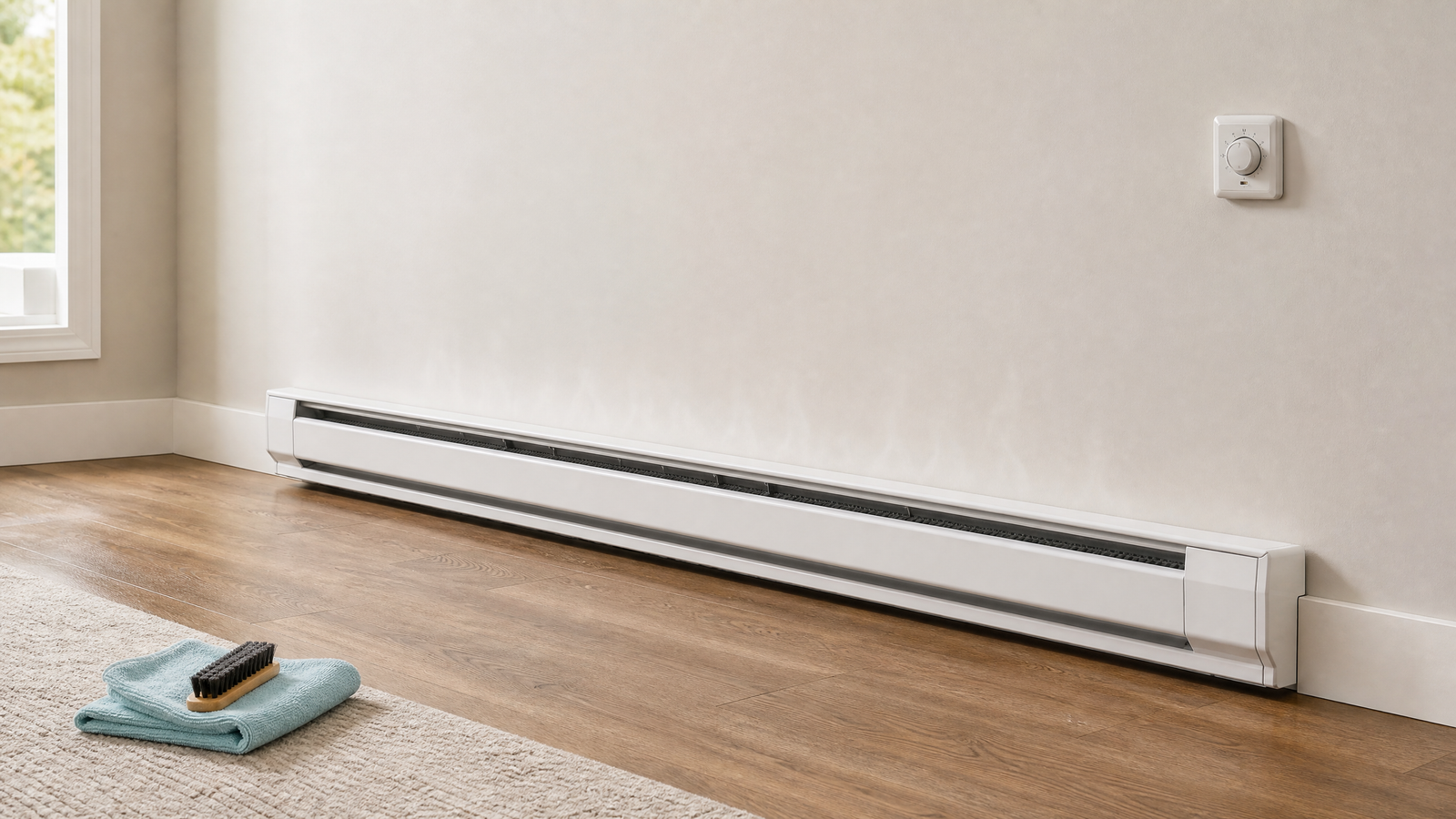
Check that any cover or removable part is securely back in place. Make sure no cleaning cloth, brush, paper, or other object has been left inside or near the heater.
Once everything is dry and properly positioned, turn the heater back on.
During the first few minutes, pay attention to unusual smells, sounds, or other changes. A small amount of dust-related odor can sometimes occur after a heater has been unused for a while, but a strong burning smell, smoke, sparking, or unusual noise should not be ignored.
If something seems wrong, turn the heater off and investigate the issue according to the manufacturer’s instructions or contact a qualified professional.
How to Clean Baseboard Heaters Without Removing the Cover
You can handle routine baseboard heater cleaning without removing the entire cover in many cases.
Start by vacuuming the accessible openings and exterior surfaces. Then use a soft brush to loosen dust around the fins while keeping the vacuum close to the area.
A microfiber cloth can clean the outer cover, while a crevice attachment can reach narrow spaces.
For deeper cleaning, compressed air can help loosen dust in difficult areas, but use it carefully. Blowing dust around the room can simply move the problem somewhere else. Whenever possible, position the vacuum to collect loosened debris.
If you cannot safely reach a dirty internal area without removing components, do not force the cover or insert tools into the heater. Check the manufacturer’s instructions or consider professional cleaning.
How Often Should You Clean Baseboard Heaters?
Most baseboard heaters benefit from a thorough cleaning at least once a year, with more frequent cleaning in dusty or high-traffic homes.
A good time to clean them is before the heating season begins. This gives you an opportunity to remove accumulated dust before the heaters are used regularly.
You may need to clean them more often if you have:
- Pets that shed
- Children
- Allergies or sensitivity to household dust
- Construction or remodeling work nearby
- A particularly dusty home
- Heavy heater use
A quick vacuum every few weeks can prevent large amounts of dust from accumulating.
If you are working on several home-maintenance projects at once, keeping a simple cleaning schedule can make the work easier. For example, our guide to organizing bathroom cabinets covers another simple way to keep regular household maintenance under control.
Common Baseboard Heater Cleaning Mistakes to Avoid
Most baseboard heater cleaning problems happen when people use too much water, too much force, or the wrong tools.
Cleaning a Hot Heater
Never start cleaning before the heater has cooled completely. Heat can make cleaning uncomfortable and increases the risk of accidental burns.
Spraying Cleaner Directly on the Heater
Directly spraying liquid into a baseboard heater is a mistake, especially with electric models. Apply an appropriate cleaner to a cloth instead of spraying the heater itself.
Bending the Fins
Avoid pushing brushes, vacuum attachments, or other tools forcefully between the fins. They can bend more easily than they may appear.
Using Harsh Chemicals
Strong cleaners are rarely necessary for ordinary baseboard heater dust. Mild soap and water are generally more appropriate for suitable exterior surfaces.
Blocking the Heater
Furniture, curtains, and other objects should not unnecessarily block the heater. Keep the area around the heater clear according to the manufacturer’s clearance recommendations.
Forgetting the Floor and Wall Nearby
Dust does not only collect inside the heater. Clean the floor, wall area, and nearby surfaces after vacuuming so that loose dust does not quickly return to the heater.
This is especially helpful when you’re doing broader home improvements. For example, if you’re updating a room, our guide to bathroom remodel ideas can help with planning another home project.
Electric vs. Hydronic Baseboard Heaters: Does Cleaning Differ?
The basic dust-removal process is similar, but electric and hydronic baseboard heaters have different internal systems and safety considerations.
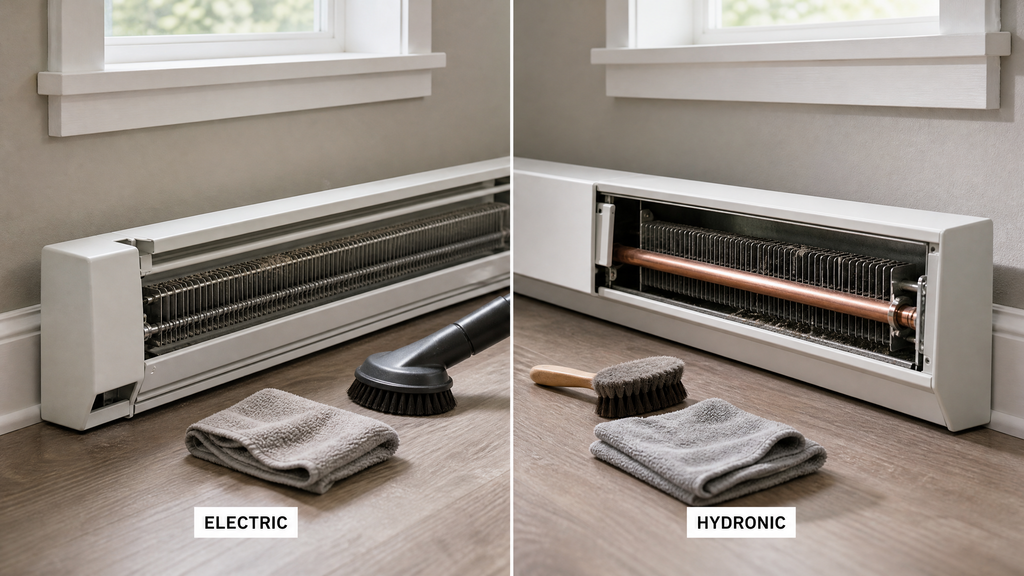
Electric Baseboard Heaters
Electric baseboard heaters use electrical heating elements, so keeping moisture away from electrical components is especially important.
Turn the heater off and let it cool before cleaning. Vacuum dust carefully and use a dry or only slightly damp cloth for appropriate exterior surfaces.
Do not pour water into the heater or use a wet cloth where it could contact electrical parts.
If you notice damaged wiring, burning odors, sparking, or other electrical problems, stop cleaning and seek qualified assistance.
Hydronic Baseboard Heaters
Hydronic baseboard heaters use heated water or another fluid moving through a system to produce heat.
The exterior fins and covers can still collect dust, so routine vacuuming and brushing are useful.
However, do not assume that every hydronic system can be opened or serviced in the same way. If you notice leaking fluid, corrosion, damaged piping, or unusual heating problems, cleaning is not a substitute for system maintenance.
The same basic rule applies to both types: clean the accessible surfaces gently and avoid forcing internal components.
When Cleaning Isn’t Enough
If a baseboard heater still smells, makes unusual noises, or heats poorly after cleaning, the problem may be more than dust.
Cleaning can remove ordinary debris, but it cannot repair damaged electrical parts, faulty controls, leaking hydronic components, or severely damaged fins.
Pay attention to warning signs such as:
- Burning or electrical smells
- Smoke
- Sparking
- Repeated unusual noises
- Water or fluid leaks
- Visible electrical damage
- A heater that stops working
- Severe corrosion
- Persistent poor heating
If you notice these problems, turn the heater off when appropriate and follow the manufacturer’s safety guidance. Electrical repairs and hydronic system repairs may require a qualified professional.
Regular cleaning should be part of maintenance, not a replacement for proper repair.
If you are also dealing with cracks or other home-maintenance concerns, you may want to read our guides on types of wall cracks and drywall nail pops for additional guidance on common household problems.
Baseboard Heater Cleaning Checklist
Use this quick checklist whenever you want to give your baseboard heaters a routine clean.
Final Thoughts
Cleaning your baseboard heaters is a simple maintenance task that can help keep them cleaner and allow normal airflow around the heating system.
The most important steps are straightforward: turn the heater off, let it cool, remove dust gently, clean suitable exterior surfaces, and avoid moisture around electrical components.
You do not need to scrub aggressively to get good results. A vacuum, soft brush, and microfiber cloth are usually enough for routine maintenance.
Making heater cleaning part of your seasonal home-care routine can also help you notice problems early. If you see damaged fins, electrical issues, leaks, unusual smells, or persistent heating problems, stop at cleaning and have the underlying issue checked.
For more practical home-maintenance and improvement ideas, explore Daily Idea Book and the Home & Living section.
Frequently Asked Questions
Can You Vacuum Baseboard Heaters?
Yes, vacuuming is one of the easiest ways to remove everyday dust from a baseboard heater. Use a brush attachment and work gently around the fins and openings.
How Do You Clean Dust From Inside a Baseboard Heater?
A vacuum with a brush attachment is usually the best starting point for removing accessible internal dust. A soft brush can loosen dust around the fins while the vacuum collects it.
For areas that cannot be reached safely, do not force tools into the heater.
Can You Use Water to Clean a Baseboard Heater?
Use very little moisture and only on suitable exterior surfaces. Never pour water into a baseboard heater or allow liquid to reach electrical components.
For electric heaters, extra care is needed to keep moisture away from electrical parts.
How Often Should Baseboard Heaters Be Cleaned?
A thorough cleaning once a year is a useful starting point for many homes. Homes with pets, heavy dust, or frequent heater use may benefit from more frequent vacuuming.
Why Does My Baseboard Heater Get So Dusty?
Baseboard heaters naturally collect dust because air moves around them and carries small particles, hair, and lint. Homes with pets, carpets, construction activity, or high dust levels may see buildup faster.
Regular vacuuming can prevent heavy accumulation.
Editorial & Home Safety Note
Safety comes first when cleaning any baseboard heater. Turn the heater off and let it cool completely before cleaning. Avoid water or cleaning products inside the heater, and never force or bend the fins.
If you notice sparking, smoke, exposed wiring, leaks, or a strong burning smell, stop cleaning and contact a qualified professional.
How We Created This Guide
We created this guide to provide simple, practical steps for removing common dust, hair, lint, and dirt from baseboard heaters. We also included cleaning mistakes to avoid, differences between electric and hydronic heaters, and warning signs that may require professional attention.
Always check your heater manufacturer’s instructions before performing maintenance.
Sources & References
For additional safety and maintenance information, consult trusted primary sources and your heater manufacturer’s documentation.
- U.S. Consumer Product Safety Commission — Home heating and electrical safety information.
- U.S. Department of Energy — Energy efficiency and home heating information.
- Your baseboard heater manufacturer’s installation and maintenance manual — Follow model-specific cleaning and safety instructions.