
A backyard does not need to be huge or professionally designed to look inviting. The best backyard landscaping ideas are the ones that fit your space, budget, lifestyle, and the amount of maintenance you are willing to handle.
Whether you have a narrow backyard, a large open lawn, or an awkward space behind your home, you can make a noticeable difference with a few well-planned DIY projects. You can add planting beds, paths, seating areas, privacy features, mulch, gravel, or even replace part of the lawn with a no-grass landscape.
Before you buy plants or materials, look at how much sun your yard receives, where water collects after rain, what you already have, and how you actually use the space. EPA WaterSense also recommends considering site conditions, soil, climate, existing plants, intended use, and maintenance when planning a landscape.
If you are also working on other areas of your home, you may find our home and living ideas useful for connecting your backyard project with the rest of your outdoor and indoor spaces.
How to Plan Your Backyard Before You Start
A simple plan can prevent you from spending money on plants, materials, or features that do not work well in your yard.
Start by walking through the backyard at different times of the day. Notice which areas receive full sun, partial shade, or very little direct light. Also look for places where rainwater collects, areas that stay muddy, and spots where grass struggles to grow.
Then decide what you want the backyard to do.
Do you want a place for outdoor meals? A play area? A garden? A quiet seating space? More privacy? Less lawn to mow? Your answer should guide the design.
A Simple Backyard Planning Checklist
Do not start by choosing plants; start by understanding the space. Plants need to match the conditions where they will grow. Soil type, moisture, sunlight, wind, and local climate can all affect whether a plant succeeds.
If you are choosing perennial plants in the United States, the USDA Plant Hardiness Zone Map can be a useful starting point, but it should not be treated as the only factor. The USDA notes that soil moisture, soil type, light, wind, humidity, and other local conditions also affect plant survival.
DIY tip: Draw your backyard on paper before purchasing anything. You do not need a professional landscape plan for a small project. Even a rough sketch can help you see where a pathway, planting bed, seating area, or lawn should go.
12 DIY Backyard Landscaping Ideas
These backyard landscaping ideas are designed to work at different scales, so you can adapt the same basic concept to either a small yard or a much larger space.
1. Create a Simple Garden Bed Along the Fence
A narrow garden bed along a fence can add color and depth without taking away much usable yard space.
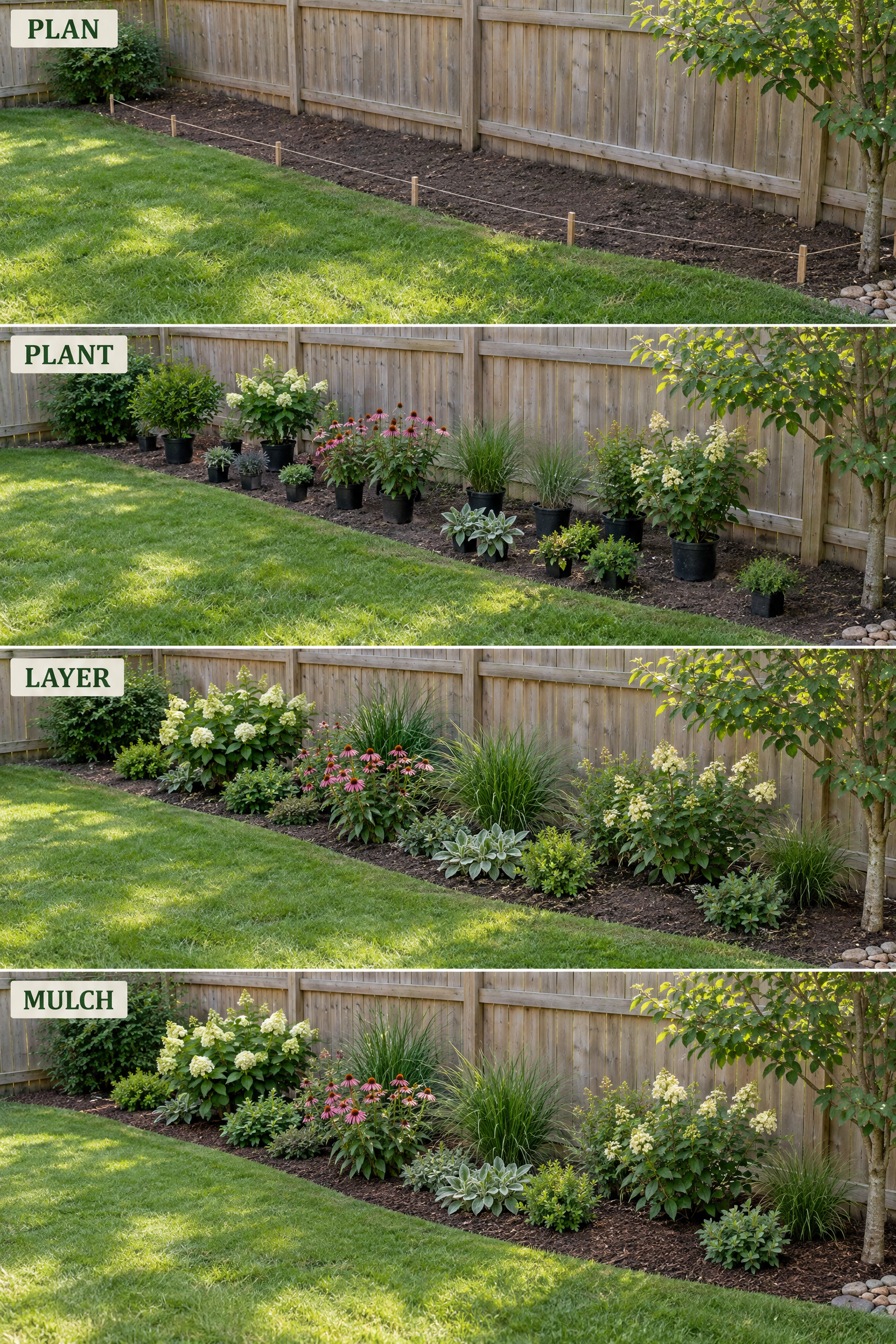
This is especially useful for small backyards where every foot matters. Instead of spreading plants throughout the yard, create one defined planting strip along the fence.
You can use shrubs, flowering plants, ornamental grasses, groundcovers, or a mixture of different plant heights. Place taller plants toward the back and shorter plants closer to the open yard.
For a large backyard, you can repeat the same planting idea along several fence sections to create a more connected design.
Use mulch around the plants to help reduce weeds and protect the soil. EPA WaterSense notes that mulch can help reduce evaporation, moderate soil temperature, and suppress weeds when used properly.
DIY approach:
- Mark the edge of the planting bed.
- Remove unwanted grass and weeds.
- Improve the soil if needed.
- Arrange plants while they are still in their containers.
- Leave enough room for mature plant size.
- Plant and water according to the plant’s needs.
- Finish the bed with an appropriate mulch.
2. Build a Small Patio or Seating Area
A simple seating area can turn an unused backyard corner into one of the most useful parts of the yard.
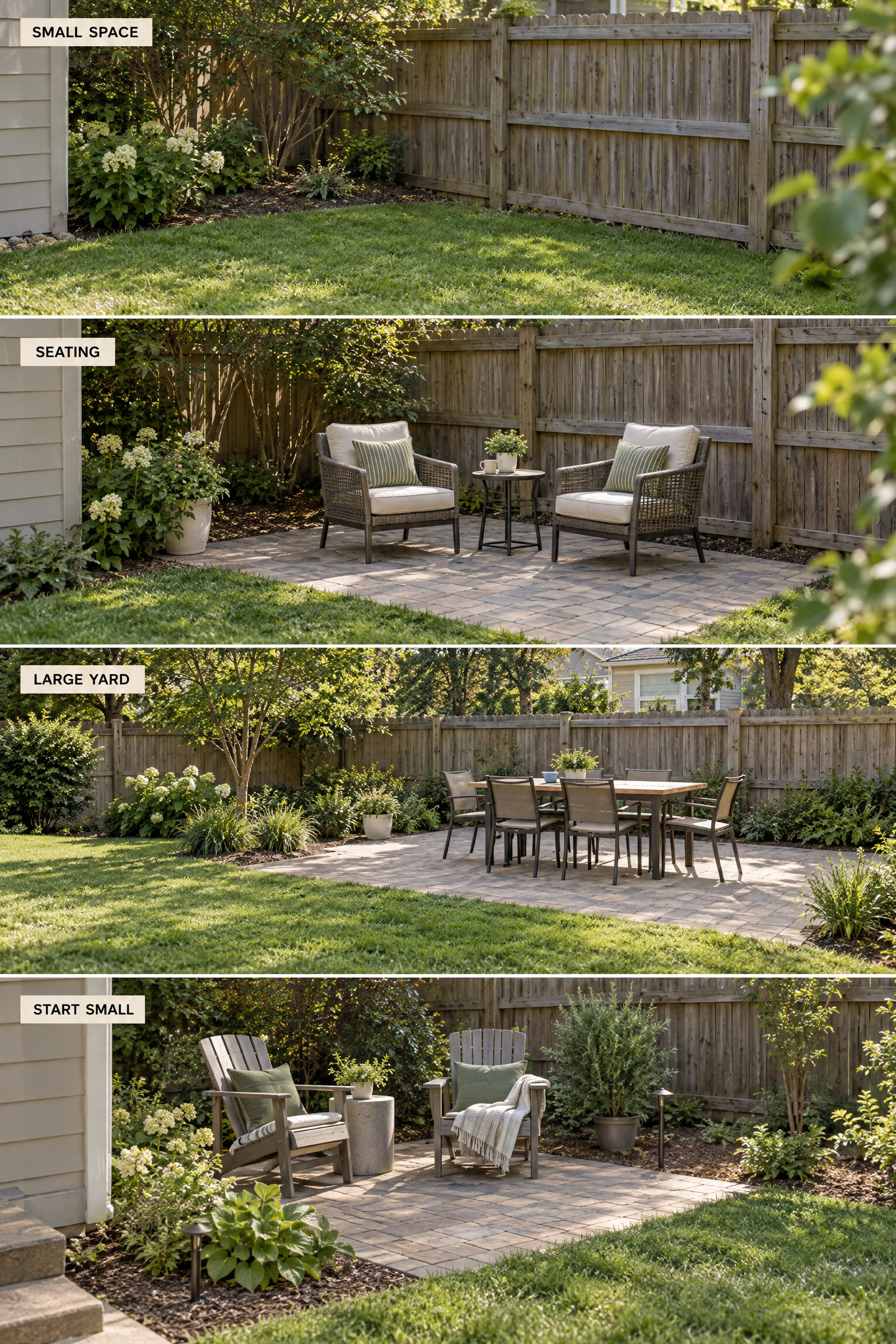
You do not need a huge patio to create an outdoor sitting area. A small paved space with two chairs and a compact table may be enough for morning coffee, reading, or casual conversations.
In a larger yard, the same concept can become a dining area, fire-pit zone, or outdoor lounge.
Before building, check local requirements for patios, fire features, drainage, property lines, and utility locations. Some projects may require permits or professional help depending on their size and location.
For a beginner-friendly project, consider starting with a small seating surface rather than attempting a complicated permanent structure.
3. Add a DIY Pathway Through the Yard
A pathway gives the backyard structure while making it easier to move between different areas.
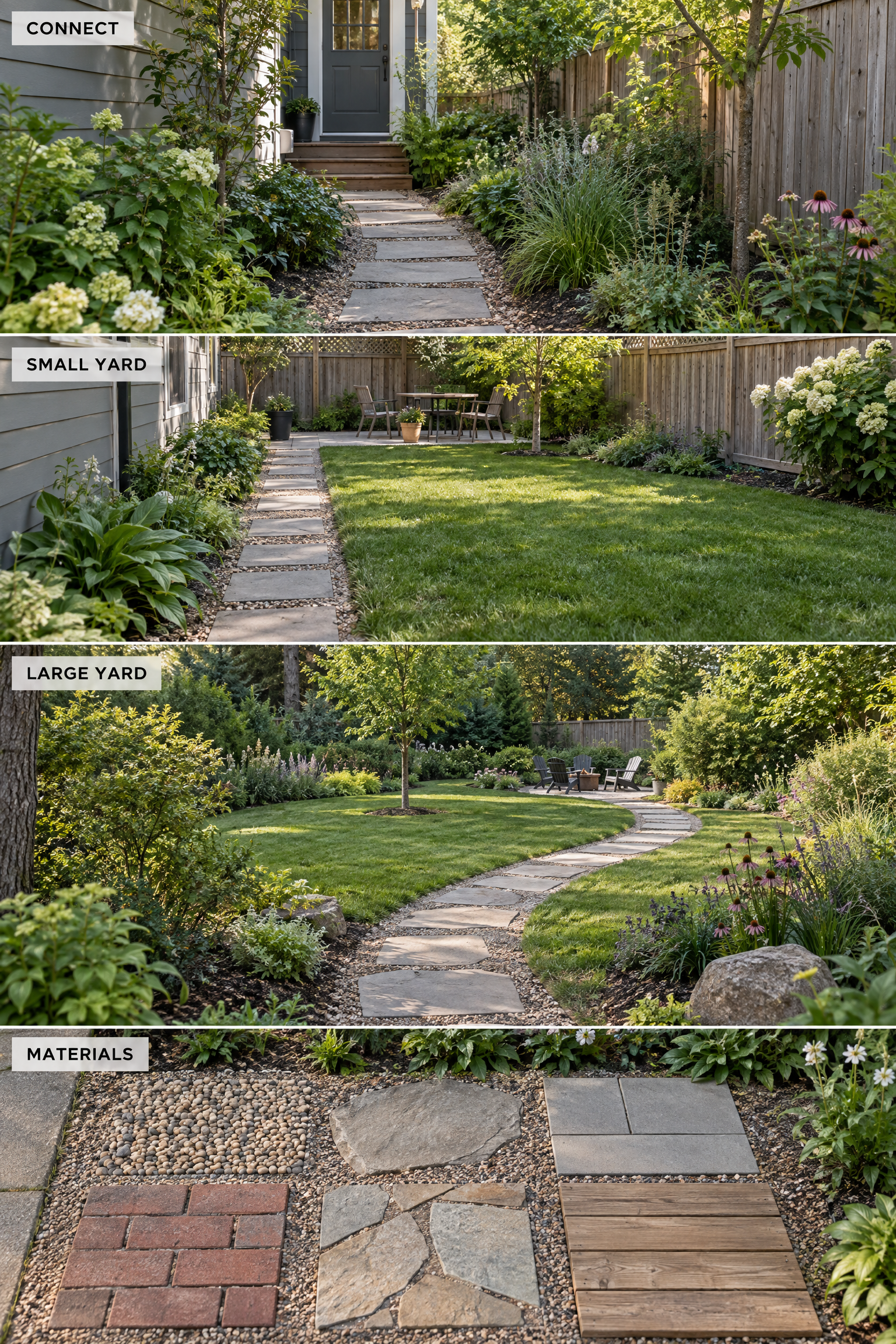
A path can connect the back door to a garden, shed, seating area, or side gate. It also helps prevent people from repeatedly walking across planting beds.
For a small yard, a narrow, simple path can visually divide the space without making it feel crowded. In a large backyard, a longer path can become the backbone of the entire landscape.
Possible materials include:
- Gravel
- Stepping stones
- Pavers
- Brick
- Natural stone
- Wood or other suitable outdoor materials
Choose a surface based on how the path will be used. A decorative stepping-stone path may work for occasional walking, while a frequently used route may benefit from a more stable surface.
4. Use Raised Garden Beds for Plants and Vegetables
Raised beds make it easier to organize plants while giving you a defined place for gardening.
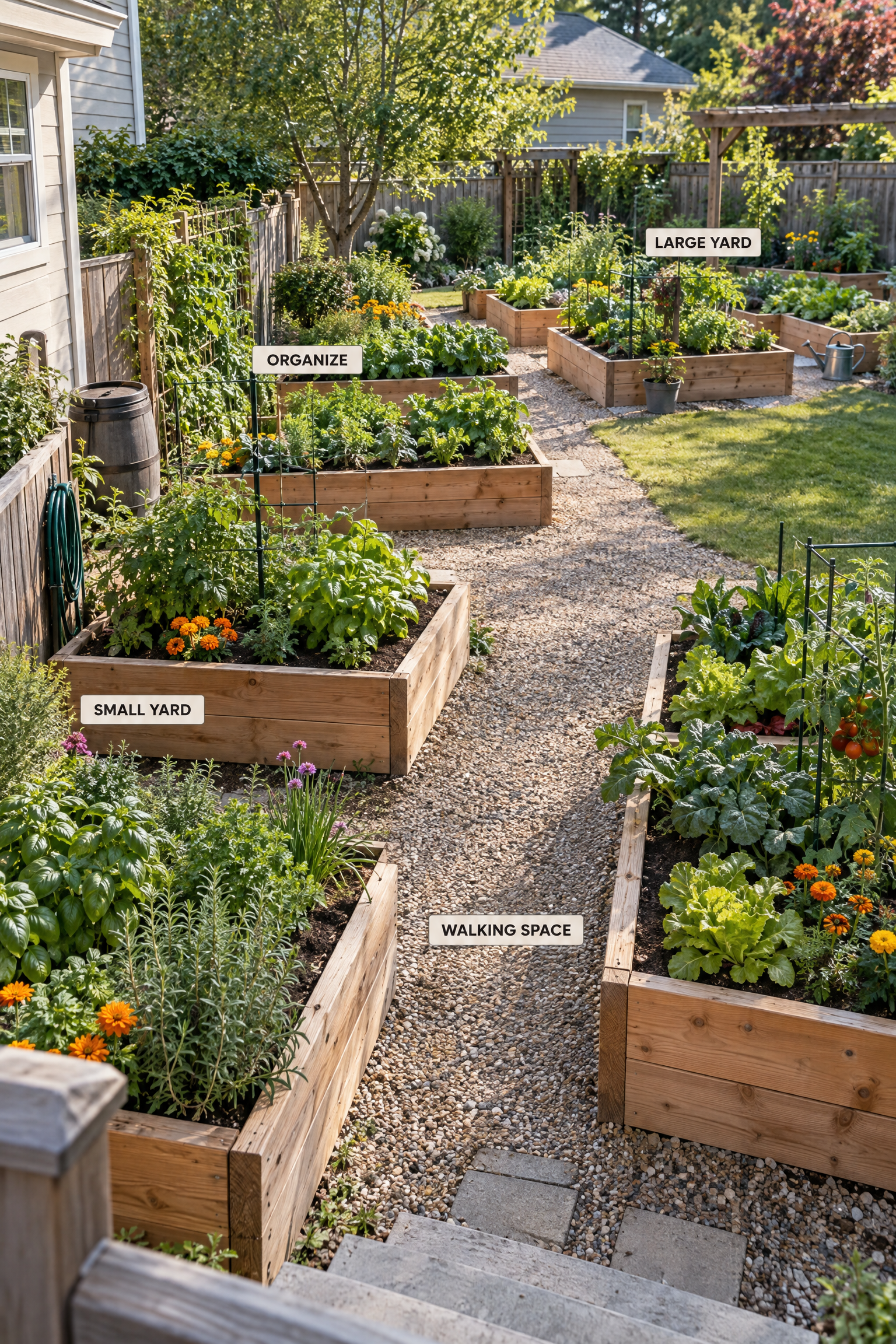
They work particularly well when the existing soil is difficult to work with or when you want to separate vegetables, herbs, flowers, or other plants from the rest of the yard.
Small yards can use one or two compact beds. Large yards can use several beds arranged in rows or grouped into a dedicated garden zone.
Keep enough walking space between beds so you can comfortably water, weed, harvest, and maintain them.
If you are growing food, choose materials suitable for garden use and follow local guidance for soil and planting.
5. Create a Low-Maintenance Rock Garden
A rock garden can reduce the amount of lawn and create a defined landscape area with relatively simple upkeep.
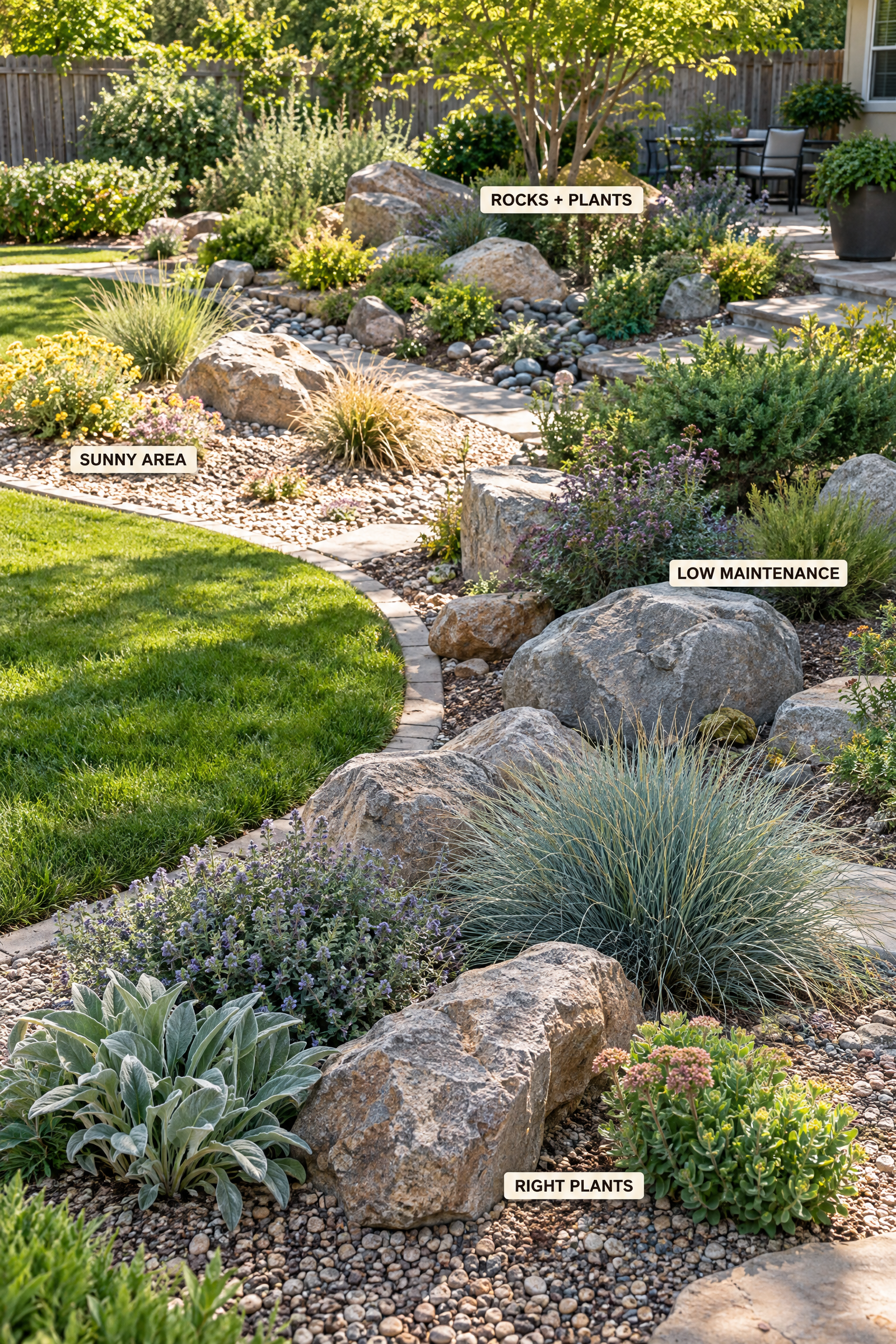
Start with a sunny area where grass is difficult to maintain, then combine appropriately selected rocks or gravel with plants suited to your climate and site conditions.
The important point is that low maintenance does not mean maintenance-free. Plants still need to be established, watered when necessary, pruned when appropriate, and monitored for weeds.
Avoid choosing plants simply because they look good in a photo. A plant that needs more water than your location naturally provides may create more work later.
EPA WaterSense recommends selecting regionally appropriate and low-water-use plants based on local conditions rather than choosing plants only for appearance.
6. Add Layers With Shrubs, Flowers and Groundcovers
Layering plants at different heights makes a backyard feel more intentional without requiring complicated construction.
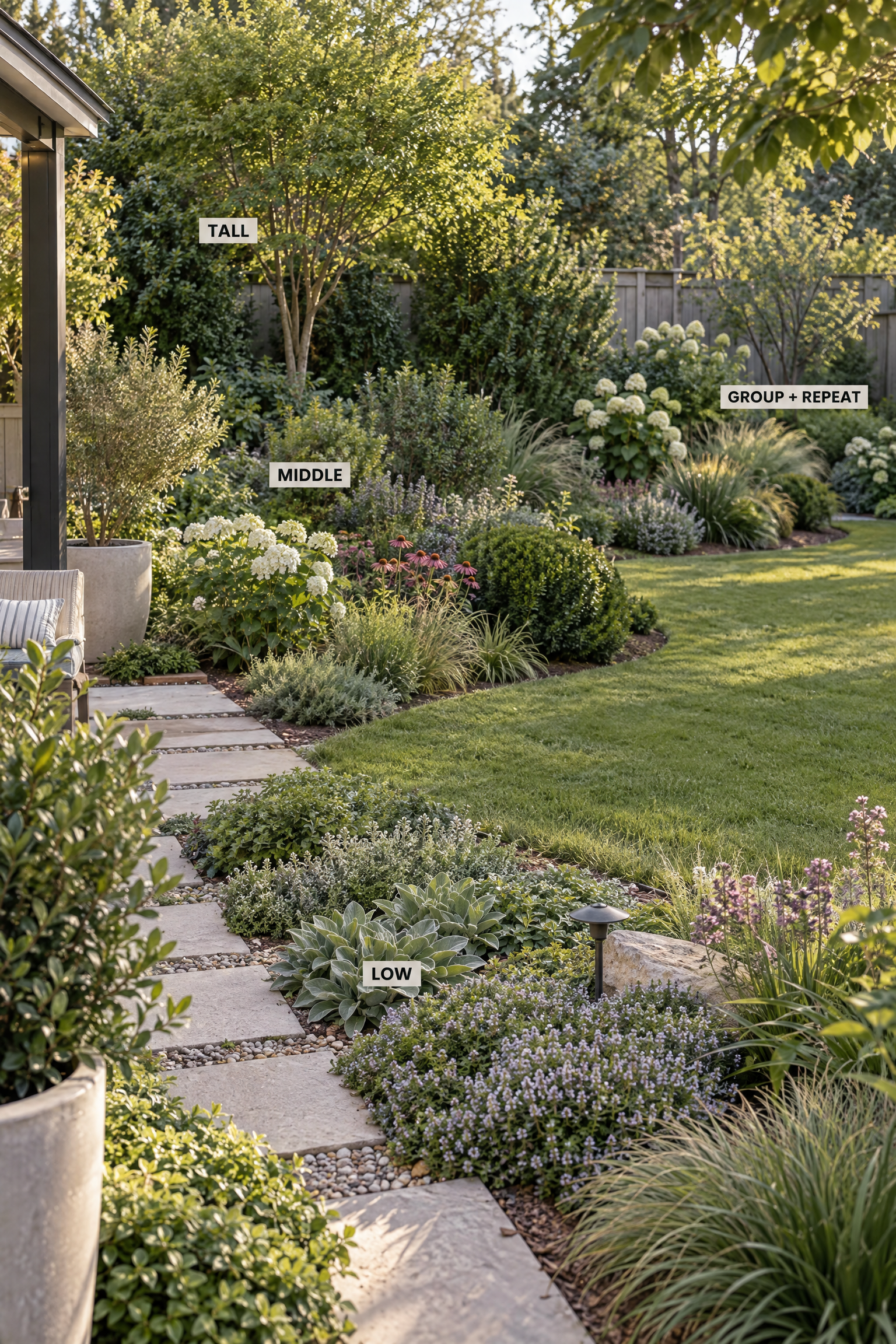
Think of the landscape in three basic levels:
- Tall: trees or larger shrubs
- Middle: smaller shrubs and flowering plants
- Low: groundcovers and shorter plants
This approach works in both small and large yards. In a small backyard, use fewer plants and leave enough open space so the area does not feel crowded.
In a large yard, repeating plant groups can create visual rhythm and help connect separate areas.
One common mistake is planting everything as isolated individual plants. Grouping compatible plants together can create a stronger visual effect and make watering and maintenance easier.
7. Turn a Small Corner Into a Cozy Outdoor Space
An unused corner can become a valuable backyard feature when you give it one clear purpose.
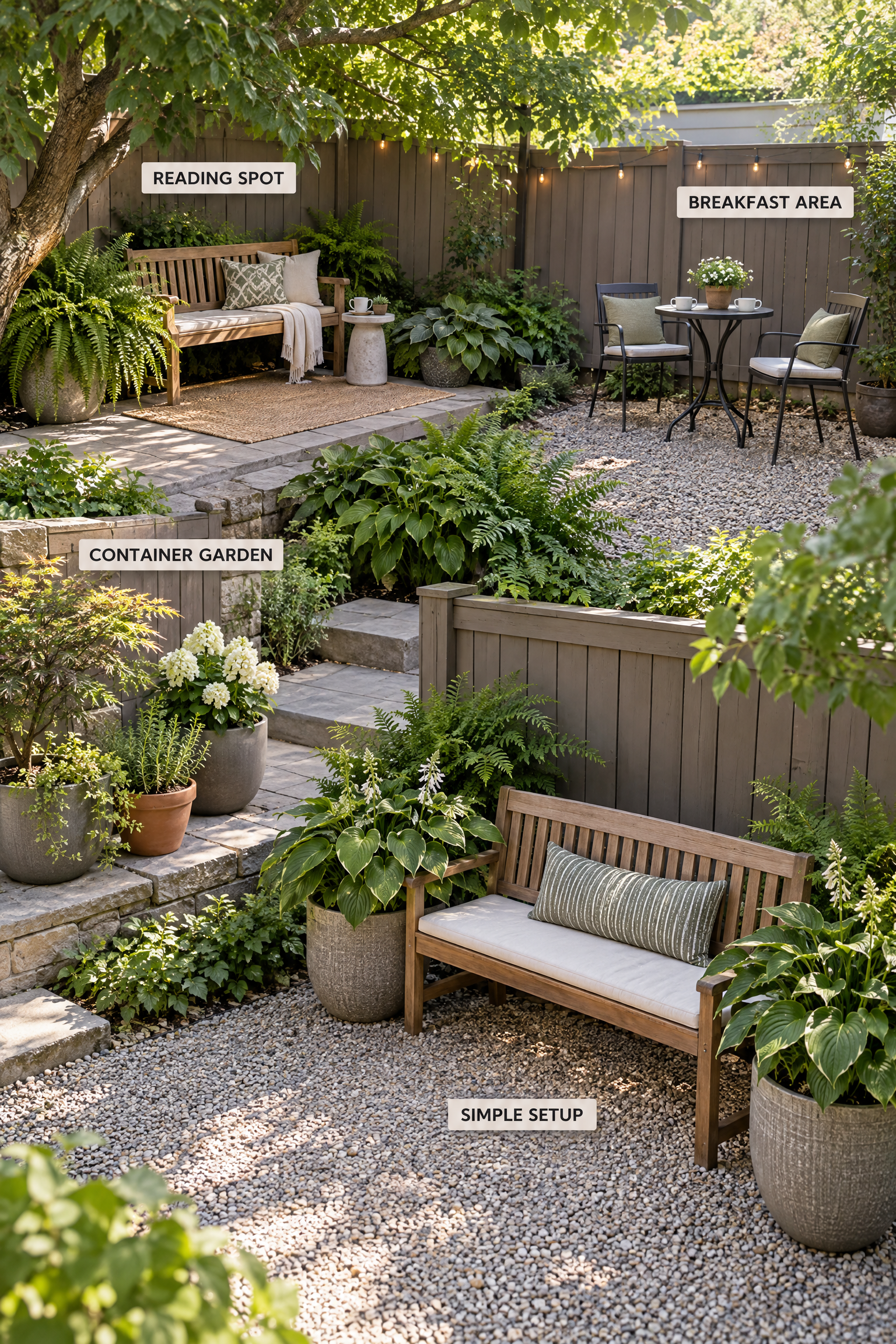
A small corner might become a reading spot, container garden, breakfast area, or quiet place for relaxing.
Start with one anchor feature such as a bench, two chairs, a planter, or a small table. Then add only a few supporting elements.
For example:
Bench + gravel + two large planters + shade-tolerant plants
That may be enough to transform a forgotten corner without filling the entire space.
This approach is especially useful for homeowners searching for small backyard landscaping ideas because it focuses on making one area useful instead of trying to redesign everything.
8. Use Mulch to Define Planting Areas
Mulch is one of the easiest ways to make a planting bed look finished while also helping the soil retain moisture.
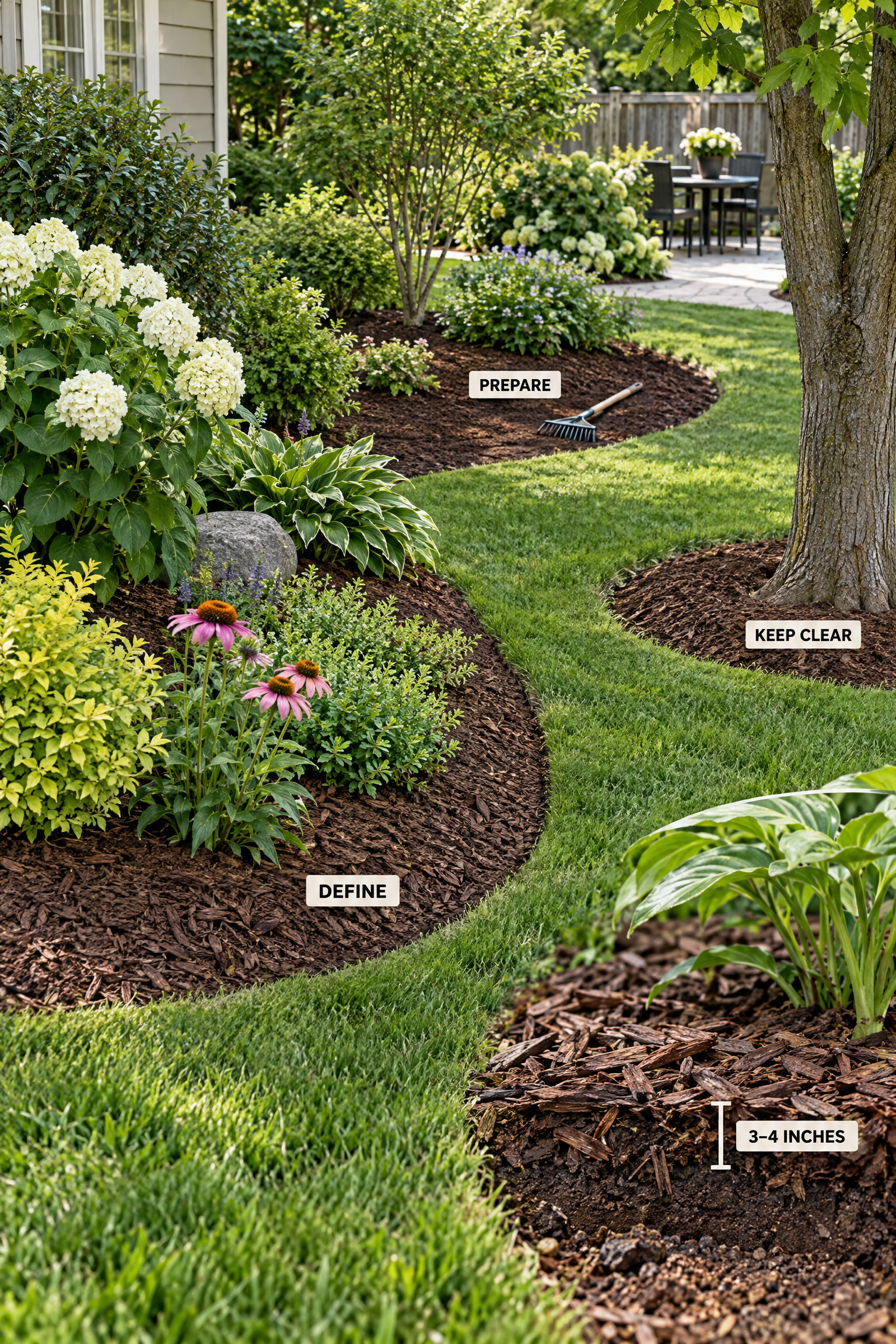
Use mulch around appropriate plants after removing existing weeds and preparing the bed. Keep mulch away from direct contact with tree trunks and woody plant bases.
The right amount depends on the material and situation, but EPA WaterSense notes that a common mulch depth for many planted areas is around three to four inches, while excessive mulch can interfere with water reaching roots.
Mulch can also help separate planting areas from grass, making the overall backyard design easier to read.
If you are updating several parts of your home at the same time, you can also browse our pantry organization ideas or garage organization ideas for practical organization projects that follow the same simple, zone-based approach.
9. Create a Backyard Focal Point
Every backyard does not need a dozen decorative features; one strong focal point can often do more.
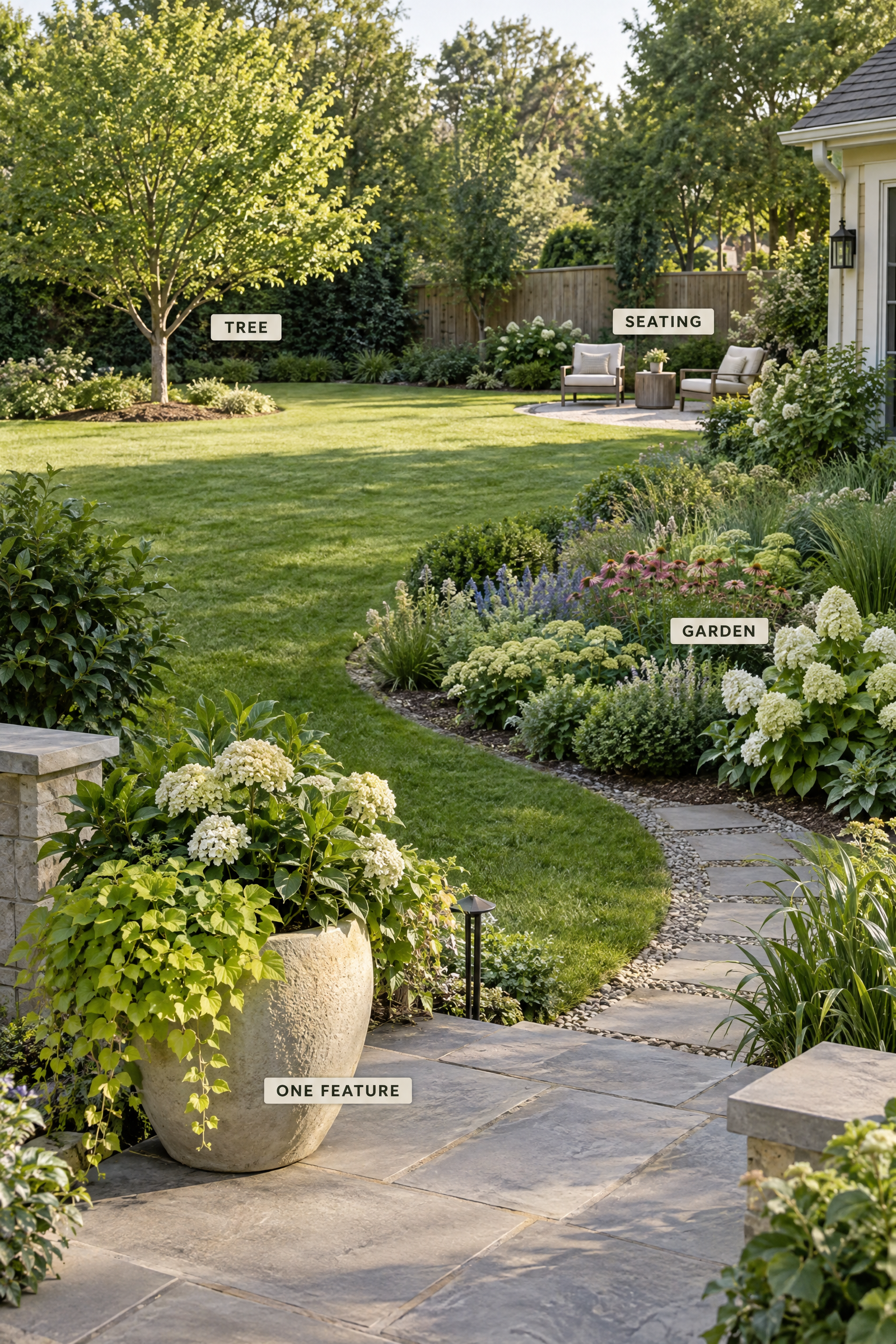
A focal point might be:
- A mature tree
- A seating area
- A garden bed
- A small water feature
- A pergola
- A large planter
- A distinctive pathway
- A fire feature where legally and safely permitted
For a small backyard, choose something proportional to the space. A very large feature can make a compact yard feel even smaller.
For a large backyard, a focal point can help draw attention toward a specific area instead of leaving the space visually empty.
The goal is not to fill every corner. The goal is to give the eye somewhere to go.
10. Replace Part of the Lawn With a No-Grass Landscape
You do not have to remove every blade of grass to create a backyard landscaping design without grass.
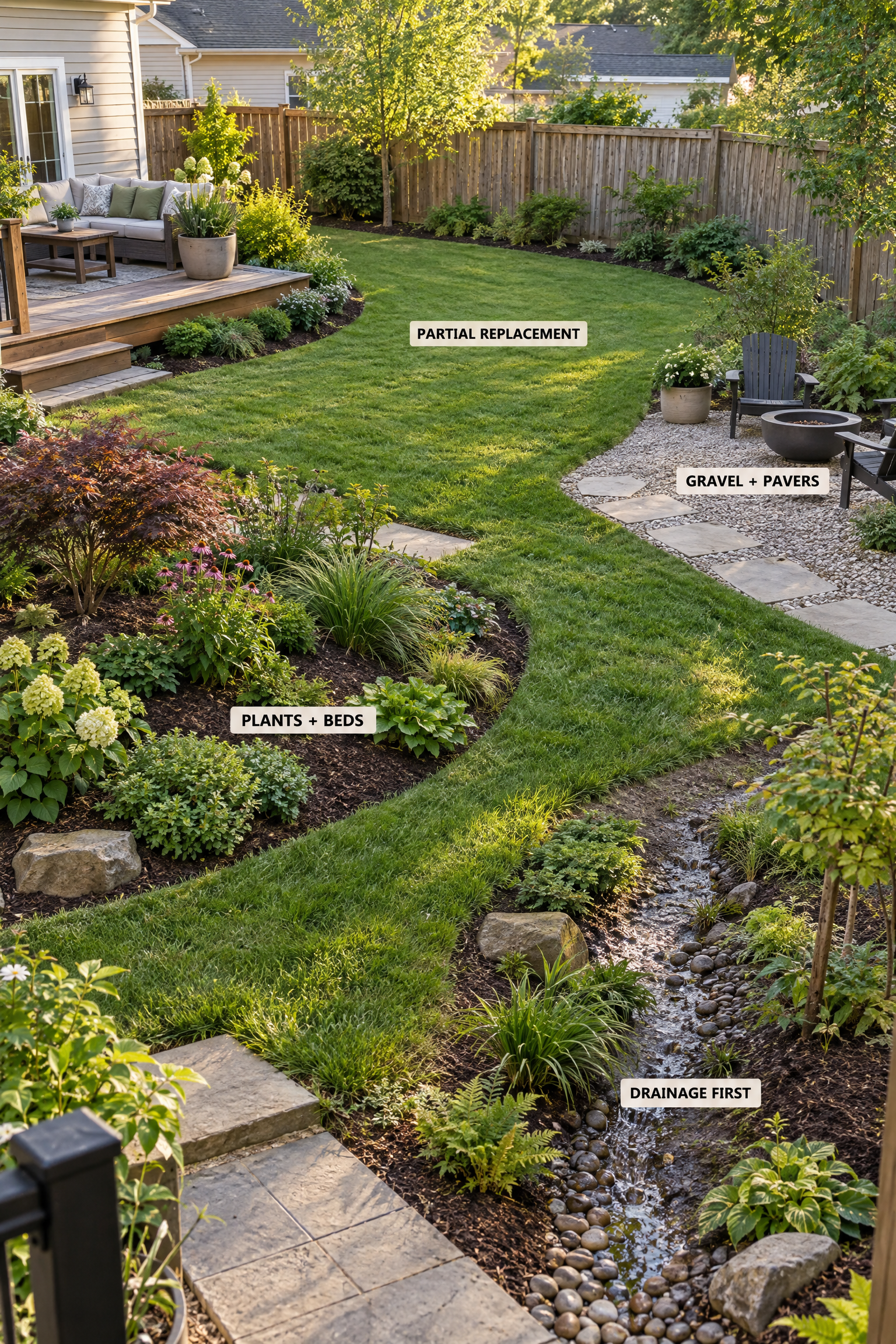
Instead, start with an area where lawn is difficult to maintain or where you do not need open turf.
Depending on your climate and site, alternatives can include:
- Gravel
- Pavers
- Mulch
- Groundcovers
- Garden beds
- Native or regionally appropriate plants
- Patio or seating areas
A partial lawn replacement is often easier for a DIY homeowner than converting the entire backyard at once.
If water tends to collect in one part of the yard, do not simply cover the area with gravel and assume the drainage problem is solved. Fix the underlying drainage issue first. Poor grading and compacted soil can contribute to runoff and standing water, and EPA guidance emphasizes healthy soils and appropriate grading for better water infiltration.
11. Add Privacy With Plants or DIY Screens
Privacy landscaping works best when you combine the right height, location, and plant growth pattern instead of simply planting a row of large shrubs.
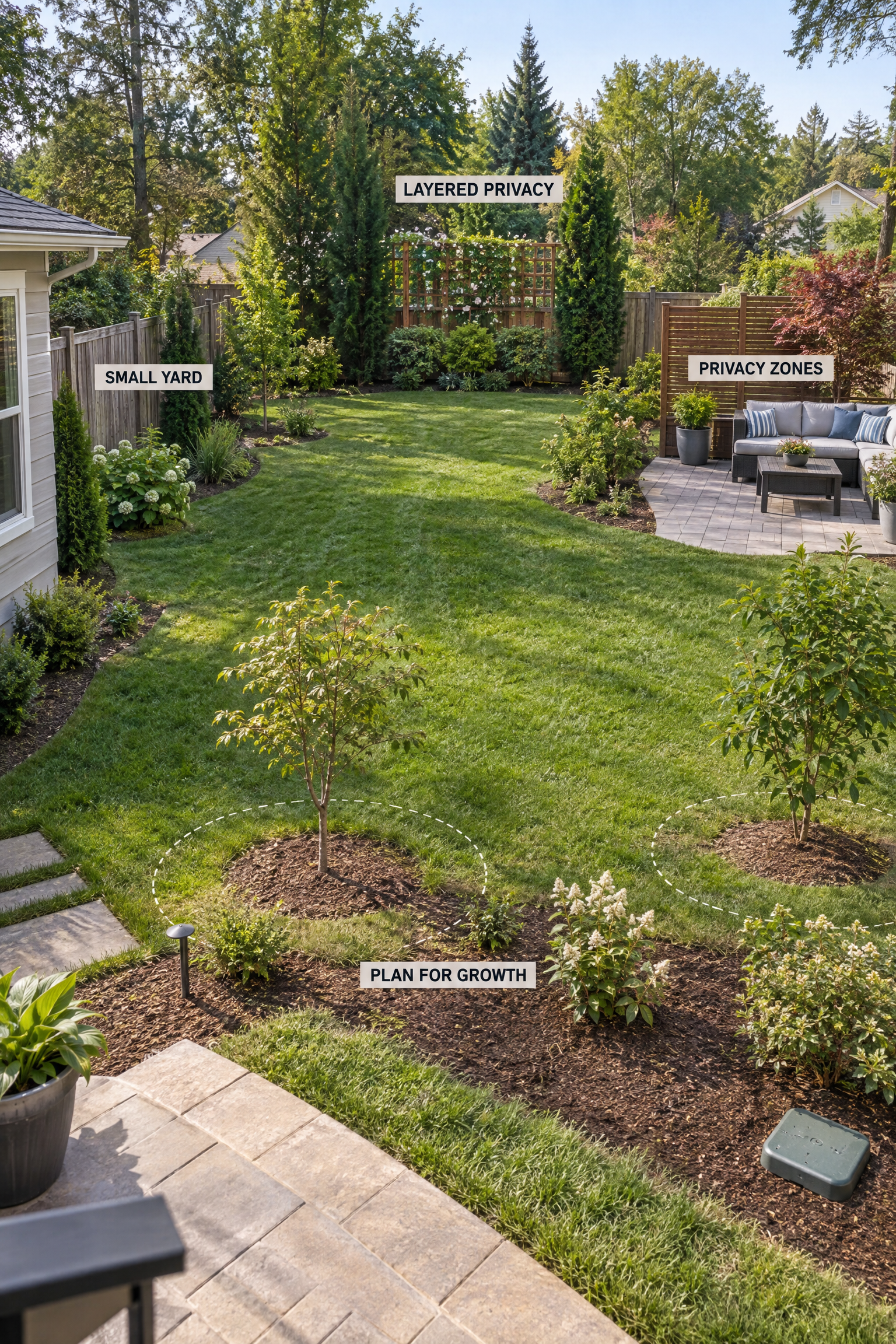
For a small yard, a few carefully positioned plants or a simple screen may be enough to block an unwanted view.
For a large backyard, you can create several privacy zones around seating areas, patios, or outdoor dining spaces.
Before planting trees or large shrubs near structures, fences, underground utilities, or property lines, consider their mature size. A plant that fits perfectly in a small container can eventually become much larger.
Privacy can also come from a combination of:
- Trellises
- Suitable vines
- Shrubs
- Trees
- Fencing
- Outdoor screens
- Layered planting
Choose the solution based on how much privacy you actually need and how much maintenance you are willing to accept.
12. Create a Budget-Friendly Backyard Makeover
The easiest way to stay on budget is to improve the backyard in stages instead of trying to finish everything at once.
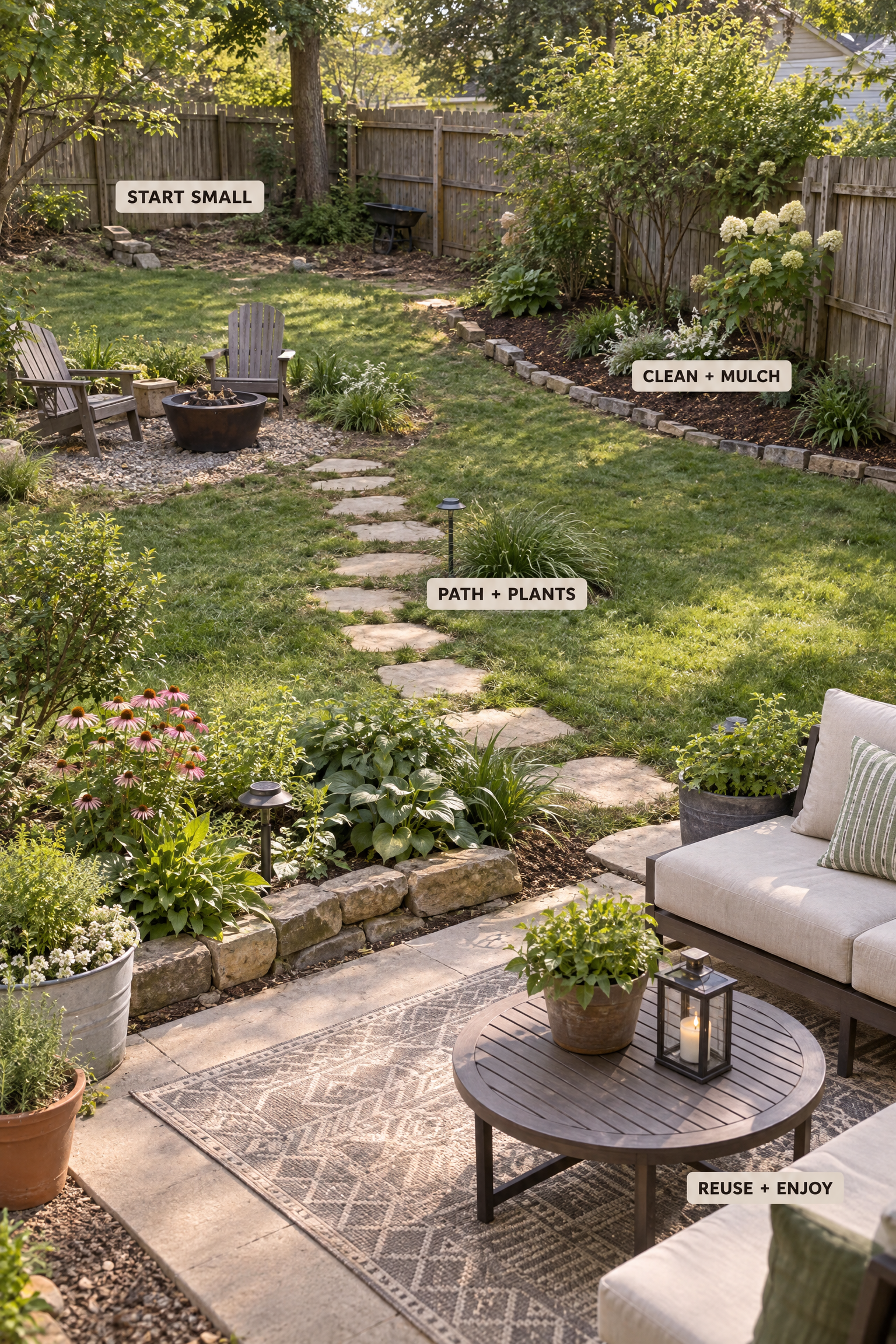
Start with the area that will make the biggest practical difference.
For example, if your backyard feels messy because there is no clear walking route, build the pathway first. If the problem is an unused corner, create a seating area. If the lawn takes too much time to maintain, replace one difficult section with a lower-maintenance planting bed.
A simple budget makeover might look like this:
| Priority | DIY Improvement | Why It Helps |
|---|---|---|
| 1 | Clean and reshape existing beds | Creates an immediate visual improvement |
| 2 | Add mulch | Defines planting areas and helps with soil moisture |
| 3 | Create a simple path | Improves movement through the yard |
| 4 | Add selected plants | Brings structure and seasonal interest |
| 5 | Add seating | Makes the backyard more useful |
| 6 | Replace difficult lawn areas | Can reduce mowing in selected zones |
Reuse what you already have before buying something new. Existing stones, containers, mature plants, edging materials, or usable outdoor furniture may already provide part of the solution.
Backyard Design Ideas for Small and Large Yards
The biggest difference between a small and large backyard is not the number of ideas you can use; it is how you manage space.
Small yards usually benefit from fewer materials, repeated plant groups, clear pathways, and multifunctional areas.
Large yards need more structure. Without some form of zoning, a big backyard can feel like one unfinished open area.
Small Backyard Landscaping Ideas
Small yards look better when every feature has a purpose.
Try combining functions instead of creating separate areas for everything.
For example:
- A narrow garden bed can also provide privacy.
- A pathway can separate a seating area from a planting area.
- A small patio can double as a dining and relaxing space.
- A fence can support climbing plants.
- A corner can become both a container garden and seating zone.
Avoid filling every available area with plants and decorations. Leaving some open space can make a small backyard feel larger.
Large Backyard Landscaping Ideas
Large yards become easier to manage when you divide them into practical zones.
You might create:
- A dining area near the house
- An open lawn or play area
- A garden area farther from the house
- A quiet seating zone
- A privacy planting area
- A pathway connecting the spaces
This does not mean every zone needs a separate expensive structure. Different surfaces, planting beds, paths, and furniture arrangements can create visual separation.
Simple Backyard Landscaping Ideas for Beginners
The best beginner landscaping projects are small enough to finish and simple enough to correct if something does not work.
If this is your first DIY landscaping project, start with one planting bed, one pathway, one seating area, or one lawn-replacement section.
Avoid taking on complicated retaining walls, major grading changes, extensive drainage work, large concrete projects, or electrical installations unless you have the required skills and understand local requirements.
A good beginner project should have a clear beginning and end.
For example:
Weekend project: clean one garden bed → improve the soil → install suitable plants → add mulch.
That gives you a finished result without turning the entire backyard into a construction site.
If you enjoy practical home projects, you may also like our guide on how to choose a paint color because the same principle applies: start with the existing conditions instead of choosing a finish in isolation.
Low-Maintenance Backyard Landscaping Ideas
Low-maintenance landscaping starts with choosing the right plants and reducing unnecessary lawn, trimming, watering, and seasonal work.
A lower-maintenance yard can include regionally appropriate plants, mulch, hardscape areas, groundcovers, and strategically placed lawn.
Consider these approaches:
- Choose plants suited to your local climate and soil.
- Group plants with similar water needs.
- Keep high-maintenance plants away from difficult-to-reach areas.
- Use mulch in appropriate planting beds.
- Reduce lawn where it has little practical purpose.
- Keep paths wide enough to maintain easily.
- Avoid overcrowding plants.
- Preserve healthy existing trees and shrubs when practical.
EPA WaterSense recommends grouping plants according to similar watering needs and choosing regionally appropriate or low-water-use plants.
Remember that “low maintenance” is not the same as “no maintenance.” Even a carefully designed landscape needs some watering during establishment, weed control, pruning, seasonal cleanup, and monitoring.
Backyard Landscaping Ideas Without Grass
A backyard without grass can be practical when the replacement matches how you use the space.
If you rarely use the lawn, consider replacing only part of it with a combination of planting beds, gravel, paths, patio space, or groundcover.
| Alternative | Works Well For | Main Consideration |
|---|---|---|
| Gravel | Paths, seating areas, dry-style landscapes | Needs edging and occasional cleanup |
| Pavers | Patios and walkways | Requires careful base preparation |
| Mulch | Planting beds | Needs periodic replenishment |
| Groundcovers | Selected planted areas | Plant choice must suit the site |
| Garden beds | Flowers, shrubs, vegetables | Require planting and seasonal care |
| Patio space | Dining and seating | More planning and installation work |
Do not choose a no-grass material simply because it looks attractive in a photo. Think about heat, drainage, foot traffic, weeds, maintenance, and how the surface will feel under everyday use.
For example, gravel may be inexpensive and flexible, but it can move underfoot. Pavers create a firmer walking surface but require more careful installation.
Backyard Landscaping Ideas on a Budget
A small budget works best when you spend money on improvements that solve a real problem.
Instead of buying many decorative items, focus first on structure.
Ways to Save Money
- Reuse healthy existing plants where practical.
- Work on one section at a time.
- Buy plants appropriate for your climate and site.
- Compare the mature size before purchasing.
- Use mulch to define beds instead of expensive edging everywhere.
- Choose simple pathway designs.
- Use existing furniture before replacing it.
- Propagate suitable plants where appropriate and legal.
- Build small projects before attempting major renovations.
- Do preparation work yourself when it is safe and practical.
The cheapest material is not always the cheapest project. A low-cost surface that needs frequent replacement or creates drainage problems can cost more over time than a slightly better solution installed correctly.
Also leave room in your budget for soil improvement, delivery, tools, fasteners, edging, drainage materials, and unexpected site conditions. Those smaller expenses are easy to overlook.
How to Choose the Right DIY Landscaping Ideas for Your Yard
Use your yard’s size, sunlight, purpose, budget, and maintenance needs to narrow down your choices.
Ask yourself these six questions before starting:
- How large is the area?
Small spaces usually need fewer, more purposeful features. - How much sunlight does it receive?
Plant selection should match the actual light conditions. - What will the space be used for?
A play area needs different planning from a quiet garden. - What is your budget?
Decide what must be completed now and what can wait. - How much maintenance can you handle?
Choose plants and surfaces that match your available time. - What is the soil and drainage like?
Do not ignore standing water, compacted soil, or runoff problems.
A beautiful landscape that you cannot maintain is not a successful landscape.
Before planting, check local plant guidance or speak with a reputable local nursery or extension service. The right plant varies by region, and even a plant that is technically suitable for a climate zone may struggle because of shade, soil, moisture, wind, or other site conditions.
Common DIY Backyard Landscaping Mistakes to Avoid
Planting Without Checking Mature Size
A small nursery plant can eventually become much larger. Check the expected mature width and height before planting close to buildings, walkways, fences, or utility areas.
Ignoring Drainage
Standing water is a site problem, not simply a landscaping decoration problem.
If water repeatedly collects in one location, identify the cause before covering the area with soil, mulch, or gravel. Major grading or drainage changes may require professional assessment.
Choosing Plants Only for Appearance
A plant may look perfect in a garden center but still be a poor match for your yard.
Consider:
- Sun exposure
- Soil
- Moisture
- Climate
- Mature size
- Maintenance
- Local pest pressure
Making a Small Yard Too Busy
Too many plants, materials, colors, and decorations can make a small backyard feel smaller.
Choose a limited palette and repeat a few materials or plant types.
Trying to Finish Everything at Once
A full backyard makeover can quickly become expensive and overwhelming.
Complete one useful area first, then decide what the yard needs next.
Forgetting About Future Maintenance
A landscape should look good after installation, but it also needs to remain manageable months and years later.
Think about mowing, pruning, watering, weeding, leaf cleanup, replacement plants, and access to every area.
A Simple Way to Start Your Backyard Makeover
You do not need to redesign the entire backyard to make it better.
Choose one problem area and give it one clear purpose. A neglected corner can become a seating area. A difficult patch of lawn can become a planting bed. An awkward route can become a pathway. A bare fence can become a layered planting area.
Then build from there.
The strongest backyard landscaping ideas are not necessarily the most expensive or complicated ones. They are the ideas that fit the yard, make everyday use easier, and remain manageable after the initial DIY work is finished.
If you are continuing to improve your home, you can explore more practical projects in our Daily Idea Book home improvement and lifestyle ideas for inspiration.
Frequently Asked Questions
What is the easiest DIY backyard landscaping project?
A small planting bed with mulch is one of the easiest projects for many beginners.
You can start with a defined area, prepare the soil, add suitable plants, and finish with mulch. A simple pathway or small seating area can also be manageable if the site does not require complicated grading or construction.
How can I landscape my backyard cheaply?
Start with the areas that create the biggest practical improvement and complete the work in stages.
Cleaning existing beds, reusing materials, adding mulch, creating a small planting area, and replacing difficult lawn sections can provide noticeable changes without requiring a complete backyard renovation.
What are the best landscaping ideas for a small backyard?
The best small-yard ideas combine several functions without filling the space with too many features.
Consider a narrow planting bed, compact seating area, simple pathway, vertical privacy planting, or a partial lawn replacement.
How can I make a large backyard look more organized?
Divide a large backyard into useful zones connected by a clear visual path.
You might create separate areas for dining, relaxing, gardening, play, and open space. Repeating materials and plant groups can help the zones feel connected.
What can I use instead of grass in my backyard?
Common lawn alternatives include gravel, pavers, mulch, groundcovers, planted beds, and patio areas.
The best choice depends on your climate, drainage, foot traffic, maintenance expectations, and how you plan to use the area.
What is the lowest-maintenance backyard landscaping?
A lower-maintenance backyard usually combines suitable plants, limited lawn, mulch, simple hardscaping, and efficient watering rather than relying on one material.
Choose plants that are appropriate for your local conditions and group plants with similar water needs. This can make routine care easier, although no landscape is completely maintenance-free.