
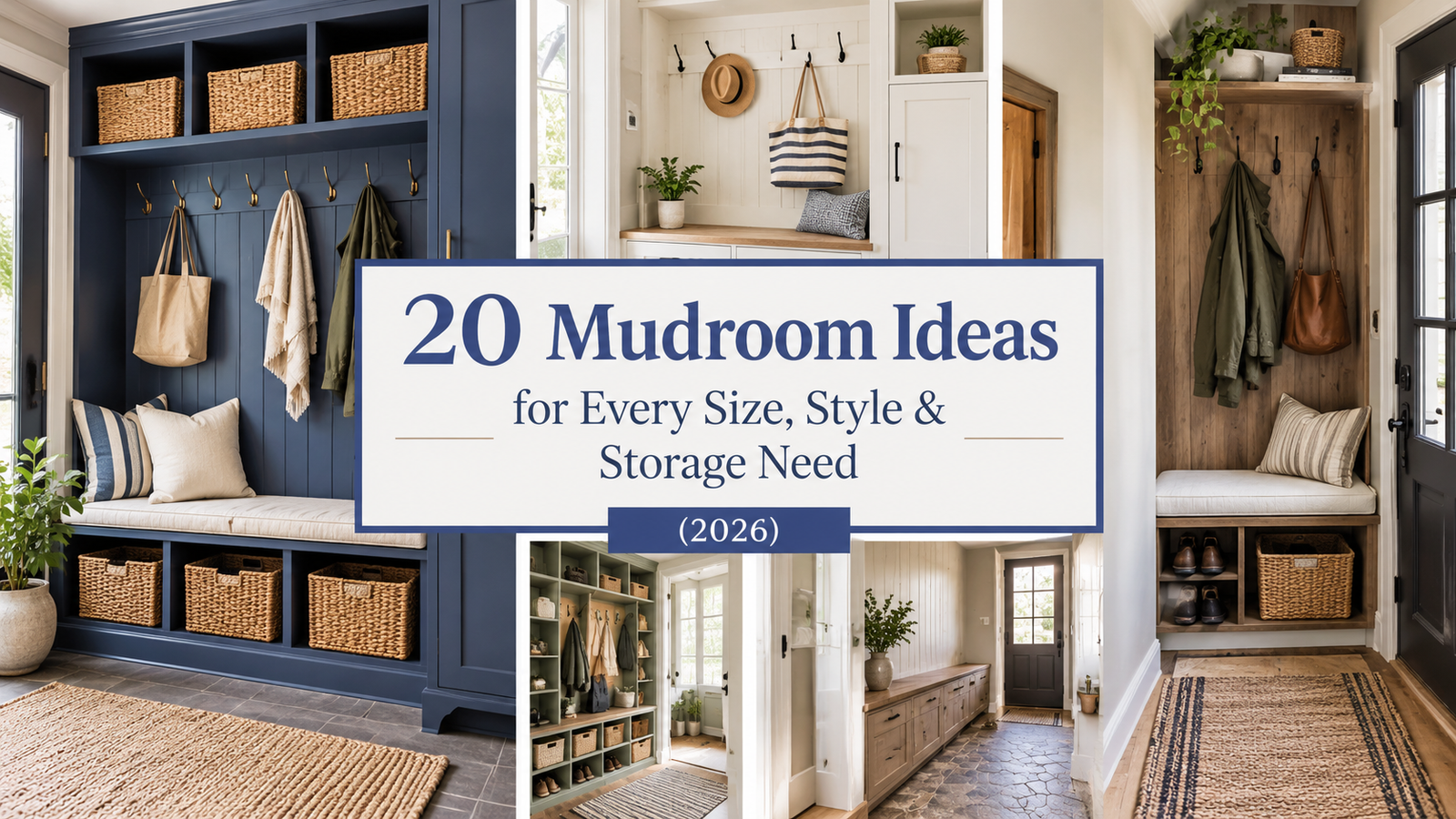
A good mudroom does more than give coats and shoes a place to sit—it creates a simple transition between the outdoors and the rest of your home. The best designs make everyday items easy to grab, easy to put away, and less likely to end up scattered around the house.
Whether you have a full room, a narrow hallway, a garage entrance, or only one small wall near the front door, you can create a useful mudroom with the right combination of storage, seating, hooks, and durable surfaces.
In this guide, you’ll find 20 mudroom ideas for different home sizes and layouts, plus practical advice for benches, storage, laundry areas, and garage entrances.
20 Mudroom Ideas for Every Home
1. Entryway Mudroom Ideas
An entryway mudroom can turn an otherwise unused wall or corner into a practical drop zone.
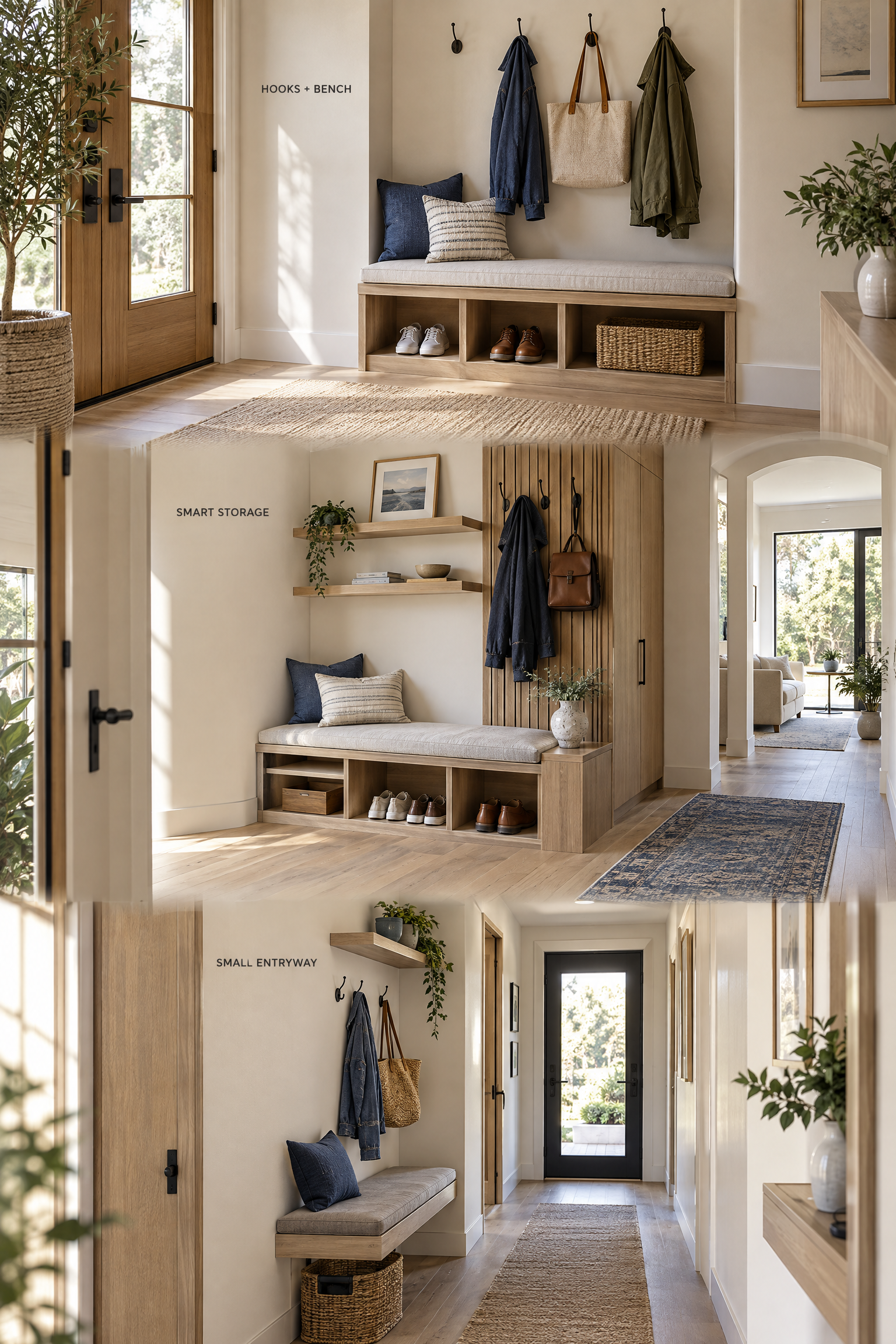
If your main entrance opens directly into the living area, you do not necessarily need a separate room. A bench, a row of hooks, and a few shelves can create a clear place for shoes, coats, bags, and other items.
An entryway mudroom works especially well when you want to keep the front door area tidy without making the space feel crowded.
For a small entrance, consider combining several functions into one piece of furniture. A bench with shoe storage underneath can provide seating and storage without taking up the floor space of separate cabinets.
If your entryway is very narrow, you can also look at these small entryway ideas for ways to use wall space more efficiently.
2. Compact Entryway with Shoe Storage
Keeping shoes directly below the seating area makes a small entryway much easier to manage.
Instead of leaving shoes beside the door, use a bench with open cubbies, drawers, or a lower shelf. Open storage makes frequently worn shoes easy to reach, while closed drawers or cabinets give the area a cleaner appearance.
A useful approach is to keep only the shoes that are currently being worn in the mudroom. Seasonal footwear can be moved to another storage area so the entryway does not become overloaded.
3. Built-In Entryway Mudroom
A built-in mudroom can make a difficult entryway feel intentional instead of improvised.
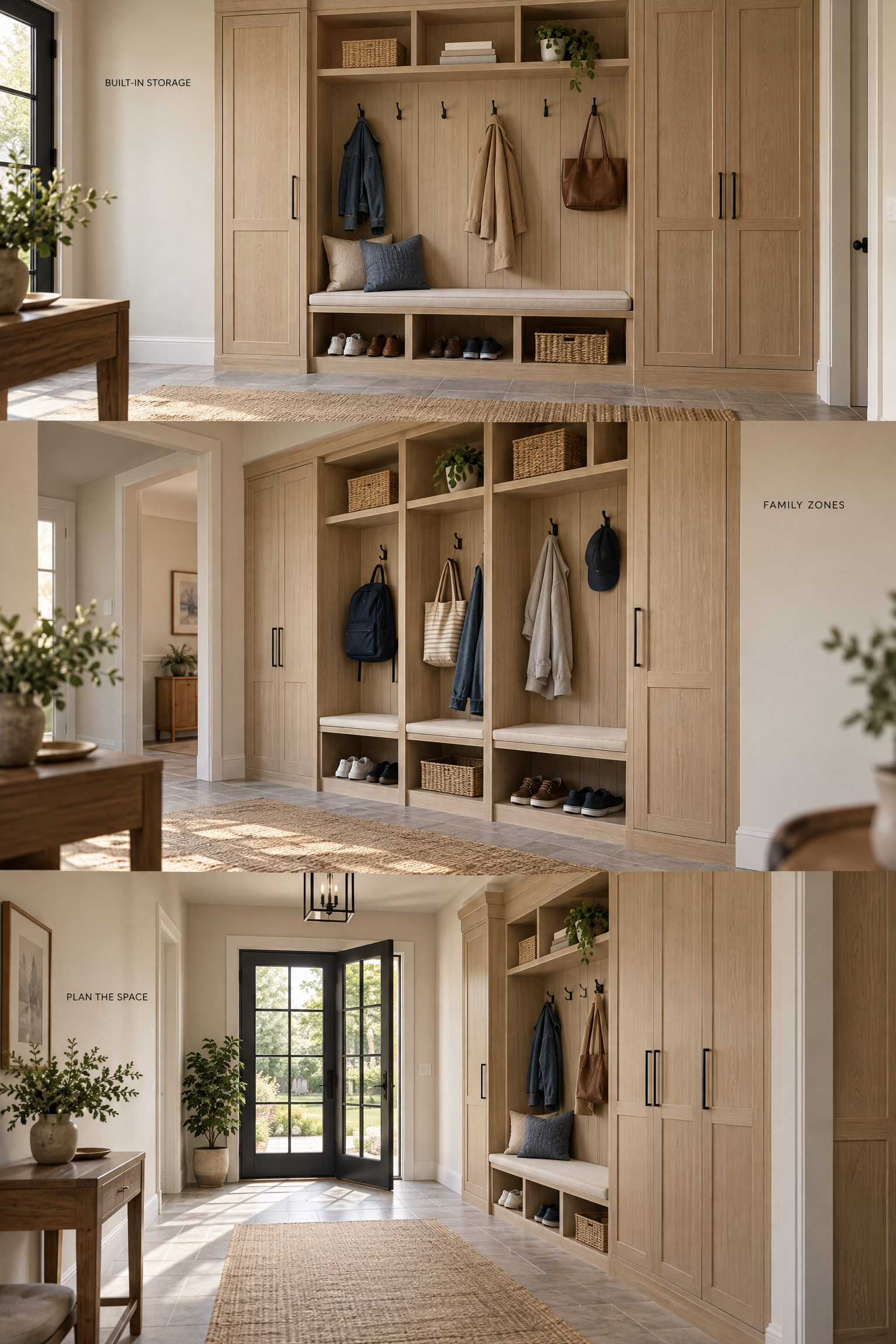
A wall of cabinets, hooks, and a central bench can create a dedicated drop zone even when there is no separate mudroom.
Built-ins are particularly useful for families because each person can have an assigned area. You can divide the storage by person, item type, or daily use.
Before planning built-in cabinets, measure the door swing, walking path, nearby furniture, and available wall space. A beautiful storage wall is not helpful if it makes the entrance difficult to use.
4. Open Entryway Mudroom with Shelves
Open shelves keep everyday items visible and make a small mudroom feel lighter.
This arrangement works well when you regularly need to grab bags, hats, shoes, or outdoor accessories. Use baskets for smaller items so the shelves do not quickly become cluttered.
Open storage does have one drawback: everything remains visible. If your household tends to accumulate many coats and bags, combining open hooks with a few closed cabinets can give you a better balance.
Small Mudroom Ideas
5. Narrow Mudroom with Vertical Storage
When floor space is limited, use the wall from floor to ceiling instead of trying to fit wider furniture.
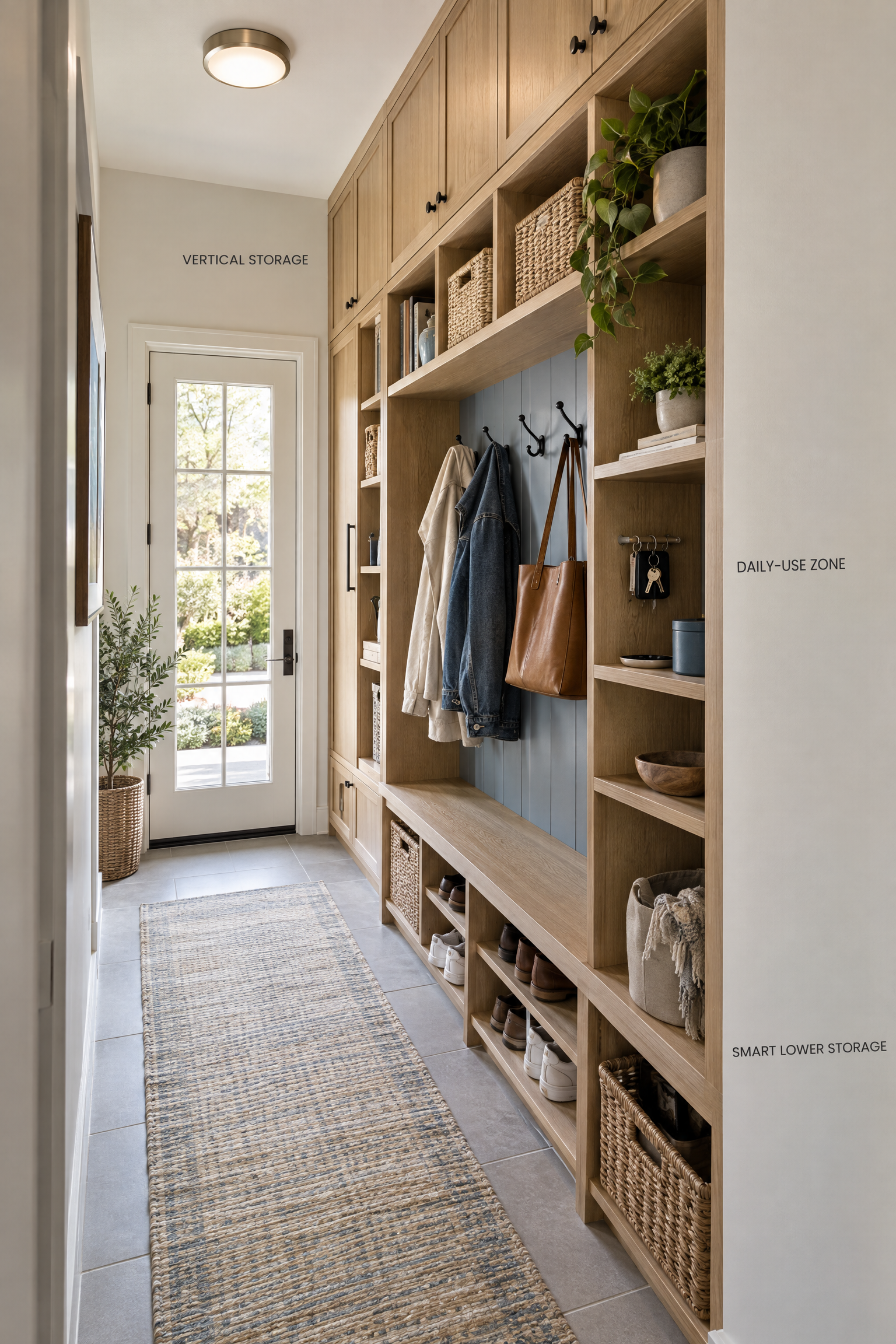
Tall cabinets, wall hooks, narrow shelves, and vertical cubbies can provide surprisingly useful storage in a tight area.
Keep the items you use every day between waist and shoulder height. Less frequently used items can go higher, while shoes and baskets can stay closer to the floor.
This simple arrangement also helps preserve a comfortable walking path.
6. Small Mudroom with a Storage Bench
A storage bench gives a small mudroom two jobs at once: seating and organization.
Look for a bench that provides storage underneath without being so deep that it blocks the walkway.
You can use the lower space for shoes, baskets, sports equipment, or everyday bags. If the storage is open, matching baskets can make the area look more organized while keeping loose items contained.
A bench is also useful for children because it gives them a comfortable place to sit while putting on or removing shoes.
7. Wall-Mounted Small Mudroom
A wall-mounted mudroom is one of the easiest ways to create storage without taking over the floor.
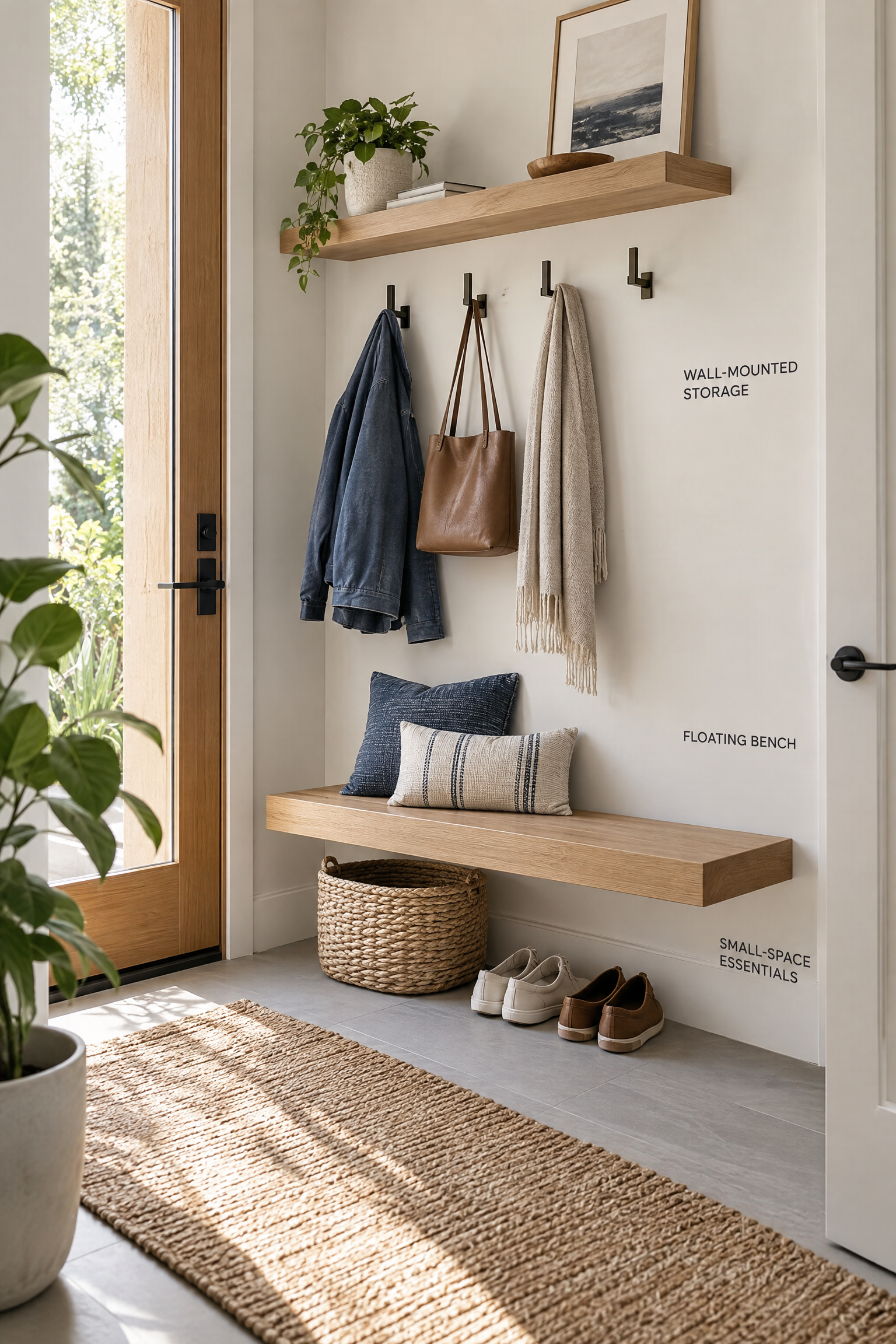
A simple combination of hooks, a narrow shelf, and a floating bench can turn an empty wall into a functional drop zone.
This option can work particularly well in apartments and smaller homes where a full cabinet system would make the entrance feel crowded.
Keep the design simple. A small mudroom does not need every possible storage feature; it needs the right storage for the items that actually collect near your door.
8. Small Mudroom Under the Stairs
The space under a staircase can become valuable mudroom storage when it is planned around the shape of the area.
Instead of trying to create one large cabinet, use different storage heights. The taller end can hold coats or cleaning items, while the lower section can accommodate shoes, baskets, or a bench.
This type of mudroom is especially useful when the staircase is close to an entrance or garage door.
Large Mudroom Ideas
9. Large Mudroom with Built-In Cabinets
A larger mudroom gives you the opportunity to separate everyday storage from less frequently used items.
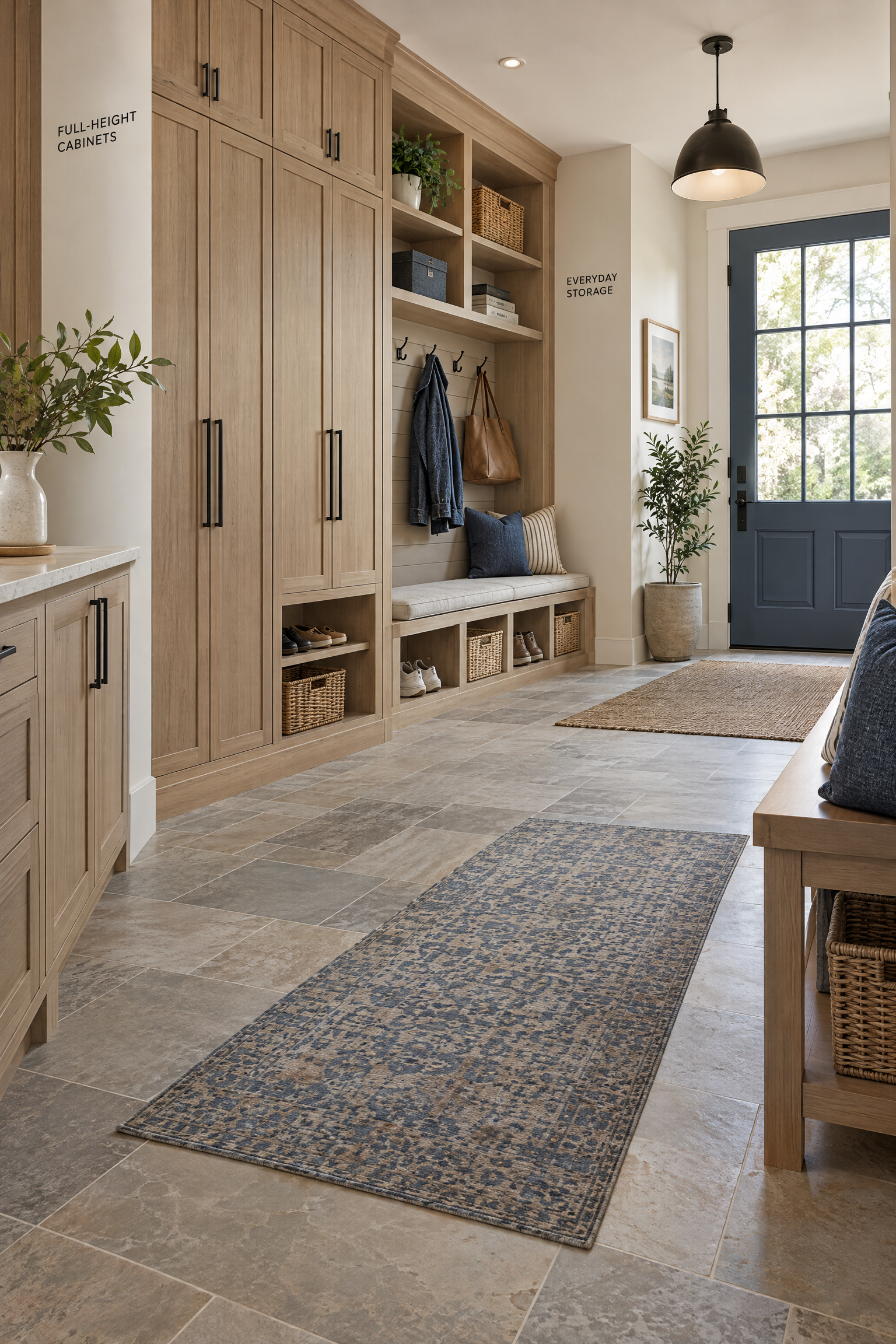
Full-height cabinets can store coats, shoes, bags, seasonal accessories, cleaning supplies, and other household items without leaving everything in view.
For a busy household, consider dividing the room into zones rather than filling every wall with cabinets. One area can handle coats and shoes, another can hold laundry supplies, and another can serve as a family drop zone.
10. Family Mudroom with Individual Cubbies
Individual cubbies make a family mudroom easier to maintain because everyone knows where their belongings belong.
Give each person a dedicated section with a hook, shelf, basket, or cubby. This approach can be especially helpful for school bags, jackets, shoes, and sports equipment.
The important part is keeping each zone realistic. If one cubby is expected to hold an entire collection of shoes, coats, and bags, it will probably become overcrowded.
11. Large Mudroom with Multiple Storage Zones
A large mudroom works best when each section has a specific purpose.
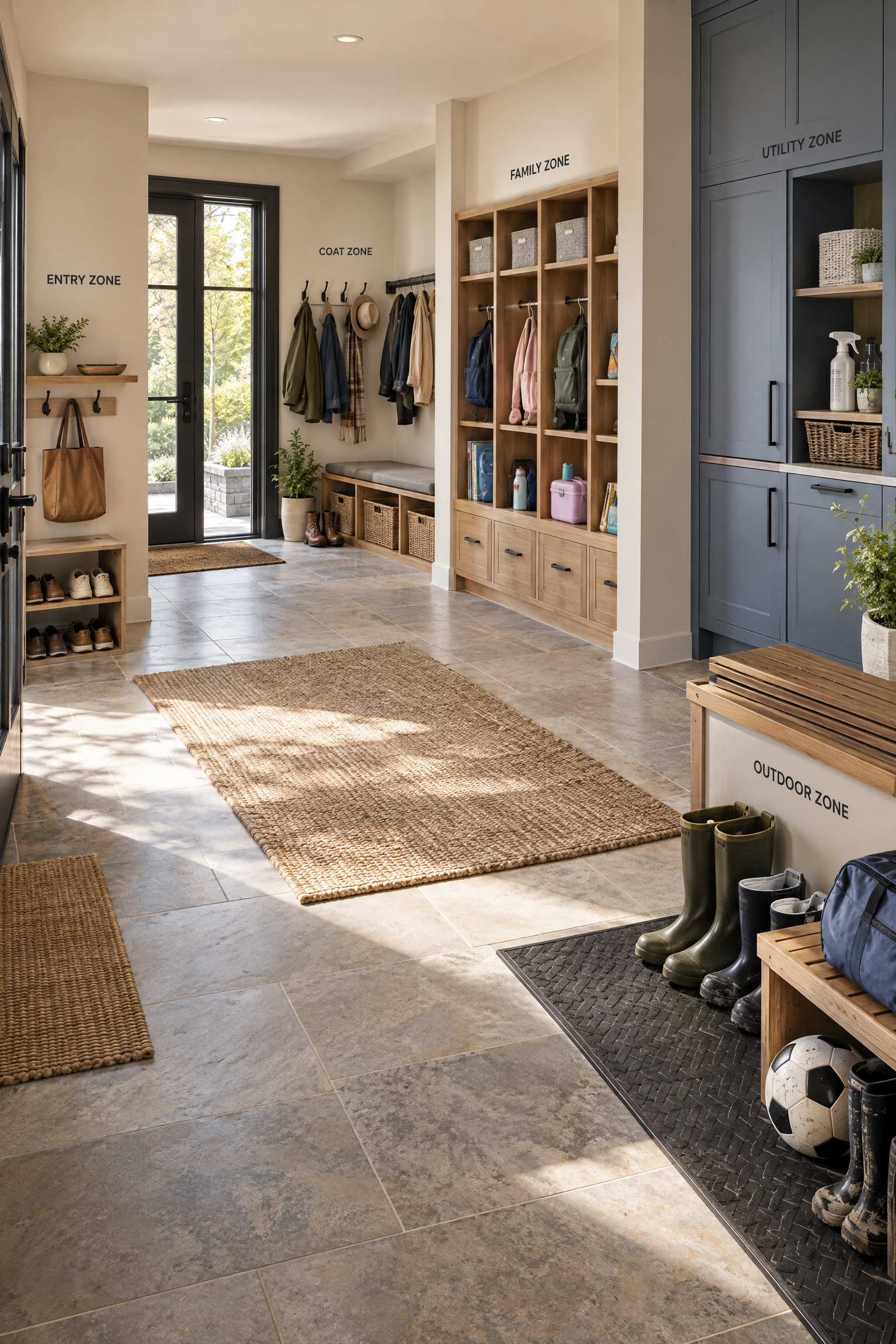
For example, you could create:
| Storage Zone | Useful Items |
|---|---|
| Entry zone | Keys, bags, daily shoes |
| Coat zone | Jackets, hats, scarves |
| Family zone | Backpacks, school items |
| Utility zone | Cleaning supplies, household items |
| Outdoor zone | Boots, sports gear, outdoor accessories |
This approach prevents the room from becoming one large storage pile. It also makes it easier to decide what belongs in the mudroom and what should be stored elsewhere.
If garage clutter is part of the problem, you may also find these garage organization ideas useful when planning the transition between the garage and mudroom.
12. Spacious Mudroom with a Laundry Area
Combining a mudroom with laundry functions can save space when both areas serve the same part of the home.
A larger room may have enough space for a washer and dryer, folding counter, cabinets, a bench, and coat storage.
The key is to separate the functions. Laundry supplies should have their own storage area, while coats and shoes should remain close to the entrance.
For more organization ideas, see these laundry room organization tips.
Mudroom Ideas with Smart Storage
13. Floor-to-Ceiling Mudroom Cabinets
Floor-to-ceiling cabinets make use of vertical space while keeping clutter hidden.
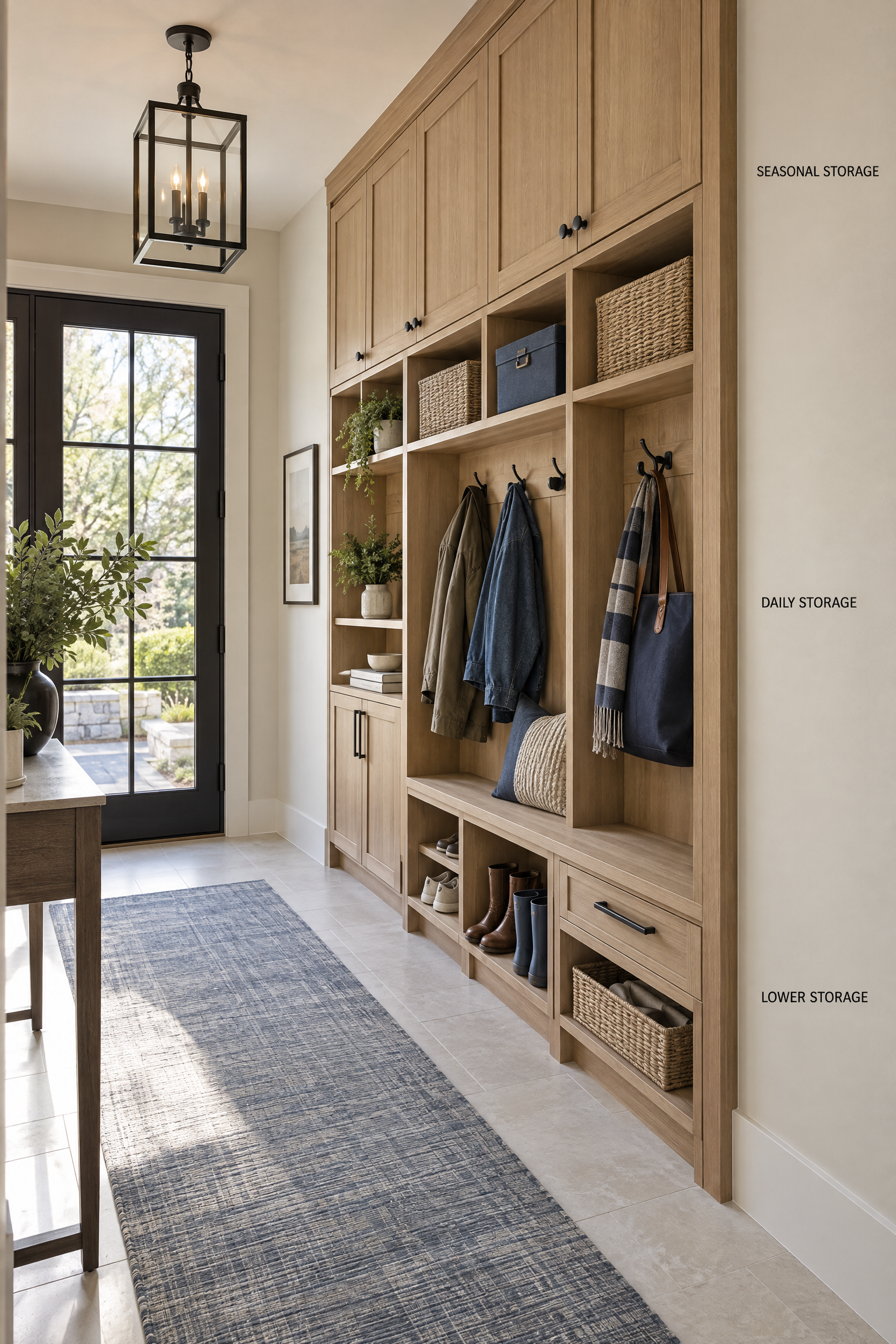
Use the lower sections for heavy or frequently used items, such as shoes and bags. Middle sections are convenient for coats and daily belongings, while higher shelves can hold seasonal items.
Do not make every shelf difficult to reach. Storage that requires a step stool every day is unlikely to be used consistently.
14. Open Cubbies with Baskets
Cubbies become much more useful when baskets give small items a defined home.
Instead of putting hats, gloves, pet accessories, and miscellaneous items directly into open cubbies, use labeled baskets.
This also gives you flexibility. A basket can be removed and carried to another room when needed, while the main storage system stays in place.
If your household includes pets, consider giving pet leashes, towels, and outdoor accessories their own small storage area rather than mixing them with family belongings.
15. Closed Shoe and Coat Storage
Closed storage is the better choice when you want a cleaner-looking mudroom with fewer visible items.
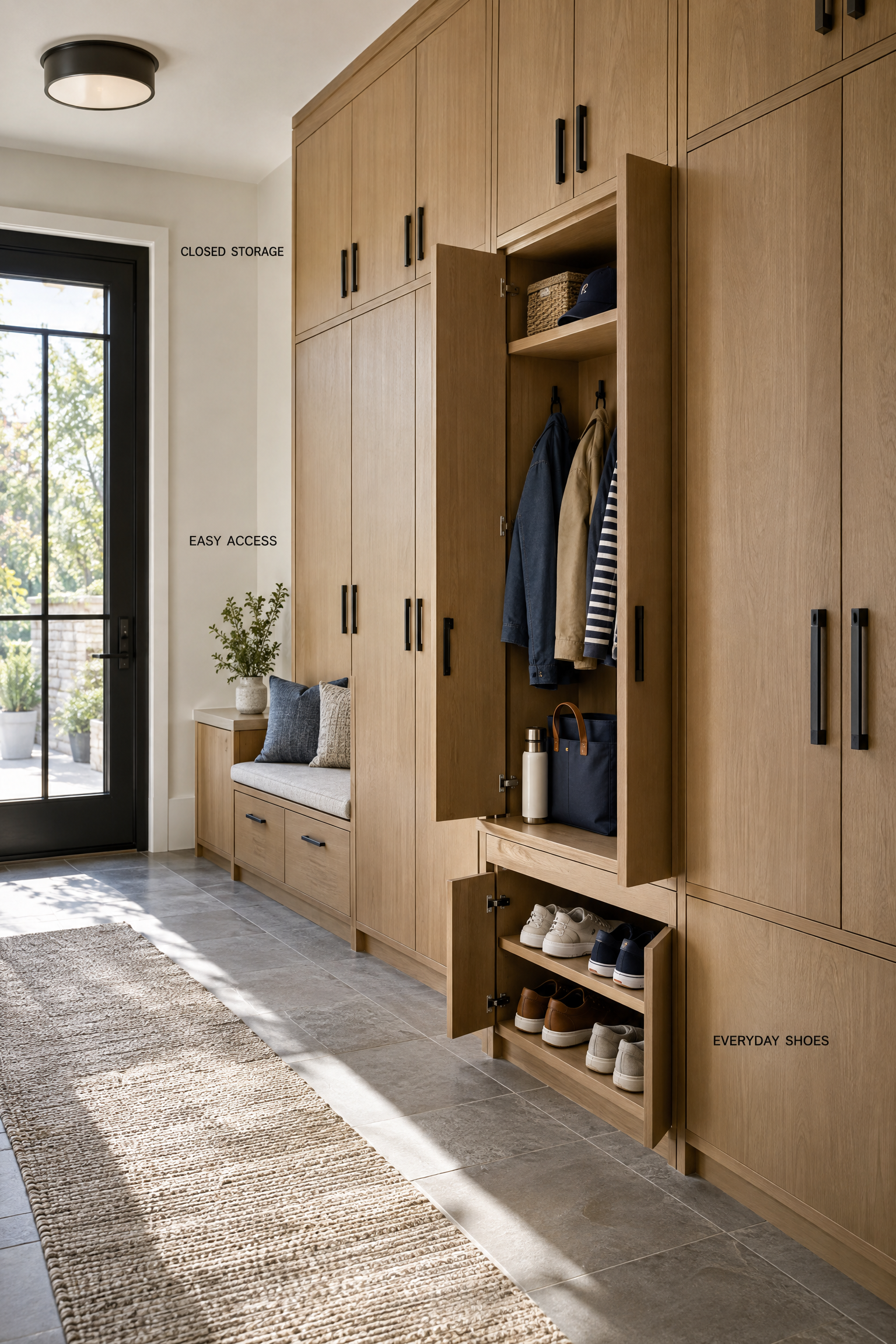
Cabinets can hide shoes and coats when they are not being used, but they should still be easy to access.
One common mistake is creating attractive cabinets without enough practical access. If a family member has to open several doors to put away a pair of everyday shoes, the shoes may end up on the floor instead.
16. Overhead Mudroom Storage
Overhead cabinets are useful for seasonal items that do not need to be reached every day.
You can use them for winter accessories, travel bags, seasonal decorations, or other items that would otherwise take up valuable lower storage.
Keep frequently used belongings at an easy height and reserve upper storage for things you use less often.
Laundry Mudroom Ideas
17. Mudroom and Laundry Room Combination
A laundry mudroom works best when the room naturally sits between an entrance and the home’s utility area.
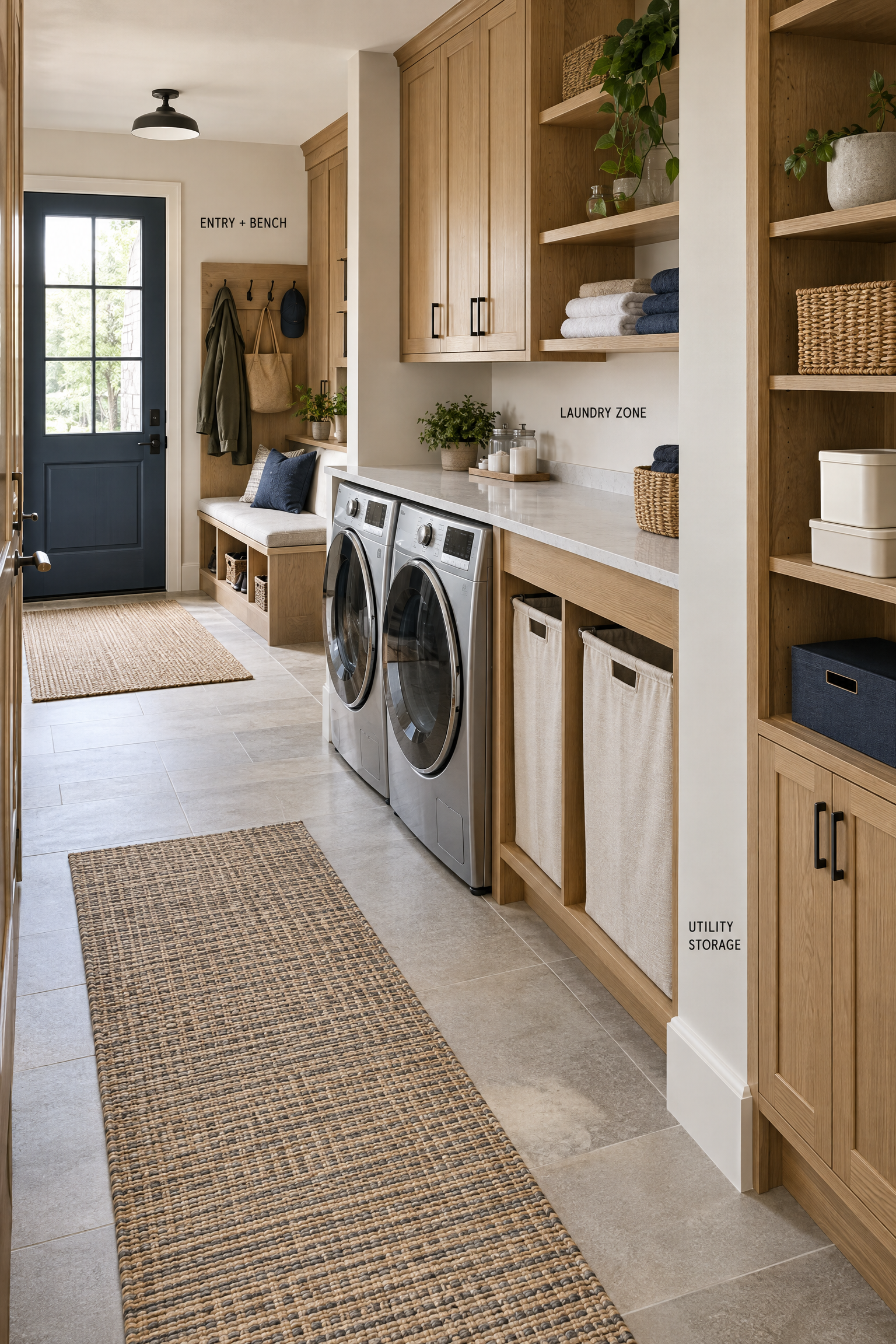
This setup lets you deal with dirty shoes, outdoor clothing, and laundry without carrying everything through the main living spaces.
A bench near the entrance can provide a place to remove shoes, while the laundry side can include cabinets, a folding surface, and hampers.
18. Laundry Mudroom with a Folding Counter
A counter above or beside the laundry appliances can add useful work space without requiring another table.
Use the counter for folding clothes, sorting items, or temporarily placing bags and household supplies.
If you are planning a new laundry-mudroom combination, measure the appliances first. Leave enough room for doors and drawers to open fully rather than designing the cabinets around appearance alone.
19. Mudroom with Washer and Dryer Cabinets
Cabinet storage can keep laundry supplies contained while giving the room a more finished appearance.
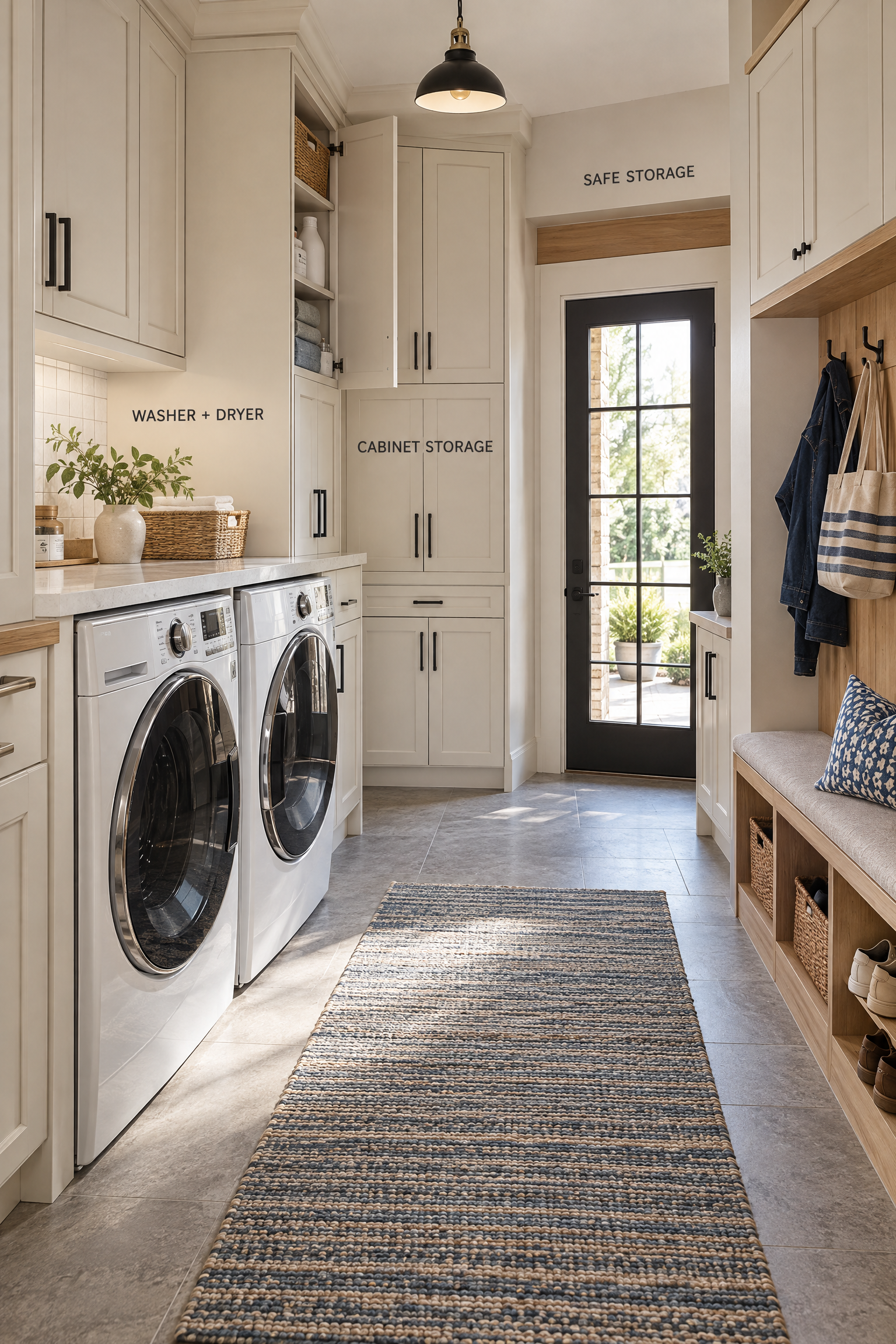
Detergent, cleaning cloths, stain-treatment products, and other supplies can be stored in dedicated cabinets.
Keep cleaning products out of children’s reach and follow the storage instructions provided on the product labels.
20. Small Laundry Mudroom with Vertical Storage
A small laundry mudroom can still work well when every wall has a clear purpose.
Use upper cabinets for supplies, wall hooks for coats and bags, and a slim bench or shelf near the entrance.
Avoid filling the entire room with storage. The washer and dryer need comfortable access, and you need enough clear space to move between the entrance and appliances.
Mudroom Bench Ideas That Actually Help
The best mudroom bench is sized around the room and the way you use it, not simply the largest bench you can fit.
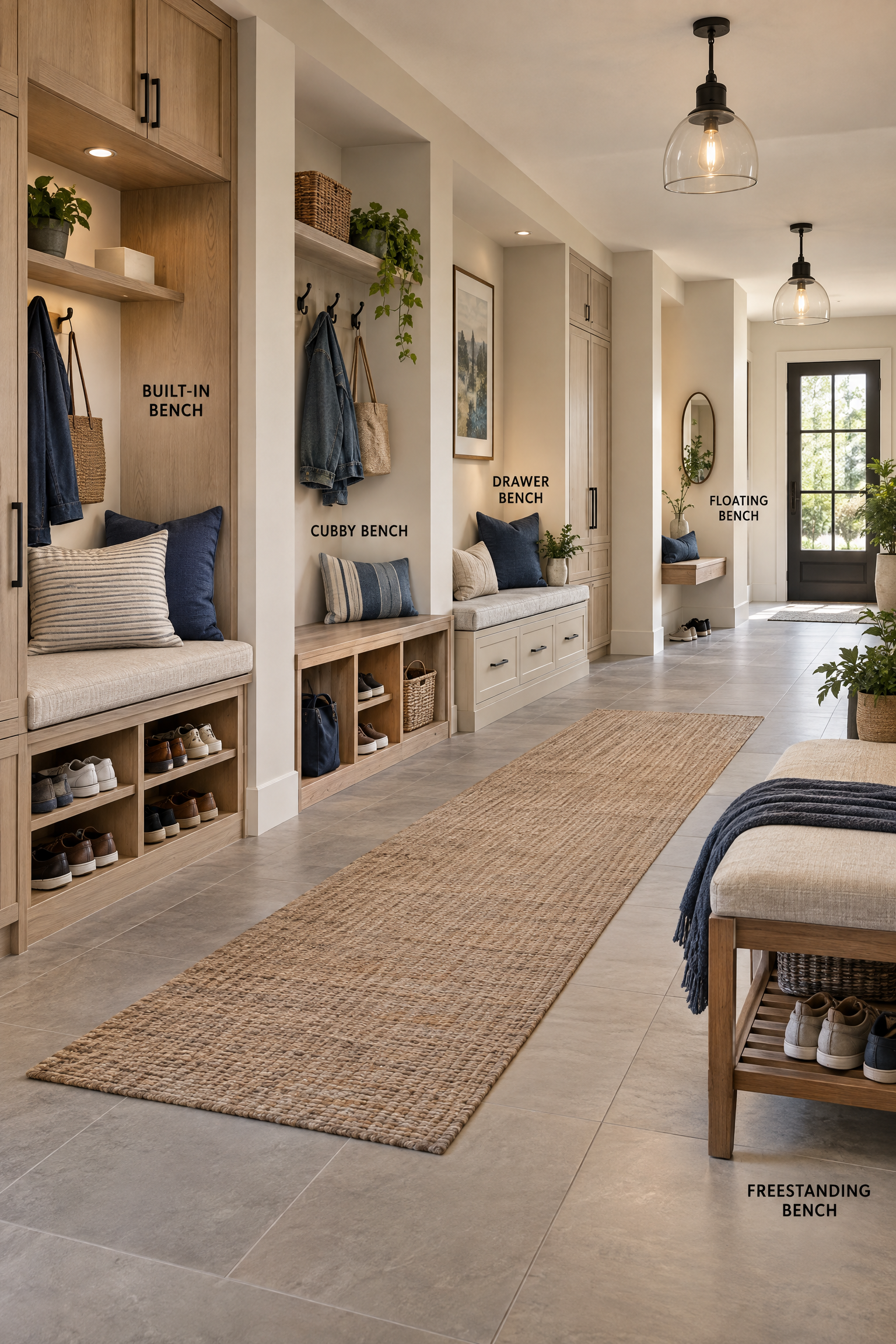
A bench should give you enough room to sit comfortably while leaving a clear path through the mudroom.
Here are some practical options:
| Bench Style | Best For | Main Advantage |
|---|---|---|
| Built-in bench | Dedicated mudrooms | Uses the space efficiently |
| Bench with cubbies | Shoes and bags | Easy access to daily items |
| Drawer bench | Cleaner appearance | Hides clutter |
| Floating bench | Small spaces | Keeps the floor visually open |
| Freestanding bench | Flexible layouts | Easy to move or replace |
A bench with shoe storage is usually the most useful choice for an entryway because it combines two everyday functions.
For families with young children, avoid creating sharp corners or unstable furniture. Heavy built-ins should be properly secured, and storage should be designed so children can use it without climbing on furniture.
Garage Mudroom Ideas
A garage mudroom creates a useful transition zone between outdoor activities and the clean areas of your home.
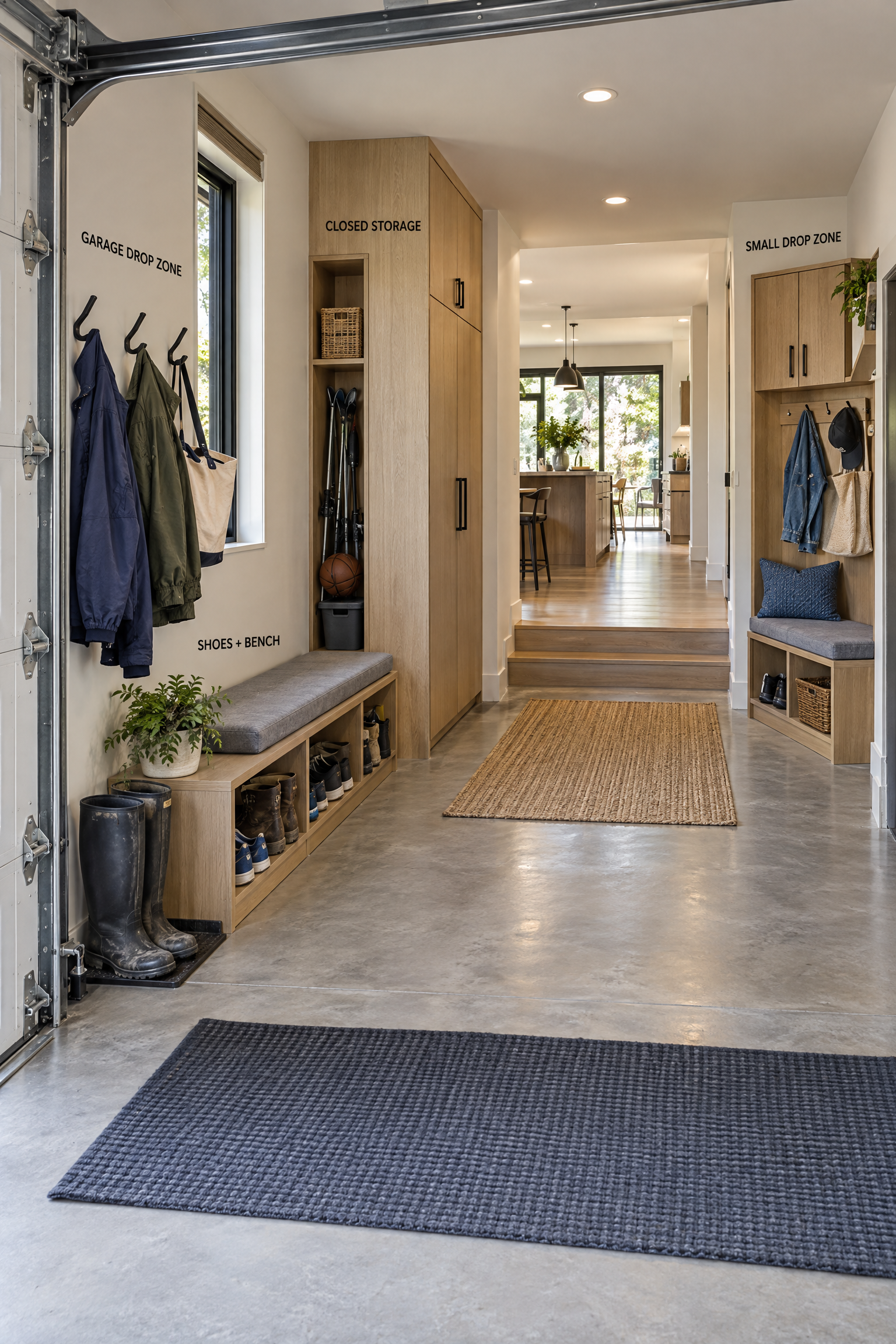
This is particularly helpful when the garage is the main entrance used by the family.
A garage mudroom can include:
- Heavy-duty hooks for jackets and outdoor clothing
- Cubbies for shoes and boots
- A bench for changing footwear
- Closed cabinets for household supplies
- Baskets for smaller items
- Dedicated storage for sports or outdoor equipment
Choose materials that can handle the amount of dirt and moisture coming through the garage entrance. A mudroom connected to a garage generally needs to be more forgiving than a decorative entryway.
You can also create a small drop zone without building a complete room. A bench + hooks + storage cabinet can be enough to separate the garage from the main living area.
How to Choose the Right Mudroom Idea for Your Home
The right mudroom design depends more on your daily routine than on the size of the room.
Before buying furniture or planning cabinets, ask yourself what normally ends up near your entrance.
Do shoes pile up? Do backpacks need their own space? Are coats the main problem? Do you need somewhere to store sports equipment? Is the garage the main entrance? Or do you need a place to manage laundry as well?
Your answers should determine the storage rather than the other way around.
| If Your Main Problem Is… | Prioritize… |
|---|---|
| Shoes everywhere | Bench with shoe storage |
| Coats and jackets | Hooks or coat cabinets |
| Family clutter | Individual cubbies |
| Limited floor space | Vertical storage |
| Laundry | Cabinets and folding counter |
| Garage clutter | Durable cabinets and hooks |
| Small entryway | Slim bench and wall storage |
The most useful mudroom is not necessarily the most expensive one. A simple arrangement that matches your routine can work better than a large room filled with storage you rarely use.
How to Keep a Mudroom Organized
A mudroom stays organized when putting something away is easier than leaving it on the floor.
Give frequently used belongings a storage spot that is close to where they are used. Shoes should be near the place where people sit to remove them. Coats should have hooks within easy reach. Bags should have their own hooks or cubbies.
A simple weekly reset can also prevent small piles from becoming a bigger problem.
Try this quick routine:
- Return misplaced items to their proper rooms.
- Remove shoes and coats that are no longer being used.
- Empty baskets that have become catch-all storage.
- Check whether the most-used storage areas are overloaded.
- Move seasonal items to higher or less accessible storage.
If your home has several problem areas, organizing one zone at a time can be more manageable. You can also use the same principle in other areas, such as these pantry organization ideas and bathroom cabinet organization ideas.
What Should You Include in a Mudroom?
A practical mudroom usually needs only a few core features: a place to sit, a place to hang items, and a place to store everyday belongings.
Depending on your space, consider:
- Bench: Makes changing shoes easier.
- Hooks: Provides quick access to coats and bags.
- Shoe storage: Keeps footwear from spreading across the floor.
- Cubbies: Works well for family members and children.
- Cabinets: Hides clutter and stores less-used items.
- Shelves: Useful for baskets and smaller belongings.
- Durable flooring: Helpful in areas exposed to dirt and moisture.
- Good lighting: Makes the space easier and safer to use.
You do not need every feature. A narrow entryway may need only hooks, a slim bench, and shoe storage, while a large family mudroom may benefit from full-height cabinets and individual cubbies.
Mudroom Design Mistakes to Avoid
The biggest mudroom mistake is designing storage without thinking about how people actually move through the room.
Not Leaving Enough Walking Space
Storage should make the room easier to use, not create a new obstacle course.
Check the door swings, cabinet doors, drawers, and the main walking route before finalizing the layout.
Using Too Much Open Storage
Open shelves can become visually messy when every item is left in sight.
If your household tends to accumulate clutter, combine open hooks and cubbies with some closed cabinets.
Making the Bench Too Deep
A large bench is not automatically a better bench.
A deep seat can reduce the usable walking area in a narrow mudroom. Measure the available space first and make sure the bench does not interfere with doors or traffic.
Forgetting Vertical Space
Walls can provide valuable storage when the floor is already full.
Tall cabinets, hooks, and upper shelves can add storage without taking up much additional floor area.
Choosing Materials Only for Appearance
Mudrooms deal with dirt, wet shoes, bags, and everyday wear, so easy maintenance matters.
Choose finishes that fit the amount of use the room receives rather than selecting materials based only on how they look in a photograph.
Final Thoughts on Choosing Mudroom Ideas
The best mudroom is the one that makes your daily routine easier.
Start with the problem you want to solve, then choose the storage, seating, and layout around that problem. A small entryway may need only a bench and hooks, while a large family mudroom may need individual cubbies, cabinets, and multiple storage zones.
Think about how people enter your home, where they remove their shoes, what they carry inside, and which belongings tend to create clutter. Those simple observations will usually tell you more about the right mudroom design than a decorative style alone.
Whether you are working with a narrow hallway, a large dedicated room, a laundry area, or a garage entrance, the goal is the same: create a space where everyday belongings have an obvious place to go.
Frequently Asked Questions About Mudroom Ideas
What should every mudroom have?
Every mudroom should have a practical place for shoes, coats, bags, and other items that normally collect near an entrance.
At minimum, this could be a bench or seat, hooks, and some form of shoe or bag storage. Larger mudrooms can add cabinets, cubbies, shelves, and laundry functions.
How do you make a small mudroom functional?
Use vertical storage and multi-purpose furniture to get more function from a small mudroom.
A slim bench with shoe storage, wall hooks, floating shelves, and tall cabinets can provide several storage functions without taking over the floor.
What is the best storage for a mudroom?
The best storage is the type that matches what your household uses every day.
Hooks work well for frequently used coats and bags, cubbies are useful for individual belongings, cabinets hide clutter, and benches can combine seating with shoe storage.
What size should a mudroom bench be?
A mudroom bench should fit the available wall and leave enough space for comfortable movement around it.
There is no single bench size that works for every room. Measure the available wall, account for doors and walkways, and choose a depth that does not make the entrance feel cramped.
Can a laundry room be used as a mudroom?
Yes, a laundry room can also serve as a mudroom when the layout provides enough space for both functions.
A combined room can include a bench and coat hooks near the entrance while keeping the washer, dryer, laundry supplies, and folding area in a separate zone.
Are mudrooms worth it in a small house?
A mudroom can be worthwhile in a small house if it solves a real storage or organization problem.
You do not need a dedicated room. Even a small section of an entryway, hallway, laundry room, or garage can work as a mudroom when it is designed around the items your household actually needs to store.