
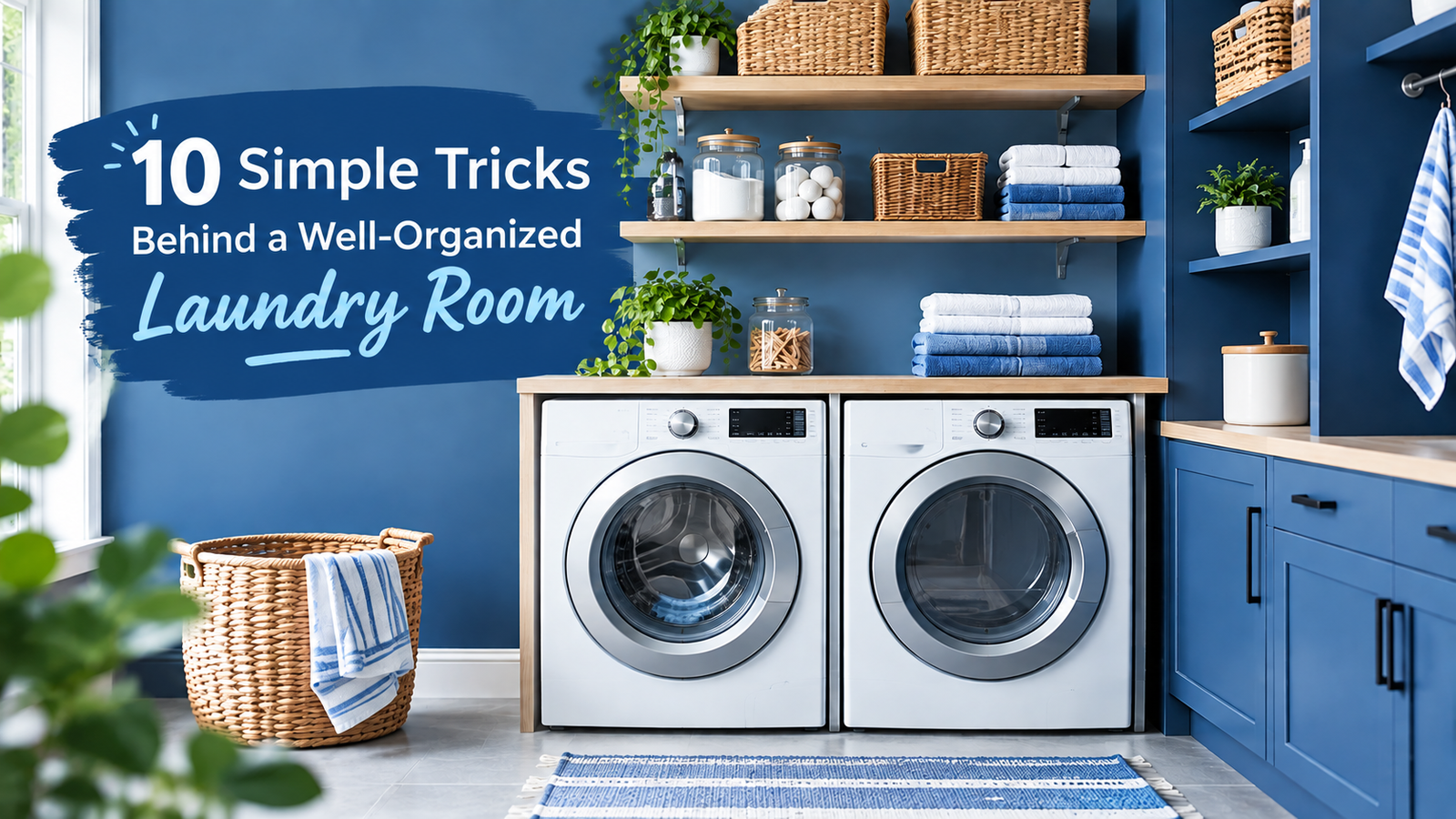
A well-organized laundry room should make laundry easier, not simply look neat. The best setup gives every frequently used item a clear place while keeping the washer, dryer, shelves, and walking areas easy to access. You should be able to grab detergent, sort clothes, move a load to the dryer, and fold clean clothes without moving a pile of unrelated items first.
Good laundry room organization also depends on how you actually use the space. A family doing several loads a week may need separate hampers and more storage, while a small household may only need a few shelves, a basket, and a simple place for detergent.
The goal is not to fill every available corner with storage. Instead, use the space you already have more thoughtfully and keep the things you use most often within easy reach.
Laundry Room Organization at a Glance
| Trick | Main Goal | Simple Solution |
|---|---|---|
| Declutter First | Remove unnecessary items | Keep only useful laundry and cleaning supplies |
| Create Laundry Zones | Improve your workflow | Separate washing, sorting, drying, and folding areas |
| Use Cabinets | Hide visual clutter | Store detergent, stain removers, and extra supplies inside cabinets |
| Use Vertical Space | Maximize storage | Add shelves, hooks, racks, or other wall storage |
| Organize Laundry Baskets | Make sorting easier | Keep baskets where dirty clothes naturally collect |
| Add a Folding Area | Make folding easier | Use a countertop, narrow surface, or fold-down table |
| Keep Essentials Within Reach | Save time | Store frequently used supplies in easy-to-access locations |
| Add Labels | Keep categories organized | Label bins, baskets, and storage containers |
| Create Hanging Space | Prevent wrinkles | Add a hanging rod, hooks, or a wall-mounted drying rack |
| Make It Easy to Maintain | Prevent clutter from returning | Reset the room after each laundry session |
10 Simple Tricks for a Well-Organized Laundry Room
1. Start by Decluttering Your Laundry Room
Decluttering is the easiest way to create more laundry room storage without buying anything. Before adding shelves, bins, or cabinets, take everything out and decide what really belongs in the room.
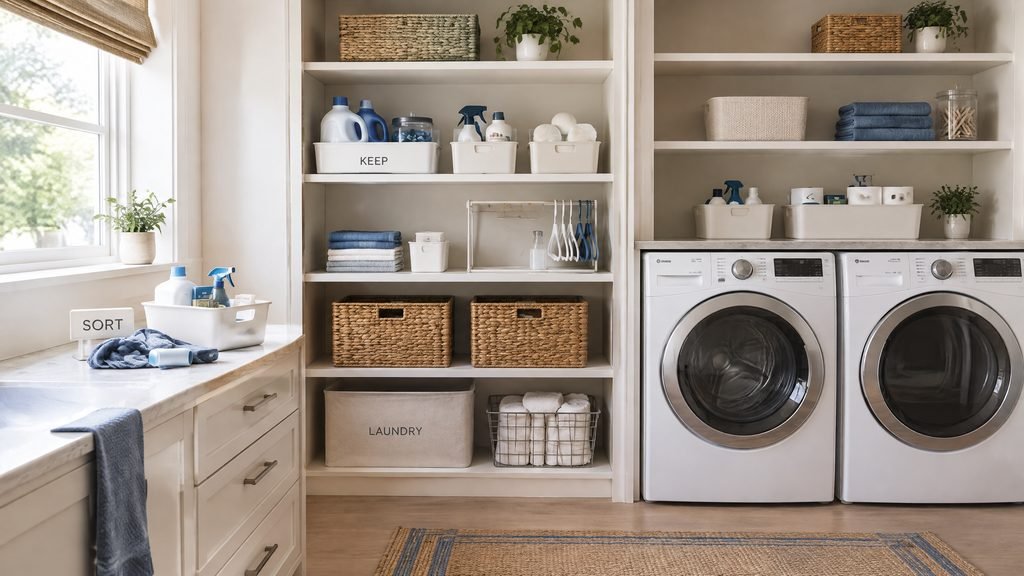
Check bottles, cleaning products, old cloths, empty containers, random tools, and items that have slowly found their way into the laundry room. If something belongs in the bathroom, garage, kitchen, or another storage area, move it there.
Try grouping the remaining items into simple categories:
- Laundry detergent and pods
- Stain removers
- Dryer sheets or wool dryer balls
- Cleaning supplies
- Laundry baskets
- Cleaning cloths
- Hanging and drying supplies
- Extra household supplies
A useful rule is to leave some empty space. An organized laundry room needs room for new supplies, laundry baskets, and everyday movement. Completely filling every shelf can make the room harder to maintain.
If you are also working on other areas of your home, you can use the same approach described in our guide to garage organization and apply the idea of creating clear storage zones.
2. Create Zones for Washing, Drying, and Folding
The easiest laundry rooms to use follow the natural order of the laundry process. Think about what happens from the moment dirty clothes enter the room until the clean clothes leave.
A simple layout might look like this:
| Laundry Zone | What to Keep Nearby |
|---|---|
| Washing | Detergent, stain remover, laundry booster |
| Sorting | Hampers, baskets, sorting bags |
| Drying | Drying rack, hangers, clothesline supplies |
| Folding | Countertop, folding table, clean laundry basket |
| Cleaning | Cloths, small cleaning tools, household supplies |
You do not need a large laundry room to create these zones. Even in a narrow room, putting related items together can save time.
Keep everyday supplies close to the washer and dryer, while less-used items can go higher or farther away. This small change can make the room feel much more efficient without requiring a major remodel.
3. Use Cabinets to Hide Laundry Supplies
Cabinets are useful when you want a cleaner-looking laundry room without leaving every bottle in sight. They can hide detergent, cleaning products, spare supplies, and other items that make open shelving look crowded.
If you have enough wall space, cabinets above the washer and dryer can provide valuable storage without taking up floor space. In a small room, even one narrow cabinet can make a noticeable difference.
Keep frequently used products on a comfortable shelf rather than placing them so high that you need a step stool every time.
Safety matters when storing laundry products. Keep detergents, stain removers, bleach, and other chemical products in their original containers and follow the product’s storage instructions. If children or pets can access the room, use storage that keeps these products safely out of reach.
For broader home organization inspiration, our pantry organization ideas also show how grouping similar supplies can make everyday storage easier to manage.
4. Make Use of Vertical Wall Space
Your walls may be the most underused storage area in a small laundry room. When floor space is limited, look upward before adding another floor cabinet or bulky storage unit.
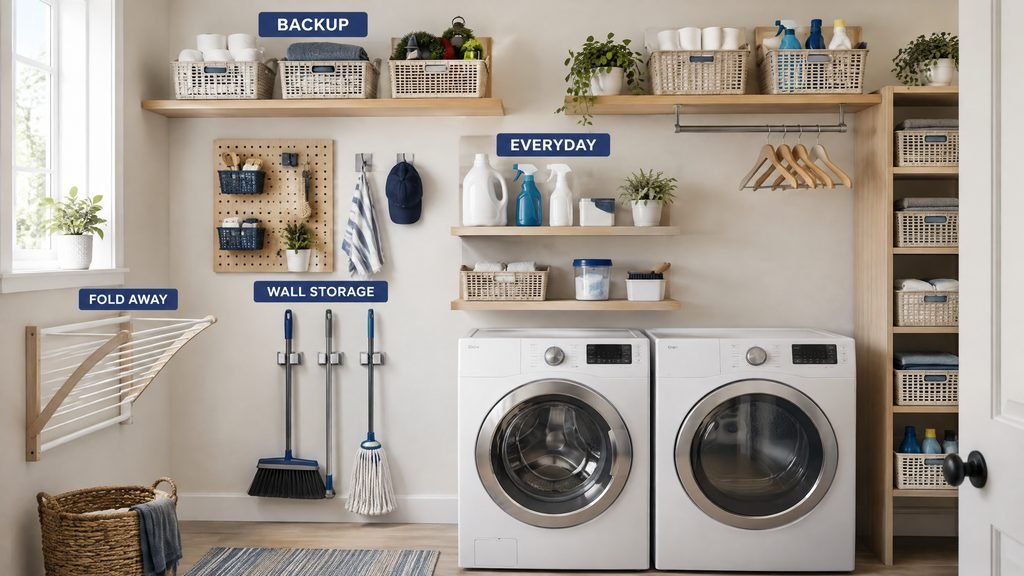
Depending on the room, you can use:
- Floating or wall-mounted shelves
- Narrow shelving units
- Wall hooks
- Hanging rails
- Pegboards
- Broom and mop holders
- Wall-mounted drying racks
- Small baskets
A wall-mounted drying rack can be particularly useful because it can fold away when you do not need it.
Use higher shelves for items you do not reach for every day. Extra detergent, spare paper products, seasonal items, or backup cleaning supplies can go higher, while everyday products should stay at a comfortable height.
Do not overload wall storage simply because space is available. Make sure shelves and wall-mounted organizers are properly installed and suitable for the weight you plan to place on them.
5. Keep Laundry Baskets Easy to Reach
Laundry baskets work best when they are placed where dirty clothes naturally collect. If you have to move three things before reaching the hamper, clothes will eventually end up on the floor.
For a family, separate baskets can make sorting easier. You might use one for lights, one for dark clothing, and another for towels or household fabrics. However, you do not need a complicated system if a single hamper works well for your household.
In a small laundry room, consider slim baskets that fit beneath a counter or shelf.
Choose baskets based on your laundry habits rather than appearance alone. A beautiful basket that is difficult to carry may be less useful than a simple lightweight one.
If you have open shelving, you can also use matching baskets to keep smaller items together while making the room look more consistent.
6. Add a Practical Folding Area
A dedicated folding surface can turn laundry day into a much smoother routine. You do not necessarily need a large countertop; a narrow work surface above front-loading machines, a wall-mounted folding table, or another suitable surface can work.
The important part is keeping the area clear enough to actually use it.
If you are planning a larger laundry room renovation, think about the complete workflow before choosing finishes. The same planning principle is useful when considering bathroom remodel ideas or other functional home upgrades: appearance matters, but daily use should come first.
Leave enough clearance around appliances and doors so the folding area does not make the room difficult to move through.
For homes without much room, a fold-down surface can be especially helpful because it provides a workspace when needed and disappears when the laundry is finished.
7. Store Frequently Used Items Within Reach
The things you use every laundry day should never be hidden behind things you rarely touch. Keep detergent, stain remover, dryer products, and your most-used laundry tools in the easiest-to-reach locations.
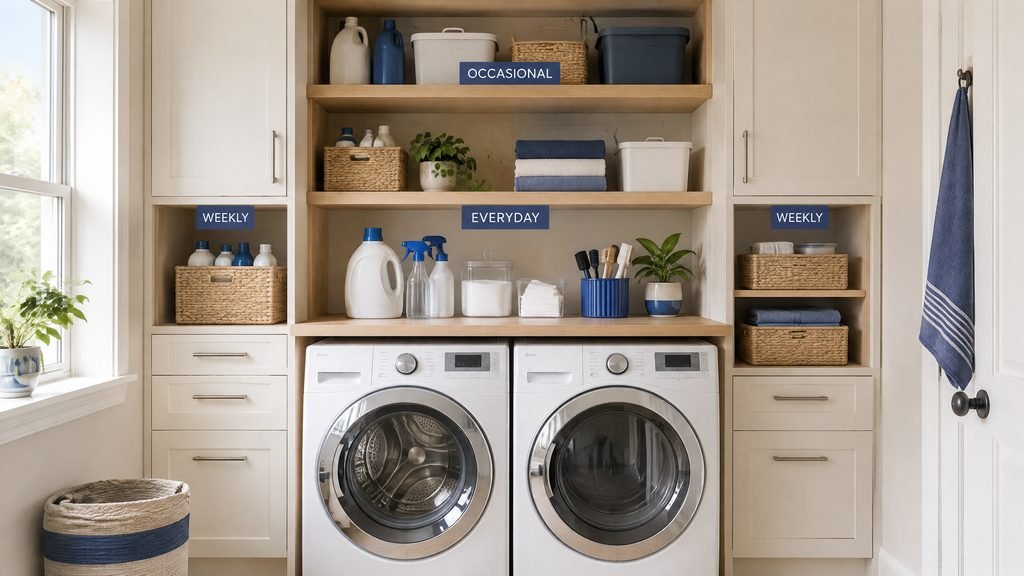
Less frequently used supplies can move to higher shelves or the back of a cabinet.
A simple storage hierarchy can help:
Everyday items → easiest to reach
Weekly items → nearby shelves or cabinets
Occasional items → higher or less accessible storage
This approach prevents the common problem of having plenty of storage but still struggling to find basic supplies.
Organizing by frequency of use is often more useful than organizing purely by product type. A backup detergent bottle does not need the same convenient location as the detergent you use every day.
8. Use Labels to Keep Everything Organized
Labels make an organization system easier for everyone in the household to follow. If several bins look similar, a simple label can prevent people from putting items wherever there is an empty space.
You could label containers:
- Laundry Supplies
- Stain Removal
- Cleaning Cloths
- Dryer Supplies
- Extra Detergent
- Hanging Supplies
- Household Backstock
Clear containers work well when you want to see what is inside, while opaque bins can hide visual clutter.
Do not create more categories than you actually need. Five useful labels are better than fifteen tiny categories that make putting things away feel like another chore.
The same principle can be useful when organizing other parts of your home, such as when you organize your bathroom cabinet.
9. Make Room for Hanging Clothes
A small hanging area can save you from carrying freshly dried clothes to another room just to keep them from wrinkling. A simple rod, wall-mounted rack, or fold-down drying rail can provide a convenient place for shirts, dresses, or other items that need to hang.
This can be especially helpful if your laundry room is also used for air-drying delicate clothing.
Before installing anything, consider the location of your washer and dryer doors, cabinets, shelves, and walking path.
The best hanging area is one that does not interfere with normal laundry movement.
You can also keep a small collection of empty hangers nearby so you do not have to search for them after every wash.
10. Keep the Laundry Room Easy to Maintain
An organization system only works when it is easy enough to maintain after laundry day. If putting something away takes several steps, it will probably end up on a countertop or shelf instead.
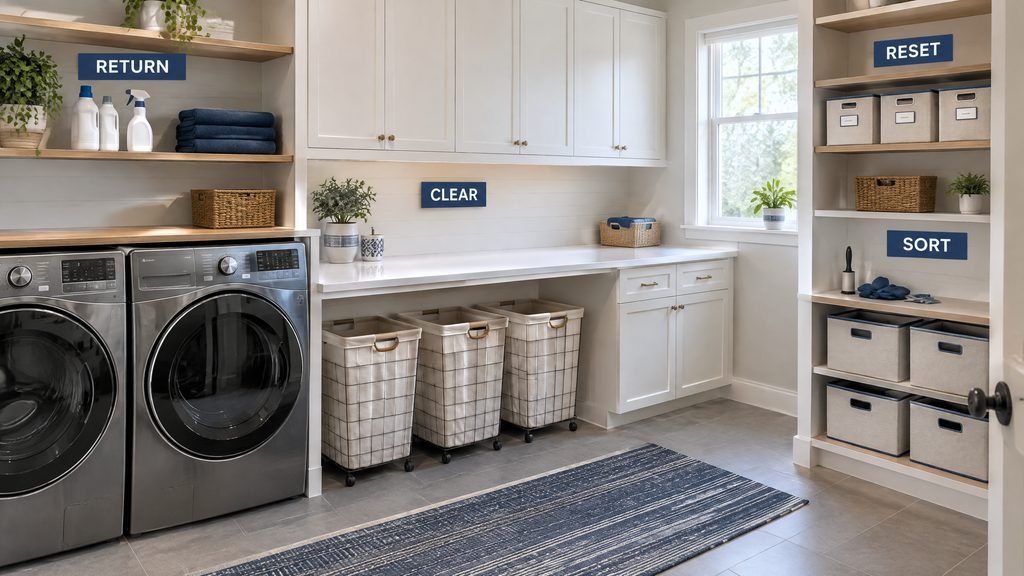
Try a quick reset after each laundry session:
- Put detergent and supplies back in their places.
- Remove empty containers.
- Return baskets to their normal positions.
- Clear the folding surface.
- Put loose items back into their labeled bins.
- Remove clothes that are ready to leave the room.
Once a week, take a quick look at the shelves and remove anything that does not belong there.
The best laundry room organization system is one you can keep using when life gets busy. It should reduce work rather than create another chore.
How to Organize a Small Laundry Room
A small laundry room can still work well when every storage choice has a purpose. Start by using vertical space, then look at the areas around and above your appliances.
Consider narrow shelves instead of deep cabinets if floor space is limited. Use wall hooks for lightweight items, baskets for loose supplies, and a fold-down surface if you need somewhere to sort or fold clothing.
Avoid filling a small room with oversized organizers. A large cabinet may technically provide storage but can make the room harder to move around in.
For very small laundry closets, prioritize the essentials: detergent, laundry baskets, stain treatment, drying supplies, and a small amount of backup stock.
You can also borrow ideas from our small entryway ideas article because both spaces benefit from vertical storage, narrow furniture, hooks, and clearly defined zones.
Laundry Room Organization Mistakes to Avoid
Most laundry room clutter comes from a few simple storage mistakes rather than a lack of space.
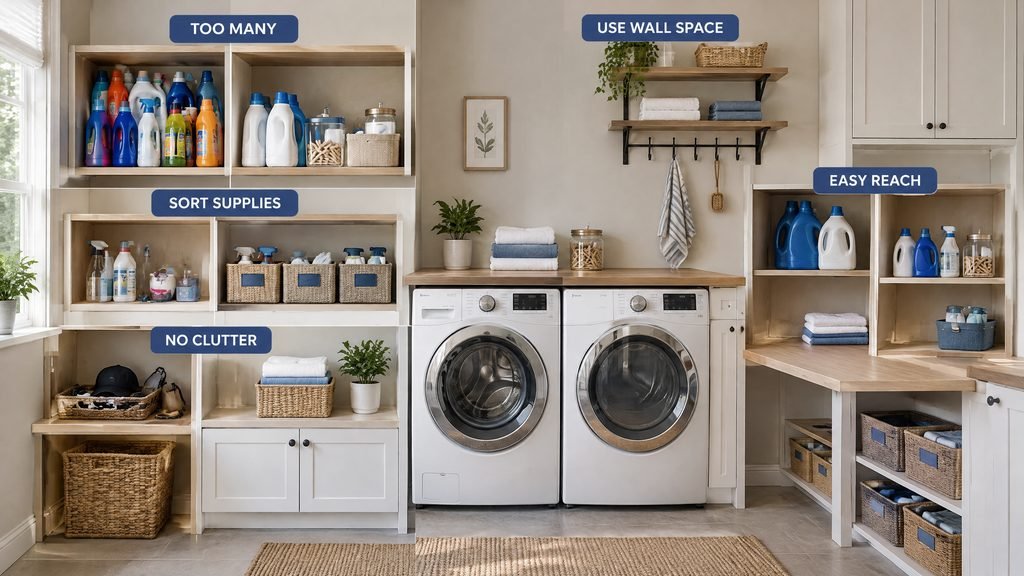
Keeping Too Many Products
Buying several versions of the same cleaner can quickly fill your shelves. Use what you already have before adding more, and avoid keeping products that you no longer need.
Wasting Vertical Space
An empty wall above your appliances is often valuable storage space. Where appropriate, use shelves, cabinets, hooks, or a hanging rack to make the room more functional.
Putting Everything on Open Shelves
Open shelves are convenient, but too many loose bottles can make a room look cluttered. Use baskets or bins for smaller supplies and keep everyday products easy to see.
Making Storage Too Difficult to Reach
Storage is only helpful when you can comfortably access it. Keep heavy or frequently used items at sensible heights and reserve high shelves for lighter, less-used products.
Turning the Laundry Room Into a Catch-All
A laundry room should not become the default storage area for everything that has no other home. If an item does not support laundry, cleaning, or another planned function of the room, consider moving it elsewhere.

What Reddit Users Say About Laundry Room Organization
One useful lesson from the Reddit discussion is that better organization does not always require replacing the entire laundry room. In the discussion you shared, several users suggested adjusting the existing wire-shelf spacing, adding bins, creating additional shelving, and moving less-used items higher up. Others pointed out that the existing setup was already functional and that open shelving can actually make frequently used supplies easier to see.
Another recurring suggestion was to group similar supplies together and use containers to control visual clutter. Some commenters also recommended using wall space for hanging items such as brooms, mops, or clothes.
My takeaway is that there is no single “correct” laundry room layout. The best system is the one that matches your habits, available space, and budget. If your current shelves work, you may only need better spacing and containers. If the shelves constantly get in the way, replacing them may make sense.
The discussion also highlights an important point: do not organize for a picture; organize for the way you actually use the room. A beautiful cabinet is not an improvement if you constantly have to open several doors to reach the detergent.
Final Tips for Keeping Your Laundry Room Organized
A few small habits can keep your laundry room organized long after the initial cleanup. Put supplies back after using them, avoid buying unnecessary duplicates, and give new items a designated home as soon as they enter the room.
Once every category has a place, maintaining the room becomes much easier.
If your laundry room also stores household cleaning supplies, keep those categories separate from laundry products. This makes it easier to find what you need and prevents the shelves from slowly becoming a collection of unrelated items.
Remember that organization should support your routine, not make it more complicated. Start with decluttering, create simple zones, use vertical space, and keep everyday items within reach.
A well-organized laundry room does not need expensive cabinets or a complete makeover. Sometimes the biggest improvement comes from simply giving the things you already own a better place to live.
Laundry Room Organization FAQs
What is the best way to organize a laundry room?
The best approach is to organize the room around your laundry routine. Keep washing, sorting, drying, folding, and storage areas easy to access, and place frequently used supplies within reach.
How do I organize a small laundry room?
Use vertical space before adding more floor storage. Wall shelves, hooks, narrow organizers, wall-mounted drying racks, and storage above the appliances can help you gain useful space without making the room feel crowded.
Where should laundry detergent be stored?
Keep detergent in a cool, dry, secure location that follows the manufacturer’s storage instructions. If children or pets can access the room, use storage that keeps laundry products safely out of reach.
How can I create more storage in my laundry room?
Start by using the space you already have more efficiently. Declutter first, adjust shelf spacing, use bins, add suitable wall storage, and consider cabinets or shelves above the appliances when the room and installation conditions allow.