
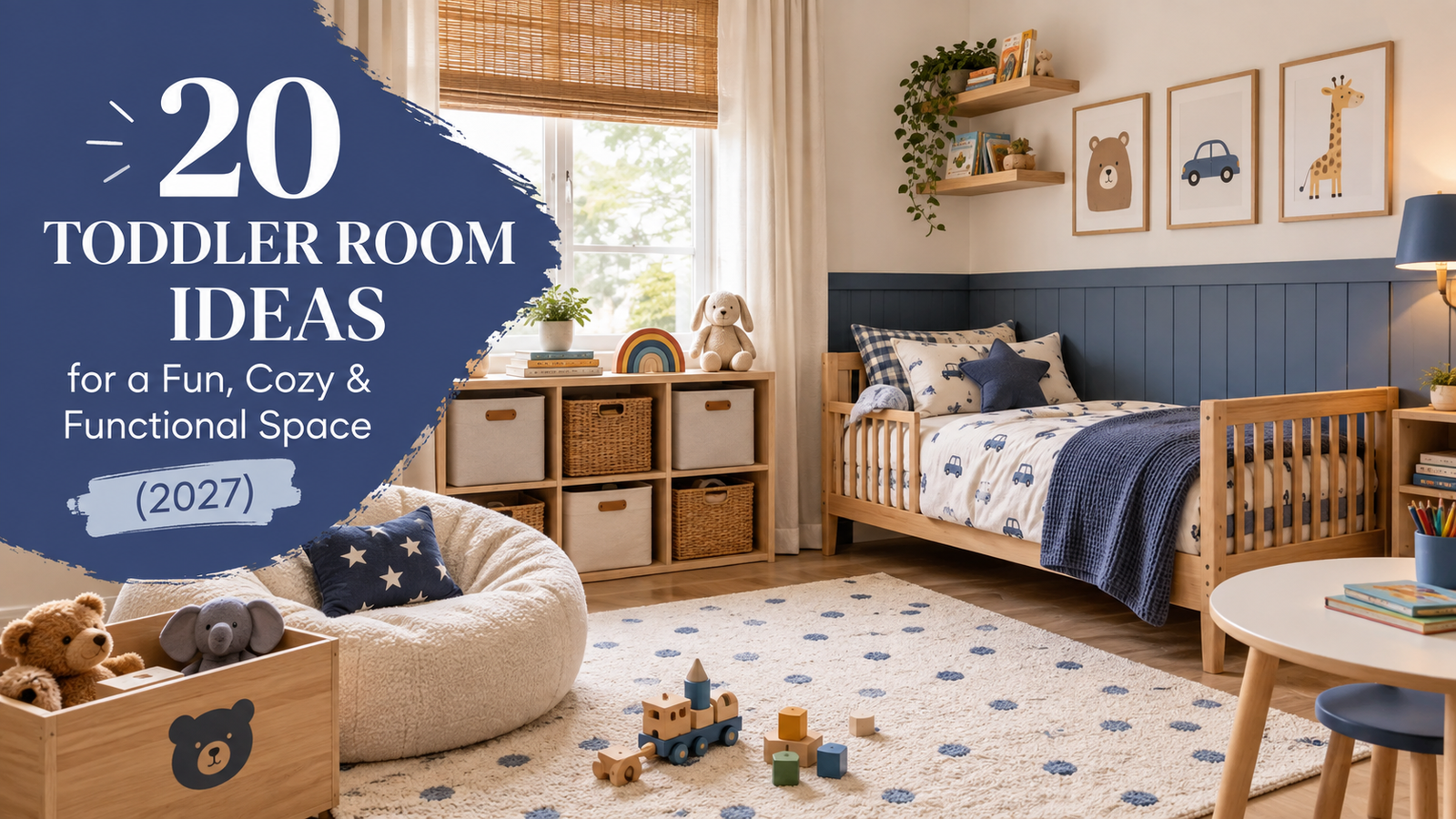
The best toddler room ideas create a space that feels fun for your child while staying comfortable, safe, and easy to manage every day.
A toddler bedroom does not need expensive furniture or a complicated theme to feel special. A comfortable bed, useful storage, open floor space, and a few decorations that match your child’s personality can be enough to create a room they enjoy.
When planning a toddler room, think about how your child will actually use the space. They may sleep, play, look at books, get dressed, and spend quiet time there. A good layout should support those activities without filling the room with unnecessary furniture.
Color is another easy way to change the feeling of a room. If you are choosing a new wall color, our guide on how to choose a paint color can help you compare colors based on lighting, room size, and existing finishes.
Toddler Boy Room Ideas
Toddler boy room ideas can be playful and creative while still leaving enough room for sleep, storage, and everyday play.
1. Adventure-Themed Toddler Boy Room
An adventure theme can turn a simple toddler bedroom into a fun space for imagination.
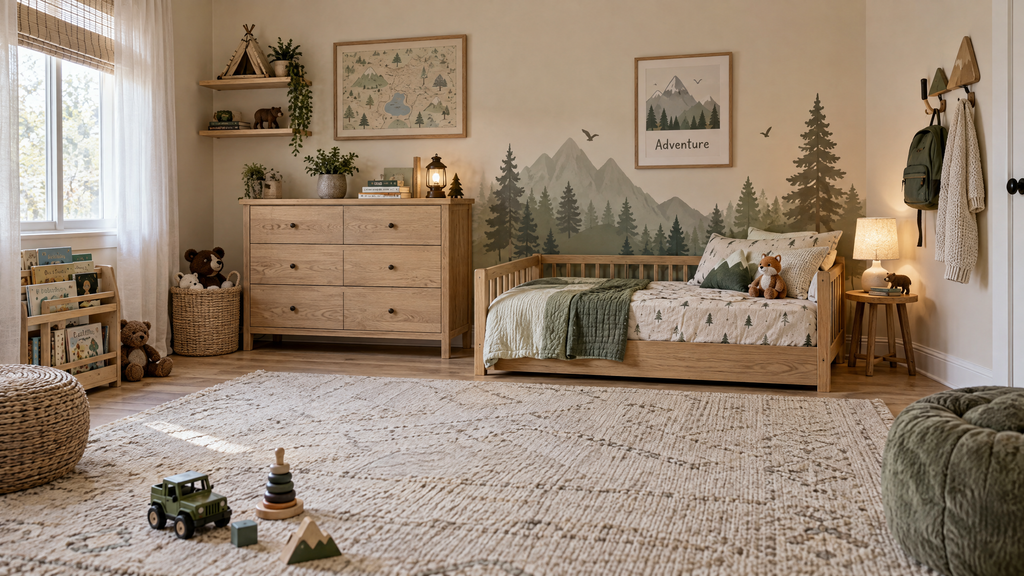
Think about mountains, forests, animals, camping, maps, or travel-inspired artwork. You do not need to put the theme on every wall. A few prints, a rug, bedding, or removable wall decals can create the look without making the room difficult to update.
Keep the larger furniture pieces neutral. When your toddler eventually moves on from the adventure theme, you can change the accessories without replacing the bed or dresser.
2. Dinosaur-Themed Toddler Boy Room
Dinosaur decor is an easy way to give a toddler boy’s bedroom plenty of personality.
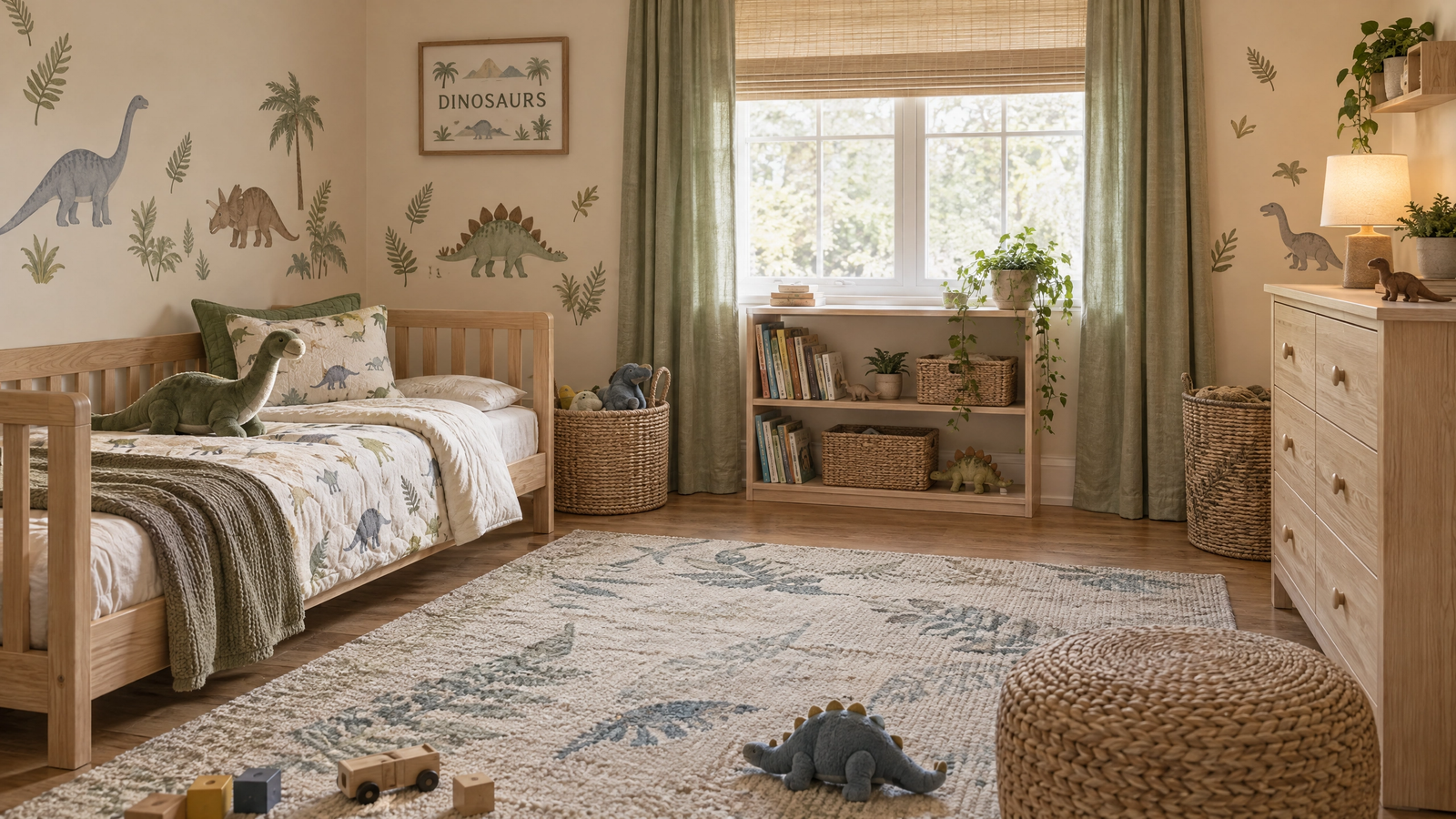
Use dinosaur artwork, bedding, removable decals, or a small collection of dinosaur toys. Green, beige, brown, cream, and muted blue can create a balanced color palette.
If your child changes interests frequently, avoid buying expensive dinosaur-themed furniture. Use the theme through smaller items that are easy to replace.
3. Space-Themed Toddler Boy Room
A space-themed room can make bedtime exciting with only a few simple details.
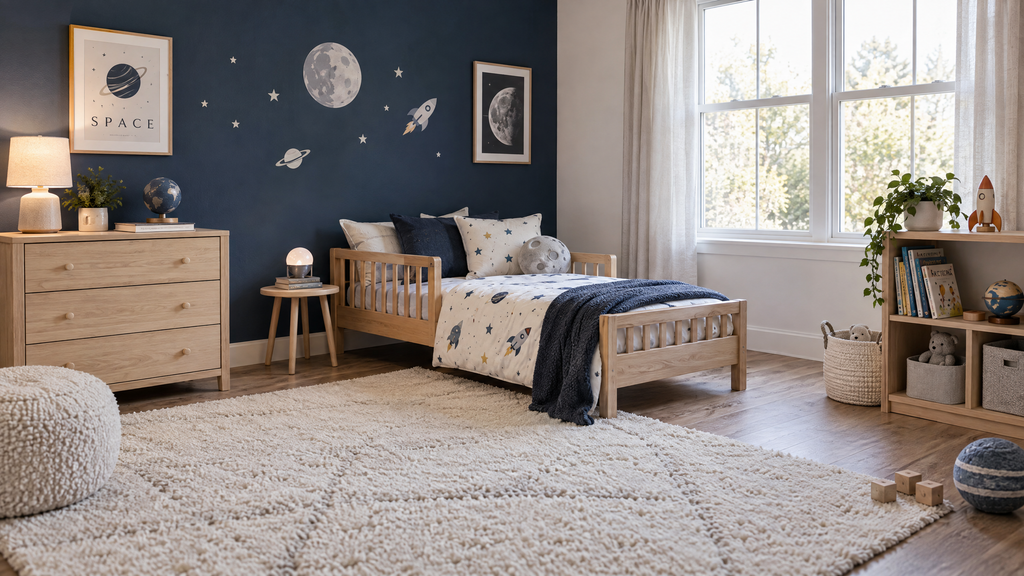
Stars, planets, moons, rockets, and space artwork can create the theme without covering every surface. A dark accent wall can work in a larger, naturally bright bedroom, while lighter walls may be better for a small room.
You can also use bedding or removable decals to introduce the theme without making a permanent change.
4. Nature-Inspired Toddler Boy Room
Nature-inspired colors can create a calm bedroom while still giving a toddler plenty of interesting things to look at.
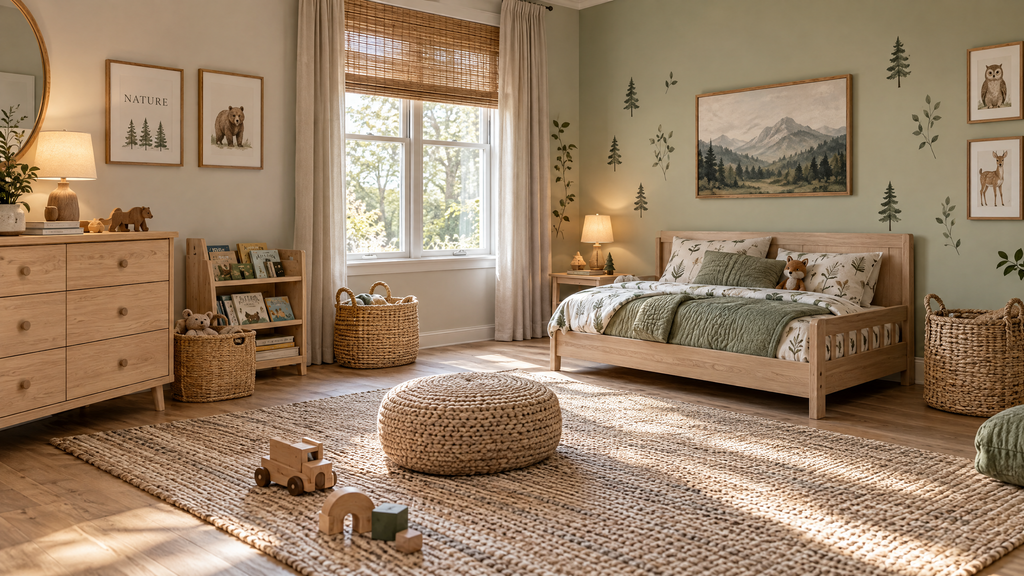
Try forest animals, trees, mountains, leaves, or simple outdoor artwork. Light wood furniture and woven baskets can add warmth without making the room feel heavily themed.
This is also a good option if you want the bedroom to grow with your child because nature-inspired colors can work just as well in an older child’s room.
5. Cars, Trucks or Construction-Themed Room
Vehicle-themed decor works especially well when your toddler already loves cars, trucks, or construction toys.
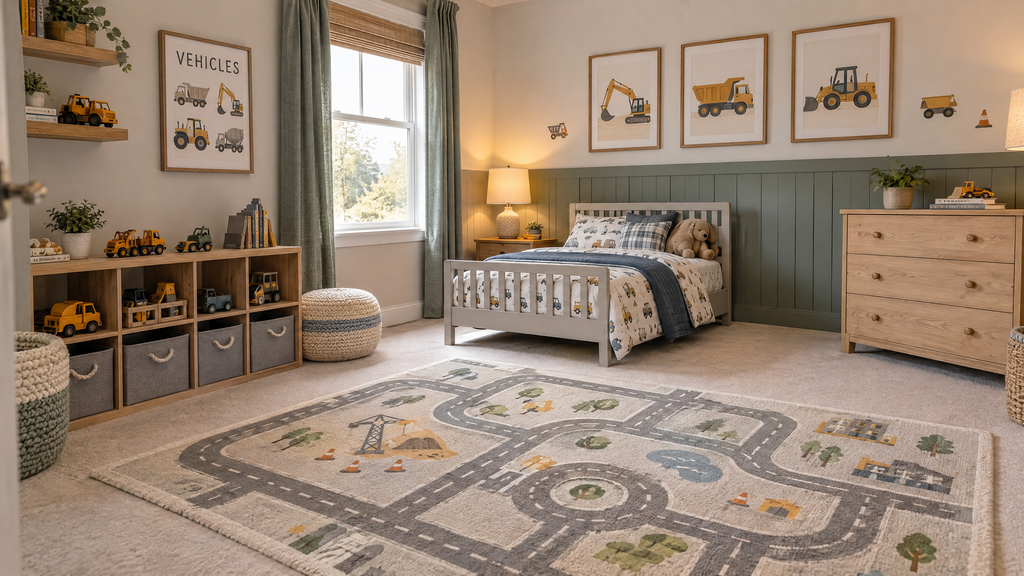
A road-style rug, truck artwork, toy vehicles, or construction-inspired bedding can provide enough decoration without taking over the entire room.
Create a small storage area for the vehicles so they do not end up scattered across the floor. If the room is small, choose one main vehicle-related feature instead of several large decorations.
Toddler Girl Room Ideas
Toddler girl room ideas can be soft and traditional, colorful and playful, or completely neutral depending on your child’s personality.
6. Soft Pink Toddler Girl Room
Soft pink can make a toddler bedroom feel warm and cheerful without turning the entire room pink.
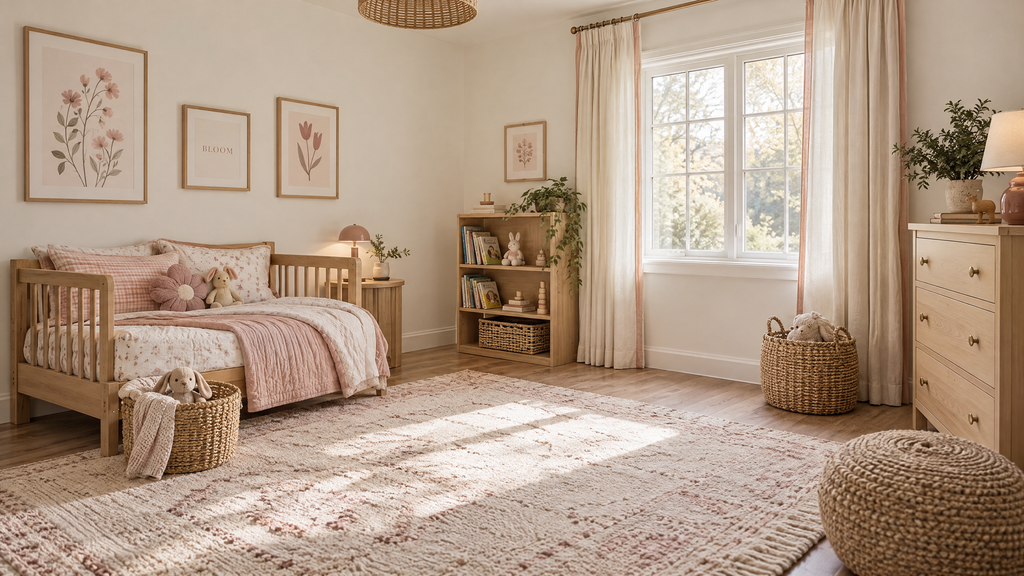
Try blush, dusty pink, or muted rose with cream, warm white, beige, or natural wood. Use pink through bedding, artwork, curtains, or a rug instead of every piece of furniture.
This makes the room easier to update later if your child’s favorite colors change.
7. Floral Toddler Girl Room
Floral patterns add a cheerful touch while allowing the rest of the bedroom to remain simple.
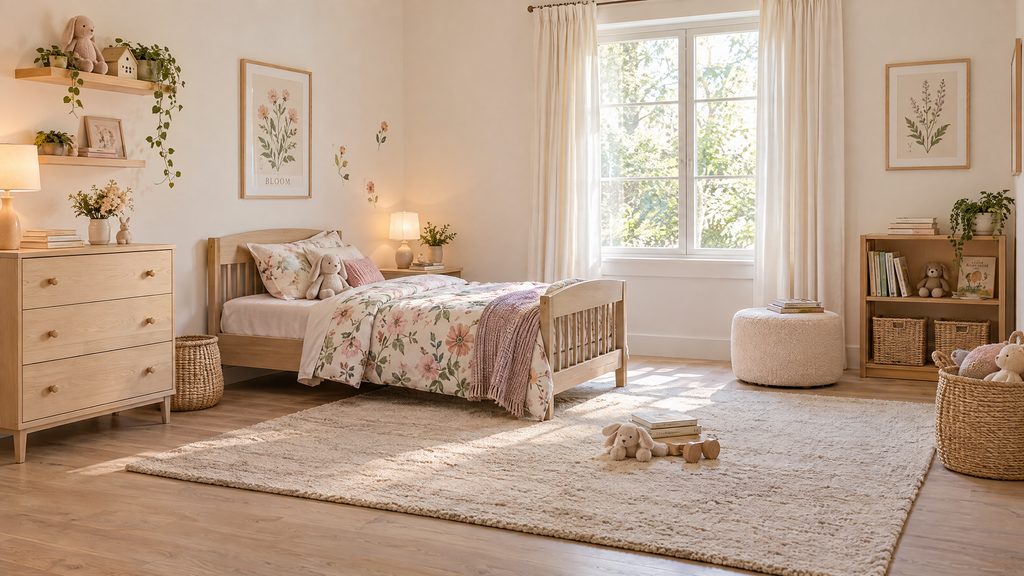
You can use flowers on bedding, removable wall decals, curtains, artwork, or a small accent rug. If the floral pattern is bold, keep nearby walls and furniture relatively simple.
For a small room, one floral feature may be enough. Too many competing patterns can make the space feel visually crowded.
8. Rainbow-Themed Toddler Girl Room
A rainbow theme is a simple way to bring several colors into a toddler bedroom without choosing just one.
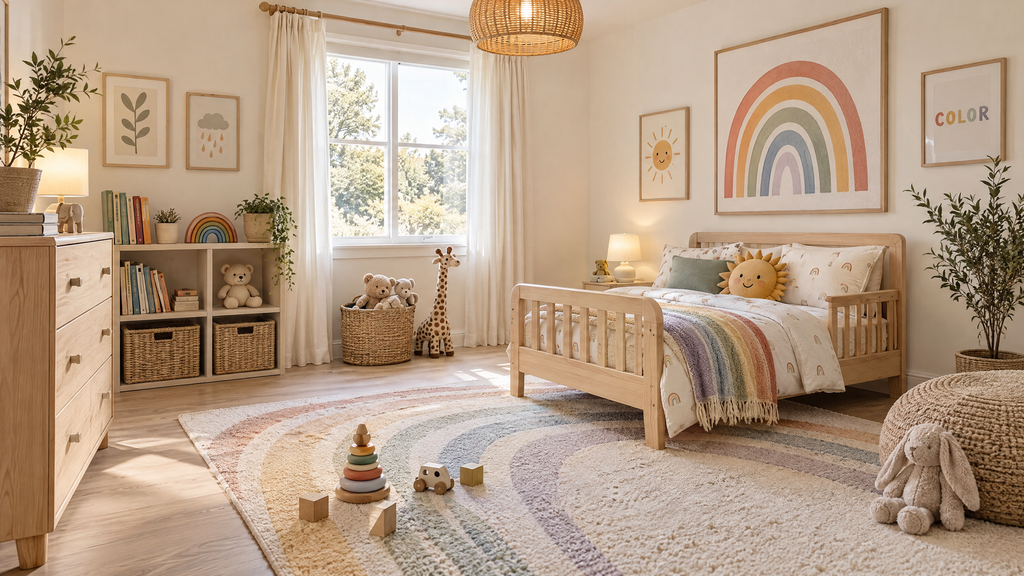
Use a rainbow wall print, colorful bedding, artwork, cushions, or a rug. A cream or warm-white background helps the colors stand out without making the room feel overwhelming.
Rainbow decor can also work well if you want a gender-neutral toddler room that can be enjoyed by siblings.
9. Fairy or Whimsical Toddler Girl Room
Whimsical details can make a toddler bedroom feel magical without requiring a complete themed makeover.
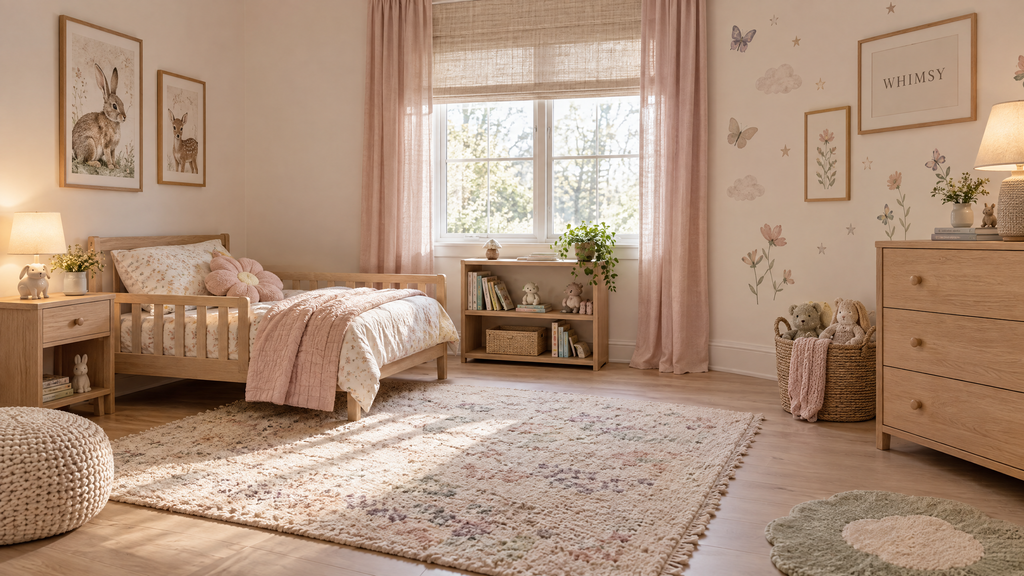
Try butterflies, clouds, stars, woodland animals, flowers, or simple fairy-inspired artwork. Removable decals can be useful because they allow you to change the design later.
Be careful with decorative hanging items, cords, and anything positioned within your child’s reach. A decoration should never become a climbing or entanglement hazard.
10. Neutral and Modern Toddler Girl Room
A neutral toddler girl bedroom provides a calm base while leaving plenty of room for colorful toys and personal touches.
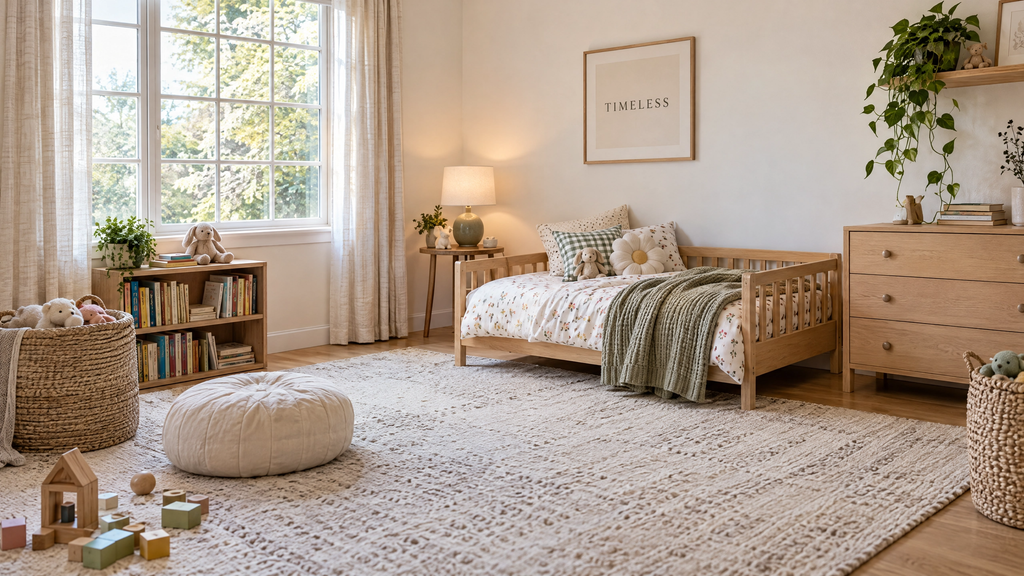
Warm white, beige, soft gray, sage, and light wood can create a timeless foundation. Add color through books, bedding, artwork, toys, and small accessories.
This approach works particularly well if you do not want to completely redesign the room when your child starts preschool.
Other Toddler Room Ideas
The most useful toddler bedroom ideas often improve the way the room works rather than simply making it look attractive.
11. Make a Small Toddler Bedroom Feel Bigger
A small toddler bedroom feels more useful when you protect the open floor space instead of filling every corner with furniture.
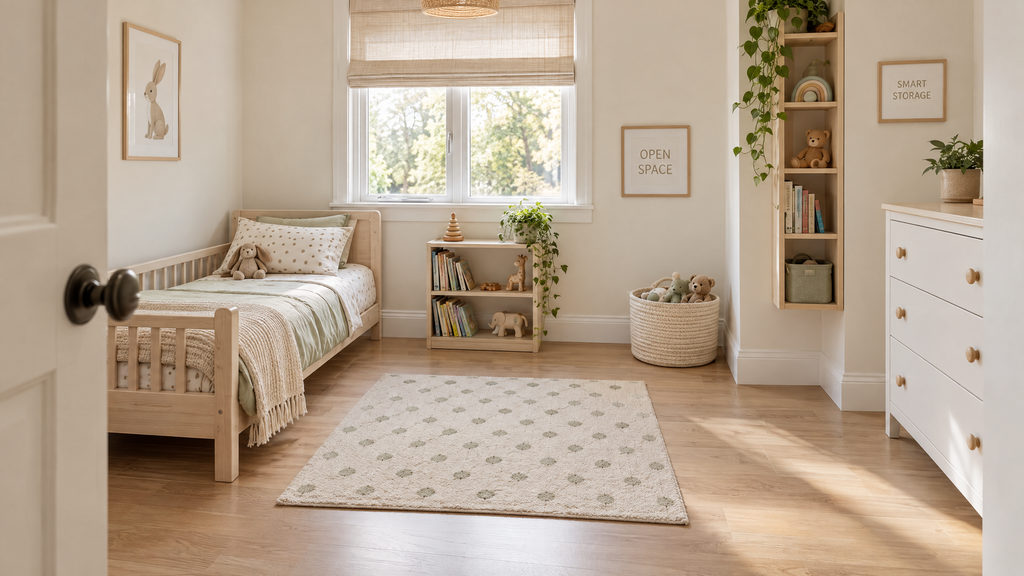
Choose appropriately sized furniture and avoid buying pieces simply because an empty wall or corner is available. A toddler needs room to move, play, and get around the bedroom comfortably.
Use vertical storage carefully and keep frequently used items easy to access without requiring your child to climb.
If you are decorating a particularly small home, our guide to small entryway ideas also covers useful principles for working with limited floor space, such as reducing clutter and giving each item a clear place.
12. Create a Montessori-Inspired Toddler Room
A Montessori-inspired room can encourage simple independence by making appropriate everyday items easier for a toddler to access.
A low bookshelf, accessible clothing area, simple toy baskets, and a clear floor area can help your child participate in everyday routines.
You do not need to follow a strict Montessori setup. Instead, consider which elements are practical for your family and safe for your child’s current abilities.
The important distinction is accessible does not mean unrestricted. Some items should remain out of reach even if you want your toddler to become more independent.
13. Add a Cozy Toddler Reading Nook
A small reading nook can give your toddler a quiet place to look at books and relax.
You can create one with a low bookshelf, comfortable floor cushion, small chair, or soft washable rug. It does not need to occupy an entire corner.
Keep a manageable number of books available rather than putting every book in the room. Rotating them occasionally can keep the selection interesting without creating clutter.
14. Create a Dedicated Play Area
A defined play area gives your toddler space to play while helping keep the rest of the bedroom organized.
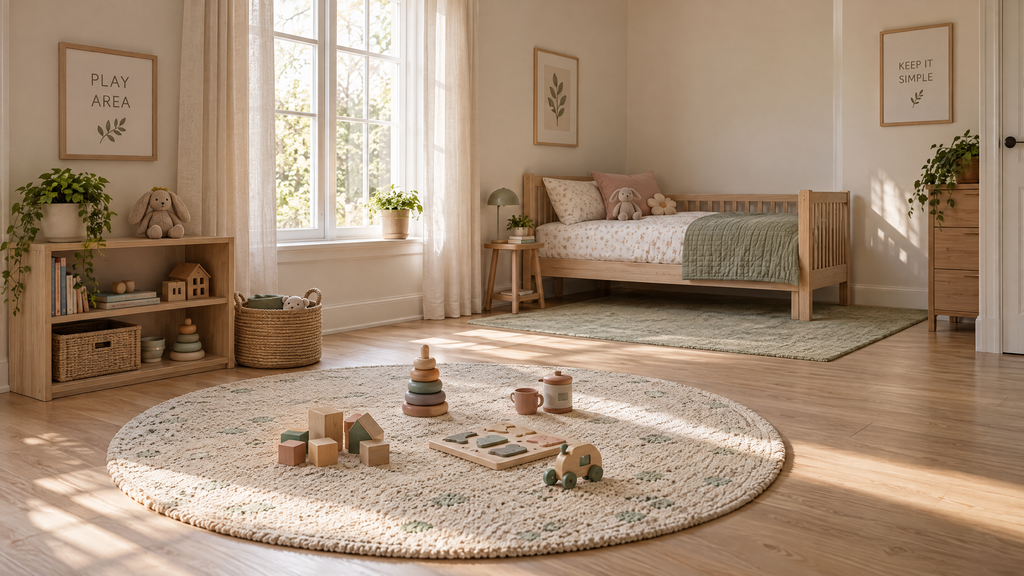
Leave a section of open floor for blocks, puzzles, pretend play, or other age-appropriate activities. A washable rug can visually define the area while making floor play more comfortable.
You do not need a large play kitchen, table, tent, and multiple activity stations. Start with what your child actually enjoys.
15. Design a Gender-Neutral Toddler Room
A gender-neutral toddler room can be colorful and playful without relying on traditional boy or girl themes.
Sage green, warm beige, muted blue, soft yellow, cream, and terracotta can all work well. Animals, clouds, stars, rainbows, nature, and simple geometric patterns are flexible choices.
A neutral foundation can also make it easier to reuse furniture and decor if siblings eventually share the bedroom.
16. Bring Nature Into the Room
Nature-inspired decor can make a toddler bedroom feel warm and calming while still giving it plenty of character.
Consider woodland animals, trees, leaves, mountains, flowers, or simple botanical artwork. Natural wood furniture and woven baskets can complement this style without making the room feel overly decorated.
If you bring real plants into the room, make sure they are appropriate for a home with young children and placed somewhere your toddler cannot pull them down or access them.
17. Create a Cozy Bed Nook
A cozy bed nook can make the sleeping area feel separate from the rest of the bedroom.
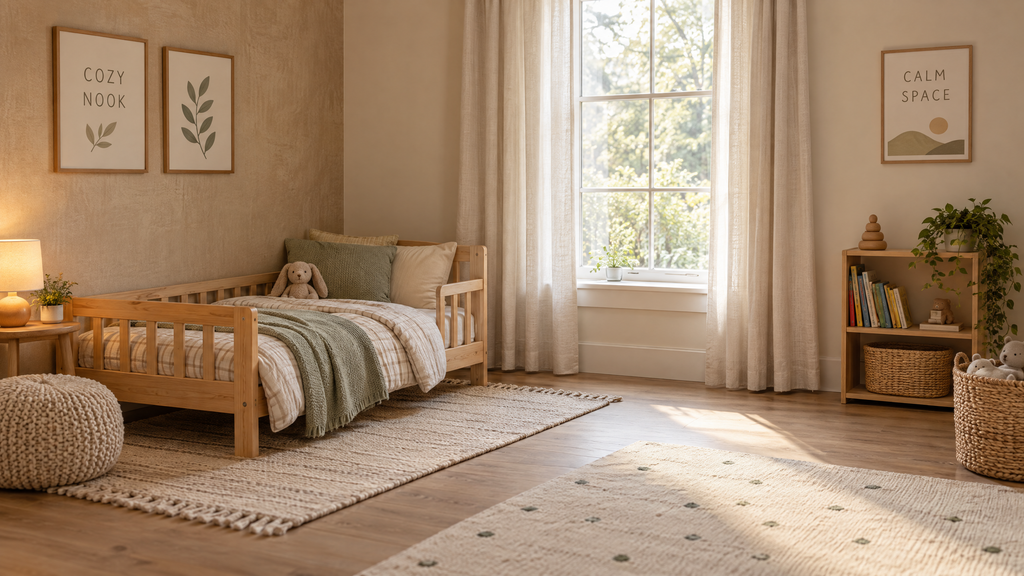
Use a comfortable bed, simple bedding, a soft rug, and calm wall artwork to create a clear sleeping zone.
You do not need a large canopy or elaborate structure. In many rooms, simply placing the bed against a suitable wall and keeping the surrounding area uncluttered creates a cozy effect.
18. Use Easy Toy Storage
The best toddler toy storage is storage that makes cleanup simple enough to use every day.
Open baskets, low shelves, and clearly defined storage areas can help your child understand where toys belong.
Try grouping similar items together instead of creating a complicated organization system.
| Storage Option | Useful For | Practical Tip |
|---|---|---|
| Open baskets | Stuffed animals and soft toys | Use a few larger baskets rather than many small ones |
| Low shelves | Books and favorite toys | Secure shelves properly |
| Toy bins | Blocks and larger toys | Use simple labels or picture labels |
| Dresser drawers | Clothes | Keep frequently used items organized |
| Small book display | Favorite books | Rotate books to prevent clutter |
The same basic idea applies to organization throughout a home: frequently used items should be easier to access than things used occasionally.
19. Try a Budget-Friendly Toddler Room
You can create a beautiful toddler bedroom without replacing every piece of furniture.
Start with the elements that make the biggest visual difference: wall color, bedding, rug, artwork, and storage.
Instead of buying a completely new room set, consider rearranging existing furniture, changing textiles, adding removable wall decals, or creating simple DIY artwork.
Spend your budget carefully on essential furniture and safety-related improvements rather than expensive decorations your child may quickly outgrow.
20. Design a Room That Grows With Your Child
A room that grows with your child can save money and prevent another major makeover a few years later.
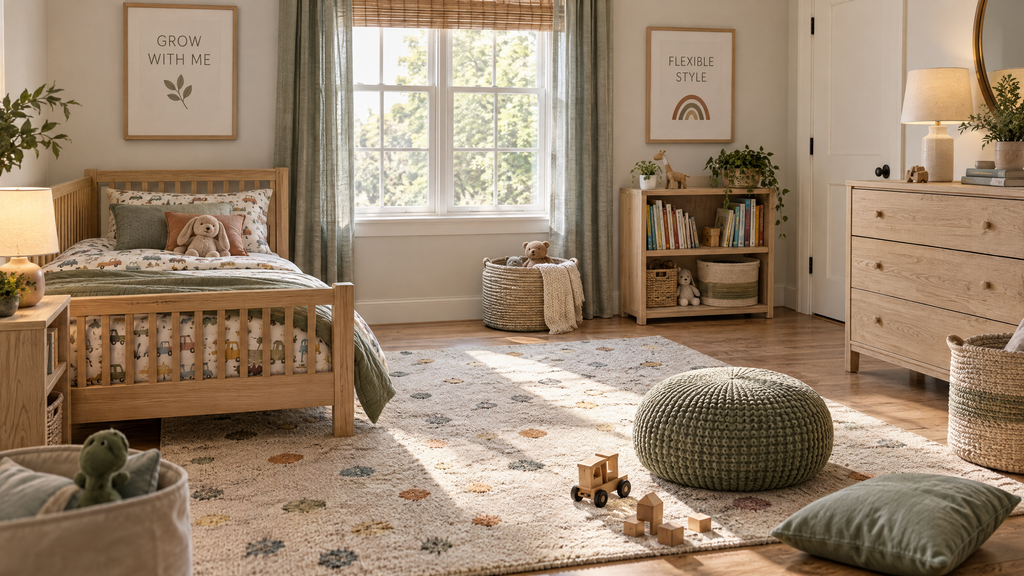
Choose simple furniture, flexible colors, and decorations that can easily be replaced. A neutral bed and dresser can stay in the room while bedding, artwork, rugs, and accessories change as your child’s interests develop.
Before making a major purchase, ask yourself: Will this still work when my child is five or six?
If the answer is no, consider whether the item is worth the cost and space.
How to Set Up a Toddler’s Room
The easiest way to set up a toddler’s room is to plan the layout around sleep, play, storage, and safe movement before adding decorations.
Create Separate Sleep and Play Areas
Keeping the sleep area calmer than the play area can make the room easier to use throughout the day.
Place the bed in one part of the room and use another section for books and toys. You do not need a physical divider.
A rug, low shelf, or simple furniture arrangement can visually separate the areas while keeping the room open.
Make Storage Easy for Toddlers to Use
Keep everyday items accessible only when your child can safely reach them without climbing.
A few low baskets or shelves can hold books and toys that your toddler is allowed to use independently. Store items that require supervision somewhere else.
Do not create storage that encourages your child to climb onto a dresser, bookshelf, or chair.
Choose Comfortable, Age-Appropriate Furniture
Toddler bedrooms usually need less furniture than adults expect.
A suitable bed, clothing storage, toy storage, and perhaps a small bookshelf or chair may be enough.
Large furniture can quickly reduce the floor area available for play. Measure the room before buying anything and leave clear paths between major pieces.
Keep the Room Simple and Uncluttered
A simpler room is often easier to clean, easier to organize, and easier for a toddler to move around in.
Do not feel pressure to fill every wall or corner. A few favorite toys, books, and decorations can make the room feel personal without making it overwhelming.
Toddler Room Safety Tips
Toddler room safety should come before the color scheme, theme, or decorating style.
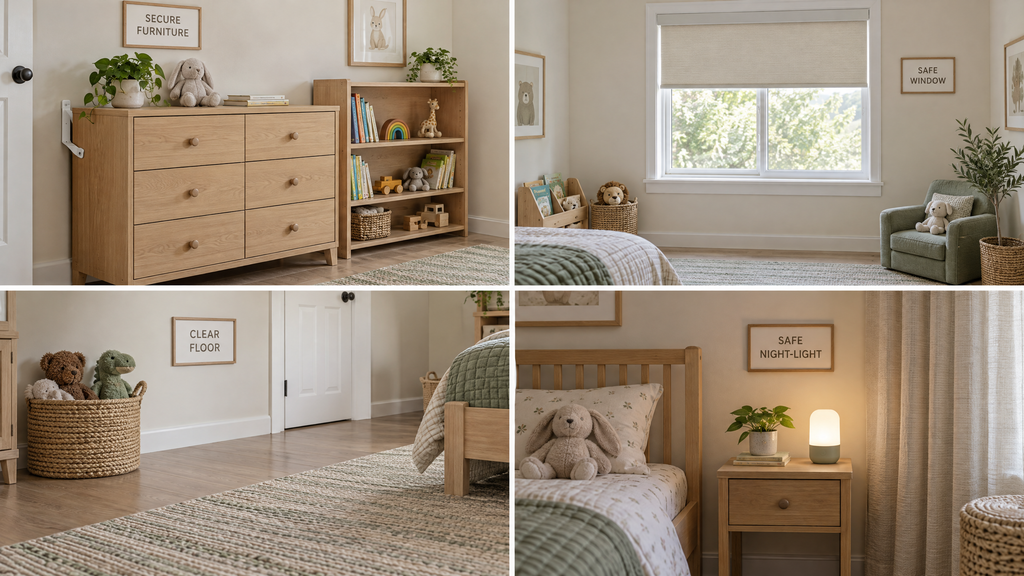
Secure Furniture and Shelves
Tall or unstable furniture should be secured according to the manufacturer’s instructions.
Dressers, bookcases, shelves, and televisions can tip when a child climbs, pulls, or falls against them. The CPSC recommends anchoring furniture and appliances that could tip to help prevent these injuries.
Keep attractive toys or objects that might encourage climbing away from high shelves.
Keep Windows and Cords Safe
Windows and window-covering cords deserve special attention because they can create hazards that are easy to overlook.
The CPSC identifies cordless window coverings as the safest option when young children are present. If corded coverings remain in the home, furniture and toys should be kept away from the cords and appropriate safety measures should be followed.
The American Academy of Pediatrics also recommends keeping a child’s bed away from windows and using appropriate window safety measures.
Keep Electrical Cords and Small Objects Out of Reach
A quick floor-level safety check can reveal hazards that are easy to miss from an adult’s height.
Look for accessible electrical cords, small objects, loose hardware, batteries, coins, beads, or other items that your toddler might handle or swallow.
HealthyChildren.org recommends keeping electrical cords out of reach and sight and checking floors for small objects that can create choking or poisoning hazards.
Choose Safe Lighting
Night lighting should provide enough visibility without creating a heat or fire concern.
If you use a night-light, choose a cool model and keep it away from curtains, bedding, and other materials that could become hot. The American Academy of Pediatrics specifically recommends keeping night-lights away from drapes and bedding.
How to Choose the Best Toddler Room Ideas
The right toddler room idea depends more on your child’s routine and your available space than on the latest decorating trend.
Before buying anything, consider these five questions:
| Question | What to Consider |
|---|---|
| How large is the room? | Protect enough open space for movement and play |
| What does your child enjoy? | Use interests as inspiration rather than a permanent theme |
| How much storage is needed? | Choose practical storage for toys and clothes |
| What is your budget? | Prioritize safe, useful furniture over decorative extras |
| How long should the design last? | Choose flexible furniture and easy-to-change decor |
A practical rule is to decorate the room in layers. Start with furniture and safety, then add storage, followed by bedding and lighting, and finish with artwork and decorative details.
This approach makes it easier to stop when the room already works instead of continuing to buy things simply because there is an empty corner.
What Parents Say About Toddler Bedroom Design
Real-world parent discussions show that practical use often matters more than creating a picture-perfect toddler bedroom.
Another useful theme from the discussion was the importance of making the room feel familiar and comfortable. Parents mentioned books, familiar bedding, comfortable seating, favorite stuffed animals, and gradually introducing the child to the new space.
A related Reddit discussion about toddler bedrooms also included parents who deliberately kept fewer toys in the bedroom because too many toys could encourage play at bedtime. One parent described reducing the number of toys and books available at night after bedtime became difficult.
Our Take on the Discussion
The most useful lesson is to design the bedroom around your child’s actual routine instead of trying to copy a perfect room from Pinterest or Instagram.
If your toddler plays in the bedroom frequently, leave plenty of floor space. If the room is mainly used for sleeping and reading, you may want fewer toys and a calmer layout.
The discussions also support an important practical point: you do not need to fill a toddler’s room to make it interesting. A few favorite books, comfortable bedding, meaningful artwork, and a small selection of toys may be more useful than a room packed with furniture.
Safety should also remain part of the design process. Furniture anchoring, window safety, accessible cords, and small objects deserve attention before decorative details.
Final Thoughts
The best toddler room ideas are the ones that make the bedroom comfortable for your child and easier for your family to use every day.
Start with the basics: safe furniture, a suitable sleeping area, useful storage, open floor space, and comfortable lighting.
Then add personality through color, artwork, bedding, books, rugs, and removable decorations. A dinosaur room, floral room, rainbow room, nature-inspired room, or simple neutral bedroom can all work when the layout fits the child.
Most importantly, do not feel pressured to create a perfect room. A toddler bedroom should work for real family life, not just look good in photographs.
Frequently Asked Questions
What Are Some Must-Haves for a Toddler’s Room?
The main toddler room must-haves are a suitable sleep space, practical clothing storage, toy storage, safe lighting, and enough open floor space.
Depending on your child’s routine, you may also want a small bookshelf, washable rug, comfortable chair, or reading area.
You do not need every product marketed for children’s bedrooms. A toddler can have a comfortable and functional room without a large play structure, oversized dresser, or dozens of decorative accessories.
Simple Toddler Room Essentials
- Suitable bed or sleep space
- Clothing storage
- Safe toy storage
- A few age-appropriate books
- Safe lighting
- Open floor space
- Appropriate window coverings
- Secure furniture
- Simple, washable textiles
What Should a 3-Year-Old’s Bedroom Look Like?
A 3-year-old’s bedroom should be comfortable, simple, safe, and suited to the child’s growing independence.
It can include a comfortable bed, accessible books and selected toys, practical clothing storage, and decorations that reflect the child’s interests.
There is no single correct look. One 3-year-old may love dinosaurs and building toys, while another may prefer animals, art, dolls, or books.
The important part is that the room supports the child’s routine without creating unnecessary hazards or clutter.
How Do You Set Up a 2-Year-Old’s Room?
A 2-year-old’s room should begin with a safe sleeping area and then add only the furniture and activities the child actually needs.
Start by checking the bed area, securing furniture, reviewing windows and cords, and removing small or unsafe objects.
Then add a limited selection of books and toys. Keeping familiar items from your child’s previous sleeping space can also make a new bedroom feel more comfortable during a transition.
A simple setup might include:
- A suitable sleep space
- Secured clothing storage
- A few accessible books
- A small number of toys
- Clear floor space
- Safe lighting
- Simple wall decor
Should a 2-Year-Old Have Their Own Bedroom?
A 2-year-old does not automatically need a separate bedroom because sleeping arrangements depend on the family and the child’s individual needs.
Some families move a toddler into a separate bedroom around this age, while others continue sharing a room. The important thing is to create a safe and comfortable sleeping environment that works for your household.
If you are making the transition, familiar bedding, books, or other appropriate comfort items can help the new space feel less unfamiliar.
The Reddit discussion reviewed for this article also shows how different families approach toddler bedroom transitions, with parents describing everything from very simple sleeping rooms to rooms that include reading and play areas.
What Furniture Does a Toddler Need in Their Bedroom?
Most toddler bedrooms only need a few functional furniture pieces.
A suitable bed, clothing storage, and toy or book storage are usually the starting points. Depending on the room, you may also want a small chair or reading area.
Before buying another piece, ask whether it solves a genuine problem. If it does not improve storage, sleep, play, or organization, leaving the space open may be more useful.
How Can I Make a Toddler’s Room Safe and Easy to Organize?
The easiest approach is to remove hazards first and organize everything else according to how often your child uses it.
Keep appropriate everyday items accessible, secure furniture, manage cords, and store less-used belongings somewhere else.
A quick weekly reset can help:
- Return toys to their storage areas.
- Remove broken or unused items.
- Rotate a few books or toys.
- Check furniture anchors.
- Look for newly accessible cords or objects.
- Recheck the room from your toddler’s height.