
The first priority is to stop the toilet from overflowing before you try to remove the clog. A clogged toilet can be stressful, but acting calmly can prevent dirty water from spilling onto the bathroom floor and causing a bigger cleanup problem.
If the water is rising after a flush, do not flush again. Remove the toilet tank lid and push the flapper closed if water is still flowing into the bowl. You can also turn the shutoff valve behind or beside the toilet clockwise to stop more water from entering the tank.
If the water level is high but stable, give it time to settle before trying any unclogging method. Some minor clogs soften and begin draining on their own.
Stop the Toilet From Overflowing
Stopping the water flow quickly is the easiest way to prevent an overflowing toilet. If the bowl is filling rapidly, take the tank lid off and close the rubber flapper at the bottom of the tank. This stops water from flowing from the tank into the bowl.
You can also close the water supply valve near the wall behind the toilet. Turn it clockwise until it stops. Avoid forcing the valve if it is old or difficult to turn.
Check Whether the Water Level Is Going Down
A slowly dropping water level is usually a good sign because it means some water is still moving through the drain. Wait for the bowl to return closer to its normal level before adding water or trying another method.
A completely full bowl should be handled carefully. Adding more water, soap, or other products too soon may cause an overflow.
When You Should Not Keep Flushing
Repeated flushing is one of the most common mistakes people make with a clogged toilet. If the first flush does not clear the bowl and the water rises, stop flushing immediately.
One extra flush can turn a simple clog into a messy bathroom problem. Wait until the water level has dropped and then try one of the methods below.
10 Toilet Unclogging Methods at a Glance
| Method | Best For | Difficulty | Try This |
|---|---|---|---|
| Wait | Minor soft clog | Easy | Wait 10–20 minutes |
| Dish Soap + Warm Water | Toilet paper or soft waste | Easy | Let it sit, then check drainage |
| Baking Soda + Vinegar | Light buildup | Easy | Allow the mixture time to fizz |
| Shampoo + Warm Water | Minor soft clog | Easy | Use as an alternative to dish soap |
| Toilet Brush | Clog near the opening | Easy | Push and pull gently |
| Wire Hanger | Reachable obstruction | Moderate | Use carefully to avoid scratches |
| Toilet Auger | Stubborn clog | Moderate | Turn gently; do not force |
| Wet/Dry Vacuum | Reachable blockage | Moderate | Use only a vacuum rated for wet pickup |
| Enzyme Cleaner | Organic material | Easy | Follow the product instructions |
| Remove Visible Object | Object near the opening | Easy | Retrieve carefully; do not push it deeper |
Related: Garbage Disposal Not Working? 10 Common Problems and How to Fix Them (2026)
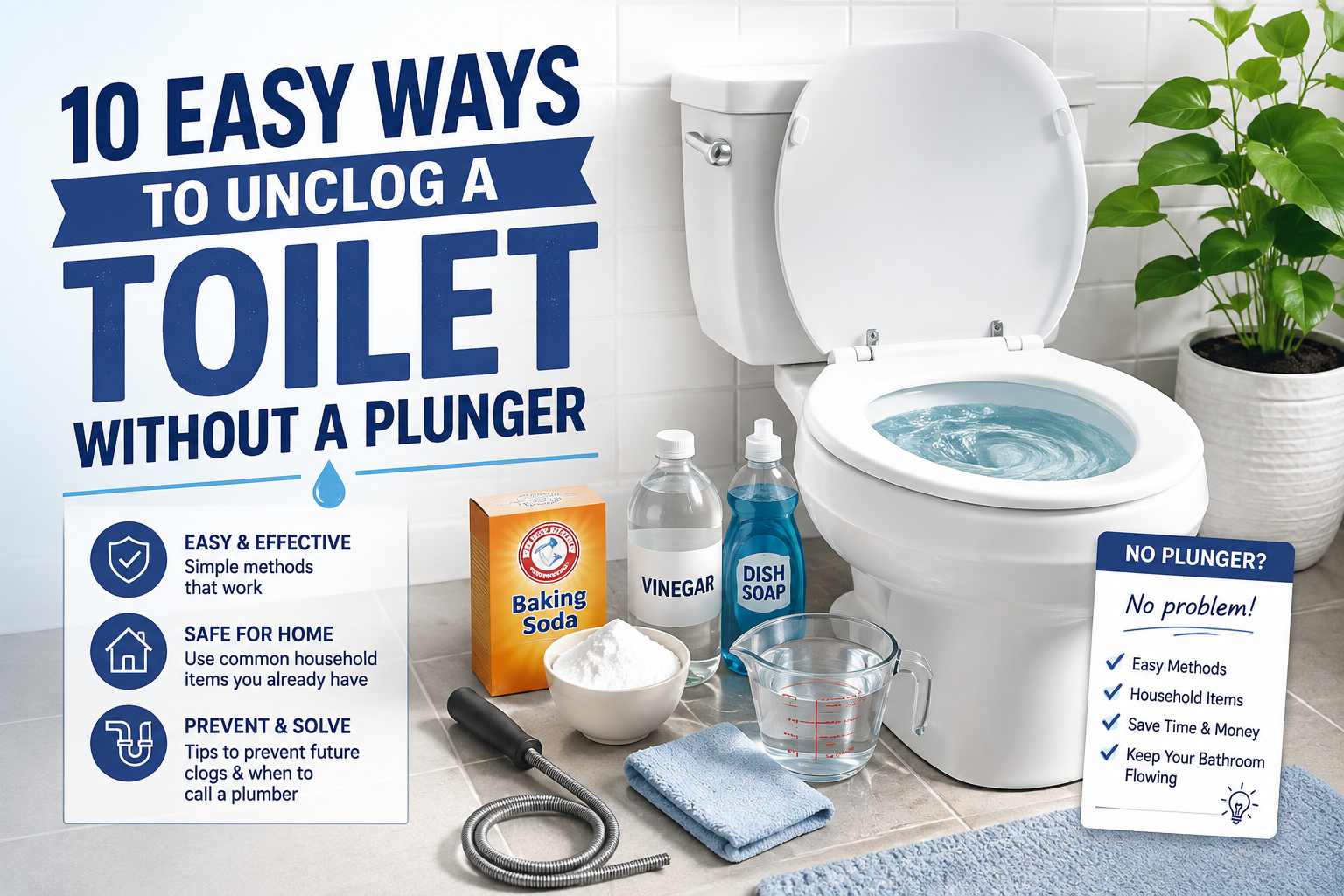
10 Easy Ways to Unclog a Toilet Without a Plunger
The best method depends on what caused the clog, so start with the safest and simplest option first. Minor clogs caused by toilet paper or normal waste may respond to water and soap, while a solid object or stubborn blockage may need a different approach.
Before trying any method, make sure the bowl is not close to overflowing.
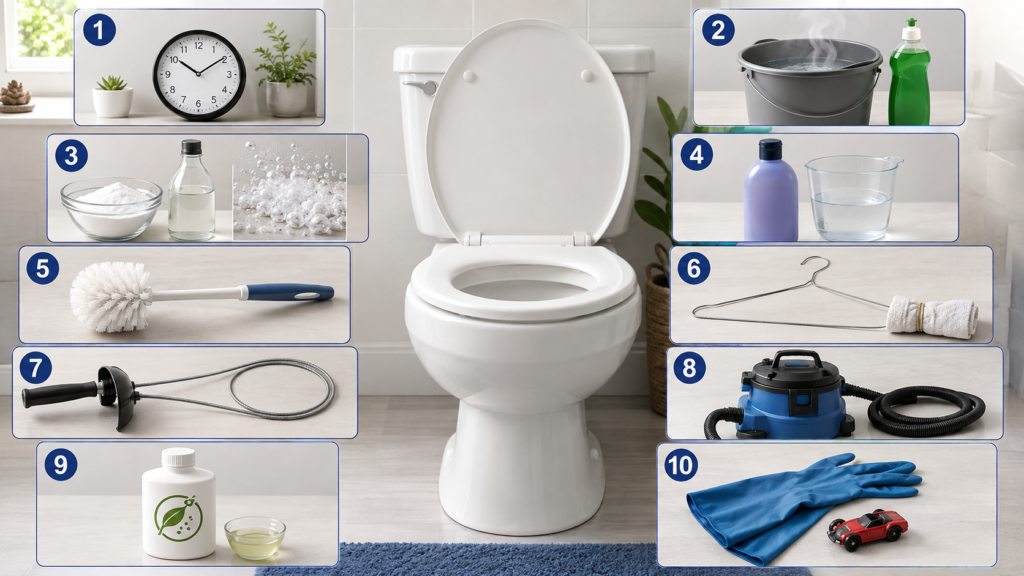
1. Wait and Let the Clog Break Down Naturally
Sometimes the easiest solution is simply giving a minor clog enough time to soften and move through the drain. Toilet paper and some waste can break down naturally when left in water.
Wait around 10 to 20 minutes, then check whether the water level has dropped. If it has, try a single careful flush. Stop immediately if the water starts rising again.
This method is best for small, soft clogs and may not help if an object is stuck in the toilet.
2. Use Hot Water and Dish Soap
Warm or hot water combined with dish soap can help loosen some soft toilet clogs. Add a generous squeeze of ordinary liquid dish soap to the bowl and let it sit for several minutes.
Then slowly pour in a bucket of hot tap water that is not boiling. Allow the mixture to sit for about 10 to 15 minutes before checking whether the water begins to drain.
Do not use boiling water. Very hot water may damage or crack porcelain under some conditions, especially when there is a large temperature difference.
3. Try Baking Soda and Vinegar
Baking soda and vinegar may create fizzing that can help with some light buildup, but they are not a guaranteed solution for a serious clog. Add baking soda to the toilet bowl, followed slowly by vinegar.
Let the mixture fizz and sit for a while. If the bowl begins draining normally, flush once carefully.
Never mix vinegar with commercial chemical drain cleaners or other cleaning products. Mixing household chemicals can create dangerous fumes or reactions.
4. Use Warm Water and Shampoo
Liquid shampoo can work in a similar way to dish soap by adding lubrication around a soft clog. Pour a moderate amount of shampoo into the bowl and let it sit for several minutes.
Slowly add warm, non-boiling water and wait. This is worth trying when you do not have dish soap available.
Keep expectations realistic: shampoo may help with a minor soft blockage, but it will not remove a solid object stuck in the trap.
5. Use a Toilet Brush Carefully
A toilet brush can sometimes help move a very minor blockage near the opening of the toilet trap. Wear cleaning gloves and use the brush gently rather than forcing it deeply into the drain.
Push and pull carefully to see whether the blockage loosens. Avoid aggressive pressure that could splash contaminated water around the bathroom.
Wash and disinfect the brush thoroughly after use.
6. Try a Wire Hanger for a Reachable Obstruction
A wire hanger should only be used with great care when you believe an obstruction is close and reachable. Straighten the hanger gently and cover the end with a soft cloth secured firmly in place to reduce the chance of scratching the porcelain.
Do not push it aggressively into the toilet. A wire can scratch the bowl or push an object farther into the trap, making removal more difficult.
If you cannot easily reach the obstruction, stop and use a more suitable tool.
7. Use a Drain Snake or Toilet Auger
A toilet auger is one of the most effective tools for stubborn toilet clogs because it is designed specifically for toilet drains. Insert the protected end according to the tool’s instructions and turn the handle gently to break up or retrieve the blockage.
A toilet auger is generally a better choice than forcing a regular drain snake into the bowl. Its design helps reduce the risk of damaging the porcelain.
If the auger repeatedly hits a hard object or does not clear the blockage, avoid forcing it.
8. Use a Wet/Dry Vacuum for Stubborn Clogs
A wet/dry vacuum may help remove water and, in some situations, assist with a reachable blockage. This should only be attempted with a vacuum designed for wet pickup.
Remove enough water from the bowl if needed and follow the manufacturer’s safety instructions. Never use an ordinary household vacuum for water.
Do not rely on this method for a deep plumbing blockage. If the clog is beyond the toilet trap, professional equipment may be necessary.
9. Try an Enzyme-Based Drain Cleaner
An enzyme-based product may help break down some organic material, but it usually works slowly and is not designed to solve every toilet clog. Follow the manufacturer’s instructions exactly and make sure the product is suitable for toilet and plumbing use.
Avoid mixing it with other cleaners. More products do not mean better results, and combining products can be unsafe.
This option may be more useful for organic material or ongoing drain maintenance than for a hard object lodged in the toilet.
10. Remove a Visible Object Safely
If you can clearly see an object near the toilet opening, removing it directly may be safer than trying to flush it farther down. Put on waterproof cleaning gloves and carefully retrieve the object if it is easy to reach.
Do not reach deeply into the toilet trap or use excessive force. If an object is stuck out of reach, a toilet auger or a plumber may be the safer option.
Never keep flushing a toilet containing a solid object. This can push the item farther into the plumbing and make the blockage harder to remove.
Which Method Works Best for Different Types of Toilet Clogs?
Choosing the right method can save time because not every toilet clog responds to the same solution. A soft blockage and a foreign object require very different approaches.
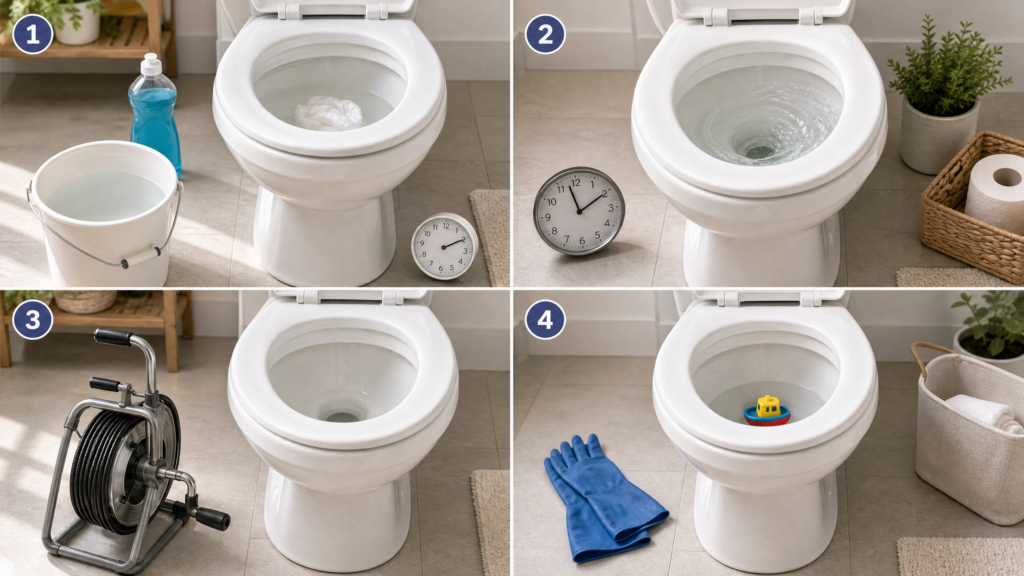
Soft Toilet Paper or Waste Clogs
Waiting, dish soap, and warm non-boiling water are good first options for many soft clogs. Give the blockage time to soften before attempting another flush.
If the problem continues, a toilet auger may be needed.
Minor Slow-Draining Clogs
A slow drain often means water can still pass through, but something is restricting the flow. Start with a gentle method and avoid repeatedly flushing.
If slow draining keeps returning, the problem may be farther down the drain line.
Stubborn Clogs
A toilet auger is usually a better next step when simple household methods do not work. It is designed to reach into the toilet trap without using the same approach as a standard plunger.
Do not force the tool if you meet strong resistance.
A Foreign Object Stuck in the Toilet
A visible object should be removed rather than pushed farther into the drain. If it cannot be safely retrieved, stop flushing and consider professional help.
What Not to Use to Unclog a Toilet
Some popular DIY tricks can cause damage, create unsafe conditions, or make the clog worse. It is better to avoid a risky method than create a plumbing problem that costs more to repair.
Why Boiling Water Can Damage a Toilet
Boiling water can create a sudden temperature change that may stress porcelain. Use warm or hot tap water instead, and pour it slowly rather than dumping it into a full bowl.
If the bowl is already full, do not add more water until the level drops.
Why You Should Avoid Mixing Chemical Cleaners
Mixing drain cleaners or household chemicals can produce dangerous fumes or reactions. Never combine different cleaning products in an attempt to make them stronger.
If one product has already been added, read its label before adding anything else. If you are unsure what is in the toilet, do not add another chemical product.
Why Repeated Flushing Can Make Things Worse
Flushing repeatedly usually adds more water without removing the blockage. This can quickly lead to an overflowing toilet and contaminated water on the floor.
Try one method at a time and give it time to work.
How to Tell if the Toilet Clog Is More Serious
A single clogged toilet is often a local problem, but repeated or widespread drainage issues may point to something larger. Pay attention to what happens elsewhere in your home.
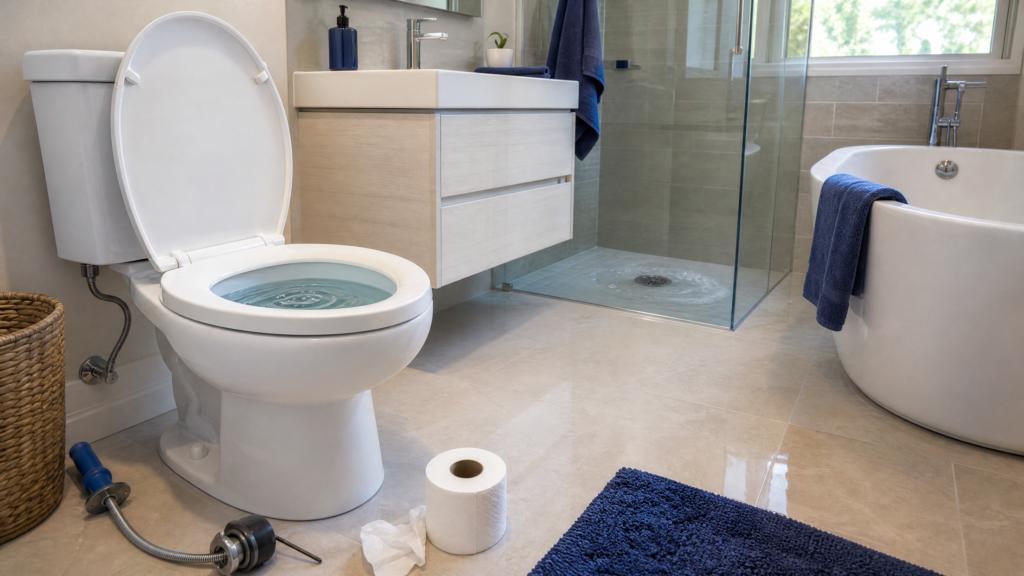
Water Backs Up Repeatedly
A clog that returns soon after being cleared may mean the blockage was not fully removed or is deeper in the plumbing. Repeated problems deserve more investigation than a one-time toilet paper clog.
Multiple Drains Are Clogging
Several fixtures draining poorly at the same time can indicate a problem beyond the toilet itself. For example, a toilet, shower, or sink showing drainage problems together may suggest an issue with a larger drain line.
You Hear Gurgling Sounds
Gurgling can be a sign that air is struggling to move normally through the drainage system. Occasional sounds do not always mean a major problem, but repeated gurgling with slow drains or backups should not be ignored.
The Toilet Keeps Clogging Again
A toilet that clogs regularly may need more than another DIY unclogging attempt. Consider whether excessive toilet paper, unsuitable items, a weak flush, or a deeper drain problem could be involved.
Water Backs Up Into Other Fixtures
Water appearing in another fixture when you flush is a warning sign that needs prompt attention. Stop using affected fixtures if backups continue and consider contacting a qualified plumber.
If you are dealing with other home maintenance issues, you may also find our guides on fixing a garbage disposal that is not working and dealing with water in a crawl space helpful.
When to Call a Plumber
It is time to call a plumber when the clog will not clear safely or the problem appears to involve more than the toilet. Continuing to force water or tools through a stubborn blockage can sometimes make the situation worse.
Consider professional help when:
- The toilet repeatedly clogs despite careful attempts to clear it.
- Several drains are slow or backing up.
- Water backs up into a tub, shower, or sink.
- You suspect a solid object is stuck deep in the toilet or drain.
- A toilet auger cannot clear the blockage.
- You notice repeated sewer-like odors or unusual drainage problems.
A plumber can inspect the problem with appropriate tools and determine whether the issue is in the toilet trap, branch drain, or a larger plumbing line.
For more practical home care ideas, visit the Home & Living section of Daily Idea Book.
How to Prevent Your Toilet From Clogging Again
The easiest toilet clog to fix is the one you prevent in the first place. Small changes in what goes into the toilet can reduce unnecessary blockages.
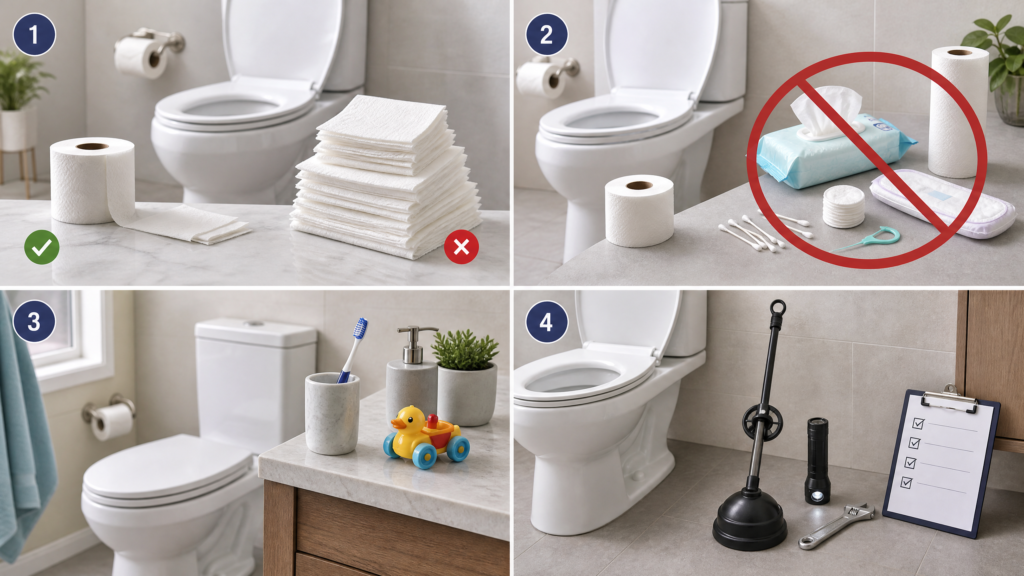
Use the Right Amount of Toilet Paper
Using large amounts of toilet paper at once can increase the chance of a blockage. Flush between large amounts if necessary rather than sending everything down at one time.
Flush Only Toilet-Safe Materials
Your toilet should only be used for human waste and toilet paper intended to break down in plumbing. Avoid flushing wipes, paper towels, cotton products, dental floss, hygiene products, or other household items.
Even products described as “flushable” can still cause problems in some plumbing systems.
Keep Objects Away From the Toilet
Small objects can accidentally fall into an open toilet and create a difficult blockage. Keep items such as toys, toothbrushes, and bathroom accessories away from the bowl.
If children use the bathroom, consider keeping the lid closed when the toilet is not in use.
Address Repeated Clogs Early
Regular clogs are a sign worth investigating instead of ignoring. Finding the cause early may help prevent a more serious backup later.
Keeping other areas of your home organized can also make maintenance easier. See our guides on how to organize a bathroom cabinet and how to organize desk drawers for more practical organization ideas.
Final Thoughts
You can often unclog a toilet without a plunger by starting with the safest method and working up only when needed. Waiting, using dish soap with warm non-boiling water, or using a proper toilet auger can help with different types of clogs.
The most important thing is to avoid repeated flushing, prevent an overflow, and never mix cleaning chemicals. If the clog keeps returning, affects multiple drains, or causes water to back up elsewhere, it is better to stop DIY attempts and investigate the larger plumbing issue.
Editorial & DIY Safety Note
This guide provides general information for dealing with common toilet clogs at home. Avoid mixing cleaning chemicals or repeatedly flushing when the water is rising. If the clog keeps returning, affects multiple drains, or causes water to back up elsewhere, contact a qualified plumber.
How We Created This Guide
We created this guide around common toilet clog situations and practical DIY methods that can be tried safely. We focused on simple methods first, explained what to avoid, and included guidance on when professional help may be needed.
When This Advice May Not Apply
Some toilet clogs are caused by deeper plumbing or sewer line problems and cannot be fixed with basic DIY methods. If you suspect a serious blockage or are unsure about the cause, stop forcing the clog and seek professional help.
Sources & References
The following resources provide additional information about plumbing safety, household cleaning products, and safe home maintenance practices:
Frequently Asked Questions
Can you unclog a toilet without a plunger?
Yes, some toilet clogs can be cleared without a plunger. Minor soft clogs may respond to waiting, dish soap and warm water, while stubborn blockages may require a toilet auger or professional help.
What is the easiest or fast way to unclog a toilet without a plunger?
For a minor soft clog, dish soap followed by warm, non-boiling water is a common first method to try. Wait for the water level to drop before adding anything to avoid an overflow.
Will hot water unclog a toilet?
Warm or hot tap water may help soften some clogs, but boiling water should be avoided. Pour the water slowly and do not add more water if the bowl is already full.
Does baking soda and vinegar unclog a toilet?
Baking soda and vinegar may help with some light buildup, but they are not a reliable solution for every clog. They are unlikely to remove a solid object or a severe blockage.
What should I do if my toilet is clogged and the water is rising?
Stop flushing immediately and prevent more water from entering the bowl. Close the tank flapper or shut off the toilet’s water supply, then wait for the water level to drop before trying to clear the clog.
When should I call a plumber for a clogged toilet?
Call a plumber when the clog keeps returning, multiple fixtures are affected, water backs up elsewhere, or DIY methods cannot safely clear the blockage. These signs can indicate a deeper plumbing problem.