
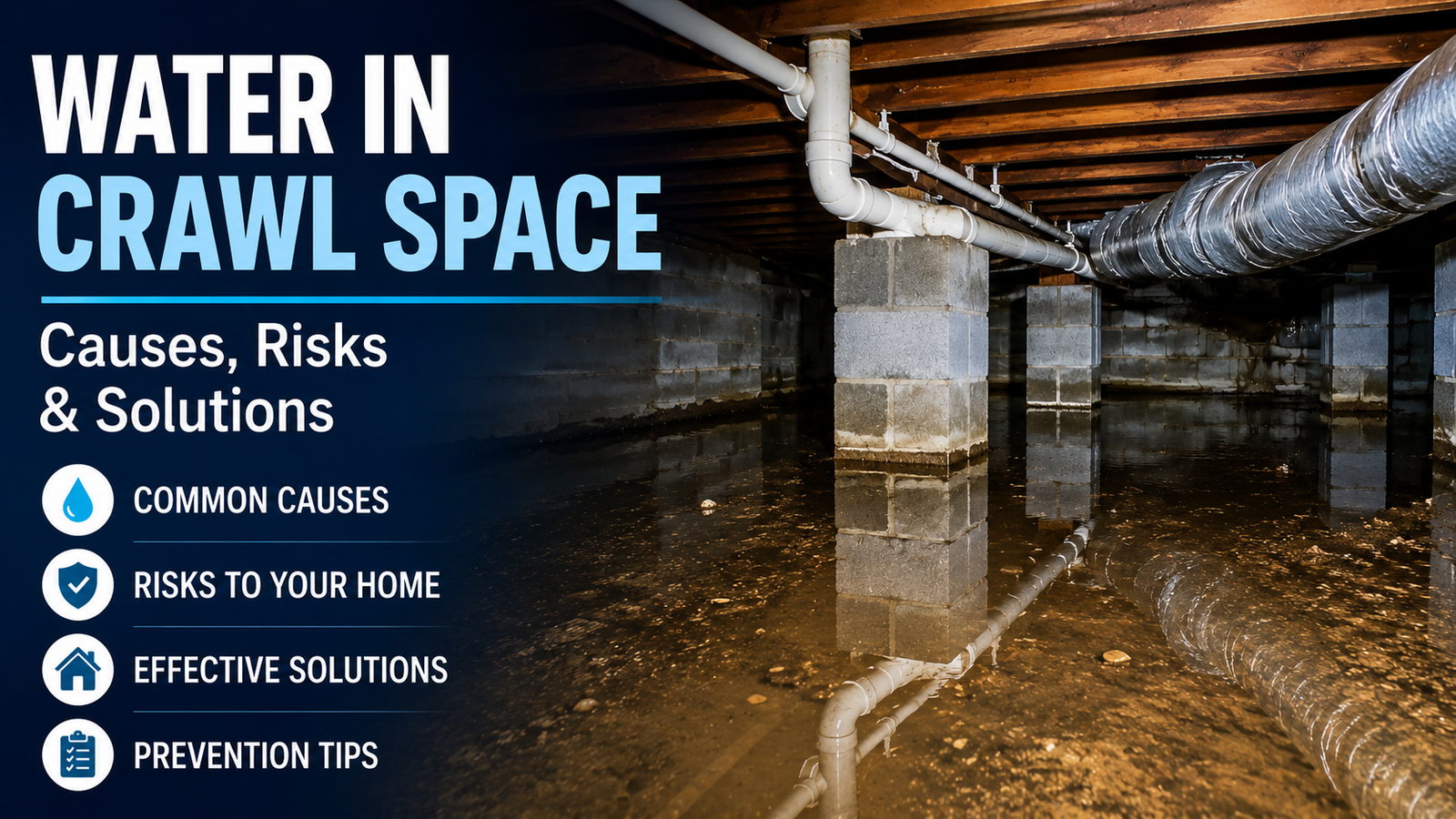
Water in a crawl space is usually a sign that moisture is entering where it should not, and the most important step is finding the source before simply removing the water. A small amount of temporary dampness may appear after severe weather, but standing water, repeated flooding, or ongoing moisture should not be ignored.
Water below your home can contribute to mold growth, wood damage, unpleasant odors, pest activity, and, in some situations, problems affecting building materials or the structure. The good news is that many crawl space water problems can be identified by looking at when the water appears, where it collects, and what conditions occur before it returns.
This guide explains the common causes of water in a crawl space, whether water after heavy rain is normal, how to identify the source, how to remove standing water, and the options that may help prevent the problem from coming back.
For more practical home guides, visit the Daily Idea Book or explore our Home & Living ideas.
Is Water in a Crawl Space Normal?
A dry crawl space is generally the goal, so standing water that remains or repeatedly returns should be treated as a problem rather than normal household moisture. The seriousness depends on how much water is present, how long it stays, where it came from, and whether the area can dry properly.
Brief dampness after unusually heavy weather may happen in some homes, particularly where the soil becomes saturated. However, water should not regularly pool beneath the house. If it does, there may be a drainage, groundwater, plumbing, or foundation-related issue that needs attention.
Water in Crawl Space After Heavy Rain: Is It Normal?
Water appearing after heavy rain usually means rainwater or groundwater is finding a path into the crawl space. A one-time event during extreme weather may be different from water that appears after every major rainfall.
Look for patterns. If water enters shortly after rain, check the gutters, downspouts, ground slope, drainage systems, and areas where water collects near the foundation. Saturated soil can also push groundwater toward or beneath the home.
When Does Water Become a Serious Problem?
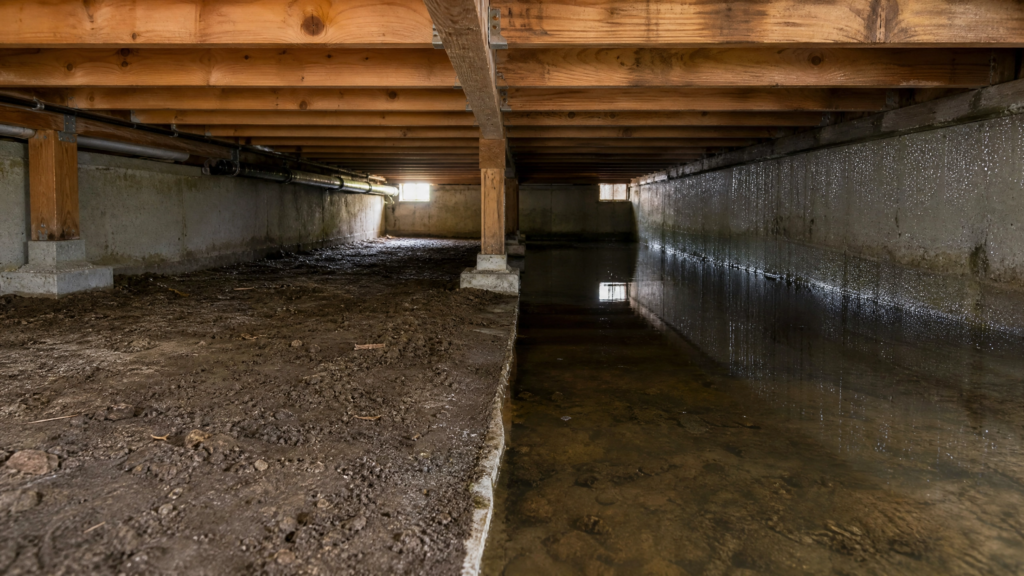
Water becomes more concerning when it stays for long periods, keeps returning, rises significantly, or is accompanied by damage and strong moisture signs. You should pay closer attention if you notice mold-like growth, a musty smell indoors, soft or damaged wood, insect activity, or soil erosion.
Repeated water problems deserve investigation because removing the visible water without correcting the cause may only provide a temporary solution.
What Causes Water in a Crawl Space?
Most crawl space water problems come from a limited number of sources, including poor drainage, heavy rain, groundwater, leaks, and excess condensation. The timing and location of the water can help narrow down the cause.
Poor Exterior Drainage
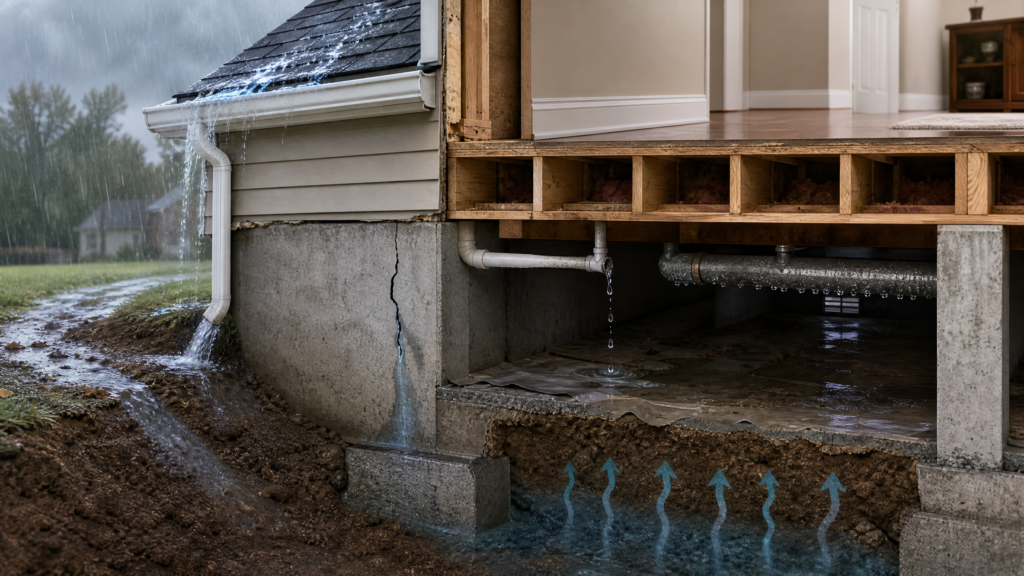
Poor drainage is one of the most common reasons water collects beneath a home. Rainwater that is not directed away from the foundation can soak into the soil beside the house and eventually enter the crawl space.
Low areas near the foundation, clogged drainage paths, and landscaping that directs water toward the home can all make the problem worse.
Heavy Rain and Surface Water
Heavy rain can overwhelm the ground around a house and send surface water toward openings or weak points near the foundation. This is especially likely when the property does not slope away from the home.
If your crawl space becomes wet only after storms, note exactly where the water first appears. This can help identify the direction from which the water is entering.
Groundwater and a High Water Table
Groundwater can rise beneath a home when the surrounding soil becomes saturated. In some areas, the water table may naturally sit close to the foundation, while heavy rain can temporarily raise groundwater levels.
This type of problem may cause water to appear even when there is no obvious opening in the foundation wall.
Plumbing Leaks
A plumbing leak can create crawl space moisture or standing water even when it has not rained. Check for water around pipes, joints, fixtures, and drain lines that pass through the crawl space.
A leak may be easier to identify when the water appears during or after using certain plumbing fixtures.
Foundation Cracks and Gaps
Cracks, gaps, and openings can provide a path for water to enter, although not every foundation crack causes a water problem. Water movement around the outside of the foundation matters just as much as the opening itself.
If you also notice cracks elsewhere in the home, our guide to types of wall cracks and when to worry may help you understand the difference between common cosmetic cracking and warning signs that deserve professional evaluation.
Missing or Damaged Gutters and Downspouts
Roof water can create a major problem when gutters overflow or downspouts release water too close to the house. A large amount of roof runoff can quickly saturate the soil beside the foundation.
Make sure water is being collected and directed away from the building according to conditions at your property.
Condensation and Moisture in the Crawl Space
Not all crawl space moisture comes from visible flooding because humid air can also create damp conditions and condensation. Moisture on pipes, framing, or other cool surfaces may point to a humidity-related problem.
Condensation usually does not create the same pattern as a major rainwater flood, so identifying whether the issue is liquid water entering the space or moisture forming inside it is important.
What Happens If You Leave Water in a Crawl Space?
Leaving water beneath a home can allow moisture-related damage to continue long after the original rain or leak has stopped. The exact risk depends on the amount of water, how long the area remains wet, and the materials exposed to moisture.
Mold and Excess Moisture
Persistent dampness creates conditions that can support mold growth and contribute to a musty smell. Because crawl spaces can connect to other parts of the building through gaps and air movement, moisture problems below the home may also affect conditions indoors.
Wood Rot and Structural Damage
Wood framing can deteriorate when it stays wet for extended periods. Floor joists, beams, subflooring, and other wooden components may be affected depending on the moisture level and duration of exposure.
Do not assume every damp board means serious structural damage, but soft wood, visible decay, sagging, or widespread deterioration should be assessed carefully.
Pest Problems
A damp crawl space can become more attractive to pests that prefer wet or decaying conditions. Water can also create conditions that support insect activity around wood and other building materials.
Foundation and Soil Issues
Water moving through or around soil can sometimes cause erosion or drainage problems near the foundation. The impact depends on the soil, property drainage, foundation design, and severity of the water issue.
If you see significant cracking around ceilings or walls along with other movement signs, read our guide on ceiling cracks, their causes, warning signs, and repairs. Multiple symptoms should be considered together rather than assuming one crack alone explains the entire condition of a home.
Indoor Air Quality Concerns
A persistently damp crawl space may contribute to unpleasant odors and poor moisture conditions inside the home. Controlling the water source and drying the area is more useful than trying to cover up the smell.
How to Tell Where the Water Is Coming From
The best way to solve a crawl space water problem is to match the water pattern with the most likely source. Before making major repairs, observe when the water appears and where it begins.
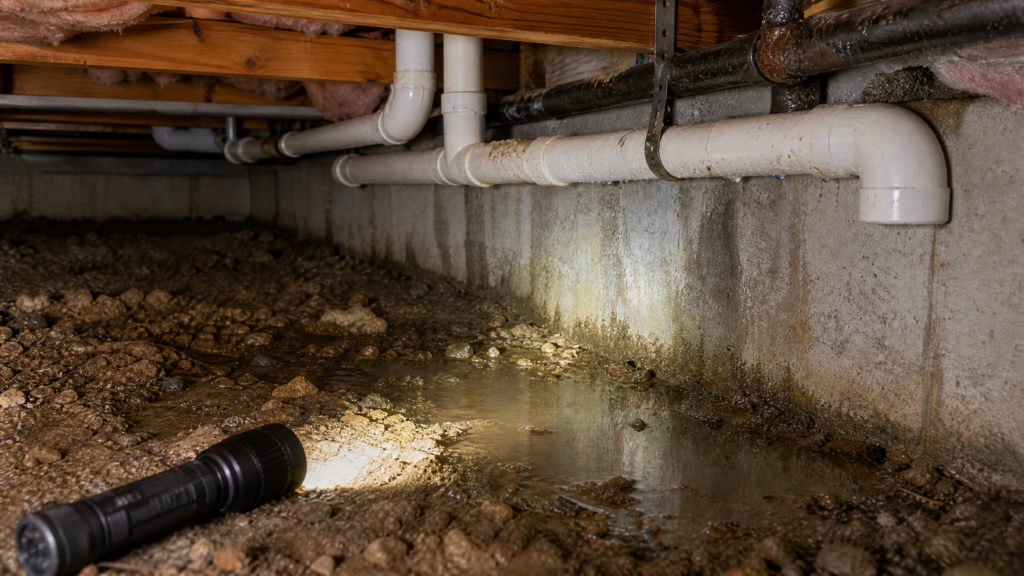
If the water shows up soon after rain, exterior drainage, surface runoff, or groundwater may be involved. If it appears during dry weather, inspect for plumbing leaks. Water concentrated around a pipe is a useful clue, while widespread dampness without a clear pool may point toward humidity or condensation.
Look for these signs:
- Water after rain: Check drainage, downspouts, grading, and groundwater.
- Water during dry weather: Inspect plumbing and drainage pipes.
- Water in one consistent area: Look for a nearby entry point, leak, or low spot.
- Widespread damp soil: Consider groundwater or high humidity.
- Moisture on pipes or surfaces: Check for condensation and humidity issues.
Taking photos after storms and noting the water level can also help you compare whether the problem is improving or getting worse.
How to Fix Water in a Crawl Space
The right fix depends on the source, but the basic process is to remove the water safely, dry the area, and correct the reason the water entered. Do not treat water removal as a complete repair if the same problem is likely to return.
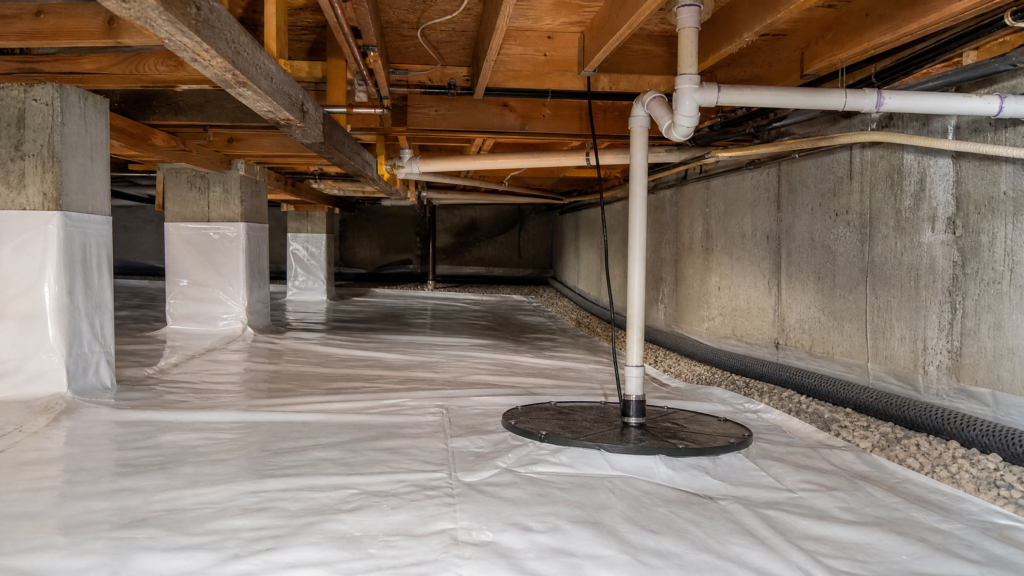
Step 1: Remove Standing Water Safely
Standing water should be removed carefully, but safety comes first when electrical equipment or unknown contamination may be involved. Do not enter deep water where electrical hazards could exist.
The removal method depends on the amount of water. A small amount may require pumping or wet-dry equipment, while significant flooding may require professional water removal.
Step 2: Dry the Crawl Space
Drying the space is essential because hidden moisture can remain after visible water is gone. Improve airflow where appropriate and use suitable drying equipment if needed.
Wet materials may require additional attention, particularly if water has been present for an extended period.
Step 3: Fix the Source of the Water
A permanent solution starts with correcting the source rather than repeatedly cleaning up the same water. Repair plumbing leaks, close appropriate openings, and address drainage problems based on what caused the water.
Step 4: Improve Drainage Around the House
Moving water away from the foundation can reduce the amount of water reaching the crawl space. This may involve maintaining gutters, extending downspout discharge away from the building, correcting drainage paths, or improving the slope of the surrounding ground where appropriate.
Step 5: Consider a Sump Pump or Interior Drainage System
A sump pump or drainage system may help when groundwater or repeated water collection cannot be controlled with simple exterior improvements alone. These systems should be selected and installed based on the home’s conditions and the amount of water involved.
Step 6: Control Moisture With Encapsulation or a Vapor Barrier
A vapor barrier can help control moisture coming from the ground, but it does not automatically solve active water entry or flooding. If liquid water continues entering the crawl space, that source should be addressed first.
Encapsulation and other moisture-control measures may be considered as part of a broader solution when they fit the specific conditions of the crawl space.
Find the source → remove standing water safely → dry the crawl space → repair the underlying problem → improve drainage → add moisture-control measures when appropriate.
How Much Does It Cost to Fix Standing Water in a Crawl Space?
The cost of fixing standing water can range widely because a simple cleanup costs far less than correcting repeated groundwater or major drainage problems. The final amount depends on the source of the water, how much damage occurred, crawl space size, accessibility, local labor costs, and the type of repair required.
Cost of Removing Water and Drying the Crawl Space
A small, short-term water problem may cost less to address than a crawl space that has remained wet long enough to damage materials or require extensive drying. Cleanup needs can increase when water is contaminated or mold-related work becomes necessary.
Cost of Drainage and Waterproofing Repairs
Drainage repairs vary because the work may involve anything from correcting a simple water-management issue to installing a more extensive system. The best estimate comes after identifying exactly how and where water is reaching the crawl space.
When a Sump Pump or Crawl Space Encapsulation May Cost More
More advanced systems usually cost more because they involve equipment, materials, installation, and sometimes drainage work. Get more than one qualified assessment for major projects and make sure each proposed solution addresses the actual source of the problem.
Flooded Crawl Space: What to Do Immediately
A flooded crawl space should be treated as a safety and water-damage issue before you begin cleanup. First, avoid entering the area if there is any possibility of electrical danger, sewage contamination, or unsafe structural conditions.
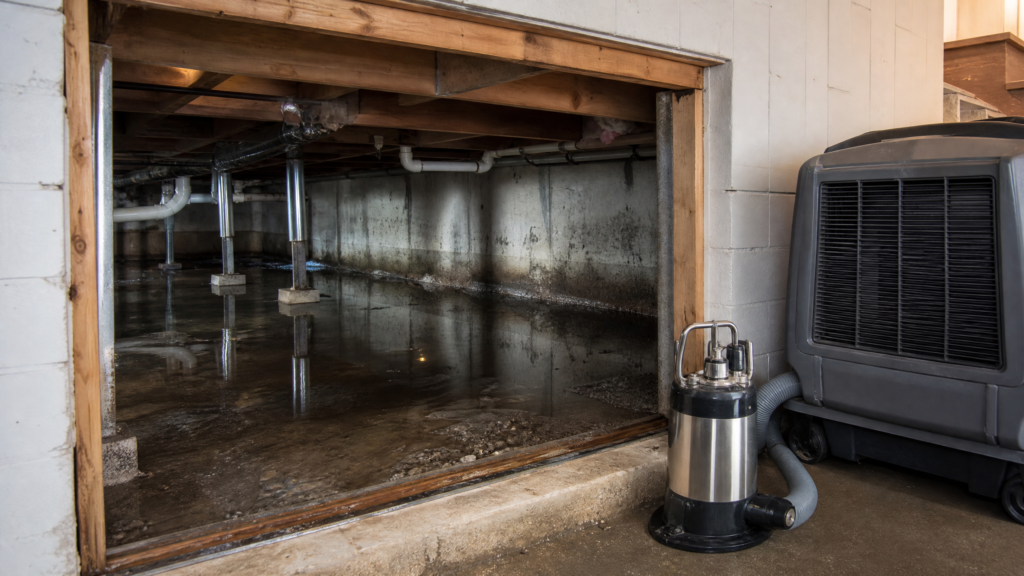
If it is safe to inspect from outside the flooded area, try to determine whether the flooding is still active. Stop a known plumbing source if possible and safe. If the water came from heavy rain, check whether exterior water is continuing to flow toward the home.
For significant flooding, contaminated water, electrical concerns, or extensive damage, contact a qualified professional rather than attempting to handle the situation alone.
How to Prevent Water From Returning to Your Crawl Space
Preventing repeat problems means controlling water before it reaches the crawl space whenever possible. Regular maintenance can also help you spot small issues before they become larger repairs.
Keep Gutters and Downspouts Working Properly
Gutters and downspouts help protect the area around the foundation by managing roof runoff. Keep them clear and make sure discharged water is directed away from the house appropriately.
Improve the Ground Slope Around Your Home
The ground around a home should generally help move surface water away rather than directing it toward the foundation. If the property has persistent low spots or drainage issues, a professional assessment may be useful.
Maintain Exterior Drainage
Drains and other water-management features need maintenance to work properly. Keep drainage paths clear and watch for pooling after storms.
Inspect for Plumbing Leaks
Regularly checking exposed plumbing can help identify small leaks before they create a larger moisture problem. Pay attention to unusual damp areas or unexplained increases in moisture.
Monitor Humidity and Moisture
A crawl space can develop moisture problems even without obvious flooding, so periodic inspections are useful. Check for damp surfaces, condensation, odors, and changes in wood condition.
When Should You Call a Professional?
Professional help is worth considering when the water problem is repeated, severe, difficult to identify, or connected with signs of damage. A qualified professional may be able to determine whether the issue is related to drainage, plumbing, groundwater, moisture control, or another building problem.
Consider getting professional help when you have:
- Repeated crawl space flooding
- Standing water that does not drain or dry
- A water source you cannot identify
- Suspected major plumbing leaks
- Significant mold or widespread moisture damage
- Soft, decaying, or visibly damaged wood
- Electrical hazards near the water
- Signs of possible foundation or structural movement
For example, recurring drywall movement can sometimes show up as fastener issues. If you are seeing these signs inside your home, read our guide to drywall nail pops, their causes, warning signs, and fixes. A professional should evaluate the overall pattern rather than relying on one symptom alone.
Conclusion
The most effective way to deal with water in a crawl space is to find out why it is there before choosing a repair. Standing water after heavy rain may point to drainage or groundwater, while water during dry weather can suggest a plumbing leak.
Start by identifying the source, then remove standing water safely and dry the affected area. Next, correct the underlying issue, whether that involves plumbing, drainage, water management, or another cause. Finally, take reasonable steps to reduce the chance of water returning.
A vapor barrier or moisture-control system may help with certain moisture conditions, but active water entry should be addressed at its source. The sooner repeated water problems are investigated, the easier it may be to prevent ongoing moisture and material damage.
For more practical guides and everyday ideas, explore the Daily Idea Book blog. You can also find helpful organization ideas such as our guides on how to organize desk drawers and organizing a bathroom cabinet.
Frequently Asked Questions
Is water in a crawl space after heavy rain normal?
Water may appear after unusually heavy rain, but standing water that remains or repeatedly returns usually indicates a drainage, groundwater, or water-entry problem worth investigating. Watch for patterns and identify where the water is coming from.
How long can water sit in a crawl space?
Water should be removed and the area dried as soon as it is safe to do so because prolonged moisture increases the risk of mold, wood damage, odors, and pest problems. The longer materials remain wet, the greater the chance of moisture-related damage.
Can water in a crawl space cause foundation damage?
Water around a foundation can contribute to soil and drainage problems, but the actual risk depends on the foundation, soil, amount of water, and local conditions. Significant or recurring water problems should be properly assessed.
How do I get standing water out of my crawl space?
The method depends on the amount and type of water, but safety should come first. Small amounts may be removed using suitable water-removal equipment, while significant flooding, electrical hazards, or contaminated water may require professional help.
Will a vapor barrier stop water in a crawl space?
A vapor barrier can help control moisture rising from the ground, but it is not a complete solution for active flooding or water entering through another source. Fix the source of liquid water first.
How much does it cost to fix standing water in a crawl space?
The cost depends heavily on what caused the water and what repairs are needed. Simple cleanup may cost far less than extensive drainage work, waterproofing, mold remediation, sump pump installation, or major repairs after long-term water damage.
Editorial & Home Safety Note
This guide is for general educational purposes and is designed to help homeowners understand common crawl space water and moisture problems. Every home is different, and the right solution depends on the source of the water, drainage, soil, plumbing, and foundation conditions.
Do not enter a flooded crawl space if electrical hazards, contaminated water, or unsafe conditions may be present. For repeated flooding, significant damage, or a water source you cannot identify, contact a qualified professional.
Sources & References
This guide was created using publicly available information from authoritative sources on moisture control, mold prevention, and crawl space water management.
- EPA: A Brief Guide to Mold, Moisture and Your Home — Guidance on controlling moisture, addressing water problems, and reducing mold risks.
- U.S. Department of Energy: Introduction to Moisture Flow — Information about how bulk water, groundwater, air, and vapor can move moisture into buildings.
- U.S. Department of Energy: Crawlspace Moisture Control — Information about moisture entering crawl spaces and measures used to help control ground moisture and water intrusion.