
The easiest way to clean baseboards is to remove loose dust first, then wipe them with a lightly damp microfiber cloth. Starting with dry cleaning prevents dust from turning into a muddy layer and makes the rest of the job much easier.
Baseboards collect more dirt than many people notice. Dust, pet hair, fingerprints, food splashes, and everyday grime can build up along the trim, especially in busy areas such as hallways, kitchens, and entryways.
You do not need a long list of expensive cleaning products to get them looking fresh again. A vacuum, microfiber cloth, warm water, and a small amount of mild soap are usually enough for painted and other washable baseboards.
The right method does depend on the material. Wood, MDF, painted trim, and vinyl baseboards can react differently to moisture and cleaning products, so avoid treating every surface exactly the same way.
Quick tip
Always test a cleaning solution on a small, hidden area first, especially when you are unsure how the finish will react.
What You Need to Clean Baseboards
A few simple household cleaning tools are enough for most baseboard cleaning jobs. Having the right tools also helps you clean gently instead of relying on heavy scrubbing.
- Vacuum cleaner with a soft brush attachment
- Microfiber cleaning cloths
- Small bucket
- Warm water
- Mild dish soap
- Soft-bristle cleaning brush
- Old soft toothbrush for corners and grooves
- Dry towel
- Magic Eraser for suitable painted surfaces and stubborn marks
Avoid reaching immediately for strong chemicals. Mild cleaning methods are generally a better starting point because baseboards can have painted, stained, sealed, or manufactured finishes that may be damaged by harsh products.
If you already clean other areas of your home regularly, you may have most of these supplies available. The goal is not to make baseboard cleaning complicated but to remove dirt without damaging the surface.
For example, if you are cleaning near a bathroom, kitchen, or utility area, check whether moisture has affected the surrounding wall or trim before you begin. Keeping moisture under control is especially important around materials that can swell or deteriorate when repeatedly exposed to water.
How to Clean Baseboards Step by Step
The best baseboard cleaning routine follows a simple order: remove dry dust, wipe the surface, treat marks, and finish by drying the trim.
1. Remove Dust and Loose Dirt
Start with dry dusting because loose dirt is much easier to remove before water is introduced.
Use a microfiber cloth or a vacuum with a soft brush attachment to remove dust from the entire length of the baseboard. Pay extra attention to the narrow ledge at the top, where dust often settles.
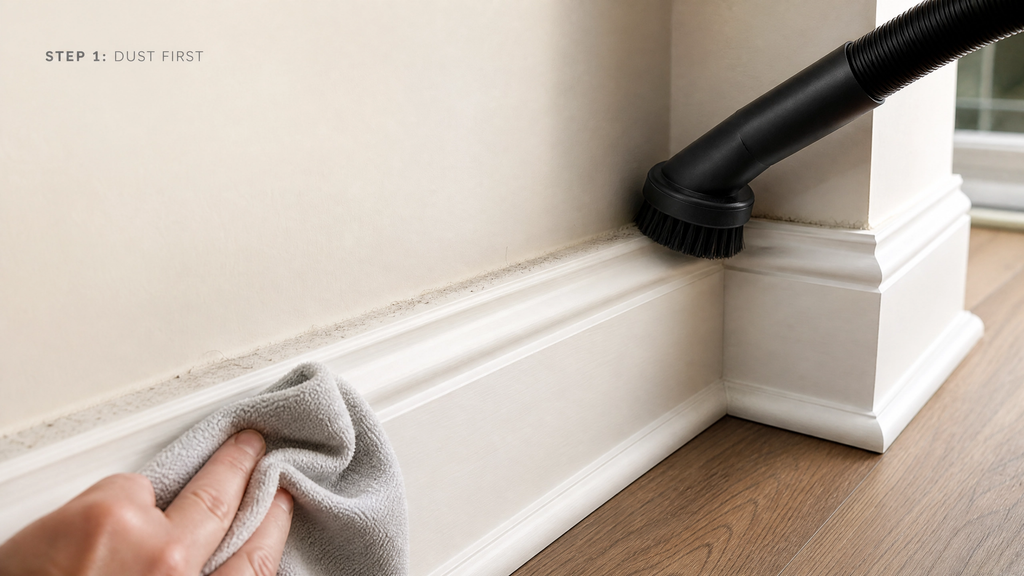
Work from one end of the wall to the other instead of cleaning random sections. This makes it easier to see which areas you have already finished.
If there is a thick layer of dust, use the vacuum first. A soft brush attachment can lift dust while reducing the chance of scratching painted or finished surfaces.
Do not press the vacuum head hard against the trim. Gentle pressure is enough to pick up loose dust and hair.
Corners can hold surprisingly large amounts of debris. Use a soft brush or dry microfiber cloth to loosen dirt from inside corners and along the joint where two pieces of baseboard meet.
2. Vacuum Along the Edges and Corners
Vacuuming the floor-to-baseboard edge removes the dust that a cloth may otherwise push into the corner.
Run the soft brush attachment along the bottom edge of the baseboard and the floor beside it. Move slowly around corners, behind furniture, and along areas that are difficult to reach.
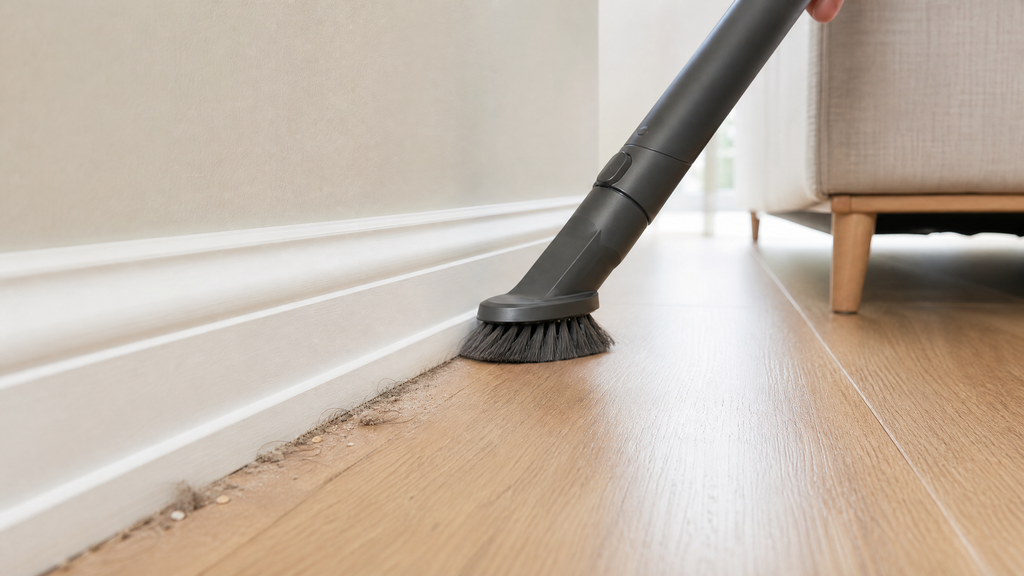
If you have pets, spend extra time along the lower edge. Pet hair and fine dust often collect where the baseboard meets the floor.
For narrow gaps, use a suitable crevice attachment carefully. Do not force a hard plastic attachment against delicate painted surfaces.
A quick vacuum before wet cleaning also helps prevent loose dirt from becoming streaks when you start wiping.
3. Wipe Baseboards With a Damp Cloth
A lightly damp microfiber cloth is usually the safest everyday cleaning method for washable baseboards.
Fill a bucket with warm water and add a small amount of mild dish soap if the baseboards have visible grime. Dip the microfiber cloth into the solution and wring it out well.
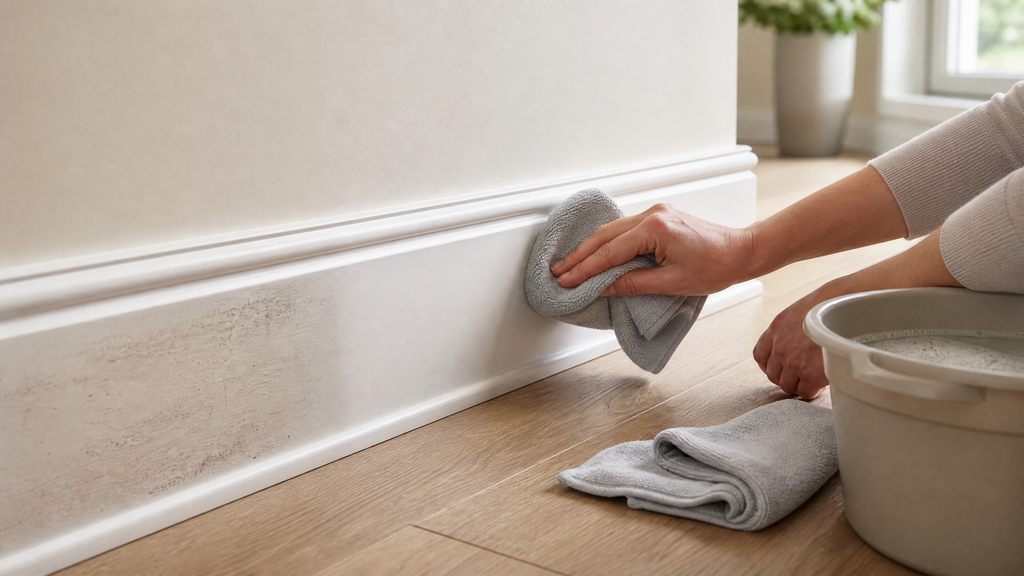
The cloth should be damp rather than dripping wet.
Starting at one end, wipe the baseboard in smooth sections. Clean the top edge, front surface, and lower edge where dirt tends to collect.
Rinse the cloth regularly as you work. Using the same dirty section of cloth over the entire wall can simply spread grime from one area to another.
For heavily soiled areas, allow the damp cloth to sit against the dirt for a few seconds rather than immediately scrubbing hard. This can help loosen the grime with less effort.
Never soak the baseboard. Excess water can get into seams, joints, unfinished edges, or porous materials and may cause swelling, peeling, or other damage.
If you are also working on other parts of your home, cleaning baseboards can fit naturally into a larger cleaning routine. For example, after organizing an entrance, you can wipe the trim around it as part of your small entryway ideas project.
4. Remove Scuff Marks and Stubborn Grime
Stubborn marks usually need gentle spot cleaning rather than aggressive scrubbing.
For ordinary scuff marks, start with a damp microfiber cloth and mild soap. Rub the affected area gently and check the result before trying anything stronger.
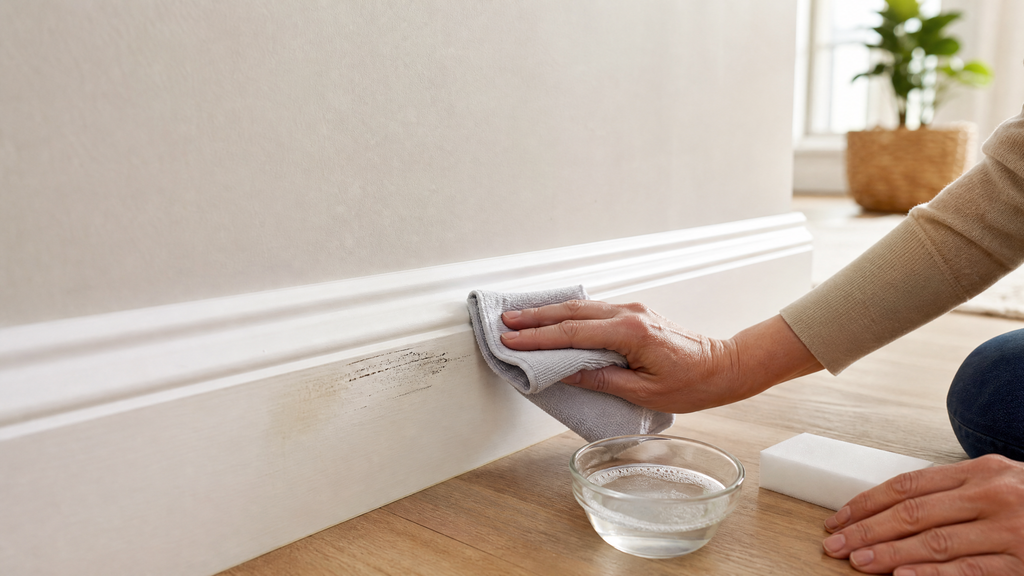
A Magic Eraser can sometimes remove difficult marks from suitable painted surfaces, but use it carefully. It works through mild abrasion and can dull certain finishes or remove paint if you rub too hard.
For this reason, test it in an inconspicuous spot first and use very light pressure.
For greasy dirt, especially near kitchens, a small amount of mild dish soap in warm water can help break down the residue. Wipe the area again with clean water afterward to remove leftover soap.
Do not mix different household cleaners together. Some cleaning products can create harmful fumes when combined.
If the baseboard has peeling paint, deep water damage, swollen MDF, or damage that cannot be cleaned away, cleaning may not solve the underlying problem. The damaged section may need repair or replacement instead.
5. Dry the Baseboards Completely
Drying the baseboards after cleaning is a small step that helps protect the material and finish.
Use a clean, dry microfiber cloth to remove remaining moisture, especially from seams, corners, and lower edges.
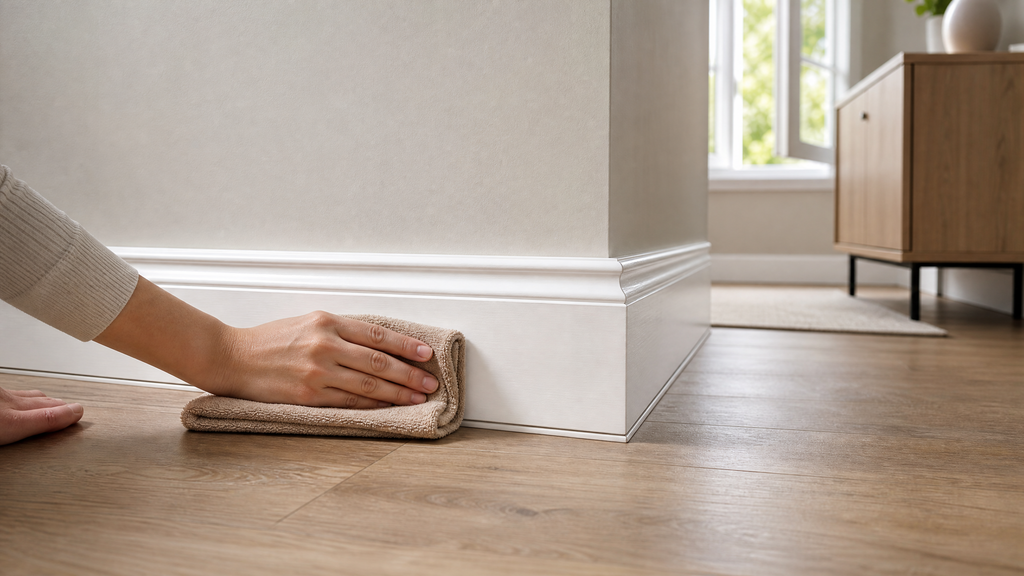
This is particularly important for natural wood and MDF baseboards, which can be more sensitive to moisture than sealed vinyl or other water-resistant materials.
Allow the room to stay reasonably ventilated while the trim finishes drying.
Do not put furniture directly against a freshly cleaned, damp baseboard. Give the surface time to dry completely.
Best Way to Clean Different Types of Baseboards
The best cleaning method depends on what your baseboards are made from and how their finish reacts to moisture.
Before using any cleaner, identify the material if possible. If you are unsure, start with the gentlest method: dry dusting followed by a barely damp microfiber cloth.
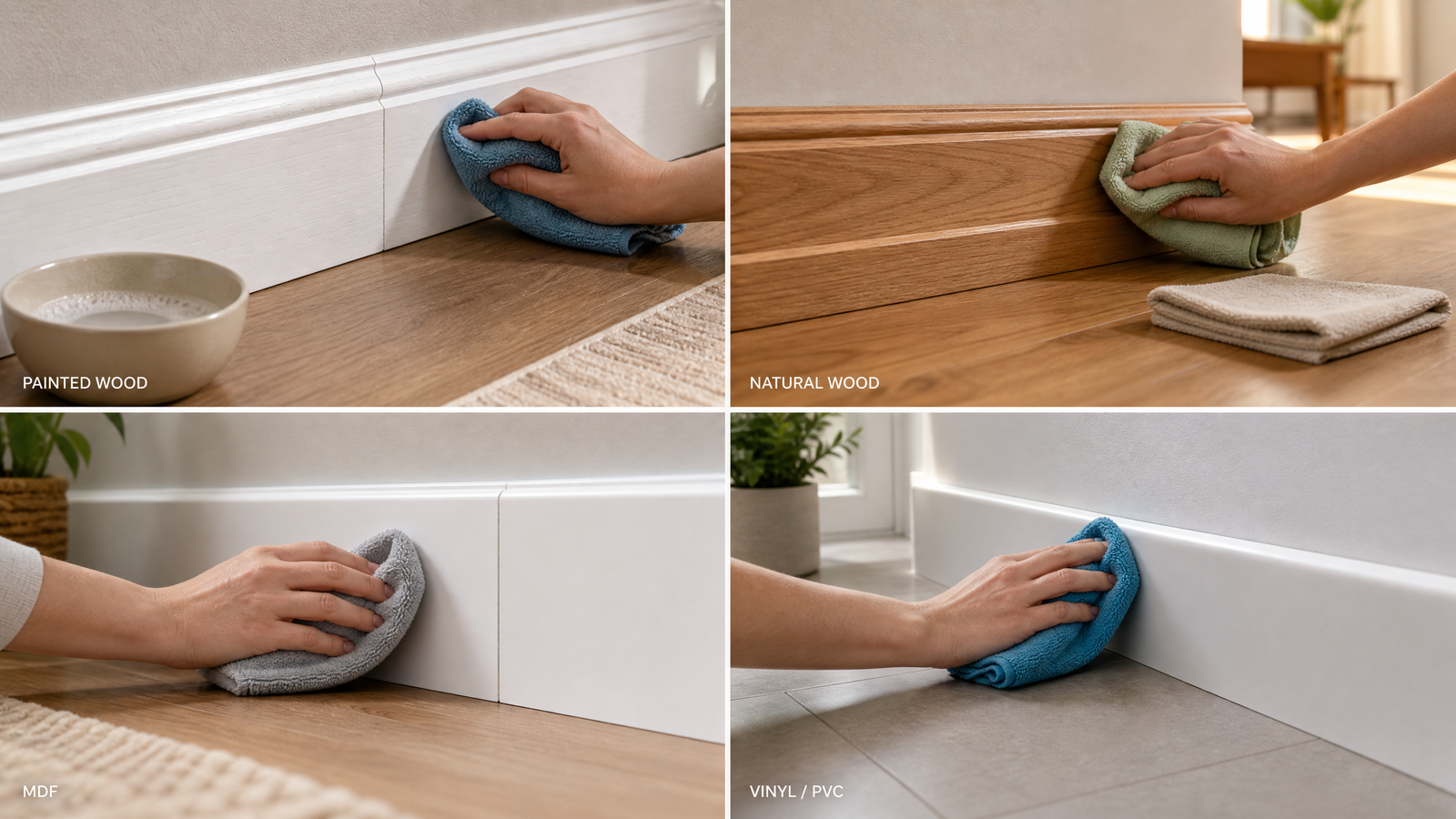
Painted Wood Baseboards
Painted wood baseboards usually clean well with a microfiber cloth, warm water, and a small amount of mild soap.
Remove dust first, then wipe the painted surface with a well-wrung cloth. Avoid soaking the joints and edges.
Be especially careful if the paint is old, chipped, or already peeling. Aggressive scrubbing can make the damage worse.
If you are repainting or refreshing your home, choosing the right wall color can also change how noticeable trim and dust appear. Our guide on how to choose a paint color covers practical factors such as lighting, undertones, and room conditions.
Natural Wood Baseboards
Natural wood needs a more careful approach because excessive moisture can damage the finish or the wood itself.
Begin with a dry microfiber cloth or soft vacuum brush. If wet cleaning is needed, use a slightly damp cloth and dry the surface soon afterward.
Avoid soaking unfinished wood. Also avoid harsh cleaners unless the product is specifically recommended for that particular wood finish.
If the wood has a special oil, wax, or protective coating, follow the care instructions for that finish whenever available.
MDF Baseboards
MDF baseboards should be kept as dry as possible because exposed MDF can swell when moisture gets into the material.
Dust them thoroughly and use a well-wrung cloth for light cleaning. Never leave water sitting on the seams, corners, or damaged edges.
If you notice swelling, soft spots, bubbling paint, or damaged edges, focus on identifying and stopping the source of moisture rather than repeatedly wiping the area.
Vinyl or PVC Baseboards
Vinyl and PVC baseboards are generally easy to wipe clean and can handle routine damp cleaning better than many wood-based materials.
Start with warm water and a microfiber cloth. Mild soap can be used when ordinary water is not enough.
Even though these materials are more moisture-resistant, avoid unnecessary soaking and wipe away cleaning residue after washing.
How to Clean Really Dirty or Greasy Baseboards
Very dirty baseboards are easier to clean when you loosen the grime instead of trying to scrub it away immediately.
Begin with a vacuum to remove loose dust and hair. Next, use warm water with a small amount of mild dish soap and a well-wrung microfiber cloth.
Work in small sections. Let the damp cloth soften stubborn grime for a few seconds, then wipe gently.
For grooves and corners, use a soft-bristle brush or old toothbrush. Keep the brush damp rather than soaking wet.
Kitchen baseboards may have a layer of grease mixed with dust. In these areas, mild dish soap is often more useful than plain water because it can help break down greasy residue.
After cleaning, wipe the area with a clean damp cloth to remove soap residue and then dry it.
If the baseboard remains stained after cleaning, determine whether the mark is actually dirt. Permanent discoloration, damaged paint, water stains, and worn finishes cannot always be removed through cleaning.
Baseboard Cleaning Mistakes to Avoid
Most baseboard cleaning damage comes from too much water, too much pressure, or using a cleaner that is too strong.
Using Too Much Water
Baseboards should be damp-cleaned, not soaked.
Excess moisture can enter seams and porous materials. This is especially risky with MDF and unfinished wood.
Scrubbing Too Hard
Gentle cleaning is usually safer than aggressive scrubbing.
Hard brushing can damage paint, dull finishes, and leave visible marks. Let warm water and mild soap loosen the dirt before applying more pressure.
Using Harsh Chemicals
A stronger cleaner is not automatically a better cleaner.
Bleach, strong degreasers, abrasive powders, and other powerful products can damage certain finishes. Start with the mildest suitable option.
Cleaning Without Removing Dust First
Skipping dry dust removal can make the wet-cleaning stage messier.
Dust mixed with water can form a dirty film that takes more effort to remove.
Leaving Baseboards Wet
Always dry the trim after wet cleaning, especially when working with wood or MDF.
Drying reduces the chance of moisture-related problems and helps the surface look clean without water streaks.
How Often Should You Clean Baseboards?
Most homes can benefit from a quick baseboard dusting every few weeks and a deeper cleaning every few months.
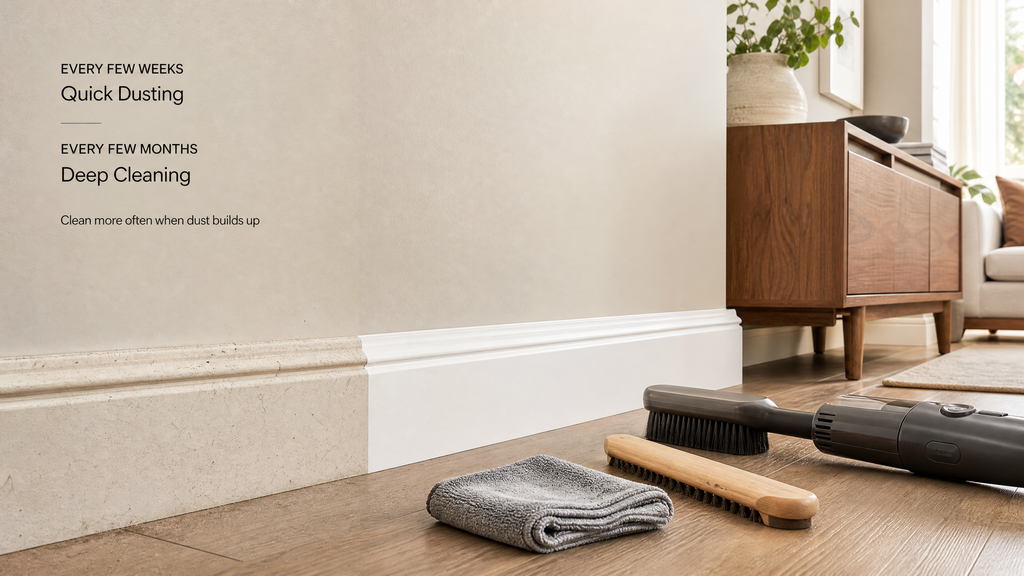
There is no single schedule that works for every home. Your cleaning frequency should depend on how quickly dust and dirt build up.
Consider cleaning more often if you have:
- Pets that shed
- High household traffic
- Children
- Construction or renovation work nearby
- Open windows that bring in dust
- A home that naturally collects a lot of dust
- Kitchens where grease can settle on nearby trim
A simple maintenance routine can prevent a large cleaning job later. If you notice a visible layer of dust, it is usually time for a quick wipe rather than waiting for the buildup to become heavy.
You can also combine baseboard cleaning with other small home maintenance tasks. For example, while checking walls and trim, look for unusual cracks or damage. Our guides on wall cracks and cracks in the ceiling explain what different types of cracks can mean and when they may need closer attention.
How to Keep Baseboards Cleaner for Longer
The easiest way to reduce baseboard cleaning is to stop dust and dirt from building up in the first place.
Vacuum the floor regularly, including the edges where the flooring meets the baseboards. This removes dust before it settles heavily on the trim.
Use a microfiber cloth for quick touch-ups when you notice fingerprints or small marks. A one-minute wipe is much easier than dealing with months of buildup.
Keep furniture and storage areas from pressing tightly against walls when possible. This gives you better access for vacuuming and cleaning.
If you are doing a larger home improvement project, protect nearby baseboards from dust, paint splashes, and construction debris. Cleaning them afterward is much easier when heavy buildup has been prevented.
For example, during a bathroom renovation, protect existing trim from water and construction materials. If you are planning a larger project, our bathroom remodel ideas guide can help with planning the space before work begins.
Simple Maintenance Routine
Vacuum floor edges regularly, dust the top of the baseboards, and spot-clean marks as soon as you notice them.
What Real People Say About Cleaning Baseboards
RedditReal-world cleaning discussions can reveal simple ways to make baseboard cleaning easier. In a Reddit discussion about baseboard cleaning, users shared practical ideas such as using microfiber cloths, long-handled tools, mops, and vacuum attachments.
A common theme is to remove loose dust before wet cleaning. This is a practical approach because wiping a heavily dusty surface with a wet cloth can turn the dust into a dirty film that takes more effort to remove.
Another helpful idea is using long-handled cleaning tools when possible. They can make it easier to reach baseboards without constantly bending or kneeling, especially when cleaning large rooms or long hallways.
Our take: These community tips are useful as practical options, but not every cleaning method shared online is suitable for every baseboard. We recommend starting with the gentlest approach—vacuum or dust first, use a lightly damp microfiber cloth, and choose the cleaning solution based on the material and finish.
Reddit comments represent individual experiences rather than professional or manufacturer instructions, so use them as additional ideas rather than universal rules. When in doubt, follow the care instructions for your specific baseboard material and test an unfamiliar cleaning method in a hidden area first.
Final Tips for Cleaner Baseboards
Clean baseboards are easiest to maintain when you use a gentle routine instead of waiting for heavy buildup.
Start by removing dry dust and hair, then use a lightly damp microfiber cloth with mild soap when needed. Treat stubborn marks carefully, avoid excessive moisture, and dry the surface when you finish.
Most importantly, match your cleaning method to the baseboard material. Painted wood, natural wood, MDF, and vinyl can have different moisture and cleaning needs.
With a few minutes of regular maintenance, you can keep your baseboards looking cleaner without turning them into a major household chore.
Frequently Asked Questions About Cleaning Baseboards
What is the best thing to clean baseboards with?
A microfiber cloth with warm water and a small amount of mild dish soap is a good starting point for many washable baseboards. Always consider the baseboard material and test unfamiliar cleaning products in a hidden area first.
How do you clean baseboards without scrubbing?
Remove dust with a vacuum or microfiber cloth, then use a damp cloth to loosen dirt before wiping it away. Allowing stubborn grime to soften for a short time can reduce the need for hard scrubbing.
Can you use vinegar to clean baseboards?
Vinegar is not necessary for routine baseboard cleaning, and it is better to avoid it when you are unsure how the finish will react. Some materials and finishes can be sensitive to acidic cleaners, so a mild soap solution is a safer starting point.
How do you clean baseboards without damaging paint?
Use a soft microfiber cloth, minimal moisture, and gentle pressure to protect painted baseboards. Avoid abrasive products and always test stronger spot-cleaning methods before using them over a large area.
How often should you clean your baseboards?
A quick dusting every few weeks and a deeper cleaning every few months works well for many homes. Homes with pets, children, heavy traffic, or high dust levels may need more frequent cleaning.
Home Safety & Cleaning Note
Use the gentlest cleaning method that works for your baseboards. Avoid soaking wood or MDF, test unfamiliar cleaners on a hidden area first, and follow the manufacturer’s care instructions when available.
Never mix household cleaning products, and keep cleaning solutions away from children and pets.
Sources & References
The following sources provide additional information about household cleaning practices and cleaning-product safety:
- U.S. Environmental Protection Agency (EPA) — Household Cleaning & Indoor Air Guidance
- EPA Safer Choice — Cleaning Product Safety
- Poison Control — Cleaning Products Safety
- Poison Control — Safe Spring Cleaning Tips
These sources are provided for additional reading. Always follow the manufacturer’s instructions for your specific baseboard material and cleaning products.