

Expert Review
Reviewed by David A. Miller, P.E. – Civil & Structural Engineer
This guide was reviewed for the accuracy of its information about common ceiling cracks, possible causes, warning signs, and situations where professional assessment may be appropriate.
Important: A ceiling crack cannot be diagnosed from appearance alone. Cracks that are widening, accompanied by sagging, water damage, separation, or other signs of movement should be assessed by a qualified professional.
A ceiling crack can be a harmless surface issue, but it can also point to moisture, movement, or a larger building problem. The important thing is not to judge a crack by its appearance alone.
Small hairline or circular cracks often develop as drywall, plaster, or building materials naturally move over time. However, cracks that are widening, spreading, accompanied by water stains, or associated with sagging deserve closer attention.
This guide at Daily Idea Book explains the 10 most common types of ceiling cracks, what causes them, which warning signs matter, and what you can do about them.
10 Types of Cracks in Ceiling and What They Mean
The pattern, location, size, and progression of a ceiling crack can provide useful clues about its cause.
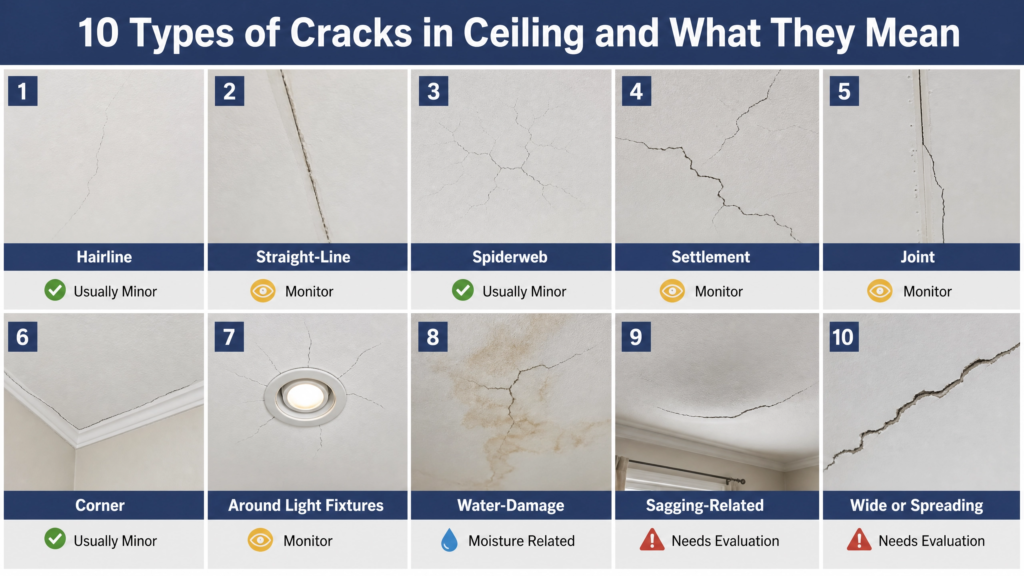
1. Hairline Ceiling Cracks
Hairline cracks are usually very thin surface cracks caused by minor movement or changes in the ceiling material. They commonly appear in drywall joint compound, plaster, or painted surfaces as a home settles or materials expand and contract.
A single, stable hairline crack with no staining, sagging, or other damage is often less concerning. Still, it is useful to photograph the area and check it periodically to see whether it changes.
If the crack keeps returning after repair, the surface damage may be hiding an ongoing movement or installation problem.
2. Straight Ceiling Cracks
Straight cracks often follow a drywall joint, seam, or another natural line in the ceiling. They can occur when joint tape or compound loses its bond, when drywall moves slightly, or when the original installation was not finished properly.
These cracks are especially common on ceilings made from several drywall panels. If the crack remains narrow and stable, it may be mainly a finishing problem.
A recurring straight crack should not simply be covered with another layer of paint. The underlying joint may need proper repair.
3. Horizontal Ceiling Cracks
A horizontal-looking ceiling crack should be evaluated by its exact location, width, and surrounding damage rather than its direction alone. A crack that runs along a drywall joint can have a different cause from one associated with movement or separation.
Look for additional signs such as uneven surfaces, widening, nearby wall cracks, or changes around doors and windows.
The direction of a crack by itself does not prove that a structural problem exists, so avoid making a diagnosis based only on the crack’s orientation.
4. Vertical Ceiling Cracks
Vertical or sharply defined cracks can result from movement between building materials, joints, or areas of the ceiling with different levels of stress. Their importance depends on where they occur and whether they are changing.
Check whether the crack continues onto a wall or appears alongside other cracks. A crack that is growing or accompanied by visible displacement deserves more attention than an isolated, stable surface crack.
5. Spiderweb or Map Cracks
Spiderweb cracks form branching patterns that can spread across a wider area of the ceiling surface. They may occur when old plaster or surface coatings become weak, when materials shrink, or when repeated movement affects the finish.
These cracks can sometimes be limited to the paint or surface layer. However, widespread cracking should be inspected more carefully, especially when pieces of material are loose or the ceiling surface is beginning to sag.
Do not assume that a large number of small cracks are harmless simply because each individual crack is thin.
6. Cracks Along Drywall Seams
Cracks along drywall seams are commonly linked to joint tape, joint compound, movement, or poor finishing. The crack may follow a long, straight line where two drywall panels meet.
If the tape underneath has separated, simply filling the visible crack may provide only a temporary repair.
Ceiling drywall can also develop other surface problems. For example, if you notice raised fasteners along with cracking, our guide to drywall nail pops can help you understand why those problems occur.
7. Cracks Around Ceiling Corners
Cracks where the ceiling meets a wall often develop because adjoining surfaces move slightly differently. Changes in temperature, humidity, settling, and movement between materials can all contribute.
A small crack at the ceiling-to-wall joint is not automatically a structural warning sign. However, monitor it if it keeps reopening, becomes wider, or appears together with other movement-related damage.
8. Cracks Around Light Fixtures or Ceiling Openings
Cracks around light fixtures, vents, recessed lights, or other ceiling openings may develop because openings interrupt the continuous surface. Local movement, installation work, vibration, or weak surrounding material can contribute.
Pay particular attention if the area also shows moisture, discoloration, sagging, or loose material.
If the crack is close to an electrical fixture and there are signs of water intrusion, do not ignore the combination. Have the cause assessed before attempting cosmetic repairs.
9. Water-Damaged or Stained Ceiling Cracks
A ceiling crack combined with a brown, yellow, or damp-looking stain may indicate a moisture problem rather than a simple cosmetic crack. Possible sources include plumbing leaks, roof leaks, overflowing bathrooms, condensation, or water entering from another area.
The first priority is finding and stopping the source of the water. Painting over a stain or filling the crack before the moisture problem is resolved can allow the damage to return.
Soft drywall, bubbling paint, sagging material, or a strong damp smell are additional reasons to take the problem seriously.
10. Wide, Growing, or Sagging Ceiling Cracks
A widening crack, visible separation, or sagging ceiling deserves more attention than a stable hairline crack. These signs can indicate significant movement, moisture damage, loss of material support, or another underlying problem.
Do not rely on crack width alone to decide whether a ceiling is safe. The surrounding condition matters too.
If the ceiling is visibly sagging, bulging, separating, or showing signs of sudden deterioration, avoid standing directly underneath the affected area and seek appropriate professional assessment.
What Causes Cracks in a Ceiling?
Ceiling cracks have several possible causes, and the same-looking crack can sometimes come from different problems.
Normal House Settling and Movement
Normal building movement can create small cracks as materials adjust over time. New construction and recently renovated spaces can be particularly prone to minor movement as materials dry and settle.
Stable, very small cracks without other warning signs are often less concerning, but continued growth should be monitored.
Temperature and Humidity Changes
Changes in temperature and humidity can cause building materials to expand, contract, or shift slightly. Repeated seasonal changes can place stress on drywall joints, plaster, and other finishes.
Keeping indoor moisture at a reasonable level and addressing obvious moisture sources can help reduce repeated damage.
Drywall Installation or Joint Problems
Poor drywall finishing can cause cracks to reappear along seams and joints. Insufficient joint compound, weak tape adhesion, movement at panel joints, or improper fastening can all contribute.
A proper repair should address the joint itself rather than simply hiding the visible crack.
Water Leaks and Moisture Damage
Water is one of the most important causes to investigate when ceiling cracking appears with staining or soft material. A leak can weaken drywall, damage plaster, and cause paint or joint compound to separate.
Check plumbing, bathrooms, roof areas, and spaces above the ceiling when moisture damage is suspected.
Foundation or Structural Movement
Significant building movement can sometimes produce cracks in ceilings as well as walls and other parts of a structure. Ceiling cracks become more concerning when they occur with several other signs of movement.
For a broader look at crack patterns and warning signs, see our guide to wall cracks and when to worry.
Poor Construction or Previous Repairs
A ceiling crack that repeatedly returns may be connected to an earlier repair or construction problem. If the original cause was never corrected, a new layer of filler or paint may only hide the problem temporarily.
Look at the repair history if you know it, especially when the same crack has appeared more than once.
When Should You Worry About a Ceiling Crack?
The most useful warning sign is change: a crack that is growing, spreading, separating, or appearing with other damage deserves closer attention.
Pay particular attention when you notice:
- The crack is getting longer or wider.
- Several new cracks appear within a short period.
- The ceiling is sagging, bulging, or separating.
- There are water stains or signs of active moisture.
- Pieces of plaster or drywall are loose.
- Cracks appear on nearby walls at the same time.
- Doors or windows suddenly become difficult to open or close.
- You can see noticeable displacement on either side of the crack.
Important
A ceiling crack cannot be classified as dangerous from a photograph or width measurement alone. Its location, pattern, progression, surrounding damage, and the construction of the building all matter.
Ceiling Cracks: Cosmetic vs. Potentially Serious
| Sign | Often Less Concerning | Needs Further Evaluation |
|---|---|---|
| Crack width | Very thin and stable | Wide or getting wider |
| Pattern | Small and isolated | Multiple or spreading |
| Surface | Flat and intact | Sagging, bulging, or separated |
| Moisture | No staining | Dampness or water staining |
| Change over time | Remains stable | Quickly worsening |
| Nearby damage | None | Wall or structural movement |
How to Tell What Type of Ceiling Crack You Have
A simple visual check can help you record useful information before deciding what to do next.
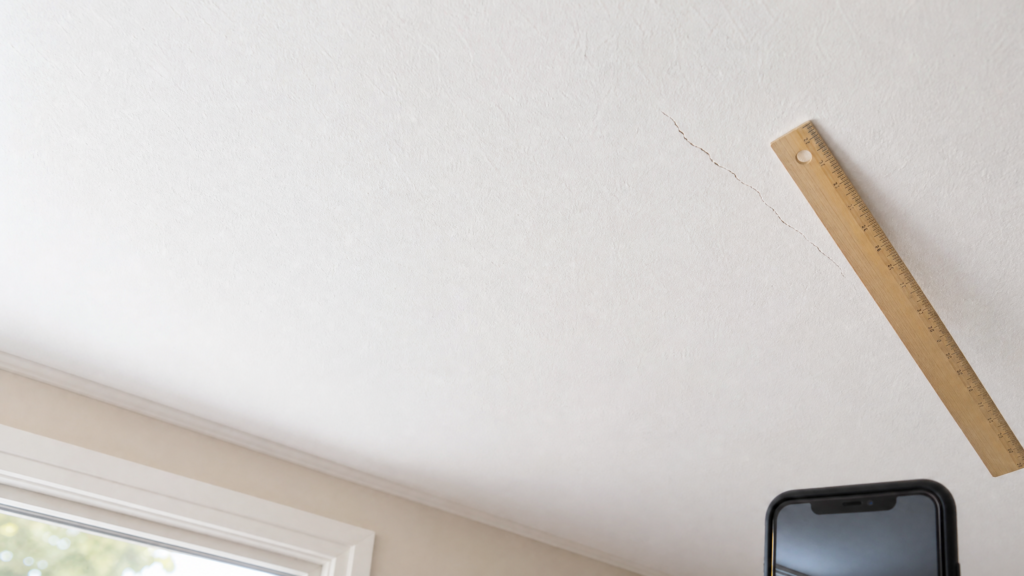
Start by looking at the crack’s pattern and location. Note whether it follows a drywall seam, appears near a corner, surrounds an opening, or forms an irregular pattern.
Next, check its width and length. You do not need specialized equipment for basic monitoring; a ruler can help you record changes over time.
Look for water stains, soft areas, bubbling paint, sagging, or loose material around the crack.
Finally, inspect nearby walls and ceilings for other signs of movement. Take clear photographs from the same angle and distance so you can compare the condition later.
This kind of record can also help a professional understand how the problem has changed.
How to Fix Cracks in a Ceiling
The correct repair depends on the cause, so fixing the visible crack should not always be the first step.
How to Repair Small Hairline Cracks
Small, stable surface cracks can often be repaired after confirming that there is no ongoing moisture or movement problem.
A typical cosmetic repair may involve cleaning the damaged area, applying suitable filler or joint compound, allowing it to dry, lightly sanding the surface, and repainting.
Always follow the product instructions and use materials appropriate for your ceiling surface.
How to Repair Drywall Seam Cracks
A recurring drywall seam crack may require the damaged joint tape or compound to be removed and properly rebuilt.
The repair generally involves preparing the joint, applying suitable joint compound and tape where needed, allowing each layer to dry, sanding carefully, and finishing the surface before painting.
If the drywall itself is loose or damaged, repairing only the visible surface may not solve the problem.
How to Fix Ceiling Cracks After Water Damage
Water-damaged cracks should be repaired only after the source of moisture has been identified and stopped.
Check for the source first, such as a plumbing leak, roof problem, or condensation issue. Damaged drywall or plaster may need to be assessed for replacement rather than simply filled.
If the material is soft, badly stained, sagging, or damaged over a large area, professional help is usually the safer choice.
When Repainting Is Not Enough
Paint can hide a small cosmetic crack, but it cannot correct movement, moisture, or damaged drywall underneath.
If the crack repeatedly returns after painting, treat that as useful information rather than simply applying another coat.
When Should You Call a Professional?
Professional assessment is especially important when a ceiling crack is accompanied by movement, moisture, sagging, or rapid change.
Consider getting qualified help when:
- The ceiling is sagging or bulging.
- A crack is rapidly getting wider.
- There is significant water damage.
- Multiple ceiling and wall cracks appear together.
- Parts of the ceiling are separating or becoming loose.
- You suspect structural movement.
- You are unsure whether the ceiling is safe.
The appropriate professional depends on the suspected cause. A qualified contractor may be suitable for drywall or repair work, while a structural engineer may be appropriate when significant structural movement is suspected.
How to Prevent Ceiling Cracks
Preventing the underlying cause is more effective than repeatedly filling the same crack.

Control Moisture and Humidity
Keep indoor moisture under control and investigate persistent condensation or damp areas.
Repair Leaks Promptly
Fix plumbing and roof leaks as soon as they are discovered to prevent water from weakening ceiling materials.
Maintain the Roof and Plumbing
Regular checks of areas above ceilings can help identify leaks before they create widespread damage.
Use Proper Drywall Repair Techniques
Use suitable materials and correct joint-repair methods instead of repeatedly covering cracks with paint.
Monitor Existing Cracks
Photograph cracks that are not immediately repaired and compare them over time. Changes in size, pattern, or surrounding damage can provide useful information.
A Quick Ceiling Crack Checklist
Before repairing a ceiling crack, check these five things:
If you answer “yes” to several warning signs, it is better to investigate the underlying cause before attempting a cosmetic repair.
Editorial & Safety Note
A ceiling crack can have a simple cosmetic cause, but its appearance alone cannot confirm whether a building has a structural problem. This guide is intended to help homeowners understand common crack patterns, possible causes, warning signs, and basic repair considerations.
Ceiling conditions can vary depending on the building’s age, construction, materials, climate, previous repairs, and maintenance history. If a crack is rapidly changing, accompanied by sagging, bulging, significant water damage, separation, or other signs of movement, do not rely on this article as a diagnosis.
When a ceiling appears unsafe or the cause is unclear, seek an assessment from an appropriately qualified building professional. For suspected structural movement, a licensed or qualified structural engineer may be appropriate. For leaks, damaged drywall, or general repair work, a qualified contractor or relevant trade professional may be able to identify and address the underlying problem.
The repair suggestions in this guide are intended for minor, stable surface damage only. Always follow the instructions for the repair products you use and take appropriate safety precautions when working overhead.
Final Takeaway
Most small, stable ceiling cracks are not automatically a sign of a serious structural problem, but every crack should be judged by its pattern, location, surrounding condition, and changes over time.
Hairline cracks along drywall joints may be related to normal movement or finishing problems, while cracks combined with water damage, sagging, separation, or rapid growth deserve greater attention.
When in doubt, document the crack, investigate possible moisture sources, avoid hiding a worsening problem with paint, and seek qualified professional advice when the signs suggest more than a cosmetic issue.
For more practical home improvement and organization guides, explore Daily Idea Book, including our Home & Living ideas. You can also find related advice on organizing desk drawers and organizing a bathroom cabinet.
Frequently Asked Questions
When should I worry about cracks in my ceiling?
Worry more when a ceiling crack is widening, spreading, accompanied by sagging, bulging, water damage, separation, or other signs of movement. Rapid changes or several related cracks are good reasons to have the area assessed by a qualified professional.
Is it normal to see cracks on the ceiling?
Small, stable hairline cracks can occur as buildings settle and ceiling materials expand, contract, or move slightly. However, a crack that keeps growing, returns after repair, or appears with other damage should be investigated.
How to tell if a crack is structural?
You cannot reliably confirm that a ceiling crack is structural from its width or appearance alone. Look for widening, displacement, sagging, multiple related cracks, or movement in nearby walls, and seek a qualified professional assessment when these signs are present.
Are cracks in a ceiling normal?
Some minor ceiling cracks are common and may be cosmetic, especially when they are thin, isolated, and stable. They should still be monitored for changes in size, pattern, moisture, or surrounding damage.
Are hairline cracks in ceilings serious?
Most isolated, stable hairline cracks are less concerning, but they are not automatically harmless. If a hairline crack repeatedly returns, becomes wider, or appears with staining, sagging, or other movement, investigate the underlying cause.
Can water damage cause ceiling cracks?
Yes, water damage can weaken ceiling materials and contribute to cracking, staining, sagging, or separation. If a crack appears with dampness or a water stain, identify and stop the moisture source before carrying out cosmetic repairs.
Should I repair or replace a cracked ceiling?
Minor, stable surface cracks can often be repaired, while severely water-damaged, sagging, or badly deteriorated ceiling materials may need replacement. The correct approach depends on the material’s condition and the cause of the damage.
Can ceiling cracks get worse over time?
Yes, some ceiling cracks can widen, spread, or return when the underlying cause continues. Monitor existing cracks and seek professional assessment if you notice rapid changes, sagging, separation, moisture, or other warning signs.
Sources & References
We used reliable building, moisture-control, and repair guidance to support the information in this article. These references can also help readers learn more about moisture damage, drywall repair, and building safety.
- U.S. Environmental Protection Agency (EPA) — Moisture Control Guidance for Building Design, Construction and Maintenance — Guidance covering moisture management in roofs, ceilings, walls, plumbing systems, and other parts of buildings.
- U.S. Environmental Protection Agency (EPA) — Water Damage: Cleanup and Mold Prevention — Guidance on drying and handling water-damaged drywall, gypsum board, ceiling materials, and other building components.
- U.S. Environmental Protection Agency (EPA) — Doing It Yourself: Flooded Homes — Practical safety and drying guidance for damaged drywall, plaster, and other building materials.
- GOV.UK — Approved Documents: Building Regulations Guidance — Government guidance covering building work, materials, and ways of meeting building regulations.
- U.S. Gypsum (USG) — Sheetrock Brand Plaster of Paris — Manufacturer information on repairing cracks and damage in drywall and plaster ceilings.