
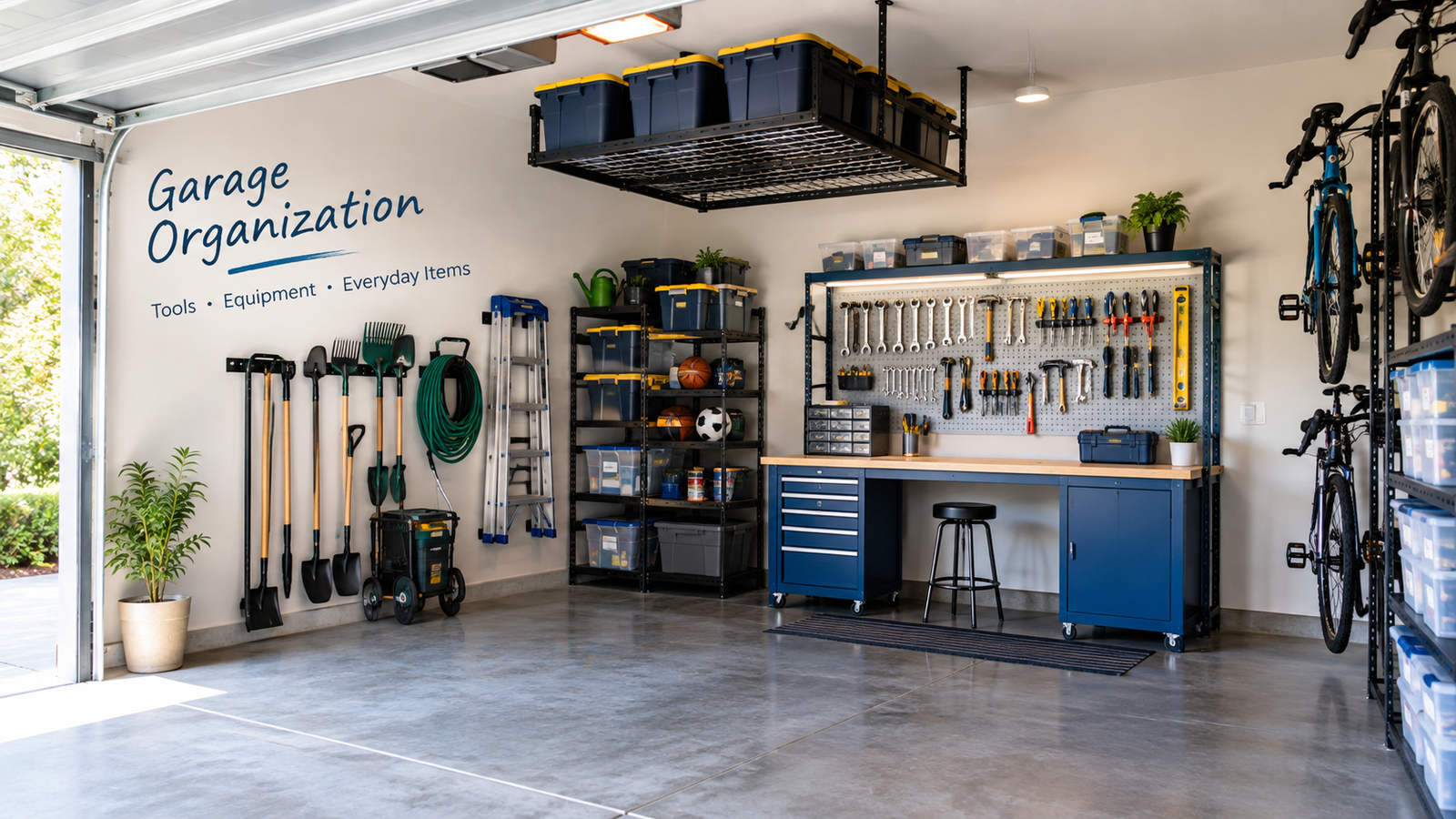
A well-organized garage should make it easier to find things, not simply make the space look neat. Whether your garage is packed with tools, gardening equipment, sports gear, seasonal decorations, or boxes you rarely open, the right storage system can turn a crowded space into a useful part of your home.
The best garage organization ideas start with one simple rule: give every type of item a logical place. Instead of buying storage products first, decide what you need to store, how often you use it, and how much floor and wall space you can safely use.
A good garage setup can include wall storage for tools, shelves for bins, hooks for long-handled equipment, cabinets for smaller supplies, and overhead storage for items you only need occasionally. The goal is to use the space efficiently while keeping frequently used items easy to reach.
If you are working on other parts of your home, our guides on pantry organization ideas and organizing desk drawers can also give you useful ideas for creating practical storage zones.
20+ Easy Garage Organization Ideas
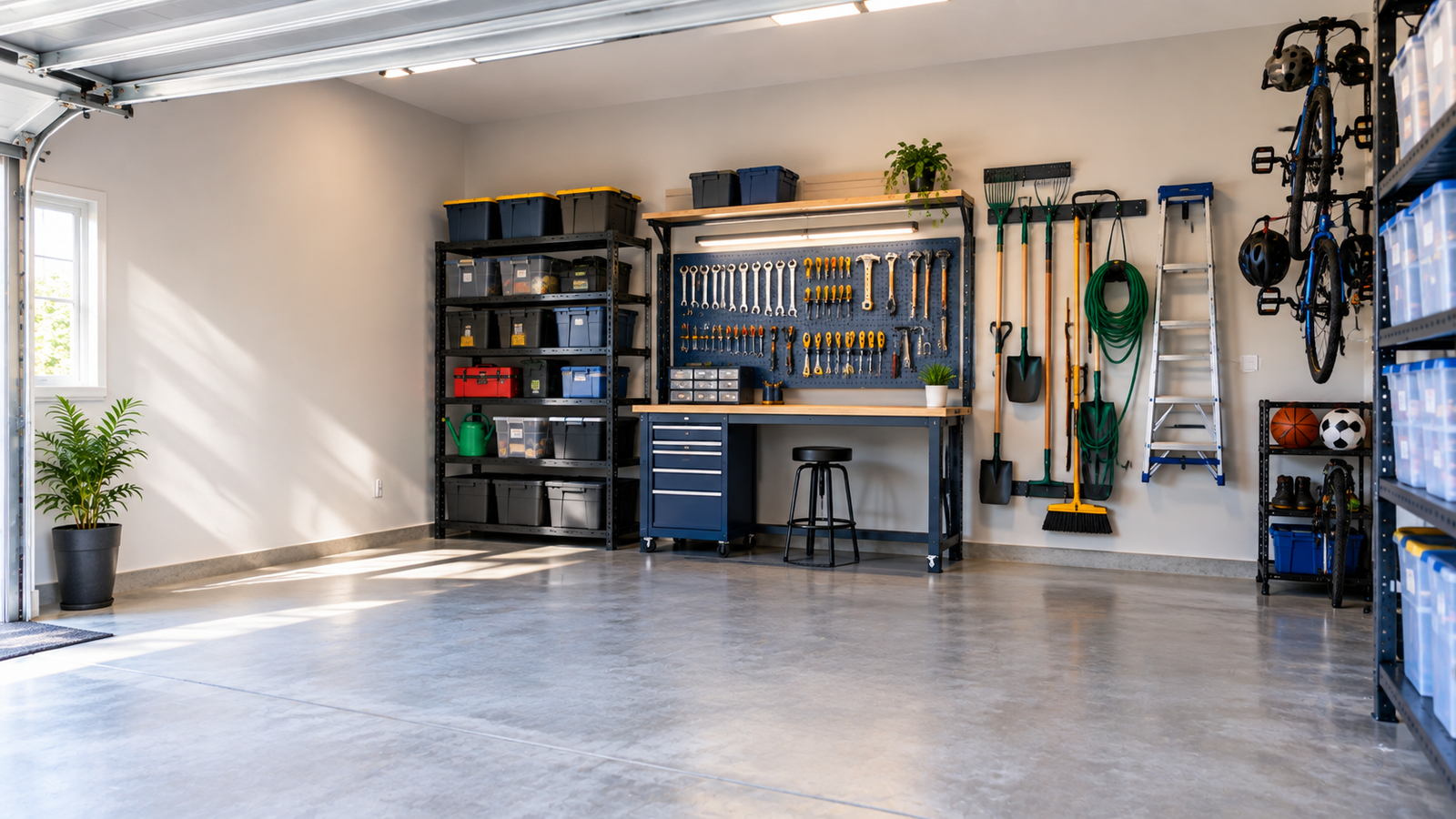
1. Start With a Garage Decluttering Plan
Decluttering is the first step because better storage cannot fix a garage that simply contains too much stuff. Before installing shelves or hooks, take everything out or work through one section at a time.
Create four basic groups:
- Keep
- Donate
- Sell
- Throw away or properly dispose of
Be honest about items you have not used for years. Broken tools, duplicate equipment, empty containers, and old materials that you are unlikely to use can quickly consume valuable space.
Do not rush this step. A few extra hours of sorting can prevent you from spending money organizing things you do not actually need.
2. Create Zones for Different Items
Garage zones make organization easier because similar items stay together. Instead of placing storage wherever there is empty space, divide the garage according to how you use it.
For example, you might create:
- A tool zone
- A gardening zone
- A sports zone
- A seasonal storage zone
- A workbench zone
- A car-care zone
- An everyday drop zone
Keep related items together. Garden gloves, shovels, hoses, and pruning tools should not be scattered across different sides of the garage.
This approach also makes it easier for other family members to put things back where they belong.
3. Install Wall-Mounted Storage
Your garage walls can hold a surprising amount of equipment without taking up valuable floor space. Use sturdy wall-mounted shelves, rails, hooks, or storage panels for items that are used regularly.
Wall storage works especially well for:
- Hand tools
- Garden tools
- Ladders
- Brooms
- Extension cords
- Hoses
- Sports equipment
Before drilling into a wall, check where the framing members, electrical wiring, plumbing, and other services are located. Use appropriate anchors and fasteners for the wall material and the expected load.
If you are doing other framing or remodeling work, our guide to metal studs vs. wood studs can help you understand the basic differences between these framing options.
4. Use a Pegboard for Tools
A pegboard turns an unused wall into an easy-to-see tool station. It is particularly useful when you want your most frequently used hand tools visible instead of buried inside a toolbox.
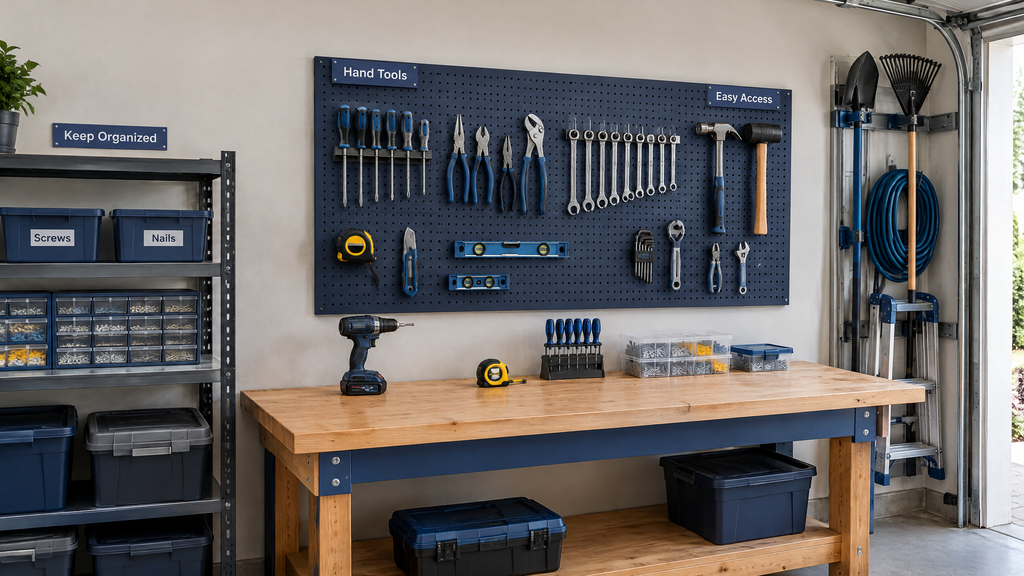
Arrange tools by type and size. Keep screwdrivers together, place pliers in another section, and give measuring tools their own area.
One useful trick is to leave a little space around each tool. An overcrowded pegboard may technically hold more tools, but it becomes harder to put everything back after use.
5. Add Garage Shelving
Garage shelving is one of the simplest ways to turn unused vertical space into organized storage. Freestanding or wall-supported shelves can hold bins, boxes, automotive supplies, household items, and seasonal decorations.
Choose shelf depth according to what you actually store. Very deep shelves may seem useful, but they can make smaller items disappear behind larger ones.
For heavy equipment, pay close attention to the shelf’s load rating and installation method. Store heavier items lower whenever possible and avoid placing heavy objects overhead where lifting them down could create a safety problem.
6. Store Items in Clear Storage Bins
Clear bins make stored items easier to identify without opening every container. Use them for small parts, holiday decorations, hardware, craft supplies, cables, and items that need to stay together.
Use similar-sized bins when possible because they stack more efficiently.
Labels are still useful, even with clear containers. A simple label such as “Christmas Lights,” “Plumbing Parts,” or “Painting Supplies” can save time when you are looking for something months later.
7. Organize Hand Tools and Power Tools
Tools work best when the storage system matches how often you use them. Keep everyday tools in an easy-to-reach location and move rarely used equipment to cabinets, shelves, or higher storage.
A simple tool arrangement might include:
- Frequently used hand tools on a pegboard
- Power tools on a sturdy shelf
- Drill bits and small accessories in labeled organizers
- Larger tools in cabinets or dedicated storage
- Batteries and chargers together in one area
Avoid piling different tools into one deep box. You may save space initially, but you will lose time searching through it later.
8. Create a Dedicated Workbench Area
A small workbench can give the garage a clear purpose and prevent DIY projects from spreading across the floor. If you regularly repair items, work with tools, or complete small projects, create a dedicated workspace.
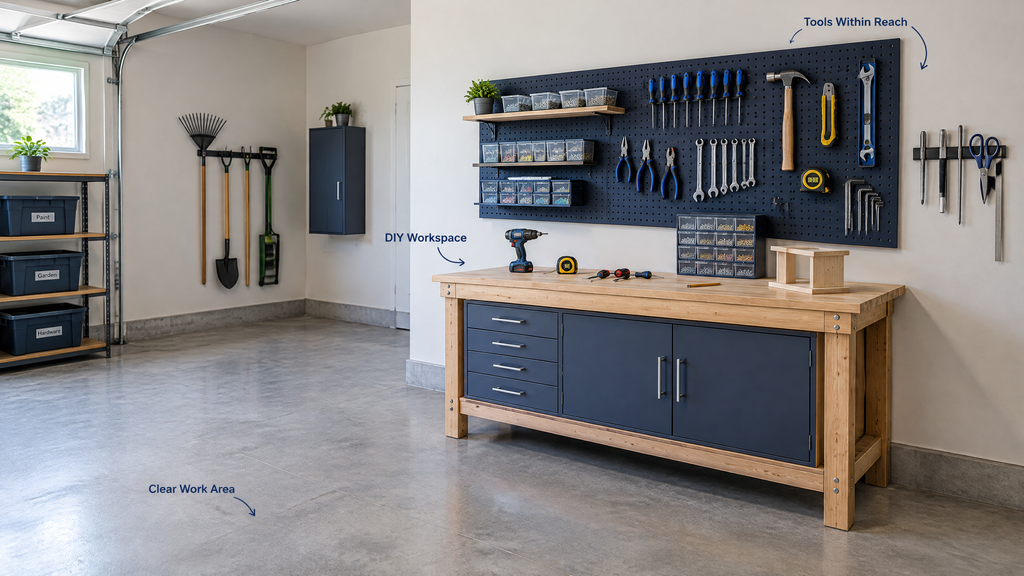
Keep the tools you use most near the workbench. A pegboard, shallow shelves, magnetic strips, or small parts organizers can keep the work surface clear.
Leave enough room around the workstation to work comfortably and move materials safely.
9. Use Overhead Garage Storage
Overhead storage is valuable when floor and wall space are already limited. It can be useful for lightweight items that you only need occasionally, such as seasonal decorations, camping equipment, or rarely used household items.
However, overhead storage should be planned carefully. Follow the storage system’s installation and weight requirements, and do not place items above areas where falling objects could cause an injury.
Keep frequently used items at a comfortable height instead of forcing yourself to use a ladder every time you need something.
10. Hang Bicycles and Sports Equipment
Sports equipment becomes much easier to manage when bulky items are lifted off the floor. Wall hooks, racks, and dedicated hanging systems can help organize bicycles, helmets, balls, scooters, and other equipment.
Create one sports zone rather than scattering equipment throughout the garage.
Keep the items used most often at an easy-to-reach height, while less frequently used equipment can be stored higher.
11. Organize Gardening Tools
Long-handled garden tools are much easier to manage when they are stored vertically. Shovels, rakes, hoes, brooms, and similar tools can take up a surprising amount of floor space when they are left leaning against a wall.
Install sturdy hooks or a purpose-built rack and group similar tools together.
Keep frequently used garden tools close to the garage entrance if that is the route you normally take to the yard.
12. Add Hooks for Hoses, Cords and Ladders
Hooks can solve some of the most annoying garage-storage problems with very little space. Garden hoses, extension cords, ropes, ladders, and similar items are difficult to store neatly when they are simply left on the floor.
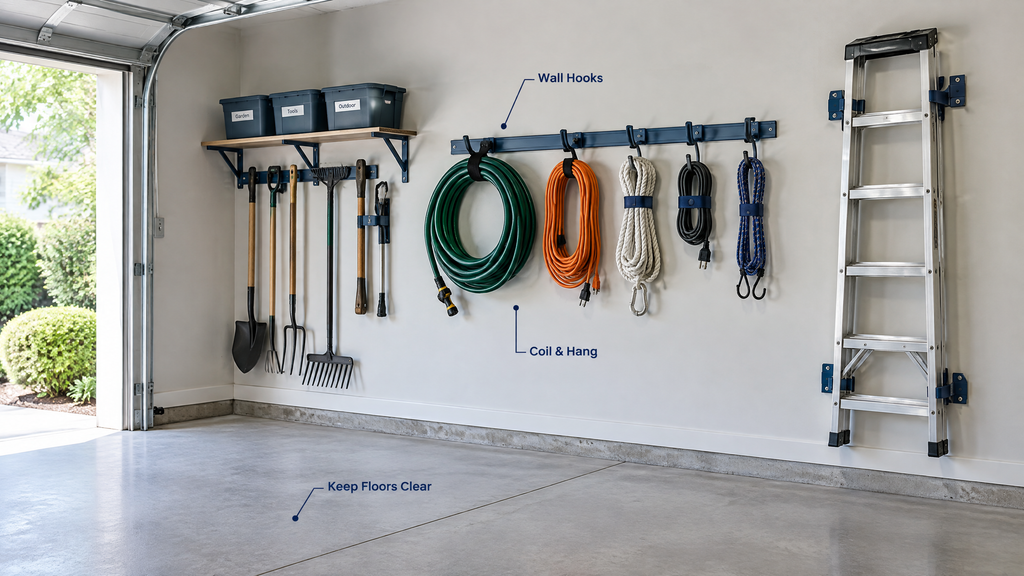
Use appropriately rated hooks or brackets and secure them properly to the wall structure.
Coil hoses and cords before hanging them, but avoid tight bends that could damage them over time.
13. Use Cabinets for Small or Valuable Items
Closed cabinets are useful when you want the garage to look cleaner and keep certain items protected. They can hide clutter while providing dedicated storage for tools, hardware, automotive products, and other supplies.
Cabinets are particularly useful for small items that would otherwise make open shelving look messy.
For chemicals, paints, fuels, or other potentially hazardous products, always follow the product label and local safety guidance for storage. Keep incompatible materials separated and away from children and pets.
14. Create a Seasonal Storage Area
Seasonal items should have a dedicated home so they do not take over your everyday storage. Holiday decorations, winter equipment, camping supplies, and other occasional items can be grouped into labeled bins.
Place these items in less convenient storage locations because you will not need them every week.
At the same time, avoid putting everything you rarely use into one giant pile. Organized seasonal storage should still be easy to identify and retrieve.
15. Organize Paint, Hardware and DIY Supplies
Small DIY supplies become much easier to manage when each category has its own container. Screws, nails, wall anchors, tape, brushes, sandpaper, and similar items can quickly become mixed together.
Use small divided organizers or labeled containers.
Keep an inventory of commonly used supplies before buying more. This prevents the familiar problem of discovering three unopened boxes of screws after buying another one.
If you regularly work on home projects, our guide to how to choose a paint color can also be useful when planning your next project.
16. Make Better Use of Garage Corners
Garage corners are often wasted because large objects naturally get pushed into them. Instead of treating corners as dumping areas, give each one a specific purpose.
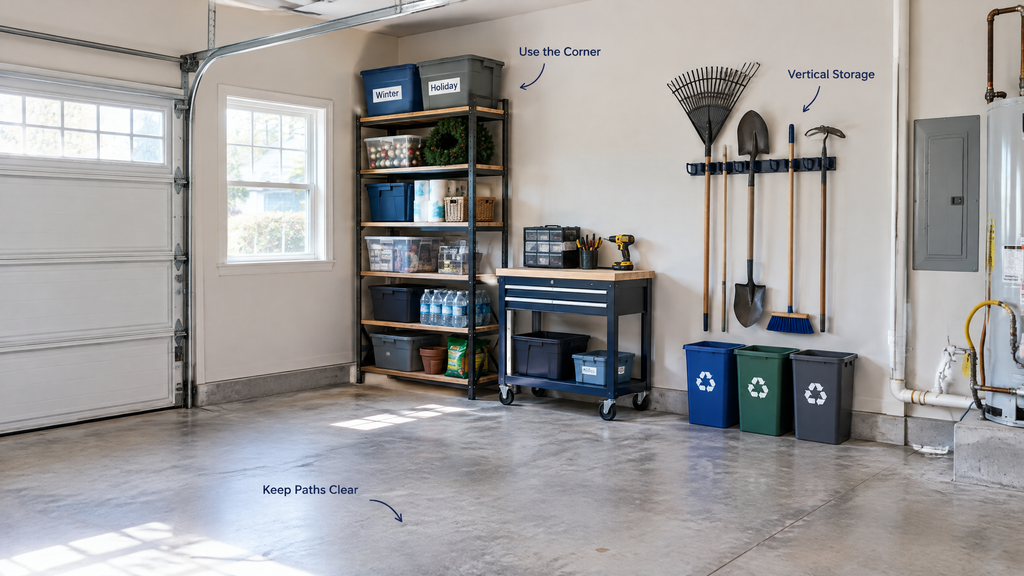
A corner could hold:
- A tall shelving unit
- A compact workbench
- Garden tools
- A rolling tool cart
- A recycling station
- Seasonal storage
Measure the area first so your storage system does not block doors, windows, utilities, or walking paths.
17. Use Vertical Space in a Small Garage
A small garage can feel much larger when more storage moves upward instead of outward. Use wall-mounted racks, narrow shelving, hooks, pegboards, and suitable overhead systems to reduce floor clutter.
Do not try to fill every available wall with storage. You still need room to walk, park vehicles, open doors, and safely handle large objects.
The goal is better use of space, not maximum storage at any cost.
18. Label Storage Bins and Shelves
Labels turn a storage system into something the whole household can actually use. Even a simple handwritten label can make it obvious where an item belongs.
Use specific labels rather than broad ones.
“Electrical Supplies” is more useful than “Miscellaneous.”
“Winter Decorations” is more useful than “Holiday Stuff.”
When every container has a clear purpose, putting things away becomes much easier.
19. Keep Frequently Used Items Within Reach
The best storage location depends on how often you use the item. Everyday tools should not be hidden behind seasonal decorations, and weekly gardening equipment should not require a ladder to reach.
A simple storage rule is:
- Daily-use items: easiest to reach
- Weekly-use items: normal shelf or wall storage
- Occasional items: higher or less convenient storage
- Rarely used items: overhead or back-of-garage storage
This small change can make your garage feel much more practical.
20. Create a Garage Drop Zone for Everyday Items
A dedicated drop zone prevents the garage entrance from becoming a random pile of bags, shoes, sports gear, and household items. Add hooks, a small shelf, or labeled bins near the entrance for things your family regularly carries in and out.
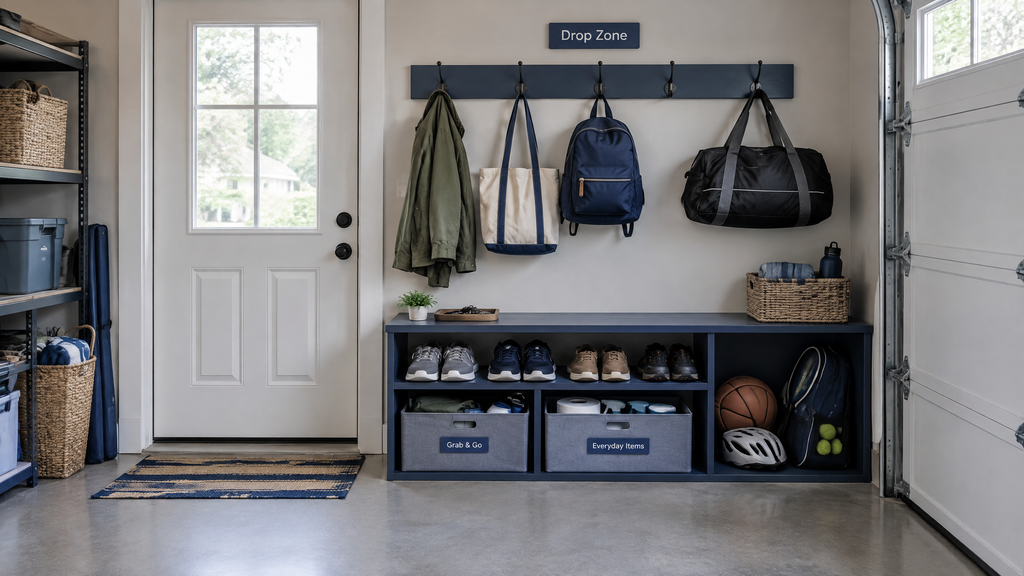
Keep the system simple enough that everyone can use it.
If something repeatedly ends up on the floor, that is useful information: the current storage location may not be convenient enough.
21. Leave a Clear Path for Parking and Walking
An organized garage still needs open space for safe movement. Do not allow storage shelves, bicycles, tools, or boxes to block doors, walkways, vehicle access, or important utility areas.
Mark the areas that need to remain clear before installing permanent storage.
Also keep access to shutoff valves, electrical panels, HVAC equipment, water connections, and other service points available. A storage system should never make essential maintenance unnecessarily difficult.
How to Organize a Garage Step by Step
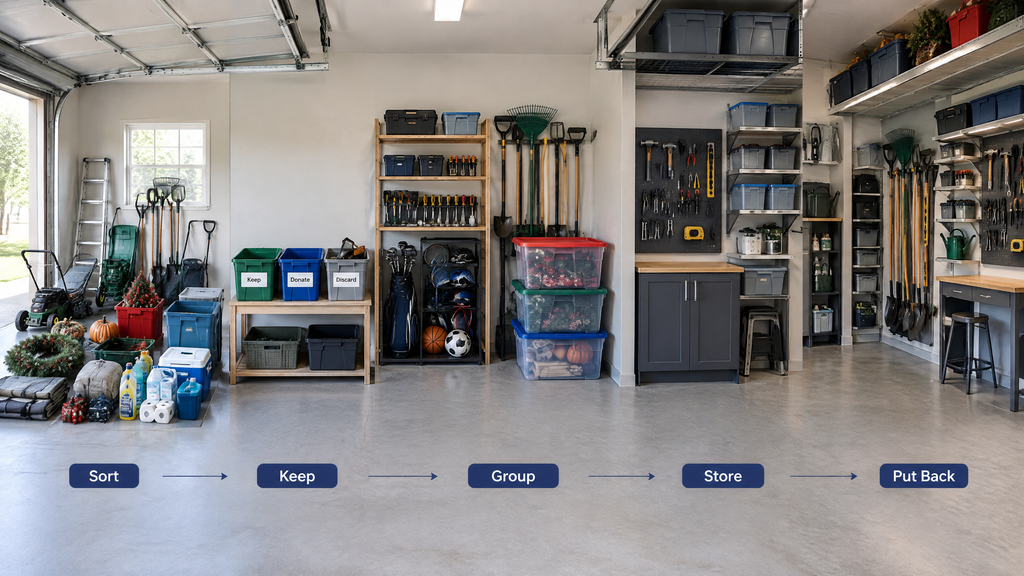
Step 1: Empty and Sort Everything
Start with one section rather than trying to reorganize the entire garage in one exhausting day. Pull out the contents, group similar items, and remove things that no longer belong there.
If the garage is extremely cluttered, divide the project into zones and complete one zone at a time.
Step 2: Decide What to Keep, Donate or Discard
Every item you keep should have a reason for staying. Ask yourself whether you use it, need it, or realistically expect to use it.
Dispose of unwanted materials responsibly, especially paints, chemicals, batteries, and other products that may require special disposal.
Step 3: Group Similar Items Together
Grouping items shows you exactly how much storage you really need. Put all gardening tools together, all hand tools together, and all seasonal decorations together.
This step often reveals duplicate items and helps you decide which storage solution makes sense.
Step 4: Choose the Right Storage Solutions
Buy storage after sorting, not before. Once you know what you own, measure the available walls, corners, ceiling areas, and floor space.
Choose storage based on the items you need to hold rather than buying organizers simply because they look useful.
Step 5: Put Everything Back in Its Proper Zone
Finish by giving every remaining item a permanent home. Keep frequently used things accessible and move occasional items into less convenient storage.
Take a quick photo of the finished setup if it helps you remember where everything belongs.
Garage Organization Mistakes to Avoid
A few common mistakes can make an organized garage difficult to maintain.
Avoid these problems:
- Buying storage before decluttering
- Filling every wall without a plan
- Storing everything on the floor
- Making frequently used tools difficult to reach
- Using shelves that are too deep
- Putting too much weight on storage systems
- Blocking electrical, plumbing, HVAC, or other service areas
- Creating narrow walking paths
- Keeping broken or unused items indefinitely
- Using one large “miscellaneous” container for everything
The biggest mistake is creating a system that looks good but is inconvenient to use. If putting something away takes too many steps, it probably will not stay organized.
How to Keep Your Garage Organized
A garage stays organized when maintenance becomes a small habit instead of another major project. Spend a few minutes putting tools back after a project and return items to their assigned zones after using them.
Once a month, do a quick check for items that have started collecting on the floor or workbench.
You can also do a larger seasonal reset. Review your seasonal bins, remove items you no longer need, and adjust storage locations based on what you use most often.
If your garage doubles as a home improvement workspace, keeping the surrounding home organized can make projects easier too. Our guides on how to clean baseboards and how to clean baseboard heaters offer practical maintenance ideas for other areas of the home.
What Reddit Users Say About Garage Organization
Home Improvement Discussion
One Reddit garage-organization discussion shows why there is rarely one perfect layout for every garage. The homeowner was trying to decide where to place shelving, a workstation, tire racks, garden-tool storage, and overhead storage in a garage with an awkward wall layout.
Several commenters focused on using vertical and overhead space, while others suggested placing a workstation where it would be convenient to access. One commenter also recommended thinking about wall preparation and marking stud locations before installing storage. Another important suggestion was to avoid using valuable wall space for tire storage if that space could serve a more useful purpose.
Our Takeaway is Simple: Do not copy someone else’s garage layout without considering how you actually use your own space. The discussion also reinforces an important point from this guide—storage should be planned around frequency of use, available wall space, walking paths, and the location of doors and utilities.
A particularly useful idea from the discussion was separating rarely used items from everyday equipment. Overhead storage can work well for occasional items, while tools and equipment used regularly should stay within easy reach.
Final Thoughts
A well-organized garage is not about fitting the most stuff into the smallest space; it is about making the things you keep easier to find and use. Start by removing unnecessary items, create practical zones, and then use shelves, hooks, cabinets, pegboards, and vertical storage where they make sense.
You do not need to transform the entire garage in one weekend. Start with one wall or one category, build a system that works, and improve it as you use the space. The best garage organization system is one that is simple enough to maintain every day.
Garage Organization FAQs
What is the best way to organize a garage?
The best approach is to declutter first, create zones, and then choose storage based on what remains. Use walls and suitable overhead areas for storage while keeping important walking and working areas clear.
How do I organize a garage with limited space?
Use vertical space before adding more floor storage. Wall hooks, pegboards, narrow shelving, cabinets, and suitable overhead storage can help you store more without making the floor more crowded.
How do I organize garage tools?
Keep frequently used tools close to your work area and group them by type. A pegboard works well for hand tools, while cabinets, shelves, or dedicated storage can handle larger equipment.
How can I add more garage storage without taking up floor space?
Wall-mounted and overhead storage are the main options. Hooks, shelves, pegboards, racks, and appropriate ceiling-mounted systems can move storage upward while leaving more floor area available.
What should not be stored in a garage?
Items that can be damaged by extreme temperatures, moisture, pests, or unsuitable conditions may not belong in a garage. Be especially careful with chemicals, fuels, paints, batteries, and other potentially hazardous products. Follow the manufacturer’s storage instructions and local requirements.