
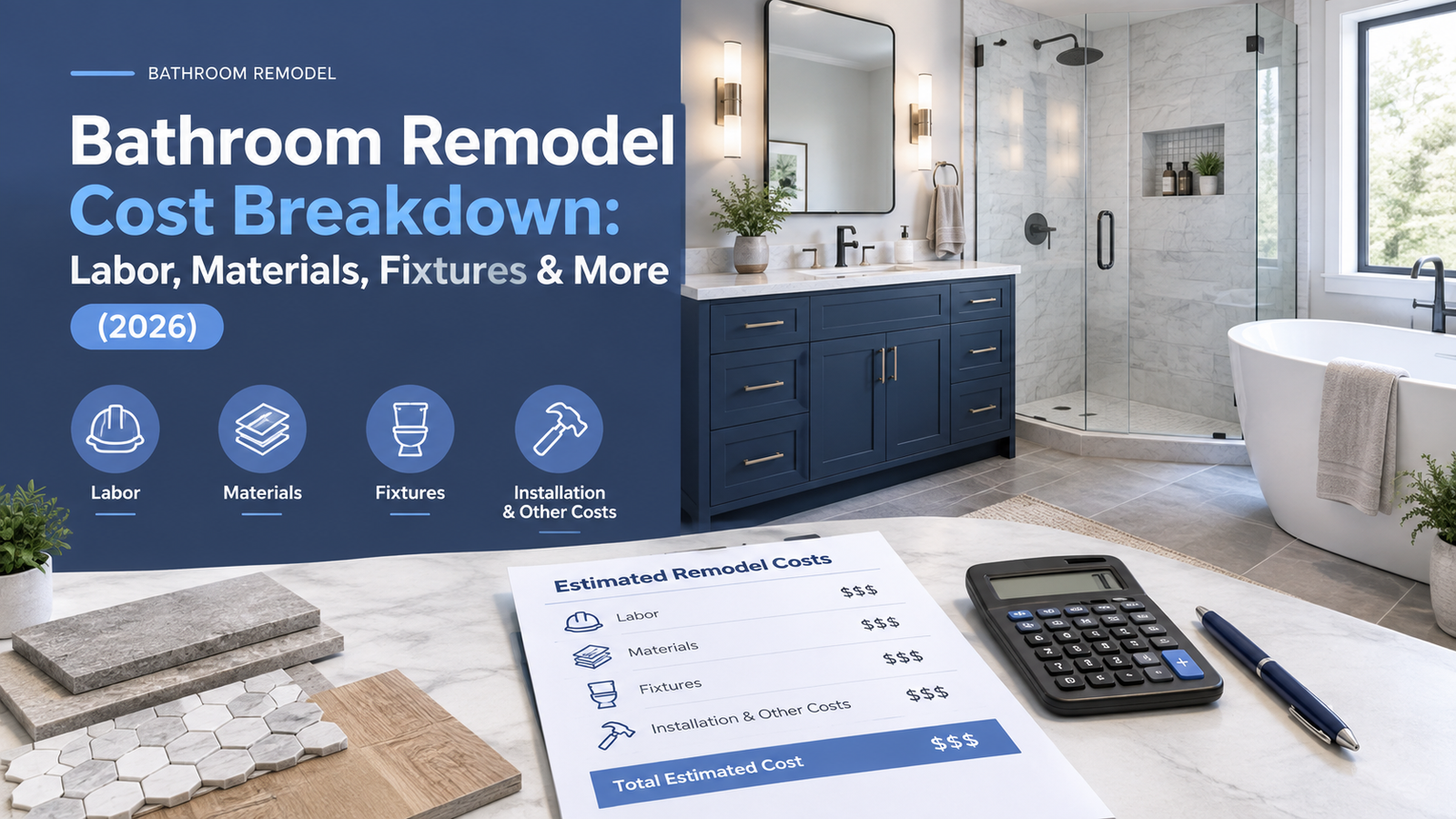
A bathroom remodel can cost anywhere from a few thousand dollars for a simple update to $30,000 or more for a major renovation with premium finishes. The final price depends mainly on the size of the bathroom, the amount of work involved, labor rates, material choices, and whether plumbing or electrical systems need to be changed.
Current U.S. cost guides show a wide range because they measure different project types. A basic refresh can be much less expensive than a full renovation that involves demolition, new plumbing, custom cabinetry, tile work, and high-end fixtures.
Bathroom Remodel Cost at a Glance
| Bathroom Remodel Type | Typical Cost Range |
|---|---|
| Minor cosmetic update | $3,000–$10,000 |
| Partial remodel | $10,000–$25,000 |
| Full remodel | $25,000–$80,000+ |
| Luxury remodel | $30,000–$80,000+ |
These figures are planning ranges, not fixed quotes. Local labor prices and the condition of your existing bathroom can move the final cost significantly.
If you are still deciding what style or layout you want, our guide to bathroom remodel ideas can help you compare different approaches before setting your budget.
What Is the Average Bathroom Remodel Cost in 2026?
The average bathroom remodel cost is often around $12,000–$16,000 for a typical project, but there is no single price that fits every bathroom. Current 2026 cost guides put reported averages around $12,000 to $15,600, while broader project ranges extend from a few thousand dollars to $30,000 or considerably more for high-end renovations.
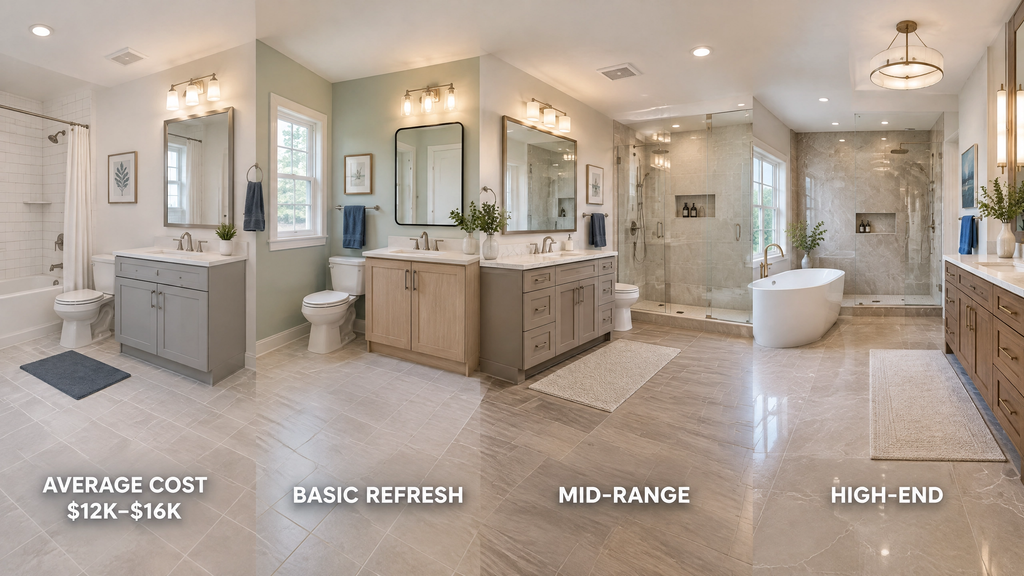
A small bathroom with an existing layout, standard fixtures, and limited tile work can stay toward the lower end. A primary bathroom with custom cabinetry, premium tile, a new shower, upgraded lighting, and plumbing changes can quickly move toward the higher end.
The most useful way to think about your budget is by project scope rather than one national average.
Basic Bathroom Refresh
A basic refresh focuses on appearance without changing the bathroom’s basic layout. This may include painting, replacing hardware, updating lighting, installing a new vanity, changing a mirror, or replacing a few fixtures.
This approach can make a dated bathroom feel much newer without paying for a complete tear-out.
Mid-Range Bathroom Remodel
A mid-range remodel usually combines new fixtures and finishes with more substantial improvements. You may replace the vanity, flooring, toilet, shower or tub, lighting, and other visible elements while keeping most plumbing locations in place.
Keeping the existing layout can be one of the easiest ways to control the budget.
High-End Bathroom Remodel
A high-end renovation uses premium materials, custom features, and more complicated installation work. Custom cabinetry, large-format or decorative tile, frameless glass, specialty showers, heated floors, premium countertops, and upgraded plumbing fixtures can all increase the total.
A luxury bathroom can therefore cost several times more than a simple cosmetic remodel.
Bathroom Remodel Cost by Bathroom Size
Bathroom size affects your budget because a larger room generally requires more flooring, wall materials, tile, paint, labor, and fixtures. However, square footage is only one part of the calculation.
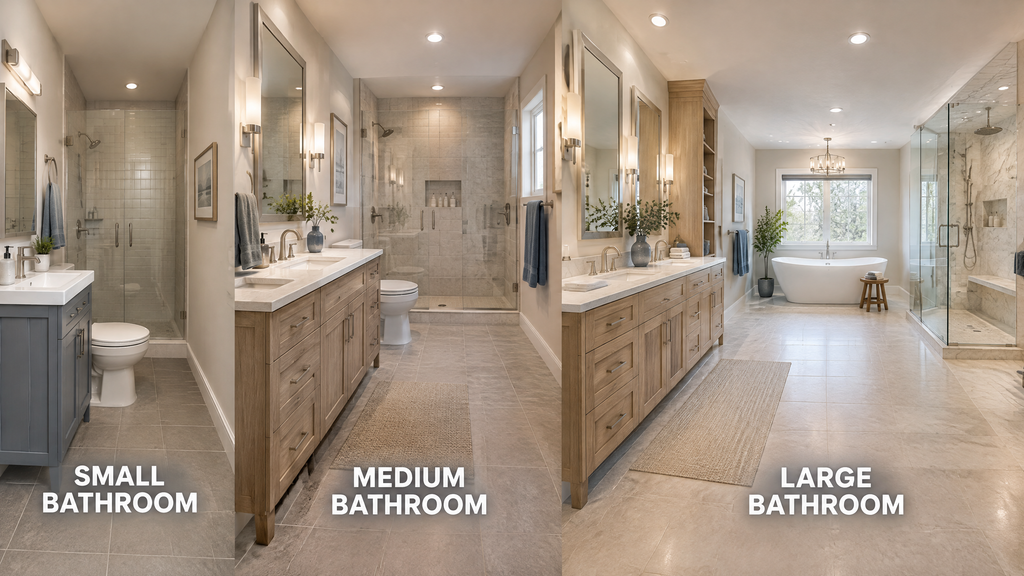
A small bathroom can still be expensive if you completely change the plumbing layout or install expensive tile and custom fixtures. Likewise, a larger bathroom can stay relatively affordable when the existing layout is retained and standard materials are selected.
Small Bathroom Remodel Cost
A small bathroom remodel may cost around $1,500–$15,000 or more depending on the scope of work. A simple update can be relatively affordable, while a complete renovation with new plumbing, tile, and fixtures can become much more expensive.
Small bathrooms often require fewer materials, but contractors still need to perform many of the same tasks as they would in a larger bathroom.
Medium Bathroom Remodel Cost
A medium bathroom commonly falls into the mid-range remodeling budget when several major components are replaced. A bathroom around 50–75 square feet may require a meaningful amount of flooring, wall tile, cabinetry, plumbing, lighting, and installation work.
For this type of project, your material choices can have a major effect on the final price.
Large Bathroom Remodel Cost
A large or primary bathroom generally costs more because there is more space to finish and more opportunities for expensive upgrades. Larger bathrooms may also include double vanities, separate showers and tubs, larger tile areas, additional lighting, and custom storage.
The cost can rise further if the remodel changes the room’s footprint or relocates plumbing.
Bathroom Remodel Cost Breakdown
Labor, materials, fixtures, demolition, and specialist work usually make up most of your bathroom remodeling budget. Understanding each category makes it easier to compare contractor estimates and spot costs you may have overlooked.
Labor Costs
Labor can account for roughly 40%–65% of a bathroom remodeling budget. Bathroom renovations often require several different trades, including general contractors, plumbers, electricians, tile installers, painters, and sometimes carpenters.
Labor becomes more expensive when the project involves extensive demolition, detailed tile work, plumbing relocation, electrical upgrades, or custom installation.
Do not automatically choose the cheapest labor quote. A detailed estimate that explains what is included can be more useful than a low number with important work left out.
Materials and Finishes
Your choice of materials can change the project price dramatically. Ceramic or porcelain tile, vinyl flooring, laminate-style surfaces, quartz, natural stone, custom cabinetry, and specialty finishes can all fall into very different price ranges.
You do not have to choose the most expensive material to create a durable and attractive bathroom. A well-planned combination of mid-range materials can provide a good balance between appearance, maintenance, and cost.
Plumbing Costs
Plumbing changes can become one of the biggest cost increases in a bathroom remodel. Keeping your toilet, sink, and shower in approximately the same locations usually requires less work than moving them across the room.
Moving plumbing may require opening walls or floors, extending supply lines, changing drainage, and repairing the surfaces afterward.
If your existing plumbing is old or damaged, your contractor may also recommend repairs that were not part of the original cosmetic plan.
Electrical and Lighting
Electrical upgrades are easy to overlook when planning a bathroom budget. New lights, outlets, exhaust fans, switches, heated floors, mirrors, and other electrical features can require additional wiring and professional installation.
Older bathrooms may also need electrical improvements to meet current local requirements.
Electrical work should be handled by a qualified professional rather than treated as a casual DIY task.
Flooring
Bathroom flooring needs to balance appearance, water resistance, durability, and installation cost. Porcelain and ceramic tile are common choices, while vinyl and other water-resistant flooring options can provide a more budget-friendly alternative.
The cost is not only the flooring material. You may also need underlayment, floor preparation, removal of the existing floor, waterproofing, trim, and installation.
Shower or Tub
The shower or tub can become one of the largest individual expenses in a bathroom renovation. A basic replacement may be manageable, while a custom tiled shower with glass doors, multiple fixtures, built-in niches, and waterproofing can require much more labor.
A tub-to-shower conversion can also involve demolition, plumbing, waterproofing, tile, glass, and new fixtures.
Vanity and Cabinets
The vanity combines storage, plumbing, countertop material, and style, making it an important part of the budget. Stock vanities are generally more budget-friendly than custom cabinetry.
Before buying a vanity, check the available width, plumbing position, door clearance, countertop requirements, and sink configuration.
Toilet
A toilet is usually a smaller part of the overall remodel budget, but installation can still become more complicated if the plumbing or floor needs repair. Standard models can be relatively affordable, while high-end or smart toilets can cost considerably more.
Choose a toilet based on fit, performance, water use, and reliability rather than appearance alone.
Countertops and Sinks
Countertop cost depends heavily on the material, size, edge treatment, sink configuration, and installation. Common options include cultured surfaces, quartz, natural stone, and other manufactured materials.
A smaller vanity can help keep countertop costs down, while a custom double vanity will naturally require more material and installation work.
Paint and Wall Finishes
Paint is one of the easier ways to change the appearance of a bathroom without spending heavily. Choose a product appropriate for bathroom conditions and make sure the walls are properly prepared before painting.
If the walls have moisture damage, peeling coatings, or damaged drywall, fix the underlying problem before applying a new finish.
For more guidance, see our article on how to choose a paint color before selecting your bathroom palette.
Bathroom Renovation Cost by Project Type
The amount of work you plan to do is often more important than the size of the bathroom when estimating renovation cost.
Cosmetic Bathroom Update
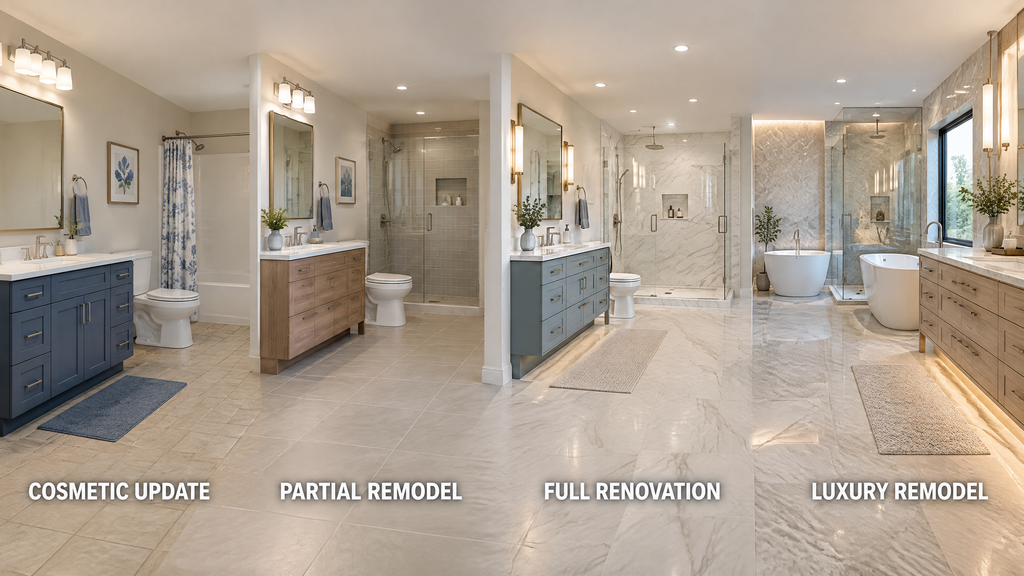
A cosmetic update changes the appearance while leaving most of the bathroom intact. Painting, new mirrors, hardware, lighting, accessories, and a replacement vanity can refresh the room without the cost of a full demolition.
This can be a smart approach when the plumbing, flooring, walls, and major fixtures are still in good condition.
Partial Bathroom Remodel
A partial remodel replaces some major components while leaving other parts of the bathroom in place. You might replace the shower and vanity while keeping the existing flooring, toilet, and plumbing layout.
This approach lets you direct more of your budget toward the areas that matter most to you.
Full Bathroom Renovation
A full renovation usually involves removing several existing components and rebuilding much of the bathroom. It may include demolition, new flooring, new fixtures, new tile, updated plumbing, electrical improvements, waterproofing, cabinetry, and painting.
The more systems you touch, the more important detailed planning becomes.
Luxury Bathroom Remodel
Luxury remodeling adds premium materials and specialized features that can push the budget well beyond a standard renovation. Examples include custom vanities, natural stone, oversized showers, soaking tubs, heated flooring, specialty lighting, smart fixtures, and custom glass.
Luxury does not automatically mean better for every homeowner. The best features are the ones that provide value for the way you actually use the bathroom.
What Factors Affect Bathroom Remodel Cost?
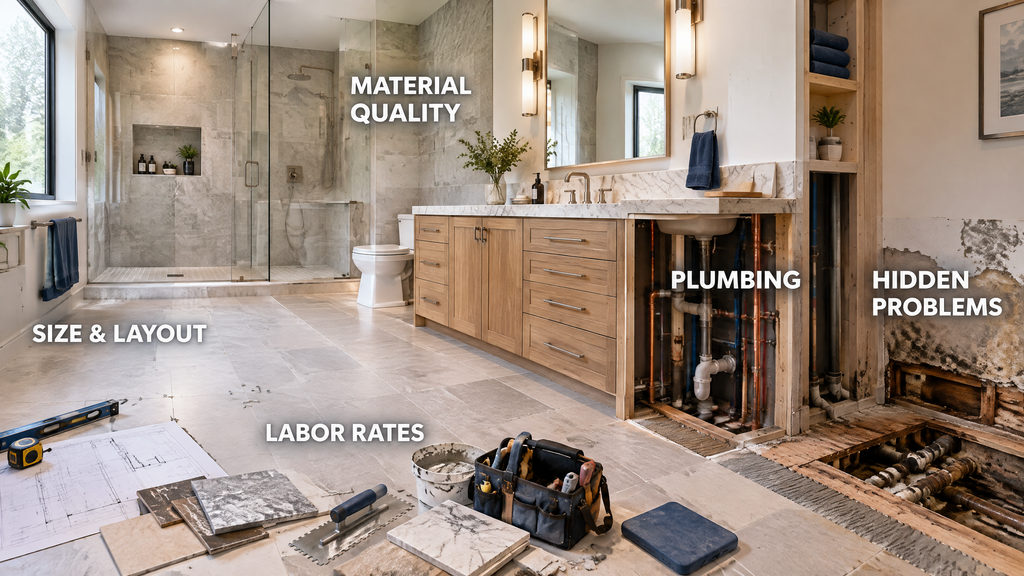
Five major factors usually drive the final price: project scope, labor, materials, layout changes, and the condition of the existing bathroom.
Bathroom Size and Layout
A larger or more complicated layout usually requires more materials and labor. However, changing the layout can be more expensive than simply increasing the room’s size.
Material Quality
Material selection can turn the same basic bathroom plan into two very different budgets. Compare durability, maintenance, installation requirements, and expected lifespan rather than looking only at the purchase price.
Labor Rates
Labor rates vary by location and by trade. A bathroom renovation in a high-cost metropolitan area may have very different labor pricing from a similar project in a lower-cost market.
Plumbing Relocation
Moving plumbing is one of the clearest ways to increase renovation complexity. Keeping fixtures close to their existing positions can reduce demolition, pipe work, and repair work.
Structural and Hidden Problems
What is behind the walls and beneath the floor can change your budget quickly. Water damage, mold, rotten subflooring, outdated plumbing, poor previous repairs, or structural problems may not become visible until demolition begins.
That is why a contingency amount should be included in your budget.
Hidden Costs to Budget For
A realistic bathroom budget should include money for problems you cannot see before demolition.
Potential unexpected expenses include:
- Water-damaged drywall
- Rotten subflooring
- Leaking pipes
- Mold-related repairs
- Outdated electrical work
- Damaged framing
- Extra demolition
- Disposal fees
- Permit costs
- Waterproofing repairs
- Additional plumbing work
A contingency of around 10%–20% of the planned renovation budget can provide a useful safety margin, although the appropriate amount depends on the age and condition of the bathroom.
If your bathroom has visible ceiling or wall problems, review our guides on cracks in the ceiling and wall cracks before starting demolition.
How to Create a Bathroom Remodeling Budget
The easiest way to control bathroom renovation costs is to decide where your money should go before construction starts.
Start by writing down every major part of the project:
- Demolition
- Labor
- Plumbing
- Electrical
- Flooring
- Shower or tub
- Vanity and cabinets
- Countertop
- Toilet
- Lighting
- Paint and wall finishes
- Hardware and accessories
- Permits
- Waste disposal
- Contingency
Get detailed estimates rather than comparing only the final totals. Two contractors may quote very different prices because one includes demolition, disposal, waterproofing, or finish work while another does not.
It is also worth getting multiple estimates for a larger project. Ask each contractor to explain what is included, what is excluded, and which items could change the price.
Bathroom Remodel Cost-Saving Tips
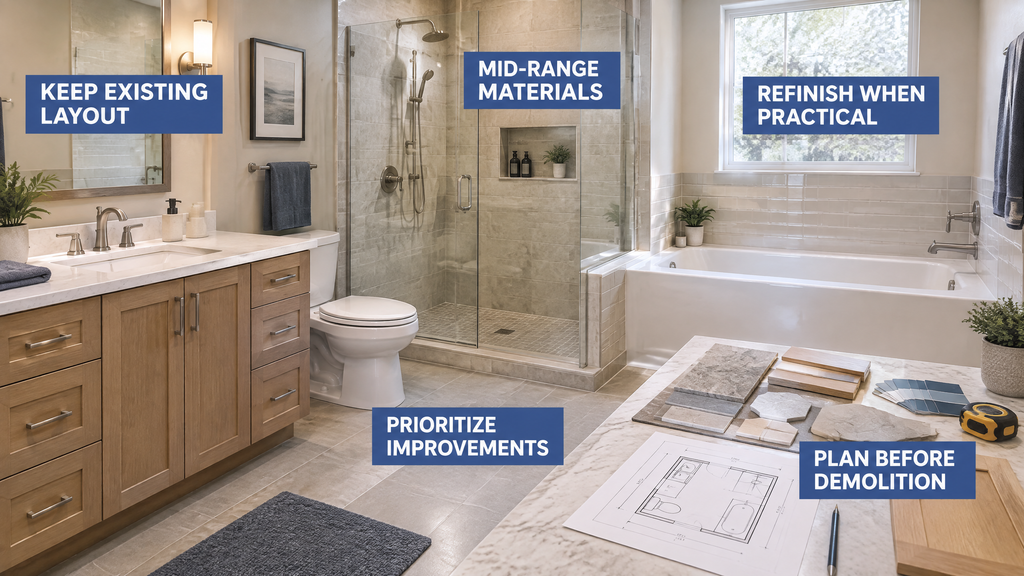
The best bathroom savings usually come from reducing unnecessary work rather than choosing the cheapest product available.
Keep the Existing Layout
Keeping the toilet, shower, tub, and sink near their existing locations can reduce plumbing and construction work.
Choose Mid-Range Materials
Mid-range materials can provide a practical balance between appearance, durability, and price. Spend more on features that receive heavy daily use and save on purely decorative upgrades where appropriate.
Refinish When Practical
Some bathroom components do not need to be replaced simply because they look dated. Refinishing a suitable tub, cabinet, or other surface may cost less than complete replacement.
Prioritize High-Impact Improvements
Spend first on problems that affect safety, water control, function, and durability. Decorative upgrades can come later if the budget becomes tight.
Avoid Too Many Changes During Construction
Changing your mind after work begins can quickly increase both labor and material costs. Finalize your layout, fixtures, tile selections, and major finishes before demolition whenever possible.
For additional home organization inspiration after your remodel, you may also find our guide to how to organize a bathroom cabinet useful.
Is a Bathroom Remodel Worth the Cost?
A bathroom remodel can be worthwhile when it solves real problems and improves how you use the space. Better storage, improved lighting, easier cleaning, safer surfaces, updated plumbing, and a more functional layout can all make a bathroom more useful every day.
A remodel may also improve the overall appeal of your home, but you should not assume that every expensive upgrade will return its full cost when you sell.
The most practical approach is to balance personal enjoyment with reasonable project costs. If you plan to stay in the home for many years, comfort and functionality may matter more than trying to maximize resale value.
What Homeowners Should Consider About Bathroom Renovation Costs
A bathroom remodel should be planned around the actual condition of the room, not a single number found online. Published cost guides are useful for creating a starting budget, but local contractor pricing and your project’s scope will determine what you actually pay.
Before accepting an estimate, check whether it includes demolition, disposal, permits, plumbing, electrical work, waterproofing, installation, finish work, and cleanup.
It is also helpful to separate needs from wants. Fixing a leaking pipe or damaged subfloor should take priority over adding an expensive decorative feature.
What Homeowners Say About Bathroom Remodel Costs
A Quora discussion about bathroom redesign budgets highlights an important point: there is no single price that fits every bathroom project. Homeowners discussing renovation costs often focus on the same factors that affect professional estimates, including the size of the bathroom, material choices, labor, plumbing changes, and the amount of work involved.
Our takeaway is that online homeowner experiences are useful for understanding the range of possible costs, but they should not be treated as fixed pricing guidelines. A bathroom that only needs new finishes and fixtures can have a very different budget from one requiring new plumbing, waterproofing, electrical work, or a completely different layout.
For a realistic budget, use online discussions as a starting point and then get local contractor estimates based on your actual bathroom, project scope, and material choices.
Final Thoughts on Bathroom Remodel Costs
The real cost of a bathroom remodel depends less on one average price and more on what you actually plan to change. A simple refresh can stay relatively affordable, while moving plumbing, replacing the wet area, upgrading electrical systems, and choosing premium materials can quickly increase the budget.
Before starting, define your project scope, price the major components, get detailed contractor estimates, and keep a contingency for hidden problems.
A well-planned bathroom renovation is not about spending the most money; it is about spending your budget where it improves the bathroom most.
Bathroom Remodel Cost FAQs
How much does a bathroom remodel cost in 2026?
A typical bathroom remodel can cost roughly $6,000–$25,000, while smaller cosmetic projects can cost less and major luxury renovations can cost much more. Your location, project scope, materials, and labor requirements will determine the actual price.
How much does a small bathroom remodel cost?
A small bathroom remodel may cost around $1,500–$15,000 or more. A cosmetic update will generally cost less than a complete renovation involving new plumbing, tile, waterproofing, and fixtures.
What is the most expensive part of a bathroom remodel?
Labor and major wet-area work can account for a large portion of the budget. Plumbing, shower installation, tile work, demolition, and complex electrical work can become especially expensive when the layout changes.
Does moving plumbing increase bathroom renovation costs?
Yes, moving plumbing usually increases the cost because it adds demolition, pipe installation, labor, and surface repairs. Keeping fixtures near their existing locations can help control the budget.
How much should I budget for unexpected bathroom remodeling costs?
Setting aside around 10%–20% as a contingency can provide useful protection against unexpected repairs. Older bathrooms may justify a larger buffer if there are signs of water damage, outdated plumbing, or previous poor-quality work.
How can I reduce bathroom remodel costs?
Keeping the existing layout is one of the simplest ways to reduce costs. You can also compare material prices, choose practical mid-range finishes, refinish suitable surfaces, and avoid unnecessary design changes after construction begins.