
Expert Review
Written by: Daniel Carter
Reviewed by: Lauren Clough, Associate Veterinarian
Reviewed for: Veterinary accuracy, cat safety, lavender exposure risks, and practical guidance
Updated: August 2026
This article was reviewed by Lauren Clough, Associate Veterinarian, to help ensure that the information about lavender exposure, essential oils, symptoms, and recommended safety steps is clear and appropriate for cat owners.
Pet Safety Disclaimer
Pet safety information can vary depending on the type and amount of exposure. If your cat has been exposed to lavender essential oil, swallowed a concentrated product, or develops concerning symptoms, contact a qualified veterinarian for guidance specific to your cat.
If you have a cat and love the soft scent or purple flowers of lavender, you may wonder whether it is safe to keep around your pet. Lavender can pose a risk to cats, especially when the plant is eaten or when concentrated lavender essential oil is involved. The level of risk depends on the form of lavender, how much your cat was exposed to, and whether any symptoms develop.
Cats can also react differently to concentrated essential oils than people do. For this reason, it is important to treat lavender oils, diffusers, and other highly concentrated products with extra care.
This guide explains the risks of lavender plant for cats, the symptoms to watch for, what to do after exposure, and practical ways to keep your cat safe.
Is Lavender Safe for Cats?
Lavender is not a plant or scent that cat owners should intentionally expose their cats to, particularly in concentrated forms. While ordinary contact with a lavender plant may not cause the same level of concern as exposure to concentrated essential oil, eating the plant can cause stomach upset and other problems.
The bigger concern is often lavender essential oil. Essential oils contain highly concentrated plant compounds, so a small amount can provide much more exposure than simply being near a lavender plant.
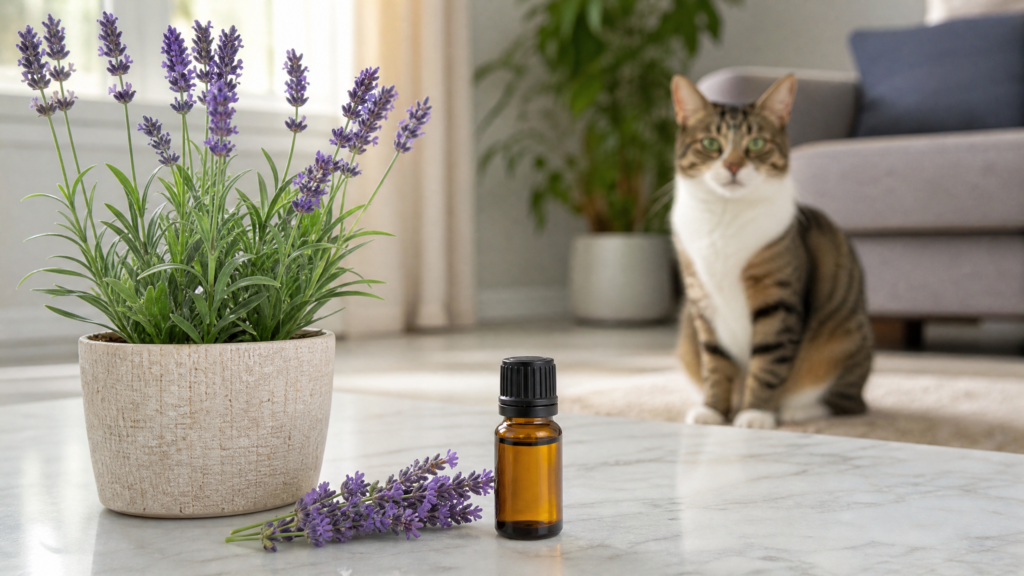
Your cat may encounter lavender through several sources, including:
- Fresh lavender plants
- Dried lavender flowers
- Lavender essential oil
- Essential-oil diffusers
- Lavender-scented sprays
- Candles and air fresheners
- Personal-care products containing lavender
- Homemade lavender products
The safest approach is to prevent your cat from licking, eating, or coming into direct contact with concentrated lavender products.
If you enjoy growing plants at home, you can also explore our pets section on Daily Idea Book for more pet-related safety and care information.
Why Cats Can Be Sensitive to Essential Oils
Cats process some substances differently from humans, which makes concentrated essential oils a special concern. Their bodies may have a harder time breaking down certain compounds found in essential oils.
A cat can also be exposed without actually eating an oil. For example, oil that gets onto the fur may later be swallowed when the cat grooms itself.
That is why applying lavender essential oil directly to a cat should be avoided unless a veterinarian has specifically recommended a product and method of use.
Is Lavender Toxic to Cats?
Lavender can cause problems for cats when it is eaten or when they are exposed to concentrated lavender oil. The risk is not identical for every type of lavender exposure, so it is useful to consider the source separately.
A cat that briefly walks past a lavender plant is in a different situation from a cat that licks concentrated essential oil from its fur.
Lavender Plant
Eating lavender plants can cause digestive upset in cats and may be poisonous. A cat that chews on a small amount may develop signs such as drooling, vomiting, or diarrhea.
The amount eaten matters, and not every cat will react in exactly the same way. If your cat has eaten lavender, monitor it closely and contact your veterinarian if symptoms develop or if you are unsure how much was consumed.
Dried Lavender
Dried lavender can still cause problems if a cat eats it. Drying the plant does not automatically make it safe for pets.
Dried lavender is commonly found in:
- Sachets
- Potpourri
- Decorative arrangements
- Herbal products
- Scented pillows
- Homemade crafts
Keep these products where your cat cannot chew or swallow them.
Lavender Essential Oil
Lavender essential oil deserves the most caution because it is highly concentrated. Even a small quantity can contain a much higher concentration of plant compounds than the original lavender plant.
A cat may be exposed if it:
- Licks oil from a surface
- Gets oil on its paws or fur
- Walks through spilled oil
- Comes into direct contact with undiluted oil
- Ingests a product containing concentrated lavender oil
Never intentionally put lavender essential oil on your cat’s skin, fur, paws, or food.
Lavender Diffusers and Scented Products
A lavender diffuser can create another form of exposure because the oil can enter the surrounding environment. The level of risk depends on the product, concentration, ventilation, and how the diffuser is used.
An active diffuser can also release tiny oil droplets into the surrounding area. Cats may then inhale the material or get it onto their fur, where it can later be swallowed during grooming.
For a cat-friendly home, avoid using concentrated essential-oil diffusers in areas where your cat spends time, and follow veterinary advice if you are considering any scented product.
Lavender Exposure: What Are the Risks?
| Type of Exposure | Main Concern |
|---|---|
| Near a lavender plant | Usually less concerning than ingestion or oil exposure |
| Chewing lavender | May cause digestive upset |
| Eating dried lavender | Can cause stomach-related symptoms |
| Lavender essential oil | Higher concern because it is concentrated |
| Oil on fur or paws | Can be swallowed during grooming |
| Diffuser exposure | May cause inhalation or skin/fur exposure |
| Directly giving lavender oil | Should be avoided |
Symptoms of Lavender Exposure in Cats
Symptoms depend on the type and amount of exposure, but digestive and behavior changes are important signs to watch for. A cat exposed to lavender may show mild symptoms, while a larger or more concentrated exposure may be more serious.
Possible signs can include:
- Drooling
- Vomiting
- Diarrhea
- Reduced appetite
- Lethargy or unusual tiredness
- Weakness
- Unusual behavior
- Skin irritation after direct contact
- Difficulty walking or poor coordination
- Breathing problems in more serious situations
Drooling or Excessive Salivation
Excessive drooling can be an early sign that something has irritated your cat’s mouth or stomach. If you notice unusual drooling after possible lavender exposure, remove the source and monitor your cat closely.
Vomiting or Diarrhea
Vomiting and diarrhea can indicate digestive irritation after a cat eats or is exposed to an unsuitable substance. Repeated vomiting, severe diarrhea, or worsening symptoms should not be ignored.
Lethargy or Weakness
A sudden change from normal behavior to unusual tiredness can be a reason to contact a veterinarian. Cats often hide signs of illness, so noticeable weakness or a major behavior change deserves attention.
Breathing Problems
Difficulty breathing should always be treated as an urgent warning sign. If your cat is struggling to breathe, breathing unusually fast, or showing other severe symptoms, seek veterinary help immediately.
Do not wait for severe symptoms before seeking advice when you know your cat has been exposed to concentrated essential oil. Tell the veterinary professional what product was involved and, if possible, keep the product packaging available.
What to Do If Your Cat Is Exposed to Lavender
The first step after lavender exposure is to stop further contact and identify exactly what your cat encountered. Knowing whether the exposure involved a plant, dried flowers, essential oil, or a scented product can help a veterinarian assess the situation.
1. Remove the Source
Move your cat away from the lavender product as soon as you notice the exposure. Remove spilled oil, plants, sachets, or other products from the area.
If oil has spilled onto a surface, prevent your cat from walking through it or licking the area.
2. Check Your Cat
Look for changes such as drooling, vomiting, weakness, unusual behavior, or breathing problems. Do not force your cat to eat or drink while you are trying to manage a possible toxic exposure.
3. Prevent Further Grooming Exposure
Oil on your cat’s fur or paws can become a second exposure because cats naturally groom themselves. If you believe concentrated essential oil has contacted your cat, contact a veterinarian for instructions on safe cleaning rather than experimenting with household products.
4. Contact a Veterinarian When Needed
Veterinary advice is especially important after essential-oil exposure, significant ingestion, or the appearance of symptoms. Provide as much information as possible, including the product name, ingredients, estimated amount, and time of exposure.
Do not induce vomiting unless a veterinary professional specifically tells you to do so.
When Should You Call a Veterinarian?
Call a veterinarian promptly if your cat has been exposed to concentrated lavender essential oil or develops concerning symptoms. It is better to ask for professional guidance when you are uncertain than to assume the exposure is harmless.
Seek veterinary advice particularly when:
- Your cat swallowed lavender essential oil.
- Essential oil got onto the fur or skin.
- Your cat has repeated vomiting or diarrhea.
- Your cat becomes very weak or unusually sleepy.
- Your cat has difficulty walking or appears uncoordinated.
- Your cat has breathing problems.
- You are unsure how much your cat consumed.
- Your cat’s condition is getting worse.
How to Keep Lavender and Cats Safe
The easiest way to reduce the risk is to keep lavender products inaccessible and avoid using concentrated essential oils around your cat.
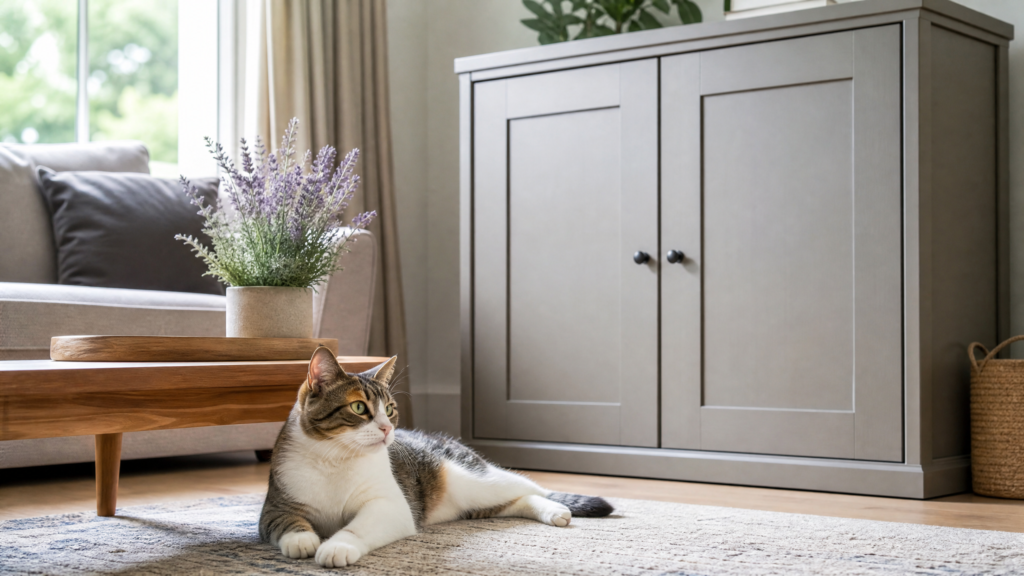
Keep Essential Oils Secure
Store lavender essential oil in a closed container that your cat cannot reach. A high shelf or closed cabinet is safer than leaving bottles on a bedside table, bathroom counter, or other accessible surface.
Clean spills immediately and keep your cat away from the area until it has been properly cleaned.
Be Careful With Diffusers
If you have a cat, think carefully before using an essential-oil diffuser in an enclosed room. Cats should not be trapped in an area where scented oil is being dispersed.
If you use any scented product, make sure your cat can leave the area and follow veterinary guidance when there is any concern about essential-oil exposure.
Don’t Apply Lavender Oil to Your Cat
Never use lavender essential oil as a homemade flea treatment, skin treatment, calming product, or fragrance for your cat. Concentrated oils are not equivalent to ordinary household fragrances or diluted products designed specifically for animals.
Your cat’s grooming behavior can also turn skin or fur exposure into an ingestion exposure.
Choose Cat-Safe Plants Carefully
A beautiful houseplant is not automatically a safe houseplant for cats. Before bringing a new plant into your home, check whether it is considered safe for cats and keep potentially harmful plants out of reach.
If you are interested in other plant-related pet safety topics, you can also read our guide on whether carnations are toxic to cats.
Safe Alternatives to Lavender Around Cats
The safest alternative is to focus on a cat-friendly environment instead of trying to add fragrance with concentrated essential oils. Cats have a much stronger sense of smell than humans, so a scent that seems pleasant to you may not be comfortable for your pet.
Instead of using essential-oil products, consider:
- Keeping your home well ventilated
- Using unscented cleaning products where practical
- Removing the source of unpleasant odors instead of covering them
- Choosing cat-friendly plants after checking their safety
- Keeping scented products stored securely
- Providing your cat with a clean, comfortable resting area
Final Thoughts
Lavender is not something you should intentionally expose your cat to, especially in concentrated essential-oil form. A cat that simply lives near a lavender plant is in a different situation from a cat that eats the plant or comes into contact with concentrated lavender oil.
The most important precautions are simple: keep lavender essential oils securely stored, prevent your cat from chewing lavender products, avoid applying essential oils to your cat, and use caution with diffusers.
If your cat has been exposed to concentrated lavender oil or develops symptoms such as repeated vomiting, weakness, unusual behavior, or breathing difficulty, contact a veterinarian promptly rather than trying to treat the exposure yourself.
For more helpful pet, home, and lifestyle information, visit Daily Idea Book, or explore the Pets category for related guides.
Frequently Asked Questions
Can I have lavender in my house with a cat?
You can keep lavender in a home with a cat, but it should be kept where your cat cannot chew or eat it. Take extra care with lavender essential oils, diffusers, and other concentrated lavender products because they can create a higher-risk exposure.
Do cats know to stay away from lavender?
No, you should not rely on a cat to recognize and avoid lavender. Some cats may ignore it, while others may sniff, chew, or investigate it. Keep lavender and concentrated lavender products out of your cat’s reach.
What is the safest plant for cats?
Spider plants, Boston ferns, and areca palms are commonly considered cat-safe choices. Even with a non-toxic plant, eating large amounts can still cause stomach upset, so provide plants as decoration rather than food.
Can cats smell lavender?
Yes, cats can smell lavender, and their sense of smell is much stronger than ours. A strong fragrance may be unpleasant or irritating to some cats, so avoid intentionally exposing your cat to concentrated lavender scents or essential oils.
Can cats eat lavender?
Cats should not be encouraged to eat lavender. Eating plant material can cause digestive upset, and the risk is greater when the exposure involves concentrated lavender essential oil. Contact a veterinarian if your cat has eaten a significant amount or develops symptoms.
Is lavender essential oil safe for cats?
Lavender essential oil should not be applied directly to cats and should be used with great caution around them. Concentrated essential oils can cause problems through ingestion, skin or fur exposure, and potentially inhalation. Contact a veterinarian if your cat is exposed.
How long do lavender exposure symptoms last in cats?
There is no single timeframe because symptoms depend on the product, amount, route of exposure, and the cat’s health. Mild signs may resolve as the exposure clears, but persistent, worsening, or severe symptoms require veterinary advice rather than waiting for them to pass.
Sources & References
The following reputable veterinary and animal-health resources can help readers learn more about essential-oil exposure and plant-related risks in pets:
- ASPCA Animal Poison Control Center — Information on potentially toxic plants and substances for pets.
- Pet Poison Helpline — Veterinary toxicology information covering essential oils and other household exposures.
- Merck Veterinary Manual — Veterinary reference information on toxicology and poisoning in animals.
These sources were consulted to support the general safety information presented in this article. Product formulations and individual cases can vary, so suspected poisoning should be discussed with a veterinarian.