
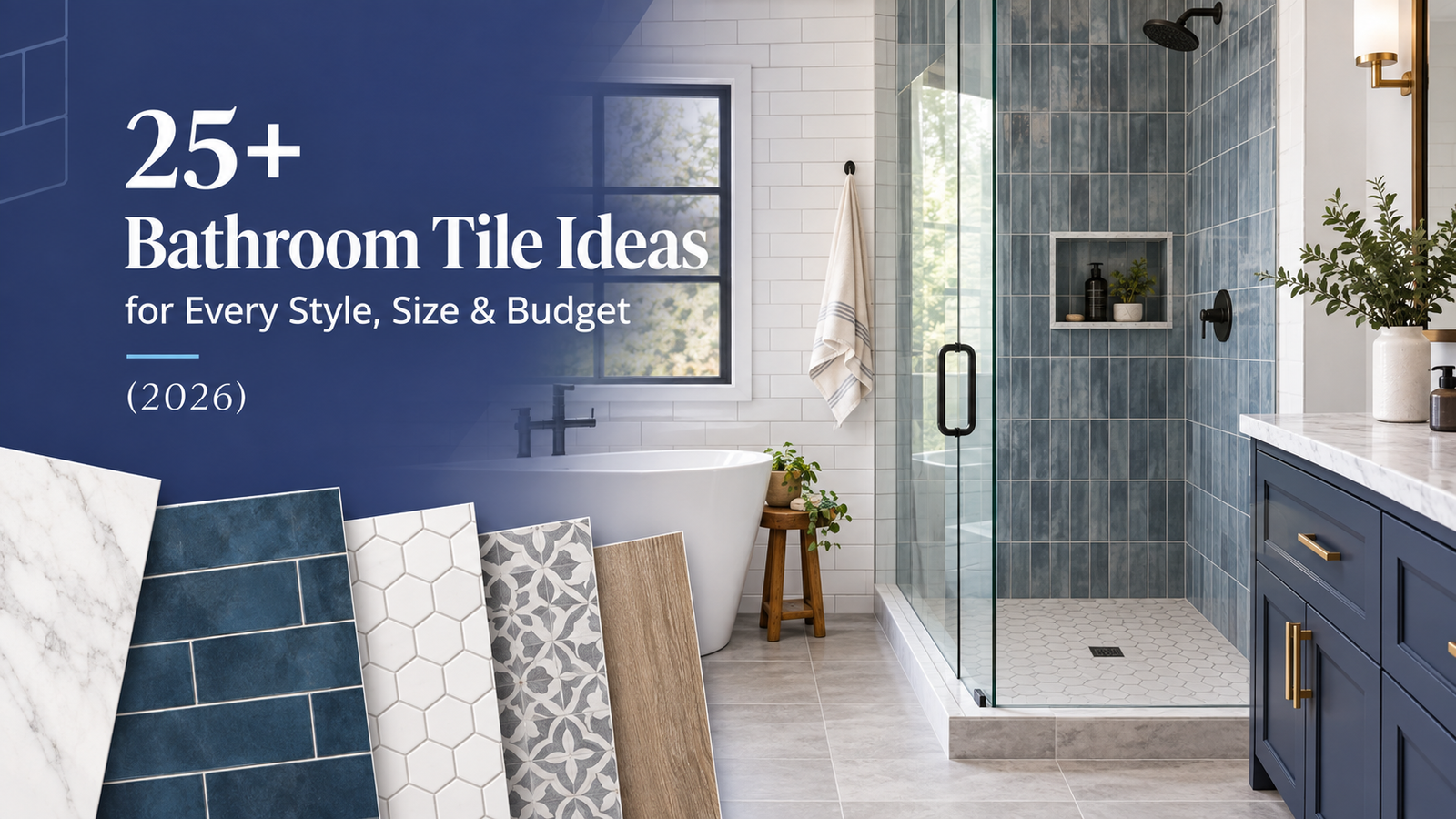
The right bathroom tile can change the entire feel of a bathroom, but good tile design is about more than choosing a pretty pattern. Tile affects how the room looks, how easy it is to clean, how well the surfaces handle moisture, and how much your renovation may cost.
Whether you’re updating a small bathroom, remodeling a primary bathroom, or simply replacing an outdated shower, there are plenty of ways to create a beautiful result without using expensive materials everywhere.
The most useful bathroom tile ideas balance style, room size, surface location, maintenance, safety, and budget. In this guide, you’ll find practical ideas for floors, walls, showers, accent areas, and small bathrooms, plus tips for choosing the right tile and avoiding common mistakes.
25+ Bathroom Tile Ideas and Designs
Start with the area you’re remodeling, then choose a tile style that fits how the bathroom will actually be used. A tile that looks excellent on a wall may not be the right choice for a wet floor, while a highly textured tile may create more cleaning work than you expect.
Here are practical bathroom tile ideas you can adapt to different homes and budgets.
1. Large-Format Neutral Tiles
Large-format neutral tiles can give a bathroom a clean, continuous appearance with fewer visible grout lines. Beige, cream, warm gray, and soft stone-inspired shades are flexible enough to work with many vanity and fixture styles.
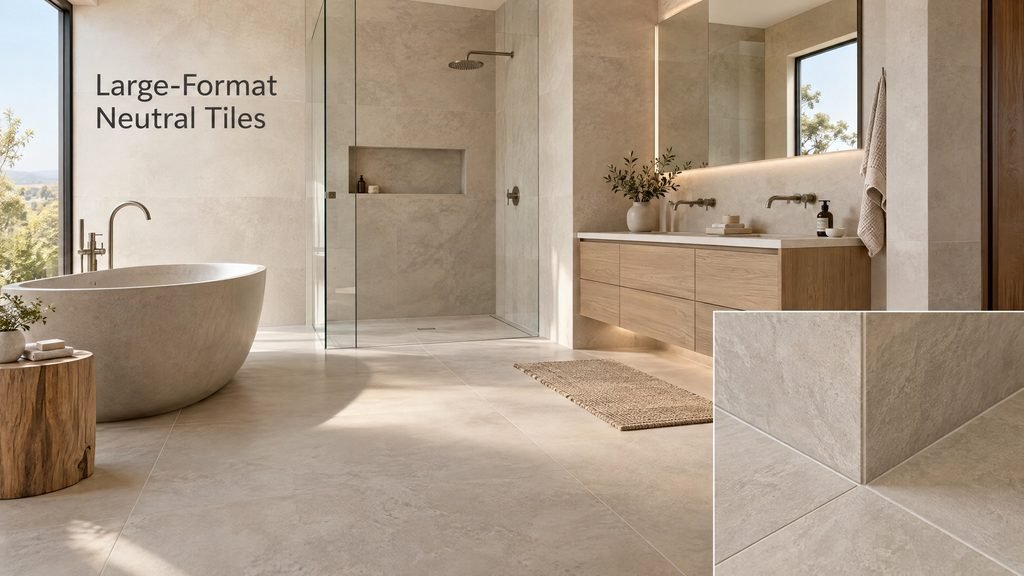
They are especially useful when you want a calm bathroom rather than a room dominated by a strong pattern.
However, large tiles require a properly prepared installation surface. They can also be more difficult to handle and cut, so the tile size should suit both the room and the installation conditions.
2. Classic White Subway Tile
White subway tile remains a versatile choice because it works with traditional, modern, farmhouse, and transitional bathroom designs.
You can keep the look simple with white grout or make the individual tiles stand out with a contrasting grout color. Changing the layout can also create a different appearance.
Try:
- Traditional running bond
- Vertical stacked layout
- Horizontal stacked layout
- Herringbone arrangement
A simple white subway tile can also be paired with a more decorative floor, allowing the floor to become the main visual feature.
3. Marble-Look Porcelain Tile
Marble-look porcelain tile can create a high-end stone appearance while giving you a wide range of colors and patterns to choose from.
Look for subtle veining if you want a calm bathroom or stronger veining if you want the tile to become a feature.
The important point is to check the manufacturer’s specifications rather than assuming every porcelain tile is suitable for every bathroom surface.
4. Light Tiles for a Small Bathroom
Light-colored tiles can make a small bathroom feel brighter and more open, especially when they work with good lighting.
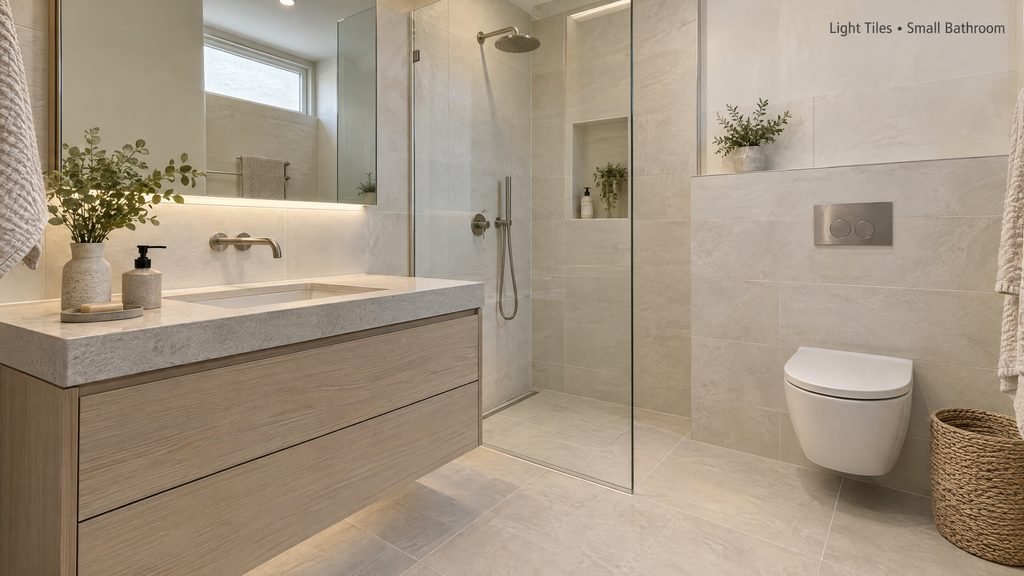
Soft white, cream, pale gray, and light beige are popular choices for compact bathrooms.
For an even more connected appearance, consider using similar colors on the walls and floor. This reduces strong visual breaks and can make the room feel less crowded.
If you’re planning a complete small-space renovation, you can also see these practical small bathroom remodel ideas for inspiration.
5. Matte Bathroom Floor Tiles
Matte tile can give a bathroom floor a softer, less reflective appearance while creating a practical finish for many design styles.
Concrete-look, stone-look, and solid-color matte tiles can all work well in contemporary bathrooms.
For floors, don’t choose a tile simply because it has a matte surface. Check that the specific product is suitable for flooring and has appropriate slip-resistance information for the intended application.
6. Geometric Bathroom Tiles
Geometric tiles are an easy way to add personality without changing the entire bathroom color scheme.
Hexagons, diamonds, triangles, squares, and other shapes can create an interesting floor or accent wall.
If you choose a strong geometric pattern, keep nearby surfaces relatively simple. A patterned floor paired with heavily patterned walls can make a small bathroom feel visually busy.
7. Soft Green Bathroom Tiles
Soft green tiles can bring a natural, calming feel to a bathroom without making the color overwhelming.
Sage, muted olive, pale green, and green-gray shades work especially well with white fixtures and warm wood tones.
Before buying a large quantity, check a physical sample in the actual bathroom. Tile color can look different under daylight, warm bulbs, and cool LED lighting.
8. Warm Beige Bathroom Tiles
Warm beige tile creates a comfortable, timeless look that works especially well with natural wood, cream, white, and earthy finishes.
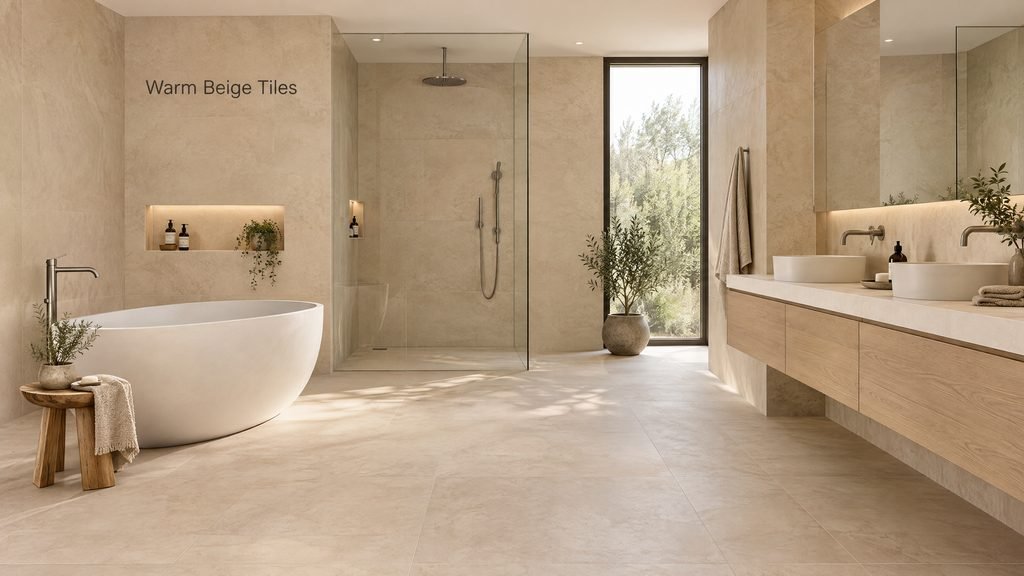
Beige doesn’t have to look old-fashioned. A large-format beige porcelain tile with a simple floating vanity can create a very modern bathroom.
For a softer design, choose grout that is close to the tile color rather than creating strong contrast.
9. Vertical Tile Layout
Installing rectangular tiles vertically can emphasize the height of a wall and give a bathroom a different visual rhythm.
This layout can work particularly well behind a vanity or on a shower wall.
Before installation, plan the cuts around corners, niches, windows, plumbing fixtures, and other interruptions. A beautiful pattern can lose its impact when the layout ends with awkward narrow pieces.
10. Dark Bathroom Tiles
Dark bathroom tiles can create a dramatic and sophisticated look when balanced with suitable lighting and lighter finishes.
Charcoal, deep green, navy, and dark stone-inspired tiles can work well on floors, shower walls, or selected accent areas.
The downside is maintenance. Depending on the surface, dark tile may make water spots, soap residue, and dust more noticeable.
11. Terrazzo-Inspired Tile
Terrazzo-inspired tile adds small flecks of color and texture without requiring a complicated decorative pattern.
It can work especially well when you want a bathroom with personality but still prefer a neutral base.
Pair it with simple wall tile and a restrained vanity to keep the overall design balanced.
12. Wood-Look Porcelain Tile
Wood-look porcelain tile can bring warmth to a bathroom while providing a tile surface for suitable applications.
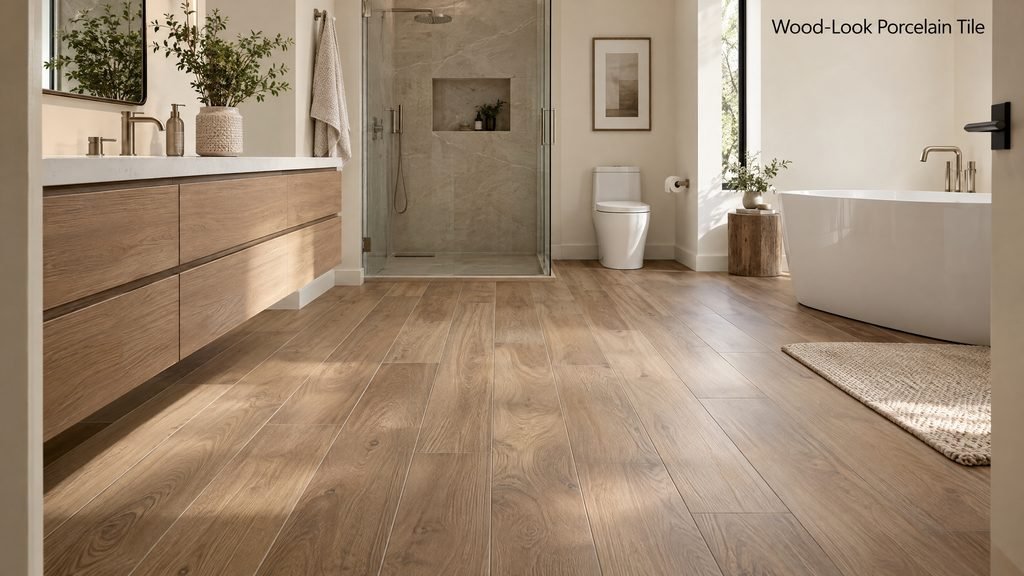
It works well with:
- Natural wood vanities
- Cream walls
- White fixtures
- Black or brushed metal accents
- Neutral stone-look surfaces
Pay attention to tile direction. Running long rectangular tiles along the room can create a different visual effect from laying them across the space.
13. Black-and-White Tile
Black-and-white tile creates strong contrast and can work in both classic and modern bathrooms.
A checkerboard floor is one option, but you don’t have to use a traditional pattern. Black floor tile with white wall tile can create a simpler look.
Because the contrast is strong, keep the rest of the bathroom relatively controlled. Let the tile provide the visual interest instead of competing with several decorative accessories.
14. Herringbone Tile Pattern
A herringbone pattern can make a familiar rectangular tile look much more decorative.
It works particularly well as:
- A shower-wall feature
- A vanity backsplash
- A selected accent wall
- A bathroom floor pattern when the tile is suitable
Keep in mind that herringbone requires more planning and cutting than a basic grid layout. A more complicated pattern can increase installation time and material waste.
15. Textured Accent Wall
A textured tile accent wall can add depth without covering every bathroom surface in a bold material.
Consider using it behind a vanity or on another suitable wall where it can be seen clearly.
Texture also affects cleaning. Deep grooves and irregular surfaces may collect more dust, soap residue, or moisture than smooth tile, so consider maintenance before choosing a highly textured product.
16. Gray Bathroom Tiles
Gray tile provides a flexible base for modern and minimalist bathrooms.
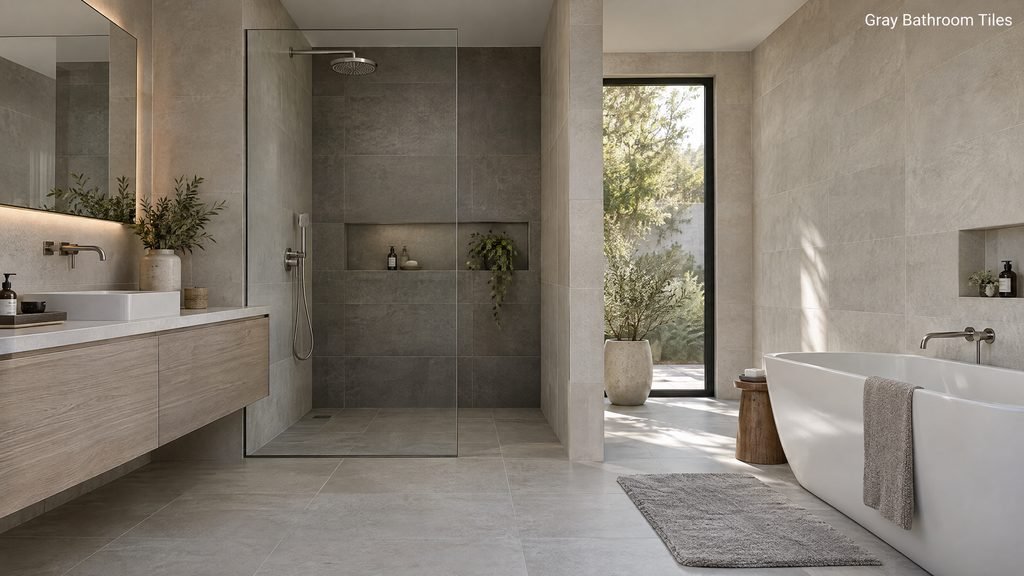
Light gray can keep the room soft and bright, while medium or dark gray can provide stronger contrast.
If your bathroom already contains cool gray fixtures or surfaces, consider whether a warm gray or greige tile would create a more comfortable balance.
17. Blue Bathroom Tiles
Blue tile can add color while keeping the bathroom feeling fresh and relaxing.
Soft blue, blue-gray, muted teal, and deeper navy shades can all work depending on the room.
For a smaller bathroom, using blue on one wall or inside the shower can provide color without making every surface visually heavy.
18. Floor-to-Ceiling Shower Tile
Floor-to-ceiling shower tile can create a strong vertical feature and make the shower feel like a defined part of the bathroom.
Large-format stone-look tiles are particularly effective for this approach because their larger surfaces can create a more continuous appearance.
However, tile is not the waterproofing system itself. A shower needs an appropriate waterproofing assembly behind or beneath the finished tile according to the installation system being used.
19. Mixed Tile Sizes
Using two tile sizes can create visual variety without introducing too many competing patterns.
For example, you could use a larger neutral wall tile with a smaller mosaic on a suitable shower floor.
The colors do not need to match perfectly. They simply need enough relationship in tone, texture, or style to make the combination feel intentional.
20. Penny Tile and Small Mosaics
Small mosaic tiles can add detail to shower floors, bathroom floors, backsplashes, and selected accent areas when the product is suitable for that application.
Penny rounds are especially recognizable and work well in vintage-inspired and contemporary bathrooms.
The trade-off is grout. More small tiles usually mean more grout joints, which can require more cleaning and maintenance.
21. Natural Stone Tile
Natural stone can give a bathroom a unique appearance because every piece can have natural variation in color, pattern, and texture.
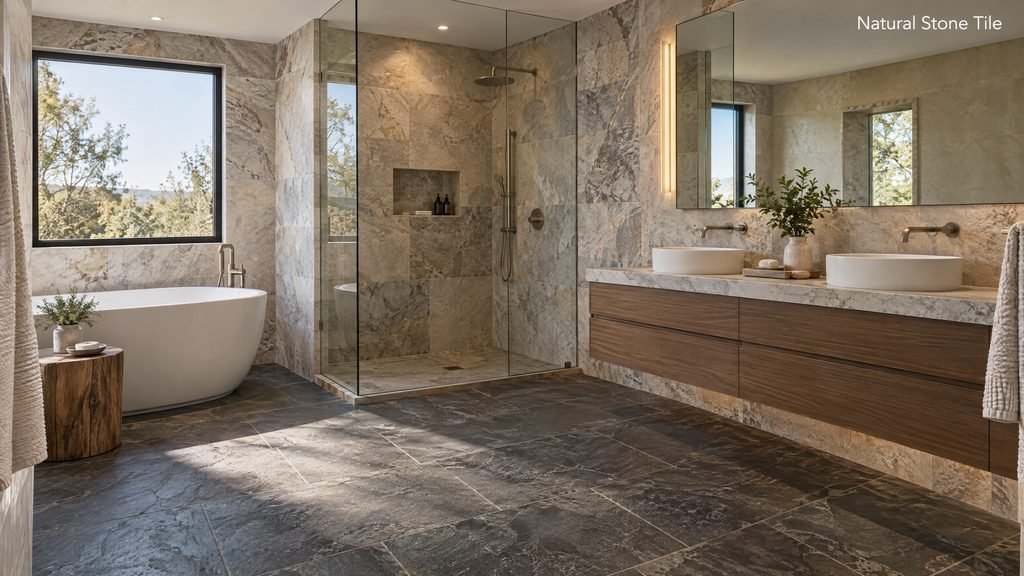
Marble, slate, and other stone products have different care requirements.
Don’t assume all natural stone should be cleaned or sealed in the same way. Follow the specific manufacturer’s or supplier’s care instructions for the stone you select.
22. Muted Pink and Earthy Tiles
Muted pink, clay, terracotta-inspired, and earthy tile colors can add warmth without overwhelming the room.
These shades work nicely with cream, beige, natural wood, and warm metal finishes.
If the bathroom receives limited natural light, test the color before purchasing. Warm artificial lighting can make earthy colors appear noticeably different.
23. Accent Border or Feature Strip
A small accent area can provide personality without requiring decorative tile throughout the entire bathroom.
Instead of creating a traditional horizontal border, consider a vertical accent strip, a decorative shower niche, or a small feature area behind the vanity.
Use accent tile sparingly if the rest of the bathroom already contains strong patterns.
24. Stone-Look Floor Tile
Stone-look floor tile provides a natural appearance while giving you many color and pattern choices.
It can coordinate with marble-look walls, plain subway tile, wood-look finishes, or simple painted walls.
For the floor, always confirm that the product is intended for floor use and appropriate for the expected bathroom conditions.
25. Monochromatic Tile Design
A monochromatic bathroom uses different tones, sizes, or textures from a similar color family to create a coordinated appearance.
For example, combine warm white wall tile with light gray floor tile and a slightly darker accent.
This approach is useful if you want a bathroom that feels calm without being completely plain.
26. Tile and Paint Combination
You don’t have to tile every bathroom wall to create a finished design.
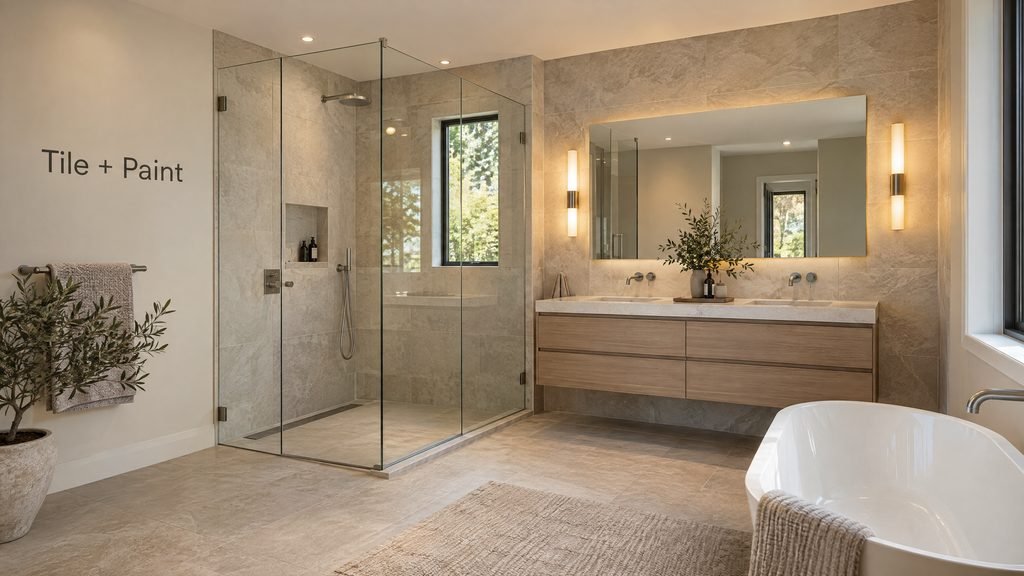
Using tile in selected areas and an appropriate bathroom paint on other surfaces can reduce the amount of tile required.
For example, you might use tile around a shower and vanity while using suitable paint on another wall.
Paint should never be treated as a replacement for required waterproofing in a wet area.
Bathroom Tile Ideas by Type & Placement
Where you install the tile is just as important as which tile you choose. Floors, shower walls, shower floors, and decorative walls have different practical requirements.
Bathroom Floor Tile Ideas
Bathroom floor tile needs to handle regular foot traffic, moisture, cleaning, and the conditions of the specific room.
Popular options include porcelain, ceramic products rated for floor use, suitable mosaics, and natural stone.
| Floor Tile | Main Design Benefit | Important Consideration |
|---|---|---|
| Porcelain | Wide range of colors and patterns | Confirm application and finish |
| Ceramic | Many affordable design options | Check suitability for flooring |
| Mosaic | Detailed patterns and smaller scale | More grout joints to maintain |
| Natural stone | Unique natural appearance | May require specific care |
For a wet bathroom floor, slip resistance deserves special attention. Look at the product’s technical information instead of assuming a particular color, texture, or material is automatically safer.
Bathroom Shower Tile Ideas
Shower tile should be selected as part of the complete shower system, not as an isolated decorative surface.
Large-format wall tiles can create a clean look, while smaller mosaics can be useful in applications where their size and layout are appropriate.
Good shower planning should account for:
- Wall and floor tile suitability
- Waterproofing
- Drain location
- Shower niche placement
- Grout joints
- Corners and transitions
- Cleaning and maintenance
- Fixture locations
A properly tiled shower still needs appropriate waterproofing behind the finished surfaces.
Bathroom Wall and Accent Tile Ideas
Bathroom walls give you more freedom to experiment with color, shape, texture, and pattern.
A decorative wall behind the vanity can become the main feature while the shower and floor remain relatively simple.
Before choosing a textured or unusual wall tile, check how it will be cleaned and how edges, corners, outlets, and plumbing fixtures will be finished.
How to Choose the Right Bathroom Tiles
Choose bathroom tile by considering the surface first, then the design.
A practical selection process can save you from buying a tile that looks perfect but is unsuitable for the area where you want to use it.
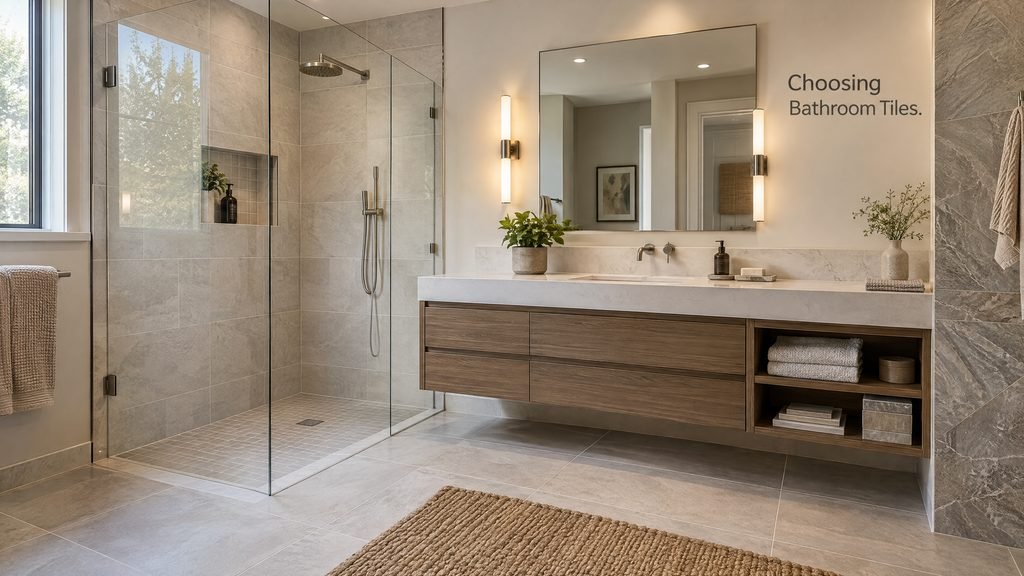
Choose the Right Tile Material
Porcelain and ceramic are common bathroom tile choices, but the specific product matters more than simply choosing one material over another.
When comparing products, check:
- Intended application
- Surface finish
- Cleaning requirements
- Size and thickness
- Slip-resistance information where relevant
- Installation instructions
- Grout recommendations
Natural stone can also be appropriate in some bathrooms, but its maintenance requirements should be understood before purchase.
Select Tile Size, Color and Pattern
Choose tile size according to the bathroom’s proportions, layout, and installation conditions rather than following a trend blindly.
Before committing to a color, place samples next to your vanity, countertop, flooring, fixtures, and wall color.
If you’re changing the wall color at the same time, our guide on how to choose a paint color can help you think about undertones, lighting, and how different finishes work together.
Consider Water Exposure, Slip Resistance and Maintenance
A beautiful tile is only a good bathroom choice if you can safely and comfortably live with it.
For every surface, ask:
- Is the product suitable for this location?
- How much water will it regularly encounter?
- Is the surface easy enough for me to clean?
- Does the floor require specific slip-resistance characteristics?
- What type of grout and installation system does it require?
- Will replacement tiles still be available if one breaks later?
That final question is easy to overlook. Keeping a few spare tiles after installation can be useful if a tile later becomes damaged and the original product is discontinued.
Practical Bathroom Tile Selection Tips
The right bathroom tile depends on where it will be installed, how much water it will encounter, and how the space will be used. A tile that works well on a bathroom wall may not be the best choice for a shower floor. Before buying, check the manufacturer’s recommendations for the specific application.
Always look at tile samples in your actual bathroom before making a final decision. Lighting can change how colors and finishes appear, while grout color, tile size, and layout can noticeably affect the finished design.
Bathroom Tile Design Mistakes to Avoid
Most tile problems are easier to prevent during planning than to fix after installation.
Choosing Tile Only Because It Looks Good
A tile can be attractive and still be unsuitable for the surface you want to cover.
Always check the product information before purchasing large quantities.
Ignoring the Layout
Tile layout affects how professional the finished bathroom looks.
Plan around:
- Doors
- Corners
- Windows
- Niches
- Faucets
- Drains
- Vanity edges
- Visible transitions
A layout that leaves very narrow pieces along several edges may look less balanced than one planned around the room’s actual dimensions.
Using Too Many Different Tiles
Mixing too many colors, shapes, textures, and sizes can make the bathroom feel disconnected.
A simple approach is to choose one main tile, one supporting tile, and possibly one accent. This is not a strict design rule, but it can make decision-making easier.
Forgetting Grout Color
Grout can change the appearance of the entire tile installation.
A matching grout tends to create a quieter appearance, while contrasting grout makes individual tile shapes more visible.
Look at grout samples next to your actual tile before making the final choice.
Ignoring Maintenance
The easiest tile to live with is usually the one whose cleaning requirements fit your normal routine.
Highly textured surfaces, many grout joints, and certain natural materials may require more attention than a simple smooth surface.
Forgetting Installation Costs
The tile price is only one part of the total project cost.
Installation can become more involved when the project includes complex patterns, difficult cuts, substrate repairs, waterproofing work, niches, or unusual tile sizes.
For broader home improvement planning, your existing bathroom remodel ideas article can naturally support readers who are considering a full renovation.
Bathroom Tile Ideas: Cost and Budget Considerations
Consider these factors before making your final selection.
| Cost Factor | What Can Affect the Cost |
|---|---|
| Tile | Material, size, finish, pattern, and quantity |
| Installation | Labor, layout complexity, and tile cutting |
| Surface preparation | Repairs, leveling, or substrate work |
| Waterproofing | Required wet-area preparation and system |
| Grout | Type, color, quantity, and application |
| Finishing | Trims, transitions, sealants, and other materials |
How to Plan Your Tile Budget
Measure the surfaces first and discuss the installation with a qualified installer before ordering the final quantity.
A useful process is:
- Measure the floor and wall areas.
- Decide which surfaces will actually receive tile.
- Select the tile and layout.
- Calculate the required tile quantity.
- Account for cuts and waste based on the actual layout.
- Price grout, trim, sealant, and other required materials.
- Get installation estimates.
- Keep some room in the budget for unexpected preparation work.
Complex patterns can require more cutting and waste than straightforward layouts, so don’t use the same material allowance for every project.
Ways to Save on Bathroom Tile
The smartest savings often come from simplifying the design rather than choosing unsuitable materials.
You could:
- Use decorative tile only on one feature wall.
- Choose a standard-size tile with a simpler installation pattern.
- Keep the existing bathroom layout when possible.
- Compare several suitable tile materials.
- Use paint on appropriate non-wet walls instead of tiling every surface.
- Choose a neutral main tile and add personality with smaller accents.
If you’re organizing other areas of your home during a renovation, you may also find ideas in how to organize a bathroom cabinet, especially when planning storage around a new vanity or bathroom layout.
Cost Information Note
Bathroom tile costs can vary significantly depending on the tile, installation method, labor, surface preparation, waterproofing, removal work, and project location. The cost information in this guide should therefore be used for general planning rather than treated as a fixed project quote.
Getting project-specific estimates before purchasing materials can help prevent unexpected costs. More complex layouts, small mosaics, difficult cuts, and extensive surface preparation can also increase installation expenses.
Final Thoughts on Choosing Bathroom Tiles
The best bathroom tile design is one that looks good today and still makes sense for your daily routine several years from now.
Before ordering tile, consider the installation location, water exposure, floor safety, maintenance, grout, room size, lighting, installation complexity, and total budget.
You don’t need an expensive tile or an elaborate pattern to create a beautiful bathroom. A simple neutral tile can look excellent when the layout is carefully planned, while a modest accent can give a basic bathroom much more personality.
Choose the tile for the job first, then choose the style you love. That approach makes it easier to create a bathroom that is attractive, practical, and suited to your home.
Frequently Asked Questions About Bathroom Tiles
What Is the Best Tile for a Bathroom?
There is no single best tile for every bathroom because the correct choice depends on where the tile will be installed and how the space is used.
Porcelain and ceramic tiles are common options, while natural stone and other materials can also work when the specific product is appropriate for the application.
What Tile Makes a Small Bathroom Look Bigger?
Light-colored tile, consistent colors, good lighting, and a carefully planned layout can help a small bathroom feel more open.
Large-format tiles can reduce the number of visible grout lines, but they are not automatically the right choice for every small bathroom.
What Is the Most Durable Bathroom Floor Tile?
Durability depends on the specific tile, installation, substrate, maintenance, and level of use.
Rather than choosing based only on the material name, check the manufacturer’s specifications and make sure the product is intended for the floor application.
Should Bathroom Floor and Wall Tiles Match?
No, floor and wall tiles do not have to match exactly.
Matching tiles create a continuous look, while complementary tiles can create contrast. For example, a neutral wall tile can be paired with a patterned floor without making the room feel disconnected.
How Do I Choose a Bathroom Tile Color?
Start with the existing bathroom finishes and the amount of natural and artificial light in the room.
Then consider the mood you want. Warm beige and cream can create a softer feel, while gray can provide a modern neutral base and blue or green can introduce color.
Physical samples are especially useful because tile color can change noticeably under different lighting.
Are Large Tiles Better for Small Bathrooms?
Large tiles can work well in small bathrooms, but the room’s dimensions and installation conditions should guide the choice.
They may create fewer visible grout joints, but they can also require more careful substrate preparation and handling.
How Many Tile Colors Should a Bathroom Have?
There is no required number of tile colors, but limiting the palette can make coordination easier.
A practical starting point is one primary tile color, one complementary surface, and an optional accent. You can create variety through texture, tile size, grout, and layout instead of adding many colors.
Sources & References
For technical tile selection and installation, refer to the documentation provided by the tile manufacturer and applicable industry or local building guidance. Product-specific instructions should take priority when they differ from general design advice.
- Tile Council of North America (TCNA) — tile installation and industry guidance
- Tile manufacturer installation and care instructions
- Applicable local building-code requirements