

Expert Reviewed By Olivia Berger
Veterinary Specialist – Nevada, United States
This article was reviewed by Olivia Berger for clarity, accuracy, and practical pet-safety information. The review helps ensure that the guidance about snake plant exposure in cats and dogs is presented in a clear and responsible way for pet owners.
Yes, snake plants are considered toxic to both cats and dogs if they are eaten. The ASPCA lists snake plant (Sansevieria trifasciata, now commonly classified as Dracaena trifasciata) as toxic to cats and dogs. The plant contains saponins, which can cause gastrointestinal upset after ingestion. Common signs include nausea, vomiting, and diarrhea.
Snake plants are popular houseplants because they are attractive, hardy, and easy to care for. However, being easy to grow does not mean they are safe for pets. A pet that simply lives in the same room as a snake plant is not being poisoned just because the plant is present. The concern is chewing or eating the plant.
The good news is that snake plant exposure is generally associated with gastrointestinal symptoms rather than the severe organ damage seen with some highly poisonous plants. Still, the amount eaten, the size of the pet, and the symptoms that develop all matter. If your cat or dog has eaten part of a snake plant, contacting your veterinarian is the safest way to determine what should happen next.
If you are researching other plants around your home, you may also want to read our guide on whether carnations are toxic to cats and our article about whether lavender is safe for cats.
Are Snake Plants Toxic to Cats?
Snake plants can cause illness in cats when they chew or swallow the plant. The ASPCA specifically lists snake plant as toxic to cats, with saponins identified as the toxic principle. Reported clinical signs include nausea, vomiting, and diarrhea.
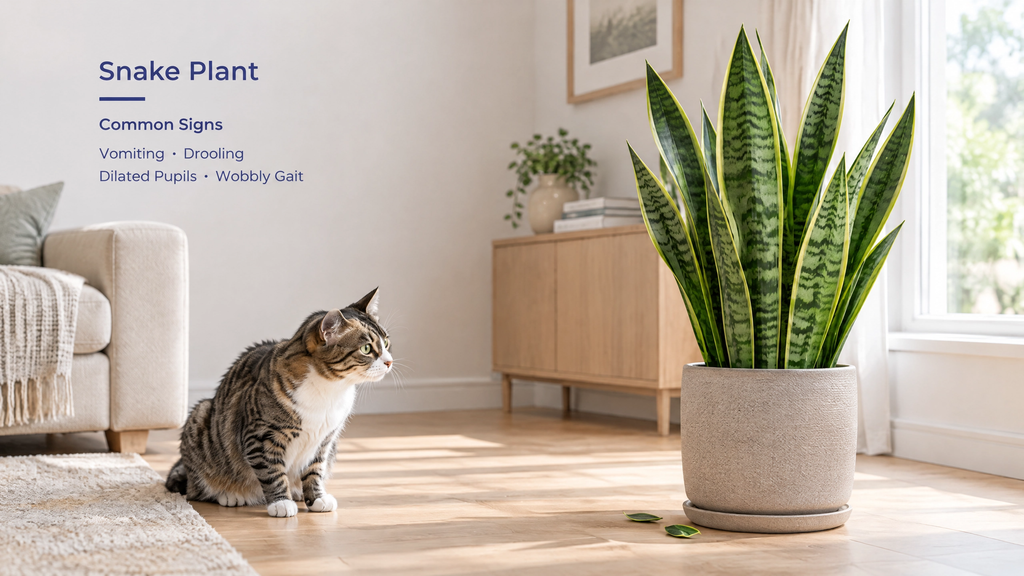
Cats can be particularly curious about houseplants, and a hanging leaf or tall blade may be tempting to chew. Even if your cat normally ignores your plants, its behavior can change, so keeping a known toxic plant out of reach is a sensible precaution.
Pet Poison Helpline also reports that ingestion of Sansevieria can cause drooling and vomiting. In cats, dilated pupils and a wobbly gait have also been reported. These additional signs make it important not to rely only on vomiting or diarrhea when deciding whether your cat needs professional attention.
If you know your cat has eaten part of a snake plant, note approximately how much was eaten and which part of the plant was involved. Take a photograph or keep a sample of the plant if it can be done safely. This information may help your veterinarian identify the plant and assess the situation.
Are Snake Plants Toxic to Dogs?
Dogs can also become sick after eating snake plant material. The ASPCA lists snake plant as toxic to dogs and identifies saponins as the toxic principle. The commonly reported signs are nausea, vomiting, and diarrhea.
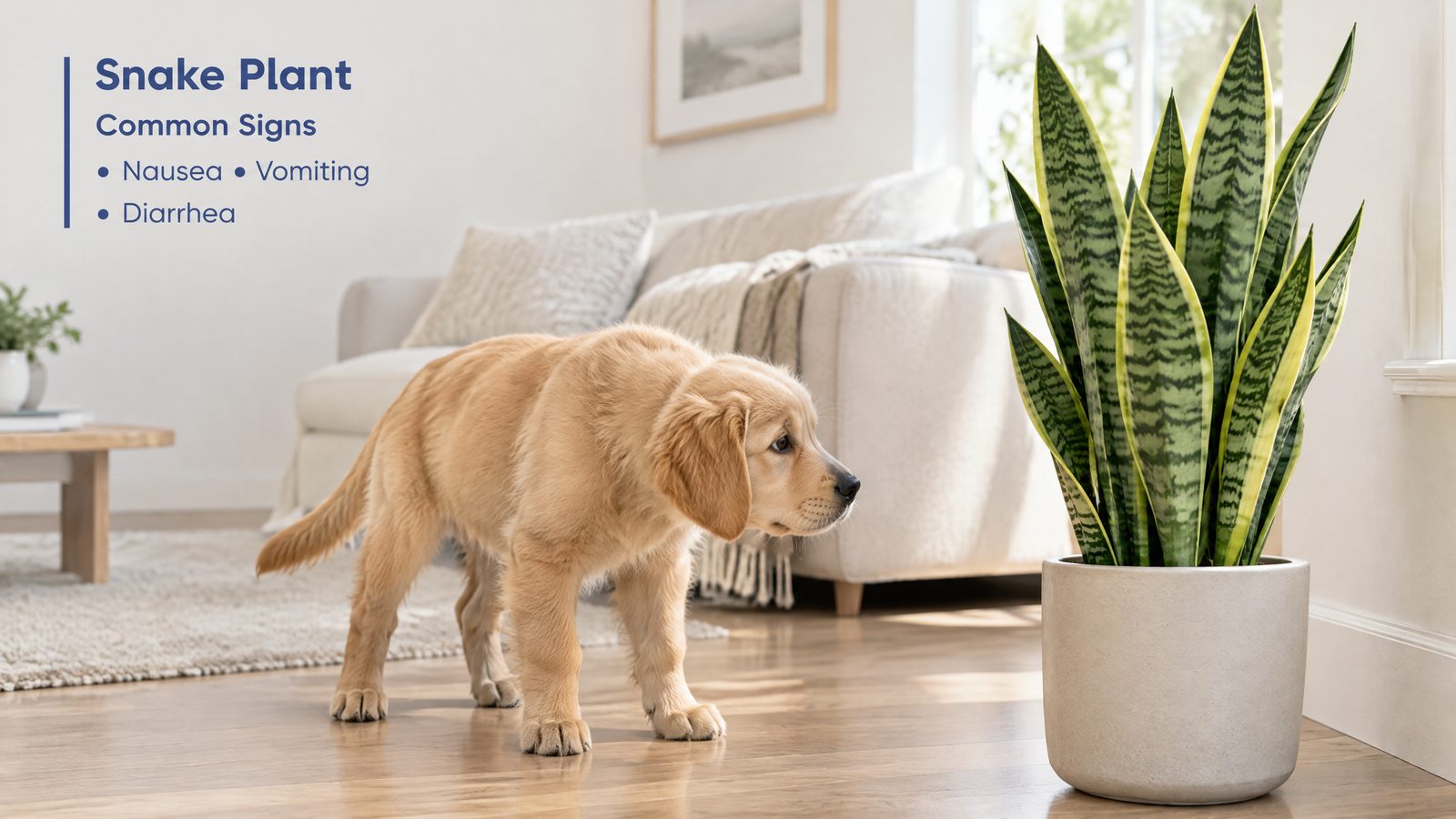
Dogs may be more likely than cats to investigate plants by chewing them, particularly puppies and dogs that like to explore objects with their mouths. A snake plant placed at floor level can therefore become an unnecessary temptation.
The amount consumed can matter, and individual pets may respond differently. Do not assume that a dog is safe simply because it appears normal immediately after chewing a leaf. If you witnessed ingestion or notice symptoms, contact your veterinarian for advice.
For other practical home-safety topics, our home and living ideas section includes guides covering common household projects and maintenance concerns.
Snake Plant Toxicity Symptoms in Cats and Dogs
The most common snake plant toxicity symptoms involve the digestive system. ASPCA lists nausea, vomiting, and diarrhea, while Pet Poison Helpline also reports drooling and notes that cats may develop dilated pupils or an unsteady gait.
| Symptom | Cats | Dogs | What to Watch For |
|---|---|---|---|
| Nausea | Possible | Possible | Lip licking, discomfort or reduced interest in food |
| Vomiting | Commonly reported | Commonly reported | Repeated vomiting or inability to keep water down |
| Diarrhea | Possible | Possible | Frequent or severe loose stools |
| Drooling | Possible | Possible | Excessive saliva after chewing the plant |
| Loss of appetite | Possible | Possible | Refusing normal food |
| Lethargy or weakness | Possible | Possible | Noticeable change from normal behavior |
| Dilated pupils | Reported in cats | Not a typical listed sign | Particularly important if other symptoms are present |
| Wobbly gait | Reported in cats | Not a typical listed sign | Seek veterinary advice if observed |
The presence of a symptom does not prove that snake plant caused it. Vomiting, diarrhea, and lethargy can have many possible causes, so tell your veterinarian about any known plant exposure rather than trying to diagnose the problem at home.
If symptoms are severe, persistent, or unusual for your pet, professional veterinary assessment is especially important.
What Should You Do If Your Pet Eats a Snake Plant?
The safest first step is to remove your pet from the plant and contact a veterinarian for specific advice. Do not wait for symptoms to become severe before asking for help if you know your pet has swallowed a potentially toxic plant. Pet Poison Helpline specifically recommends seeking veterinary treatment or contacting a poison service after a suspected exposure.

1. Remove the Plant
Move the snake plant away from your pet immediately. This prevents additional leaves or pieces from being eaten while you work out what happened.
If pieces of the plant are still easily visible in your pet’s mouth, avoid putting your fingers deep into the mouth or creating a bite risk. Your pet’s safety comes first.
2. Check What Was Eaten
Knowing what your pet consumed can help a veterinarian assess the exposure. If possible, identify the plant and estimate how much may be missing.
Take a clear photograph of the plant, including its leaves and overall appearance. If you still have the chewed piece, keep it available for identification.
Also make a note of approximately when the ingestion happened and whether your pet has already vomited, developed diarrhea, drooled excessively, or behaved differently.
3. Monitor Your Pet
Careful observation can help you notice changes that need professional attention. Watch for vomiting, diarrhea, drooling, loss of appetite, unusual weakness, or changes in coordination.
Do not rely on an online article to decide that your pet is definitely fine. A pet’s size, the amount eaten, existing health issues, and other factors can affect how an exposure should be handled.
4. Contact Your Veterinarian When Needed
A veterinarian can give you advice based on your individual pet rather than a general symptom list. Contact your regular veterinarian or an emergency veterinary clinic if your pet has eaten the plant, particularly if you know a significant amount was consumed or symptoms have started.
If your pet is having serious symptoms such as difficulty breathing, collapse, seizures, severe weakness, or repeated vomiting, seek emergency veterinary care immediately.
Do not induce vomiting unless a veterinarian or qualified animal poison professional specifically tells you to do so. Trying home remedies without professional guidance can create additional risks.
How Serious Is Snake Plant Toxicity?
Snake plant exposure should be taken seriously, but it is important not to confuse it with plants that can cause life-threatening organ damage after very small exposures. The ASPCA identifies snake plant as toxic to cats and dogs and lists gastrointestinal signs such as nausea, vomiting, and diarrhea.

The severity of an exposure can depend on several factors. These include the amount of plant material consumed, the animal’s size, and the individual animal’s response. Pet Poison Helpline also notes that factors such as the amount consumed and the animal’s individual characteristics can influence toxicity.
A small bite does not automatically mean a serious poisoning will occur, but it is still useful information to share with your veterinarian. The safest approach is to identify the plant, report the exposure, and follow professional advice.
It is also worth remembering that not every houseplant has the same level of risk. For example, the ASPCA describes some plants as causing mild gastrointestinal irritation while others can cause much more serious problems.
How to Keep Cats and Dogs Safe Around Snake Plants
The easiest way to prevent snake plant poisoning is to stop your pet from chewing the plant in the first place.
If you already have a snake plant, consider where your pet spends time and whether the plant can realistically be reached. A high shelf may work for some cats but not for a cat that climbs furniture. Likewise, placing a plant on a low stand may not be enough to keep a curious dog away.
Consider these simple precautions:
- Keep snake plants physically inaccessible to pets.
- Pick up fallen leaves instead of leaving them on the floor.
- Check plants regularly for damaged or missing leaves.
- Keep newly purchased plants away from pets until you confirm their safety.
- Teach puppies and dogs not to chew household plants.
- Consider replacing plants that your pet repeatedly tries to eat.
- Keep the plant’s identification information available in case an exposure occurs.
A pet-safe home is easier to manage when you know which plants are present. One practical idea is to keep a simple list of your houseplants and their pet-safety status.
This is similar to organizing other areas of your home: knowing what you have makes it easier to respond when something goes wrong. For example, our guide to organizing a bathroom cabinet focuses on keeping important items easy to identify and access.
If you enjoy decorating with plants but have a curious pet, choosing plants that are considered non-toxic to your animal can also reduce the worry.
What About Snake Plants and Cats Living in the Same Home?
A snake plant does not automatically need to be removed simply because a cat lives in the house, but access to the plant is the key concern.
The Reddit discussion you shared raises a very practical question: what should an owner do when cats live with a snake plant but do not appear interested in eating it?
In the discussion, the original poster explained that their cats generally sniffed the snake plant but preferred other plants. Comments included practical ideas such as identifying and labeling plants according to whether they are safe for cats, so the plant can be quickly identified if a pet ever becomes sick.
The useful lesson from the discussion is preparation rather than panic. Online experiences can show how other pet owners handle similar situations, but Reddit comments should not be treated as veterinary guidance.
For a cat that never touches the plant, some owners may choose to keep it in an inaccessible location. For a cat that regularly chews plants or climbs to reach them, removing the snake plant or replacing it with a pet-safe option may be the more practical choice.
The important point is that individual pet behavior matters. A plant that is ignored today could become interesting tomorrow, so physical separation is more reliable than assuming a pet will always leave it alone.
Final Takeaway
Snake plants are toxic to both cats and dogs when eaten, so keeping them away from pets is the simplest way to reduce the risk. The plant contains saponins and can cause symptoms such as nausea, vomiting, diarrhea, and drooling. Some additional signs, including dilated pupils and an unsteady gait, have been reported in cats.
If your pet has eaten part of a snake plant, do not rely on symptoms alone to decide what to do. Remove access to the plant, identify what was eaten, note when it happened, and contact your veterinarian or an appropriate animal poison service for guidance.
For more pet-related information, explore the Pets section of Daily Idea Book.
Snake Plant Toxicity FAQs
Are snake plants poisonous to cats?
Yes, snake plants are considered toxic to cats if ingested. The ASPCA identifies saponins as the toxic principle and lists nausea, vomiting, and diarrhea among the clinical signs.
Are snake plants poisonous to dogs?
Yes, snake plants are also considered toxic to dogs when eaten. Vomiting, nausea, and diarrhea are among the symptoms reported by the ASPCA.
What happens if my cat eats a snake plant?
A cat that eats snake plant may develop gastrointestinal symptoms such as vomiting or diarrhea. Drooling may also occur, and Pet Poison Helpline reports dilated pupils and an unsteady gait in some cats.
What happens if my dog eats a snake plant?
A dog that eats snake plant may develop nausea, vomiting, or diarrhea. Contact your veterinarian for advice after a known ingestion, especially if symptoms develop.
Can snake plants cause vomiting in pets?
Yes, vomiting is one of the commonly reported signs of snake plant ingestion in both cats and dogs. Other possible signs include nausea, diarrhea, and drooling.
Should I call a vet if my pet eats a snake plant?
Yes, contacting a veterinarian is a sensible step after a known ingestion. Tell them the plant name, approximately how much was eaten, when it happened, and what symptoms you have noticed. A professional can determine what action is appropriate for your pet.