
Expert Review
Reviewed by Shaun Wiley
Home Improvement & Flooring Specialist
Review focus: Flooring performance, installation, durability, and moisture considerations.
Updated: August 2026
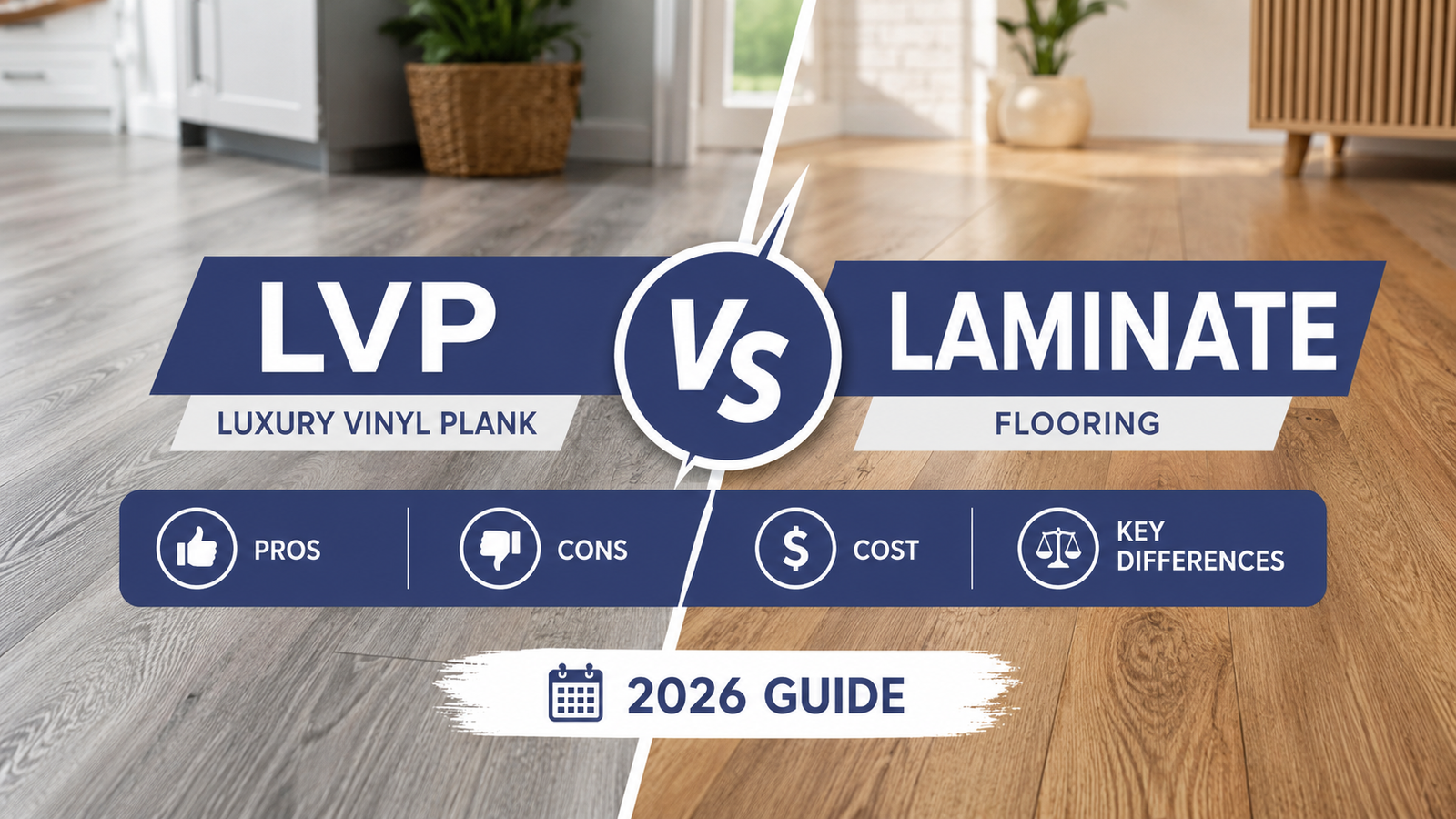
Choosing between LVP and laminate can be confusing because both can give your home the look of hardwood without the same price or maintenance needs. LVP, or luxury vinyl plank, is known for its moisture resistance and flexible use, while laminate is popular for its realistic wood appearance, scratch resistance, and often lower upfront cost.
The better flooring depends on where you plan to install it, how much moisture the area gets, your budget, and how you use the room. Neither option is automatically best for every home.
In this guide, we compare LVP vs laminate flooring based on cost, durability, water resistance, installation, appearance, maintenance, lifespan, and everyday use. The goal is to help you choose flooring based on your actual needs rather than simply choosing the more popular option.
LVP vs Laminate: Quick Comparison
The biggest difference is moisture performance: LVP generally handles water better, while laminate can be an excellent choice for dry areas where appearance and scratch resistance are important.
| Feature | LVP Flooring | Laminate Flooring |
|---|---|---|
| Main material | Vinyl-based flooring | Wood-based fiberboard core |
| Water resistance | Usually very good | Varies by product |
| Scratch resistance | Good to excellent, depending on wear layer | Often very good |
| Appearance | Realistic wood and stone designs | Very realistic wood designs |
| Installation | Often click-lock or adhesive | Usually click-lock |
| Maintenance | Easy | Easy, but moisture needs more care |
| Comfort | Softer and warmer underfoot | Can feel firmer |
| Lifespan | Often around 10–25+ years depending on quality and use | Often around 10–25+ years depending on quality and use |
| Best for | Moisture-prone and busy areas | Dry rooms and wood-look applications |
| Main concern | Quality varies widely | Water can damage the core |
Product quality matters just as much as the flooring category. A high-quality laminate can outperform a low-quality LVP in some situations, so always check the manufacturer’s specifications, warranty, wear rating, installation requirements, and moisture limitations before buying.
What Is LVP Flooring?
LVP is a layered vinyl flooring product designed to imitate the appearance of wood while offering strong resistance to everyday moisture. The name stands for luxury vinyl plank, and individual planks are usually designed with a printed decorative layer, a protective wear layer, and a vinyl-based construction.
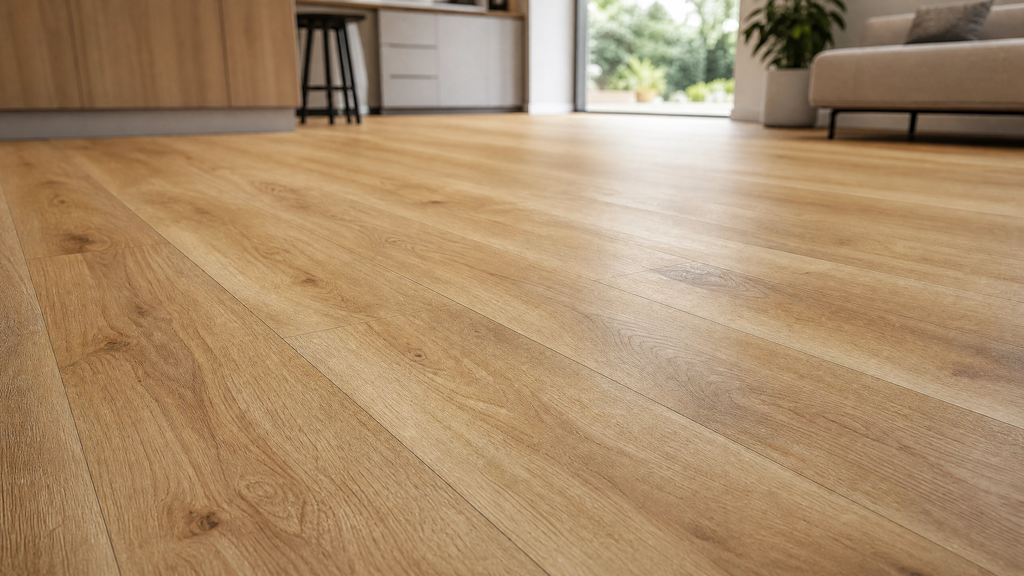
Many LVP products use a click-lock installation system, although glue-down products are also available. The exact construction varies between manufacturers and product lines.
LVP is available in many wood colors, plank widths, textures, and patterns. Some products are designed to look like oak, maple, walnut, or other wood species.
Main Advantages of LVP
LVP’s strongest advantage is its ability to handle everyday moisture better than many traditional wood-look flooring products.
Other advantages can include:
- Easy routine cleaning
- Large range of colors and wood-look patterns
- Comfortable feel compared with some harder flooring
- Simple installation for many click-lock products
- Good resistance to everyday wear
- Suitable options for kitchens, laundry rooms, and other areas where moisture may occur
However, not every LVP product is fully waterproof. Some products are water-resistant rather than waterproof, and the seams, edges, subfloor, and installation method can affect real-world performance.
What Is Laminate Flooring?
Laminate flooring combines a wood-based core with decorative and protective layers to create a durable surface that looks like natural wood. Modern laminate can have detailed grain patterns, textures, and colors that make it difficult to distinguish from real wood from a normal viewing distance.
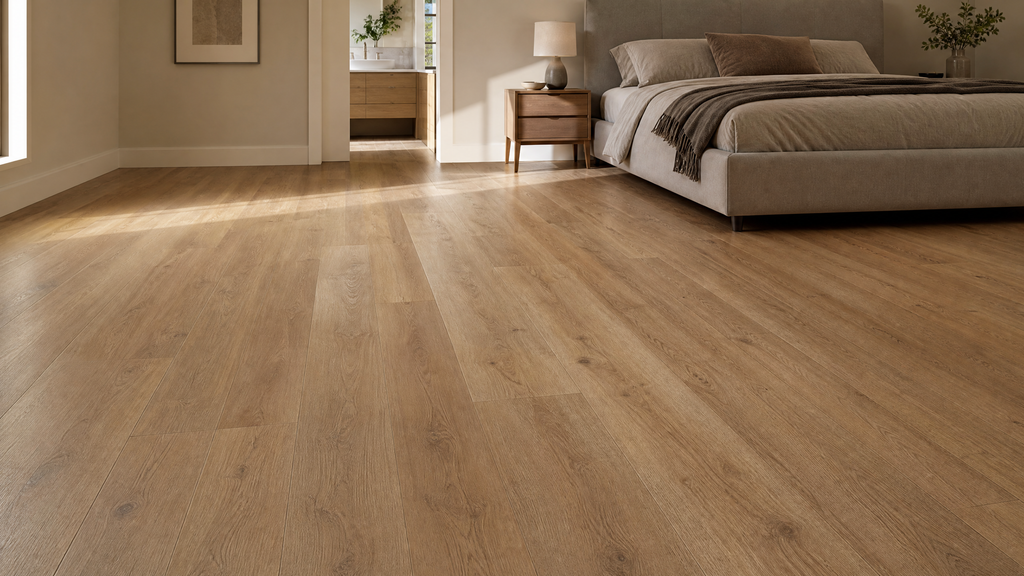
Laminate is commonly installed as a floating floor, meaning the planks lock together without being permanently attached to the subfloor. Installation requirements vary by product, so the manufacturer’s instructions should always be followed.
Main Advantages of Laminate
Laminate is especially attractive when you want a convincing wood appearance and good everyday scratch resistance at a reasonable price.
Depending on the product, laminate can offer:
- Realistic wood patterns
- Good resistance to scratches and everyday wear
- Easy floating-floor installation
- A wide selection of colors and styles
- Relatively simple maintenance
- A firm and stable walking surface
The main limitation is moisture exposure. Modern water-resistant and waterproof laminate products have improved significantly, but you should never assume every laminate floor can handle standing water.
LVP vs Laminate: Key Differences
1. Water Resistance
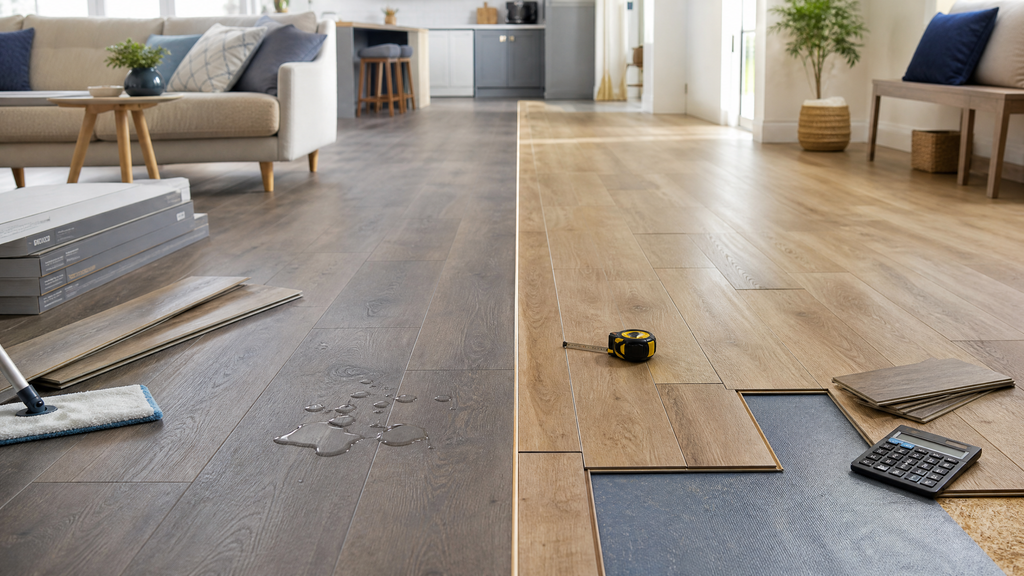
LVP is usually the safer choice when moisture is one of your biggest concerns. Vinyl-based construction does not absorb water in the same way as the wood-based core found in traditional laminate flooring.
This makes LVP a popular option for kitchens, laundry areas, entryways, and other locations where occasional spills are likely.
Laminate flooring requires more attention to the manufacturer’s moisture rating. Water that reaches the core through damaged areas, seams, or prolonged exposure can cause swelling or other damage.
That does not mean modern laminate cannot be used in moisture-prone areas. Some products are specifically designed with improved water resistance. Always check the exact product specifications instead of judging all laminate flooring by older products.
2. Durability and Scratch Resistance
Both flooring types can be durable, but the type of damage they handle best can differ. LVP generally performs well against everyday moisture and normal household traffic, while quality laminate is often highly resistant to scratches and surface wear.
For either product, look at the actual specifications rather than relying only on the words “durable” or “heavy duty.”
Consider:
- Wear-layer thickness for LVP
- Surface protection
- Laminate AC rating when provided
- Manufacturer warranty
- Expected traffic level
- Installation quality
- Subfloor condition
A busy household with pets, children, or frequent foot traffic should choose a product rated for that level of use.
3. Cost
The total cost of flooring includes more than the price printed on the box. You should consider the flooring itself, underlayment when required, installation, transitions, subfloor preparation, removal of old flooring, and future repairs.
Prices vary greatly by brand, product quality, location, and installation method, so there is no single price that applies to every LVP or laminate floor.
In many markets, budget and mid-range LVP and laminate can overlap in price. Premium products can cost considerably more.
When comparing two products, calculate the cost per square foot and then add installation and preparation costs. This gives you a much more useful comparison than looking only at the plank price.
4. Installation
Both LVP and laminate can be relatively DIY-friendly when the subfloor is properly prepared and the product uses a click-lock system.
Before installation, check whether the manufacturer requires:
- A specific subfloor condition
- Moisture testing
- Underlayment
- Expansion gaps
- Acclimation or temperature requirements
- Specific tools
- A particular installation direction
LVP can be available as click-lock, glue-down, or other installation types. Laminate is commonly installed as a floating floor.
A poor installation can shorten the life of either flooring type, even when the flooring itself is high quality.
If you’re already researching other home improvement materials, you may also find our comparison of Sheetrock vs drywall useful for understanding why product names and specifications matter in home projects.
5. Appearance and Design
Laminate often has an advantage when a highly detailed wood appearance is your top priority, but today’s LVP can also look remarkably realistic.
Both products are available in many colors and plank designs. Some have textured surfaces designed to imitate natural wood grain.
When choosing based on appearance, look beyond a single sample. Check several planks together because repeated patterns can become more noticeable across a large floor.
Also consider the room’s:
- Natural lighting
- Wall colors
- Cabinet finishes
- Furniture
- Room size
- Existing flooring
The best-looking flooring is the one that works with the entire room rather than simply looking attractive on a small sample.
6. Cleaning and Maintenance
Both LVP and laminate are relatively easy to maintain when you follow the manufacturer’s cleaning instructions.
Regular maintenance usually starts with removing dirt and grit that can act like sandpaper under shoes and furniture.
Use suitable cleaning products and avoid excessive water unless the manufacturer specifically says the flooring can handle it. For laminate in particular, avoid allowing water to sit on the floor.
Felt pads under furniture legs can also help reduce scratches and surface damage.
7. Comfort and Sound
LVP can feel slightly softer and warmer underfoot, while laminate can provide a firmer walking surface.
The final feel depends on the product construction, underlayment, subfloor, and installation.
Sound is also affected by the room and the materials underneath the flooring. If noise is a concern, check whether the manufacturer recommends a particular underlayment or acoustic system.
Do not assume that a thicker floor automatically means better sound performance. The complete flooring system matters.
8. Lifespan
A quality LVP or laminate floor can last many years when it is installed correctly and used within its intended conditions.
Actual lifespan depends on product quality, traffic, moisture exposure, cleaning habits, installation, subfloor movement, pets, furniture, and other factors.
A manufacturer’s warranty can provide useful information about expected performance, but a warranty should not be treated as a guaranteed lifespan. Read what the warranty actually covers and what exclusions apply.
9. Repair and Replacement
Small damaged areas can sometimes be replaced more easily when spare planks are available from the original installation.
For both LVP and laminate, keeping a few extra planks after installation can be a smart idea. Flooring colors and patterns can be discontinued, making an exact match harder to find several years later.
The repair method depends on the flooring’s locking system, adhesive, location of the damaged plank, and manufacturer’s recommendations.
LVP Flooring: Pros and Cons
LVP is a strong all-around option when moisture resistance and easy maintenance are high priorities.
Pros of LVP
- Good moisture resistance on appropriately rated products
- Easy routine cleaning
- Many wood and stone designs
- Good choice for busy areas
- Available in different price ranges
- Many products are relatively easy to install
Cons of LVP
- Quality varies considerably between products
- Cheap products may have a less convincing appearance
- Some products can be damaged by sharp objects or heavy impacts
- Not every LVP product has the same water-resistance rating
- Certain installation methods require more skill
Laminate Flooring: Pros and Cons
Laminate can be an excellent choice for dry rooms when you want realistic wood styling and strong everyday surface protection.
Pros of Laminate
- Realistic wood appearance
- Often good scratch resistance
- Many affordable options
- Easy floating-floor installation
- Large range of colors and designs
- Simple routine maintenance
Cons of Laminate
- Traditional products are more vulnerable to moisture
- Water damage can affect the core
- Damaged areas may need plank replacement
- Quality varies considerably
- Some products can sound hollow without suitable underlayment
If you’re comparing flooring as part of a larger home improvement project, you may also want to explore our guides on wall cracks and drywall nail pops for other common home maintenance issues.
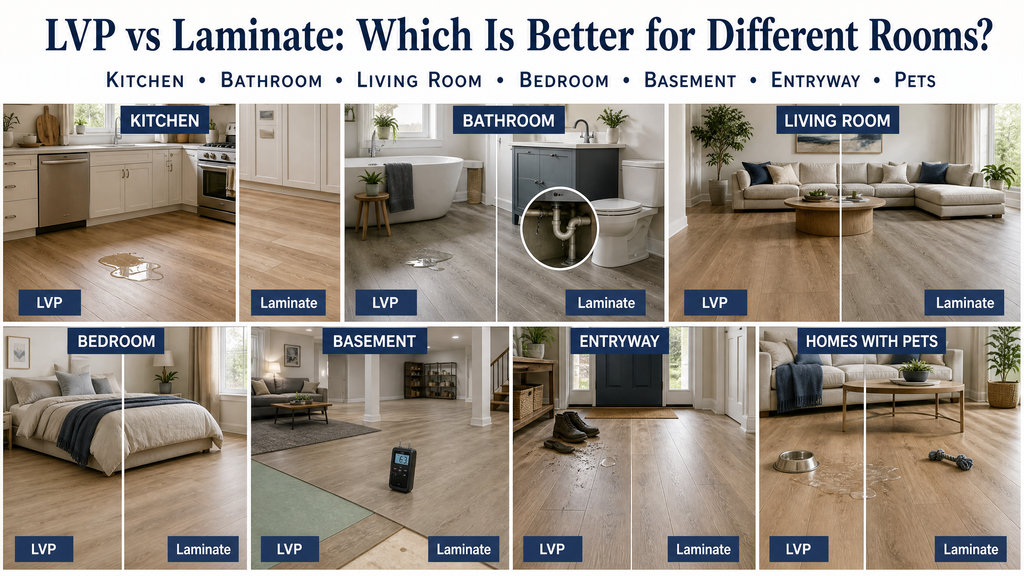
LVP vs Laminate: Which Is Better for Different Rooms?
The best flooring changes from room to room because moisture, traffic, and daily use are not the same throughout a house.
Kitchen
LVP is often the more practical choice for kitchens because spills and moisture are common.
Choose a product specifically rated for the conditions in your kitchen, and make sure installation follows the manufacturer’s requirements.
Laminate can also work in a kitchen when the product has suitable moisture protection and spills are cleaned promptly.
Bathroom
LVP is generally the better option for bathrooms when the product and installation are rated for bathroom use.
However, flooring is only one part of moisture protection. Leaks around toilets, tubs, showers, plumbing connections, and walls should be addressed quickly.
If you are dealing with other plumbing problems, our guide on how to unclog a toilet without a plunger may also be useful.
Living Room
Both LVP and laminate can work very well in living rooms because these spaces are usually less exposed to standing water.
Your decision can therefore focus more on appearance, comfort, durability, budget, and the rest of your home’s flooring.
Bedroom
Laminate can be a good bedroom choice when you want a warm wood-look appearance and moisture is not a major concern.
LVP is also suitable when you prefer its softer feel or want the same flooring to continue into other rooms.
Basement
LVP is often worth considering for basements because moisture is a bigger concern below ground level.
However, flooring should never be used to hide a moisture problem. Before installing any flooring, make sure the basement and subfloor meet the flooring manufacturer’s moisture requirements.
For related moisture problems, see our guide to water in a crawl space.
Entryway
LVP can be a practical choice for entryways because shoes can bring in water, dirt, and grit.
A durable laminate product can also work in a protected entryway, especially when moisture is controlled and spills are cleaned quickly.
Homes With Pets
LVP is often attractive for pet owners because it handles everyday spills and cleaning well when the selected product is properly rated.
However, scratch resistance still matters. Dogs’ claws, dirt, furniture movement, and heavy traffic can affect any flooring.
When comparing products, look at the manufacturer’s durability information instead of assuming that all LVP is pet-proof or all laminate is scratch-proof.
LVP vs Laminate: Which Is Cheaper?
Neither LVP nor laminate is always cheaper because product quality and installation requirements can change the final price significantly.
For an accurate comparison, calculate:
- Flooring cost per square foot
- Underlayment cost, if required
- Installation cost
- Old flooring removal
- Subfloor repairs
- Transitions and trim
- Waste from cutting
- Future maintenance or replacement needs
A cheaper box price does not always mean a cheaper finished floor.
The smartest approach is to compare two products with similar quality levels and warranties, then calculate the complete installed cost.
LVP vs Laminate: Which Should You Choose?
Choose LVP when moisture resistance, easy cleaning, and flexible room use are your biggest priorities.
LVP may be the better fit if:
- You expect frequent spills
- The room may experience moisture
- You want easy everyday maintenance
- You have pets or children
- You want flooring that can continue through several areas of the home
Choose laminate when realistic wood appearance, scratch resistance, and value in dry areas are your main priorities.
Laminate may be the better fit if:
- The room is generally dry
- You prefer its wood-look appearance
- You want a firm walking surface
- Scratch resistance is important
- You find a laminate product that offers the features you need at a good price
There is no universal winner. The right choice is the flooring that matches the room’s moisture level, traffic, budget, appearance, and installation conditions.
LVP vs Laminate: Final Verdict
LVP is usually the more versatile choice when moisture is a major concern, while laminate remains a strong option for dry rooms where appearance, scratch resistance, and value are important.
If you’re choosing between two specific products, compare their warranty, water-resistance rating, wear protection, installation requirements, thickness, maintenance instructions, and total installed cost.
Most importantly, don’t choose flooring based only on the name printed on the box. Two LVP products or two laminate products can perform very differently.
For the best result, match the flooring to the room instead of trying to find one flooring type that is automatically best for the entire house.
If you’re working on several home projects at once, you can also explore more practical guides from Daily Idea Book and its Home & Living section.
How We Evaluated LVP vs Laminate
We compared LVP and laminate based on cost, durability, water resistance, installation, maintenance, appearance, lifespan, and common room uses. Because flooring performance varies by product, always check the manufacturer’s specifications before buying or installing.
Frequently Asked Questions
Is LVP better than laminate?
LVP is generally better when moisture resistance is the priority, while laminate can be better when realistic wood appearance and scratch resistance are more important. The quality of the specific product also matters.
Which lasts longer, LVP or laminate?
Both can last for many years when properly selected and installed. Lifespan depends on product quality, traffic, moisture, maintenance, installation, and the manufacturer’s specifications.
Is LVP more waterproof than laminate?
Many LVP products offer better water resistance than traditional laminate because of their vinyl-based construction. However, always check whether the exact product is labeled water-resistant or waterproof and follow its installation requirements.
Is laminate cheaper than LVP?
Laminate can be less expensive, but there is no universal price difference. Budget, mid-range, and premium products in both categories can overlap in price.
Which is better for pets, LVP or laminate?
LVP is often a practical choice for homes with pets because it can offer good moisture resistance and easy cleaning. However, scratch resistance varies by product, so check the product’s specifications before buying.
Can you install LVP over laminate?
Sometimes LVP can be installed over an existing laminate floor, but only when the existing floor and subfloor meet the new product’s installation requirements. The existing flooring may need to be removed if it is damaged, unstable, uneven, or unsuitable.
Which flooring adds more value to a home?
Neither LVP nor laminate automatically adds more value because buyer preferences, product quality, installation, and the local housing market all matter. A well-installed, attractive floor that suits the home is generally more useful than choosing a material simply because it is marketed as premium.
Editorial & Home Improvement Safety Note
Flooring installation can involve cutting tools, adhesives, dust, and subfloor preparation. Follow the flooring manufacturer’s installation instructions and use appropriate protective equipment.
Before installing flooring in a moisture-prone area, investigate the source of the moisture rather than covering the problem. For example, persistent plumbing leaks, crawl-space moisture, or structural movement should be addressed before installing a new floor.
For related home maintenance topics, you can also read our guides on garbage disposal problems, ceiling cracks, and PEX-A vs PEX-B.
Sources & References
We recommend checking manufacturer documentation and trusted flooring resources for product-specific information.
- Flooring Installation & Care Resources – NWFA
- FloorScore – Flooring & Indoor Air Quality
- Manufacturer product specifications, installation instructions, care guides, and warranty documents for the flooring being considered.