
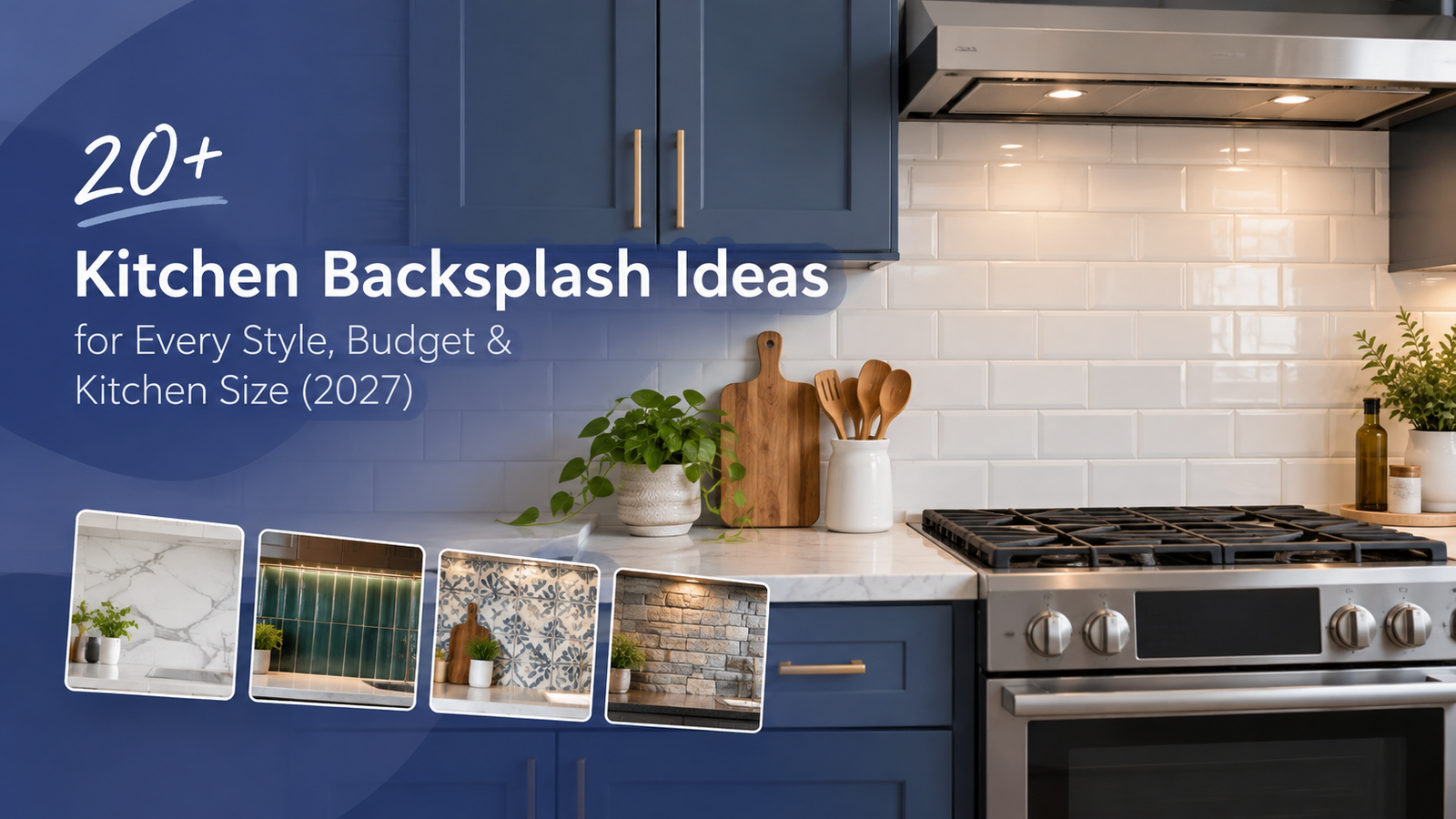
The right kitchen backsplash can make your kitchen feel more complete while protecting the wall behind your countertop and cooking area. Whether you prefer a modern, farmhouse, traditional, or simple kitchen design, the backsplash you choose should match your style, budget, and everyday needs.
A backsplash is more than a decorative feature. The material, tile pattern, grout color, and installation method all affect how the finished kitchen looks and how much maintenance it requires. A beautiful design may not be the right choice if it is difficult to clean or unsuitable for the intended location.
In this guide at Daily Idea Book, you will find 20+ kitchen backsplash ideas, practical material comparisons, budget planning tips, and simple advice to help you choose a backsplash that works for your home.
20+ Kitchen Backsplash Ideas to Inspire Your Kitchen
The best backsplash ideas combine an attractive design with materials and layouts that suit the kitchen. Before choosing a tile, look at your cabinets, countertops, lighting, and available wall space.
Here are 21 ideas to help you find a design that fits your kitchen.
1. Classic White Subway Tile
White subway tile is a flexible choice for homeowners who want a clean and timeless kitchen design. Its rectangular shape works with traditional, modern, farmhouse, and transitional interiors.
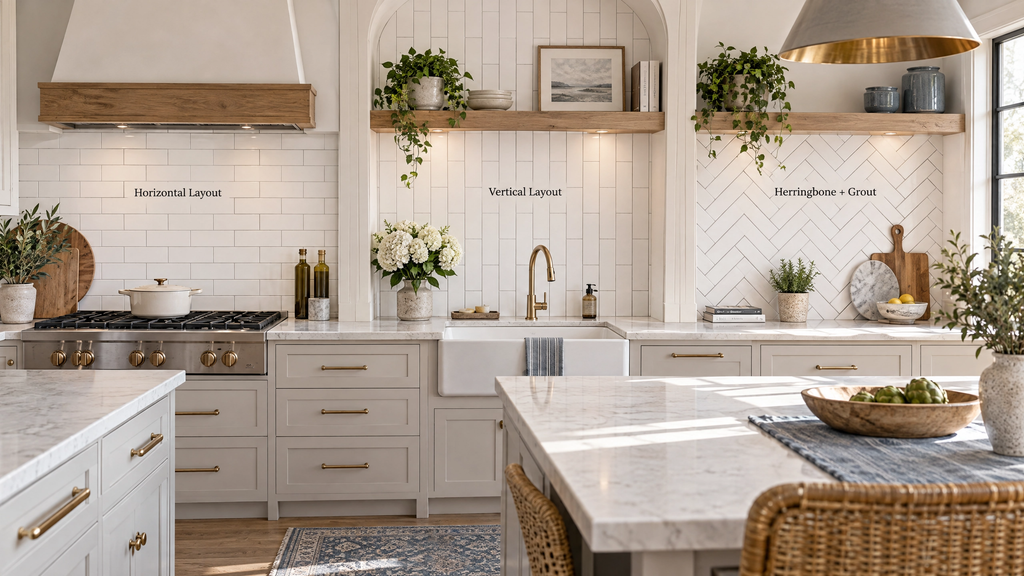
You can install subway tile in a standard horizontal pattern, a vertical arrangement, or a herringbone layout. The grout color also changes the final appearance. Matching grout creates a more blended look, while contrasting grout makes the tile pattern easier to notice.
This option works particularly well when your cabinets or countertops already have a strong design and you want a simpler backsplash.
2. Large-Format Kitchen Backsplash
Large-format tiles can create a more continuous appearance by reducing the number of visible grout lines. They are a useful option for homeowners who prefer a clean and less busy design.
Choose the tile size based on your wall dimensions and the product’s installation requirements. A large tile is not automatically easier to install, especially around outlets, corners, and uneven surfaces.
Ask your installer to plan the layout before purchasing the material so you can see where cuts and joints will appear.
3. Warm Beige Backsplash
A beige backsplash adds warmth to a kitchen without requiring a bold color or complicated pattern. It pairs well with many neutral cabinets, wood finishes, and light countertops.
You can choose a plain beige tile, a stone-look surface, or a tile with subtle variation. Always compare samples under your kitchen’s lighting, because warm and cool tones can look different from what you see online.
A beige backsplash can be a good option when you want a welcoming appearance that does not compete with the rest of your kitchen.
4. Bold Patterned Tile
Patterned backsplash tiles can give your kitchen a strong focal point without changing the entire room. Geometric designs, decorative motifs, and repeating patterns can add personality to an otherwise simple kitchen.
If your cabinets and countertops already contain noticeable patterns, consider using the decorative tile in a smaller area. A pattern should complement the other finishes rather than make the kitchen feel visually crowded.
Before installing, place several tiles together to see how the design repeats across the wall.
5. Herringbone Backsplash
A herringbone layout adds movement to a backsplash by arranging rectangular tiles in an angled pattern. It can make a simple tile look more decorative without requiring a highly detailed surface.
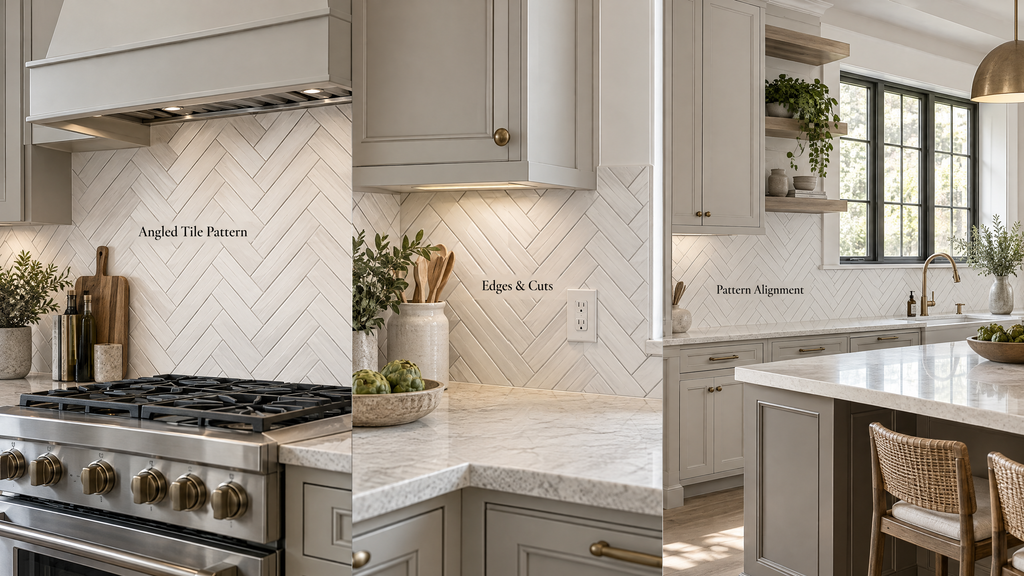
This layout needs careful planning because the pattern must finish neatly at the edges. Cuts around outlets, corners, and cabinets can affect the final appearance.
If you prefer this style, discuss the layout with your installer before work begins and confirm how the pattern will be aligned.
6. Vertical Stack Tile
Vertical tile installation creates a different visual direction from the traditional horizontal layout. It can be a suitable choice for a modern kitchen, especially when paired with simple cabinets and a clean countertop.
The appearance depends on the tile proportions and the height of the backsplash area. Use a sample layout before deciding, because the finished pattern may look different on a full wall than it does in a small product photograph.
7. Natural Stone Backsplash
Natural stone gives a kitchen a distinctive appearance through natural color variation, texture, and pattern. Marble, travertine, and other stones can create different design effects depending on their finish and color.
However, natural stone needs material-specific care. Some stone products may require sealing or special cleaning practices, so check the manufacturer’s instructions before purchasing.
Natural stone is worth considering when you appreciate its appearance and are comfortable following the maintenance requirements of the selected product.
8. Glass Tile Backsplash
Glass tile can add a reflective finish and a decorative touch to a kitchen backsplash. It is available in different colors, sizes, and patterns, making it suitable for both simple and colorful designs.
Before choosing glass tile, confirm that the product is intended for your application and that the recommended installation materials are compatible. The adhesive, grout, and installation method should follow the manufacturer’s guidance.
A glass backsplash can look attractive, but careful planning is important because the installation details may be easy to notice.
9. Marble-Look Porcelain Tile
Marble-look porcelain tile offers a stone-inspired appearance with a range of product designs and finishes. It can be used to create a coordinated look with light cabinets, wood tones, or contrasting countertops.
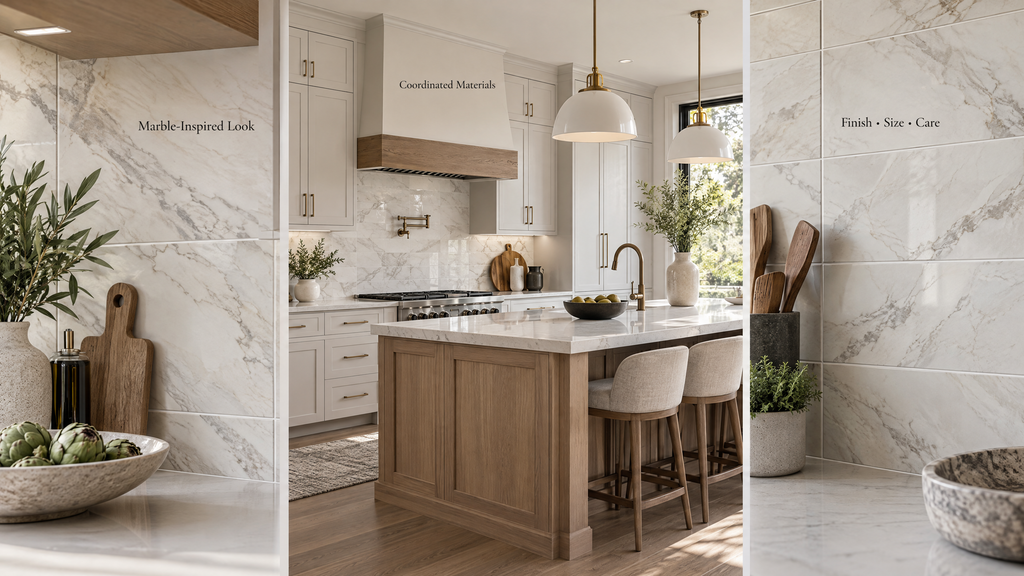
Compare the specific tile’s finish, size, and maintenance instructions before buying. A marble-look product is not the same as natural marble, so do not assume that all care and installation requirements are identical.
This option is useful when you want the visual style of marble-inspired surfaces and need to evaluate a porcelain product’s specific characteristics.
10. Dark Kitchen Backsplash
A dark backsplash can add contrast and depth to a kitchen with lighter cabinets or countertops. Charcoal, deep green, navy, and other dark shades can create a bold or understated appearance.
Consider how the color works with the amount of natural and artificial light in your kitchen. A dark backsplash may create a heavier visual effect in some small or poorly lit spaces, although the final result depends on the entire room.
Use a sample before committing to a dark tile, especially if the kitchen has limited lighting.
11. Green Kitchen Backsplash
Green backsplash tiles bring color into the kitchen while offering a range of soft and bold design options. Sage, muted olive, and deeper green shades can be paired with neutral cabinets and wood accents.
The surrounding finishes affect how the green color appears. Check the sample next to your cabinets, countertop, and wall color rather than selecting a tile based only on an online image.
A green backsplash can work as a subtle accent or a stronger design feature, depending on the shade and pattern you choose.
12. Penny Tile Backsplash
Penny tiles create a small-scale pattern that can give your kitchen a distinctive decorative appearance. Their rounded shape works with a variety of color combinations and design styles.
Because penny tiles contain many small pieces and grout joints, cleaning and maintenance should be part of your decision. Consider the grout color and the amount of surface you want to cover before selecting this option for a large backsplash area.
13. Terracotta-Inspired Tile
Terracotta-inspired tile adds warm, earthy color to a kitchen and can work well with natural wood and neutral finishes. It is an option for homeowners who want a more relaxed or rustic-inspired appearance.
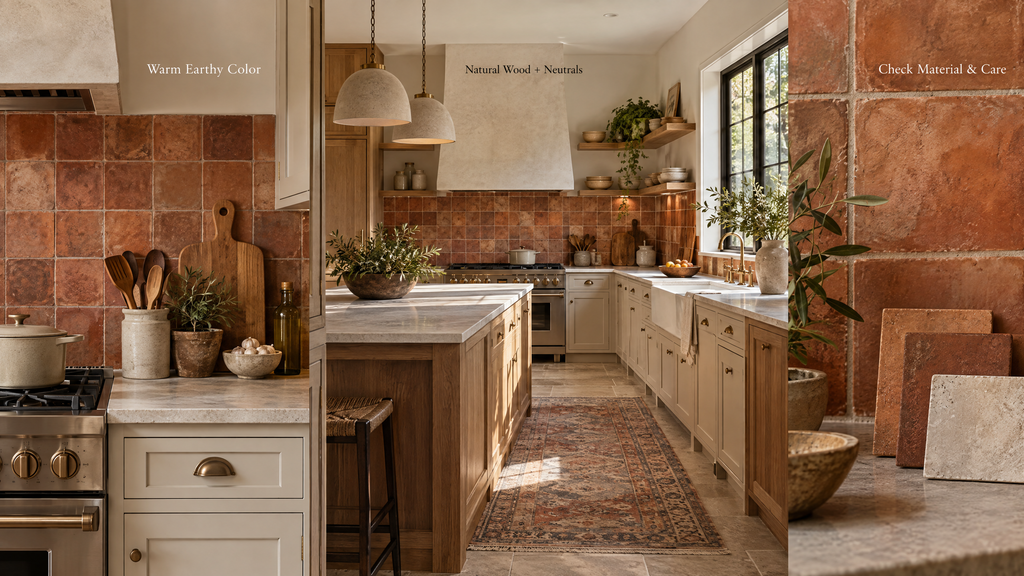
Check the actual material before purchasing. Terracotta, ceramic, porcelain, and terracotta-look products may have different care and installation requirements.
Choose a product that fits both your preferred appearance and the conditions of your backsplash area.
14. Minimalist Solid-Color Backsplash
A solid-color backsplash is a practical choice when you want the cabinets, countertop, or other kitchen features to receive more attention. It creates a simple background without relying on a complex pattern.
You can still add interest through the tile size, finish, and grout color. A simple backsplash does not mean the design has to look plain or unfinished.
Compare the tile with the other kitchen surfaces to ensure the colors work together.
15. Backsplash with Open Shelving
Open shelving and a backsplash should be planned together so that the shelves and tile complement each other. A simple backsplash can create a calm background for decorative dishes, jars, or kitchen essentials.
Think about how the shelves will be installed and whether the backsplash material is suitable for the mounting method. Leave enough practical space for the objects you plan to store and clean.
If you are also improving storage, you can explore these pantry organization ideas for additional kitchen planning inspiration.
16. Full-Height Kitchen Backsplash
A full-height backsplash extends the finished surface farther up the wall and can create a strong visual feature. It may be used behind a cooking area, along a countertop wall, or throughout a selected kitchen section.
The appropriate height depends on the kitchen layout, wall conditions, design preferences, and installation requirements. A full-height backsplash is a design choice, not a requirement for every kitchen.
Plan the transitions around cabinets, shelves, and fixtures before ordering materials.
17. Two-Tone Backsplash Design
A two-tone backsplash combines two colors or finishes to create a deliberate decorative effect. You could use a neutral tile across most of the wall and a contrasting tile in a selected area.
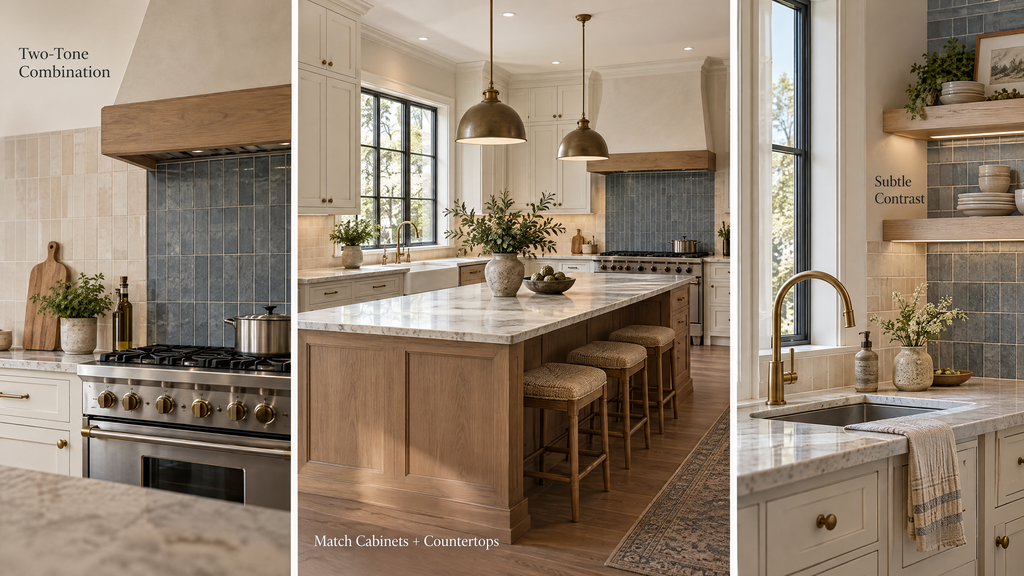
The key is to maintain a clear relationship between the two finishes. Compare both colors with the cabinets and countertops before installing them together.
A two-tone design can work well when you want a little more detail without covering every surface with a bold pattern.
18. Peel-and-Stick Backsplash
Peel-and-stick backsplash products may offer a convenient decorative update, but their suitability depends on the product and the location. They are not a universal replacement for a properly installed tile backsplash.
Before purchasing, check the instructions for surface preparation, moisture, heat exposure, and cleaning. Do not assume that an inexpensive or easy-to-install product is suitable behind every cooking appliance.
Choose this option only when the product’s instructions support your intended application.
19. Contrasting Grout
Contrasting grout makes tile shapes and patterns more noticeable. It can be used with subway tile, herringbone layouts, and other decorative arrangements.
Grout affects the appearance of the entire backsplash, not just the spaces between the tiles. Compare grout samples with your selected tile, and check the recommended grout type and cleaning guidance.
A contrasting grout can be attractive, but it may also draw more attention to the layout and installation details.
20. Coordinated Countertop and Backsplash
A coordinated countertop and backsplash can make a kitchen feel more visually connected. You can select similar tones, create contrast, or repeat a subtle color across the two surfaces.
Use physical samples to compare the materials under your kitchen lighting. A tile and countertop that look compatible online may appear different when placed together in your home.
This approach is especially useful when you are updating the backsplash while keeping your existing countertop.
21. Simple Backsplash for a Small Kitchen
A small kitchen backsplash should support the room’s proportions, colors, and practical needs. A simple tile pattern may suit your design preference, but the best choice depends on the entire kitchen.
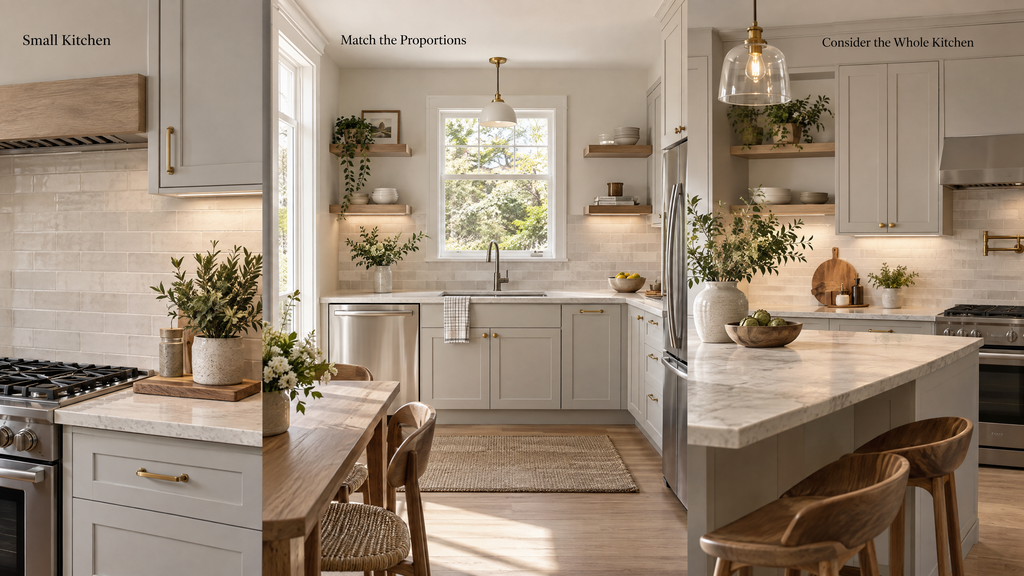
Consider the available wall area, cabinet style, lighting, and countertop. Do not choose a tile only because it is light or small; evaluate how the complete design works together.
Popular Kitchen Backsplash Materials
The right backsplash material depends on the intended application, appearance, maintenance needs, and installation requirements. Ceramic, porcelain, glass, and natural stone each have different characteristics, so the specific product matters.
| Material | Why consider it? | What to check |
|---|---|---|
| Ceramic tile | Wide range of colors, sizes, and designs | Application suitability, care, and installation instructions |
| Porcelain tile | Many stone-look and modern design options | Product specifications, installation, and maintenance |
| Glass tile | Reflective and decorative appearance | Compatible installation products and application requirements |
| Natural stone | Natural variation and distinctive texture | Sealing, stone-specific care, and cleaning |
| Peel-and-stick | Convenient decorative update for suitable applications | Heat, moisture, surface, and product limitations |
Ceramic and Porcelain Tile
Ceramic and porcelain tiles offer many backsplash design options, but you should evaluate the individual product rather than assuming all tiles perform the same way.
Before purchasing, check:
- Whether the tile is intended for your backsplash application.
- The recommended adhesive and grout.
- Surface preparation requirements.
- Cleaning and maintenance instructions.
- Tile size, finish, and quantity.
The right product is one that suits both the look you want and the conditions where it will be installed.
Glass and Natural Stone Backsplash
Glass and natural stone can create distinctive kitchen designs, but their installation and maintenance requirements should be checked before selection.
Ask the supplier or installer about the product’s intended use, cleaning requirements, and compatibility with the installation method. Do not rely on appearance alone when choosing a material for a high-use kitchen area.
How to Choose the Right Kitchen Backsplash
Start with your existing kitchen finishes before choosing a backsplash color or pattern. A practical selection process helps you avoid buying a tile that looks good on its own but does not work well with the rest of the room.
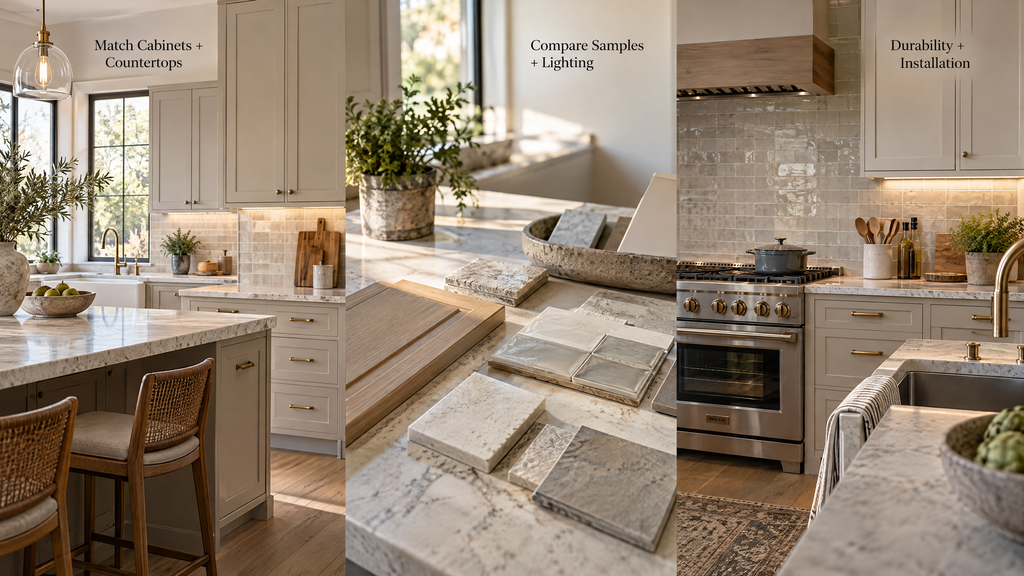
Match the Backsplash with Cabinets and Countertops
Your backsplash should complement the cabinets and countertop instead of being selected in isolation. Matching every surface is not necessary, but the colors and patterns should create a deliberate combination.
Follow these simple steps:
- Identify the main colors. Look at your cabinets, countertop, flooring, and wall paint.
- Choose your design direction. Decide whether you want a coordinated, contrasting, or decorative backsplash.
- Compare physical samples. Place the tile next to your cabinet and countertop materials.
- Check the lighting. View the samples during the day and under your kitchen lights.
- Consider the grout. Grout color and tile arrangement can change the overall appearance.
For additional guidance, read this helpful article on how to choose a paint color, which can support your decisions about coordinating kitchen wall colors and other home finishes.
Consider Maintenance, Durability, and Installation
A backsplash should be suitable for the conditions where it will be installed, especially around cooking and cleaning areas. Food splashes, grease, moisture, and regular cleaning can influence the practical requirements of your chosen material.
Before installation, confirm:
- The product is suitable for the intended location.
- The wall surface is properly prepared.
- The adhesive and grout are compatible.
- The installation follows the product instructions.
- The finished surface can be cleaned using suitable products.
If you are planning a larger kitchen update, explore these kitchen remodel ideas to help coordinate your backsplash with other renovation decisions.
Kitchen Backsplash Cost and Budget Considerations
A backsplash budget should include more than the price of the tile. Material quantity, installation, surface preparation, layout complexity, and removal of an existing backsplash can all affect the total cost.
Your project expenses may depend on:
- The size of the backsplash area.
- Tile material, finish, and size.
- The complexity of the layout.
- Wall preparation requirements.
- Installer rates and location.
- Removal of existing materials.
- Cutting around outlets, corners, and fixtures.
How to Estimate the Material Quantity
Measure the wall area before purchasing your backsplash materials. For a simple rectangular wall, multiply the width by the height to estimate the surface area.
For example:
| Measurement | Example |
|---|---|
| Wall width | 10 ft |
| Wall height | 1.5 ft |
| Approximate area | 15 sq ft |
The final quantity should account for cuts, waste, and the specific layout. A detailed pattern may require more careful planning than a straightforward arrangement.
Confirm the required quantity with your installer or supplier before ordering, especially when the material is difficult to replace or has noticeable color variation.
Kitchen Backsplash Maintenance Tips
Regular cleaning with a suitable product helps keep your backsplash looking attractive and makes everyday kitchen maintenance easier. The right cleaning method depends on the tile, grout, finish, and manufacturer’s instructions.
A Simple Backsplash Cleaning Routine
- Remove loose crumbs and surface debris.
- Use a cleaner suitable for the specific material.
- Wipe the surface with a soft cloth or recommended cleaning tool.
- Clean food splashes promptly when appropriate.
- Follow the product instructions for grout and natural stone care.
Never assume that a cleaner safe for one backsplash material is suitable for every other material. Some surfaces and finishes have specific cleaning limitations.
For more practical home maintenance, you can also read how to clean baseboards as part of your wider home-care routine.
Common Kitchen Backsplash Mistakes to Avoid
A little planning before installation can help prevent avoidable design and material problems. The following mistakes are worth considering before you purchase or install your backsplash.
Choosing a Tile Without Checking Its Application
A tile that looks beautiful may not be suitable for every location. Check the manufacturer’s instructions for the intended use, moisture exposure, heat-related limitations, and installation requirements.
Ignoring the Grout Color
Grout can significantly change how a backsplash looks, especially when the tile pattern is highly visible. Compare grout samples alongside your chosen tile rather than selecting a color without seeing the complete combination.
Forgetting Outlets and Corners
Outlets, corners, and cabinet edges should be included in the layout plan before installation begins. These details may require cuts that affect the pattern and the final appearance.
Ask your installer how the tile will be positioned around obstacles, especially when using a decorative layout.
Choosing Appearance Over Maintenance
A backsplash near a cooking area should be practical to clean as well as attractive. Think about how often you cook, where food splashes occur, and whether the selected material fits your maintenance routine.
A design that requires care you cannot realistically maintain may not be the right choice for your kitchen.
Final Thoughts on Choosing a Kitchen Backsplash
The right kitchen backsplash balances appearance, practical use, and the needs of your home. Whether you prefer classic subway tile, a bold pattern, a stone-inspired finish, or a budget-friendly update, begin by considering your existing kitchen and the conditions where the backsplash will be installed.
Choose a suitable material, compare samples, and plan the layout around outlets, corners, and other details. A thoughtful backsplash choice can help you create a kitchen that looks cohesive and remains practical for everyday use.
Kitchen Backsplash FAQs
What is the best material for a kitchen backsplash?
The best material depends on the intended application, design preference, budget, and maintenance requirements. Ceramic, porcelain, glass, and natural stone offer different choices, so check the specific product’s suitability and installation instructions before deciding.
What backsplash looks best with white cabinets?
White cabinets can work with neutral, contrasting, and decorative backsplash designs. The right choice depends on your countertop, flooring, lighting, and the style you want to create.
Compare physical samples with the other finishes before making your final selection.
Is a peel-and-stick backsplash a good option?
A peel-and-stick backsplash may be suitable for some applications, but it is not appropriate for every kitchen location. Check the product’s instructions for heat, moisture, surface preparation, and cleaning requirements.
Do not assume that an easy installation method makes a product suitable for use behind every cooking appliance.
Should a kitchen backsplash match the countertop?
A backsplash does not have to match the countertop exactly, but the two surfaces should work together visually. You can choose similar colors for a coordinated appearance or create contrast with a different material or pattern.
Use samples to see how the combination looks under your kitchen lighting.
How do I choose a backsplash for a small kitchen?
Choose a backsplash by considering the entire kitchen rather than focusing on one tile color or size. Compare the material with your cabinets, countertop, lighting, and available wall area.
A simple pattern may suit a less busy design, but the final decision should also consider your practical needs and personal preferences.
1 thought on “20+ Kitchen Backsplash Ideas for Every Style, Budget & Kitchen Size (2027)”