
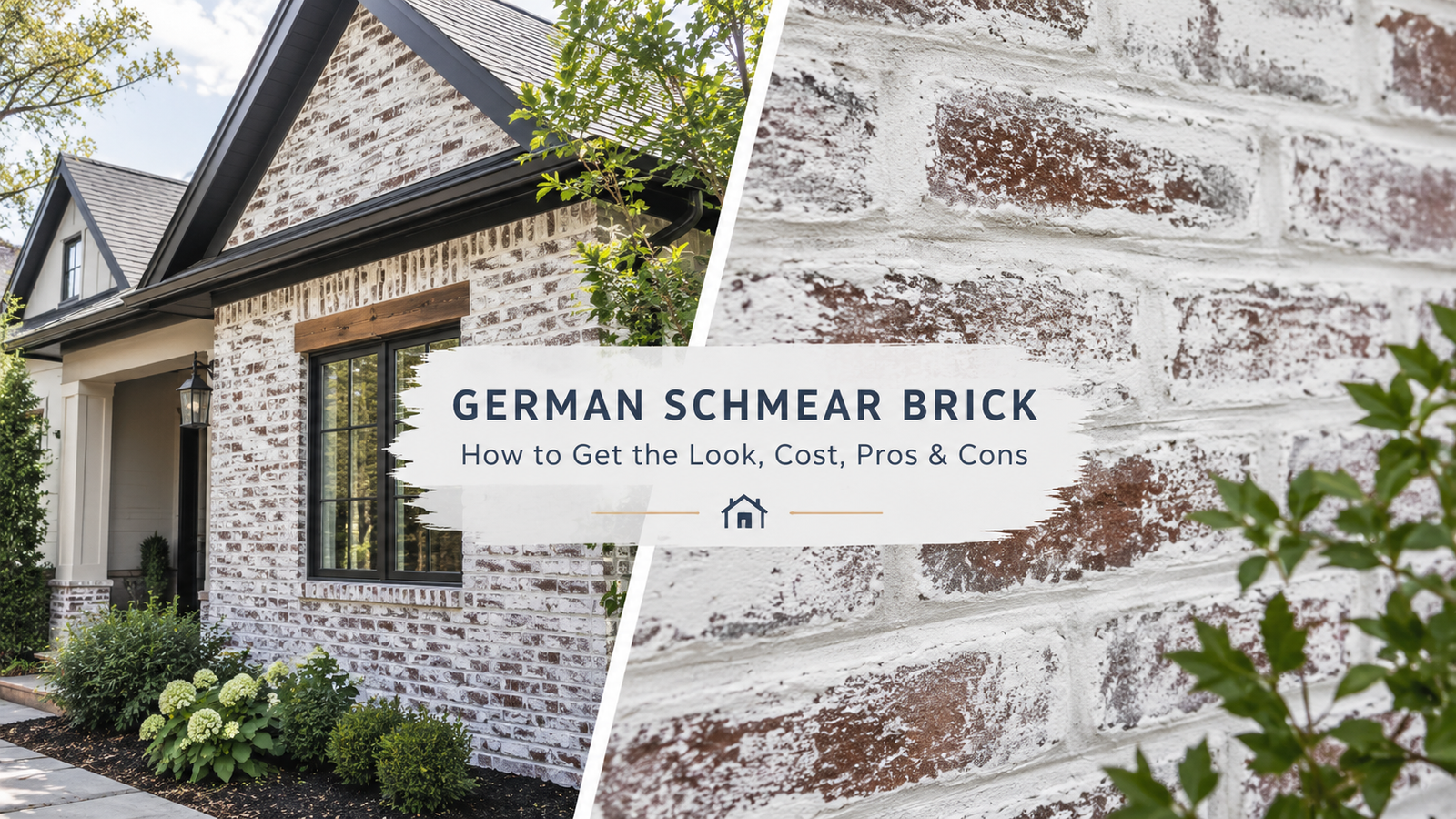
German Schmear is a brick-finishing technique that adds a thin, uneven layer of mortar over brick to create a soft, aged, old-world appearance. Instead of completely covering the brick, the mortar is usually worked into the joints and across parts of the brick face, leaving some of the original brick visible.
The result can range from a light, subtle wash with plenty of exposed brick to a heavier finish where much of the brick is covered. The final look depends on how much mortar is applied, how it is spread, and how much is removed before it dries.
German Schmear is often used on exterior brick walls, fireplaces, chimneys, accent walls, and other masonry surfaces. It can make newer brick look more weathered and can also soften strong red, orange, or mixed brick colors.
German Schmear vs. German Smear: Are They the Same?
German Schmear and German Smear generally refer to the same decorative brick technique. You may also see the terms written as “German schmear brick,” “German smear brick,” or simply “schmear.”
The spelling varies online, but the basic idea is the same: a mortar-based finish is applied over brick to create an irregular, textured appearance.
It is worth knowing this difference when researching the project because using both spellings can help you find more examples, tutorials, and professional services.
What Does German Schmear Look Like?
The easiest way to recognize German Schmear is by its uneven mortar coverage and the amount of original brick that remains visible. It does not usually create a perfectly smooth or uniform surface.
A light application may leave most of the brick exposed while adding pale mortar around the joints and across small sections of the brick face. A heavier application can cover much more of the brick and create a plaster-like, European cottage appearance.
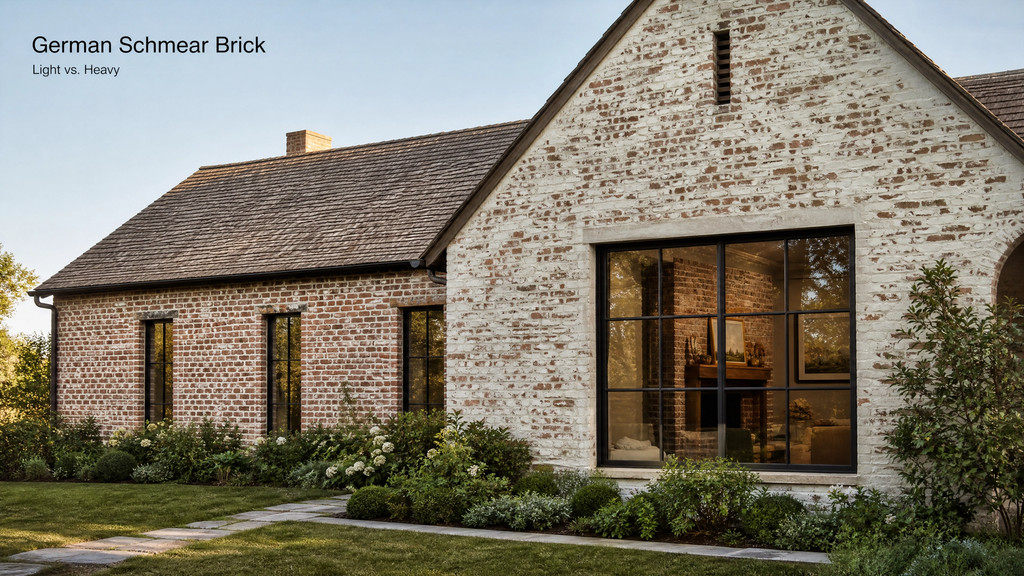
The final color also depends on the mortar or masonry material used. A bright white finish creates a stronger contrast, while warm gray, cream, beige, or other muted tones can produce a softer appearance.
Light vs. Heavy German Schmear
A lighter Schmear keeps the original brick as the main feature, while a heavier Schmear makes the mortar a much larger part of the design.
For a subtle update, use less material and leave larger areas of brick exposed. This works well when you like the existing brick but want to soften its color.
A heavier application is better suited to homeowners who want a distinctly rustic or European-inspired appearance. However, heavy coverage can make a wall feel visually different from the rest of the house, so it is smart to test a small area first.
Interior vs. Exterior German Schmear
Interior German Schmear is often used to create a cozy fireplace or accent wall, while exterior applications have to deal with weather, moisture, and temperature changes.
A fireplace can handle a more dramatic finish because the brick becomes a focal point inside the room. On an exterior wall, the condition of the brick and mortar, local weather, water exposure, and the suitability of the chosen material become more important.
If you are already planning several home updates, our guide to choosing a paint color can also help you select surrounding wall and trim colors that work with the finished brick.
German Schmear Brick: Materials You’ll Need
The right materials make it much easier to control the final texture and avoid an uneven or weak finish.
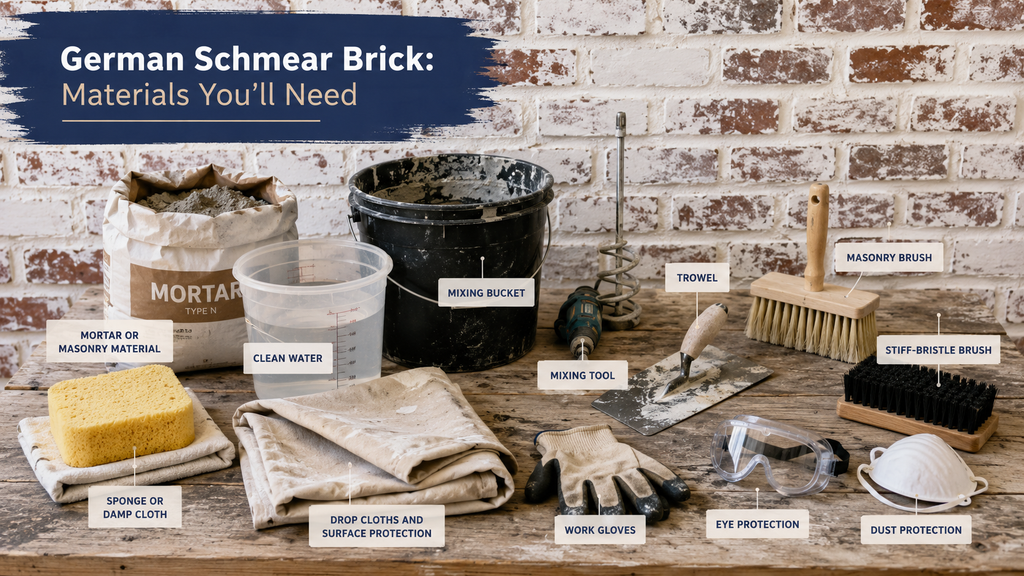
Depending on the surface and product selected, a typical project may require:
- Suitable mortar or masonry material
- Clean water
- Mixing bucket
- Mixing tool
- Trowel
- Masonry brush
- Stiff-bristle brush for shaping or removing material
- Sponge or damp cloth
- Drop cloths and surface protection
- Work gloves
- Eye protection
- Dust protection when mixing dry materials
The exact product matters. Do not assume that every mortar, cement mixture, or masonry coating is appropriate for every brick. Older brick, soft brick, historic masonry, and damaged surfaces may require a different approach.
For larger exterior projects or older masonry, getting advice from a qualified masonry professional before starting can help prevent an expensive mistake.
How to German Schmear Brick
The best German Schmear results come from controlling the amount of mortar rather than trying to make every brick look identical.
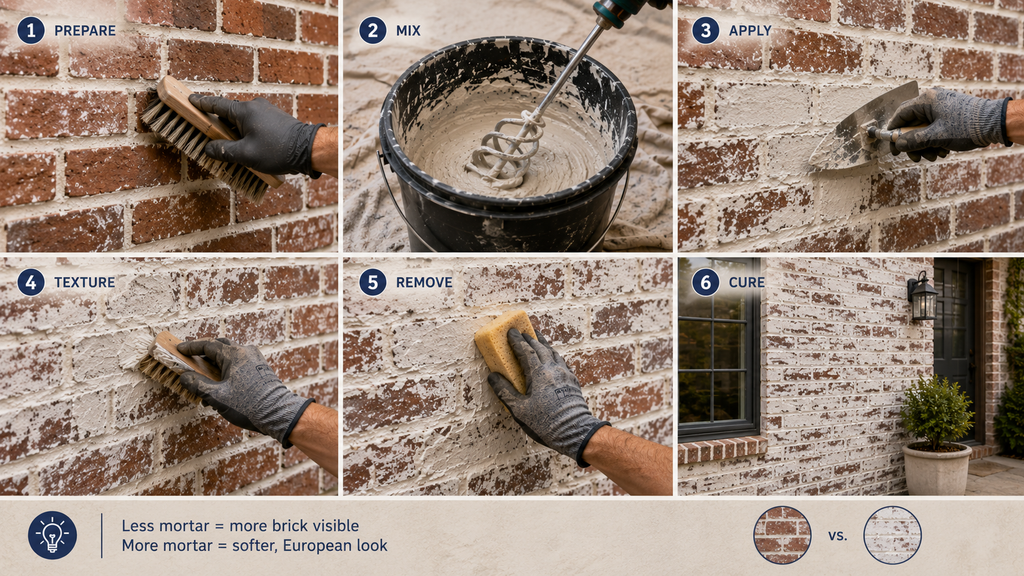
Clean and Prepare the Brick
A clean, sound brick surface gives the new finish a much better starting point.
Remove loose dirt, dust, grease, algae, and other surface contamination. Allow the brick to dry as appropriate for the cleaning method and product instructions.
Look closely for cracked bricks, loose mortar joints, water damage, or areas that are already deteriorating. Do not use German Schmear to hide an underlying masonry problem.
If the brick has previously been painted or coated, do not assume that new mortar will bond properly over it. The existing coating may need to be evaluated and removed or treated by a professional.
Mix the Mortar
The consistency of the material affects how easily you can spread it and how much texture you can create.
Follow the manufacturer’s instructions for the product you choose instead of relying on a random water-to-mortar ratio.
The mixture should be workable enough to spread but not so wet that it runs down the wall. If you are trying the technique for the first time, make a small test batch and practice on an inconspicuous section or spare brick.
Apply the Mortar
Start with a small section so you can control the coverage before committing to the entire wall.
Work the material into the mortar joints and across selected parts of the brick face. You do not need to create perfectly even coverage because the irregularity is part of the style.
Step back regularly and look at the wall from several feet away. A finish that looks subtle up close can appear much heavier when viewed across an entire facade.
Create the Desired Texture
The amount of exposed brick you leave behind is one of the biggest factors controlling the final appearance.
For a lighter finish, remove more material while it is workable. For a heavier appearance, leave more mortar across the brick faces.
Try to avoid creating an artificial repeating pattern. Natural-looking variation usually looks better than making every brick receive exactly the same amount of material.
Remove or Soften Excess Mortar
Removing some mortar before it fully sets is what helps create the characteristic uneven German Schmear appearance.
Use the appropriate tool or method recommended for your chosen material. Work carefully because aggressive scraping or brushing can damage the brick surface or mortar joints.
Always follow the product instructions for working time, curing, cleaning, and safety.
Allow the Finish to Cure
Give the new finish enough time to cure before exposing it to heavy cleaning, impact, or harsh weather conditions.
Curing time varies according to the material, temperature, humidity, and application conditions. Follow the manufacturer’s instructions rather than assuming that the surface is ready simply because it feels dry.
For exterior work, weather conditions are especially important. Avoid starting a large project when rain, freezing temperatures, or unsuitable conditions could interfere with curing.
How Much Does German Schmear Brick Cost?
The cost of German Schmear depends mainly on the size of the brick surface, the condition of the masonry, the materials used, and whether you do the work yourself or hire a professional.
A small DIY fireplace project can cost far less than hiring a professional to finish an entire home’s exterior. Larger surfaces also require more preparation, material, labor, and cleanup.
DIY German Schmear Cost
DIY projects are usually cheaper because you mainly pay for materials and tools.
Your budget may include mortar or masonry products, brushes, mixing supplies, protective equipment, and cleaning materials. If you already own some tools, the project can be more affordable.
However, the cheapest approach is not always the best one. A mistake on a large exterior wall can be difficult and expensive to correct.
Professional Application Cost
Professional pricing varies considerably because every brick surface has different preparation and labor requirements.
A contractor may consider:
- Total square footage
- Brick condition
- Surface preparation
- Height and accessibility
- Number of coats or application passes
- Material selection
- Cleanup
- Repairs needed before application
Get multiple written estimates when comparing contractors, and ask to see examples of their previous masonry finishing work.
Pros and Cons of German Schmear Brick
German Schmear can dramatically change the character of brick, but the finish is not the right choice for every home or every masonry surface.
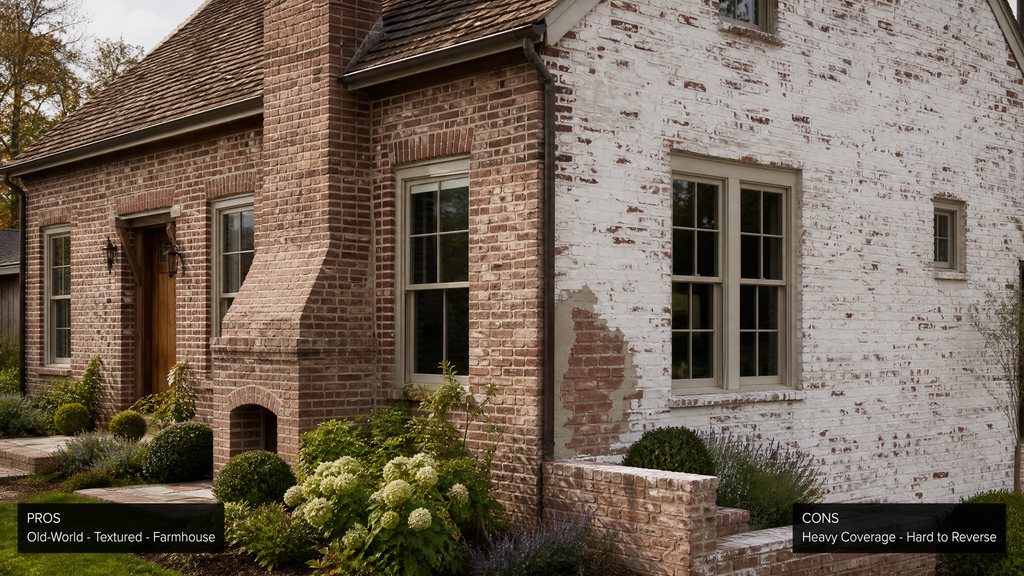
Pros
The biggest advantage is its ability to give ordinary brick a distinctive, textured character without completely hiding the masonry.
Other potential benefits include:
- Creates an old-world appearance
- Can soften strong brick colors
- Works with rustic and farmhouse-inspired designs
- Can make a fireplace feel more substantial
- Offers more texture than a simple painted finish
- Can be customized from light to heavy coverage
- Works with several exterior and interior design styles
Cons
The biggest drawback is that the finish can be difficult to reverse once you decide you no longer like it.
Other concerns include:
- May not suit every architectural style
- Heavy application can hide attractive brick
- Poor preparation can lead to adhesion problems
- Existing masonry damage should be repaired first
- Exterior applications require careful material selection
- Removing the finish later can be difficult
- The final result depends heavily on application technique
If you are unsure whether you want to permanently change your brick, consider testing a small area first.
German Schmear vs. Limewash vs. Whitewash
German Schmear, limewash, and whitewash can all change the appearance of brick, but they create noticeably different finishes.
German Schmear generally creates a more textured and mortar-heavy appearance because material is applied over the brick and joints.
Limewash creates a softer, mineral-based finish that can allow more of the original brick color and texture to remain visible. Our detailed guide to limewash brick ideas covers different ways this finish can be used.
Whitewash is a broader term for applying a diluted white coating to create a lighter appearance. Depending on the product and technique, it may look more uniform than German Schmear.
Before choosing one, compare the amount of coverage, desired texture, maintenance, reversibility, and compatibility with your particular brick.
German Schmear Brick Ideas for Different Home Styles
The best German Schmear designs look intentional because the finish works with the home’s architecture instead of fighting against it.
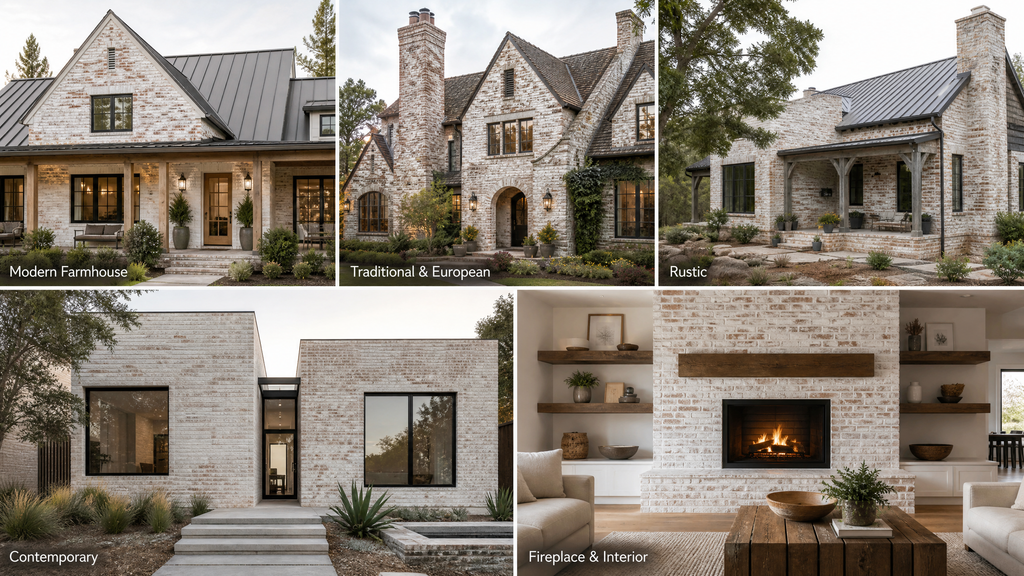
Modern Farmhouse
A soft white or warm neutral Schmear can pair well with modern farmhouse exteriors.
Combine the brick with simple trim, natural wood accents, muted colors, and restrained landscaping. Avoid adding too many competing finishes.
Traditional and European-Inspired Homes
German Schmear naturally fits homes that already have traditional, cottage, Tudor, or European-inspired architectural details.
The irregular mortar texture can emphasize arches, chimneys, brick columns, and other masonry features.
Rustic Homes
A heavier Schmear can make rustic homes feel older and more established.
Warm mortar tones can work particularly well with wood, natural stone, dark metal, and earthy landscaping.
Contemporary Homes
A lighter application can help introduce texture to a contemporary home without making the brick look overly rustic.
Keep the surrounding colors simple and let the masonry remain the main feature.
Fireplace and Interior Brick Ideas
A Schmear finish can turn an ordinary brick fireplace into a strong focal point.
It can work especially well with warm wood, neutral walls, simple shelves, and natural materials. Before changing the fireplace, consider how its new finish will work with the rest of the room.
For more home improvement inspiration, you can also explore our guides to LVP vs. laminate and sheetrock vs. drywall when planning broader renovation projects.
Things to Know Before German Schmearing Brick
The most important step happens before the first application: make sure the brick is suitable for the project.
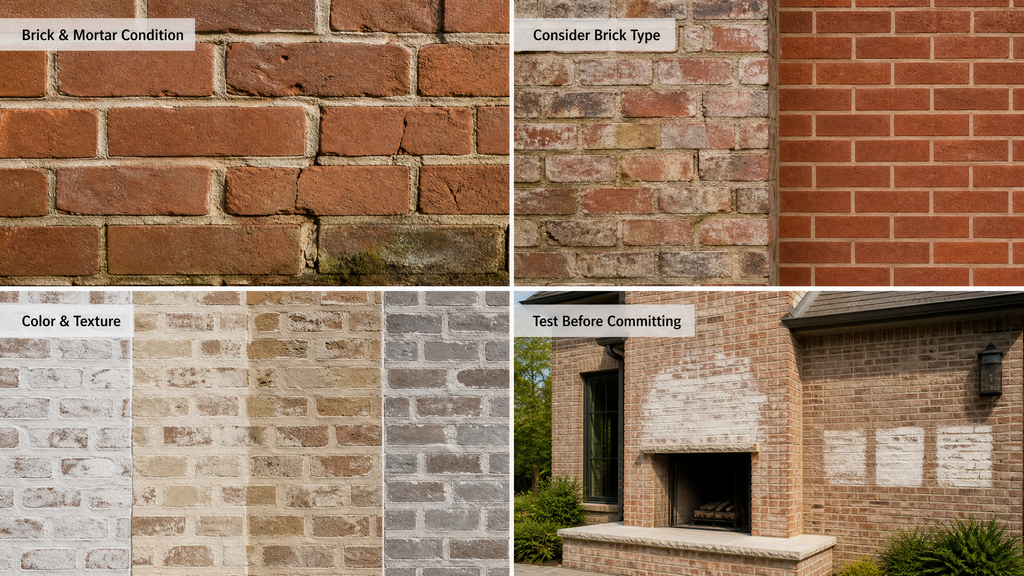
Check the Brick and Mortar Condition
Never use German Schmear as a quick fix for damaged masonry.
Repair loose mortar, cracked brick, moisture problems, or other serious defects first. If you notice persistent moisture around walls, crawl spaces, or other areas of the house, deal with the source before applying a decorative finish.
Our guides on wall cracks and cracks in the ceiling explain why visible cracks should be investigated rather than simply covered.
Consider the Brick Type
Not every brick reacts to masonry finishes in exactly the same way.
Older or softer brick deserves particular care because aggressive cleaning, incompatible materials, or trapped moisture can contribute to masonry damage.
If the home is historic or the brick appears fragile, consult a masonry professional before applying anything.
Think About Color and Texture
The mortar color can change the entire personality of the finished wall.
Bright white creates a high-contrast look, while cream, beige, gray, or other muted tones can appear more subtle.
Use samples whenever possible. View them during different lighting conditions before making a final decision.
Consider Whether You Can Live With the Change
German Schmear should be treated as a significant design decision rather than a temporary paint color.
If you are unsure, start with a small fireplace, interior accent wall, or hidden section of brick instead of immediately covering an entire exterior.
How to Maintain German Schmear Brick
Simple, gentle maintenance is usually the safest approach for a finished masonry surface.
Avoid aggressive cleaning methods unless the material and brick manufacturer specifically allow them. Harsh pressure washing, strong chemicals, or abrasive tools may damage the finish or the underlying masonry.
For routine maintenance, remove loose dirt with an appropriate soft brush or gentle cleaning method. Deal with stains based on their type rather than applying random chemicals.
If small areas become damaged, matching the original texture can be more difficult than simply applying another coat. Keep a record of the material and finish used so future repairs can be made more accurately.
What Homeowners on Reddit Say About German Schmear
One Reddit discussion about German Schmear shows an important side of the decision that photographs often fail to capture: sometimes the existing brick is already the home’s strongest feature.
In the r/ExteriorDesign discussion, many commenters advised the homeowner not to alter the brick at all. Several felt that the existing brick was attractive and that the surrounding gray siding, trim, shutters, and other colors were creating the bigger design problem. Others warned that the trend could become dated or difficult to reverse.
There were also practical concerns. One commenter questioned whether Schmear would work well on exterior steps because of foot traffic, while another mentioned that adding material to brick can carry a risk of spalling depending on the masonry.
At the same time, the discussion was not completely against the style. One commenter said they liked the look and another suggested that black and bronze/copper accents can work particularly well with German Schmear.
Our Take is Simple: German Schmear can look beautiful, but you should not use it just because your brick feels outdated. Before changing good brick, try looking at the surrounding paint, siding, landscaping, shutters, lighting, and front door. Sometimes changing those elements gives the brick a completely different appearance without covering it.
Is German Schmear Right for Your Brick?
German Schmear is worth considering when you genuinely like its aged, textured appearance and your brick is suitable for the treatment.
Think about four things before making the decision: the condition of your brick, the architectural style of your home, the amount of coverage you want, and how comfortable you are with a difficult-to-reverse finish.
If you love the old-world look, a carefully applied Schmear can give brick a completely new personality. If you are only considering it because you dislike your current brick color, try changing the surrounding colors first.
For larger renovation projects, taking the same careful approach can help you avoid unnecessary changes. Whether you are working on bathroom remodel ideas, small entryway ideas, or other home updates, the best results usually come from solving the actual design problem rather than simply following a trend.
Frequently Asked Questions About German Schmear
Is German Schmear permanent?
German Schmear should be considered a long-term finish rather than an easily reversible decoration. Removing hardened mortar or masonry material from brick can be difficult and may damage the surface if done aggressively.
Can you German Schmear painted brick?
Painted brick needs special consideration before applying German Schmear. The existing paint can interfere with bonding, and removing the coating may be necessary. The safest approach depends on the type of paint, the condition of the brick, and the material you plan to use.
Does German Schmear damage brick?
German Schmear does not automatically damage brick, but incompatible materials or poor application can create masonry problems. Older, soft, or historic brick deserves particular care. Avoid treating a decorative finish as a substitute for proper masonry assessment.
Can German Schmear be removed?
German Schmear can be difficult to remove once it has cured. Mechanical removal, scraping, or aggressive cleaning may damage the brick, so prevention and careful testing are much better than relying on future removal.
How long does German Schmear last?
A properly selected and applied masonry finish can be long-lasting, but its service life depends on the material, surface, climate, exposure, and application quality. Exterior surfaces generally face more wear and weather exposure than interior brick.
Is German Schmear better than limewash?
Neither finish is automatically better because they create different looks. Choose German Schmear if you want visible mortar texture and an old-world appearance. Consider limewash if you prefer a softer finish that keeps more of the original brick character.
Sources & References
-
HGTV — What Is German Smear?
Covers the German Smear technique, fireplace applications, mortar preparation, application steps, and the finished old-world look.
-
The Spruce — German Schmear Guide
Explains how German Schmear works, where it can be used, how it differs from whitewash, and important considerations before starting.
-
Angi — German Schmear: Cost & Application
Provides practical information about German Schmear costs, materials, DIY application, benefits, drawbacks, and professional installation.
-
German Smear Specialists — FAQs
Discusses German Smear materials, texture, brick suitability, application methods, and how the finish differs from paint and limewash.