
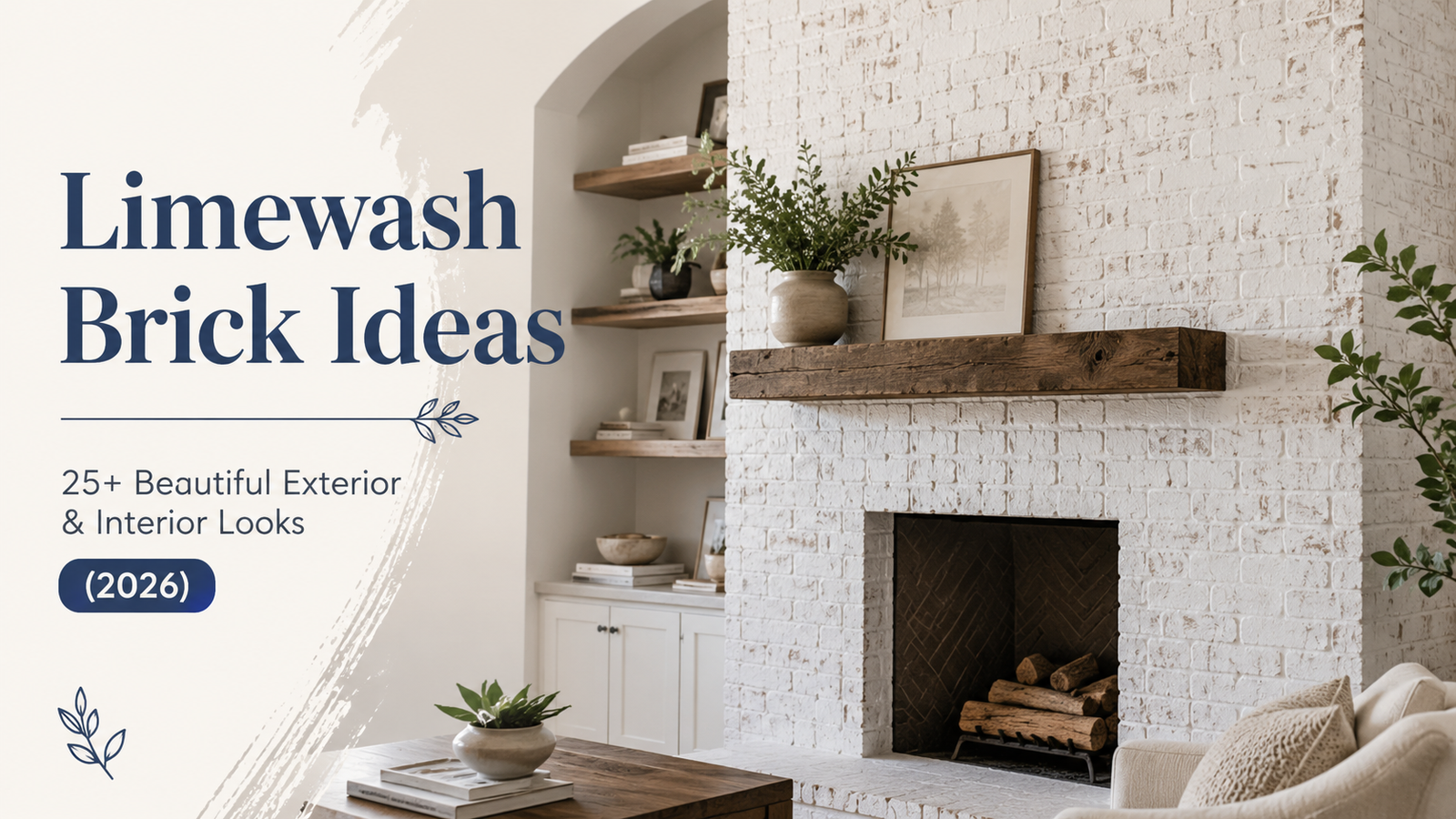
Limewash brick can make an ordinary brick surface feel softer, brighter, and more timeless without completely hiding the natural character of the masonry. Unlike a solid coat of paint, a traditional limewash look can allow some of the brick color and texture to remain visible, creating a finish that feels naturally aged rather than perfectly uniform.
Whether you are updating a brick house, refreshing a fireplace, or creating an accent wall, there are many ways to use limewash brick. The right amount of coverage can change the entire appearance, from a light and weathered finish to a much brighter white exterior.
In this guide at Daily Idea Book, you’ll find 25+ limewash brick ideas for both exterior and interior spaces, along with practical tips for choosing a look that fits your home.
What Is Limewash Brick?
Limewash brick is a finish that changes the appearance of brick while allowing the natural texture of the masonry to remain part of the design.
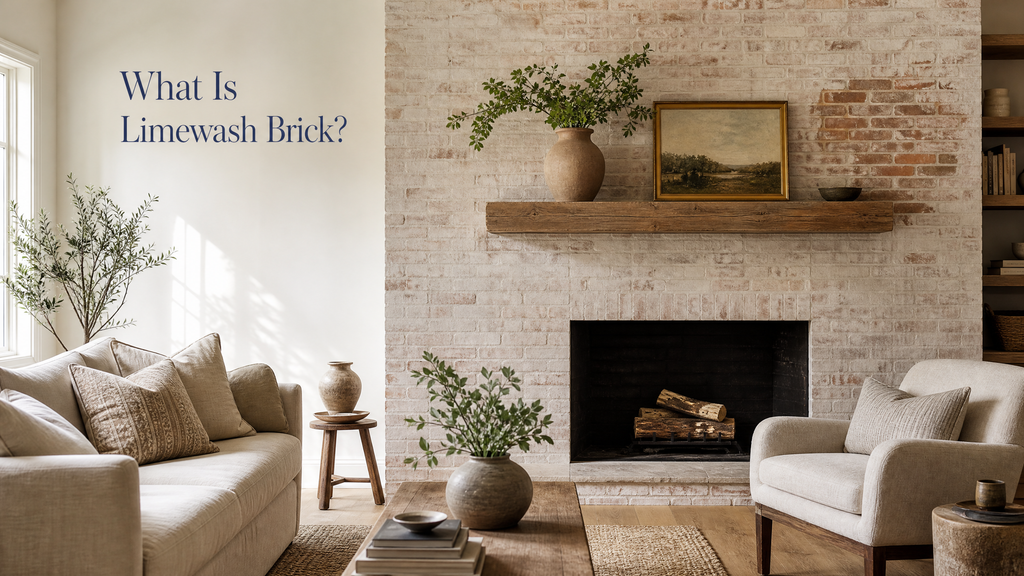
Traditional limewash is made with lime and water, while modern limewash products may be specially formulated for interior or exterior masonry. The important point is that limewash is not simply the same thing as ordinary wall paint. Suitable products are designed to work with absorbent masonry, and the final appearance can vary depending on the brick, application method, dilution, and amount of coverage.
The biggest attraction of limewash brick is its natural-looking finish. Instead of creating a perfectly flat painted surface, a limewashed wall can have subtle variation from brick to brick.
That variation is especially useful if you like farmhouse, cottage, European, traditional, rustic, or modern organic styles.
Limewash can also be applied with different levels of coverage. A thinner application can leave more of the original brick visible, while heavier coverage creates a brighter and more uniform appearance.
25+ Limewash Brick Ideas for Your Home
The best limewash brick ideas do more than change the color of the masonry; they also work with the architecture, trim, roof, windows, landscaping, and other materials around it.
Exterior Limewash Brick Ideas
1. Classic White Limewash Brick House
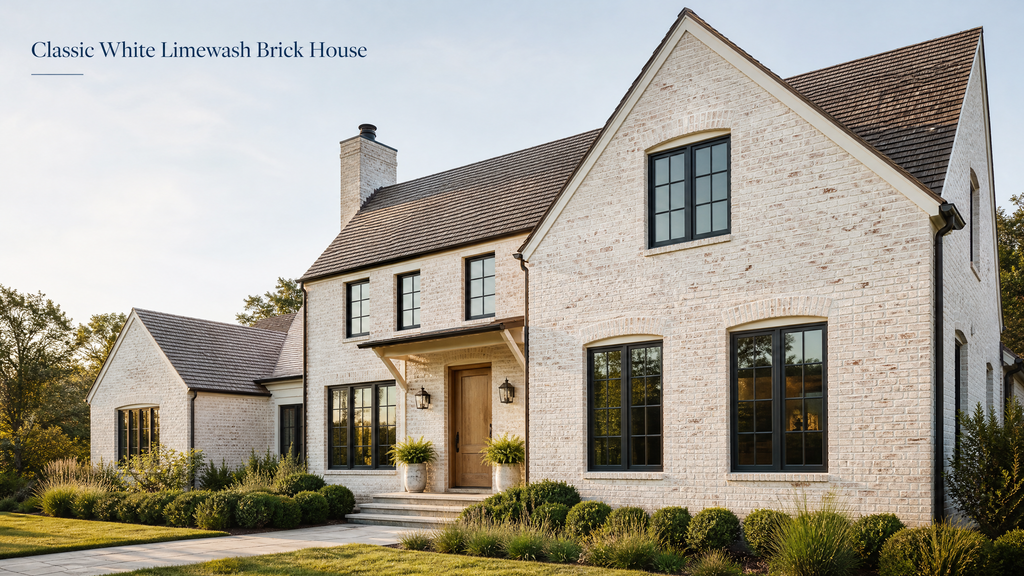
A classic white limewash can give a brick house a cleaner and brighter appearance while keeping some natural brick character.
This look works especially well when you want a traditional exterior that does not feel overly polished. White or soft off-white limewash can also pair beautifully with dark windows, natural wood, stone, or simple landscaping.
For a more natural result, avoid aiming for perfectly identical coverage across every brick.
2. Lightly Distressed Limewash Exterior
A lightly distressed finish creates a soft, aged appearance with plenty of the original brick showing through.
This is a good option when you like the color of your brick but want to reduce its visual intensity. The uneven appearance can make a newer house feel more established and can work particularly well with traditional or cottage-style architecture.
3. Full-Coverage Limewashed Brick
Full-coverage limewash creates a brighter exterior where the original brick color becomes much less noticeable.
This approach can make a dark or visually busy brick exterior feel calmer. Even with heavier coverage, the texture of the brick and mortar can remain visible, which helps prevent the surface from looking like a smooth painted wall.
4. Limewashed Brick With Dark Trim
Dark trim can make a limewashed brick exterior look sharper and more architectural.
Black, charcoal, deep bronze, or another dark neutral can create strong contrast against white or cream limewash. Consider using the darker color on window frames, shutters, the front door, or selected architectural details rather than adding it everywhere.
If you are also considering a new ceiling or roof design as part of a larger renovation, our guide to vaulted vs cathedral ceilings can help you understand how different ceiling styles affect a home’s overall character.
5. Warm White Limewash for Red Brick
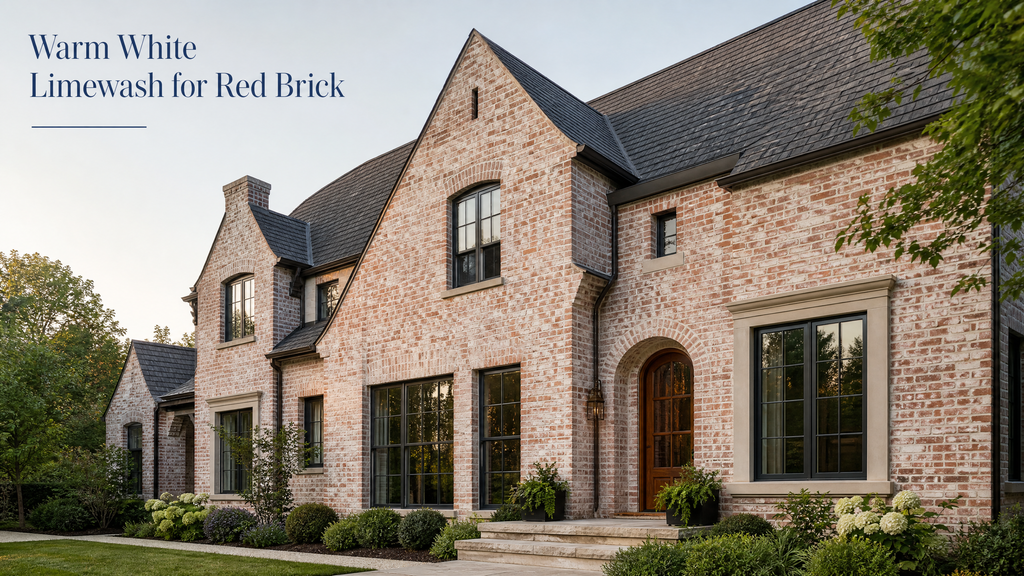
Warm white limewash can soften strong red or orange brick without completely removing its warmth.
This is a particularly useful approach when cool white would look too stark against the existing brick. Look for a limewash tone that works with the undertones already present in your brick, roof, stone, and exterior trim.
6. Limewashed Tudor-Style Home
A Tudor-style home can look especially attractive with soft limewashed brick combined with dark timber or trim details.
The contrast between pale masonry and darker architectural elements highlights the home’s structure. A slightly weathered finish can also reinforce the old-world character associated with Tudor-inspired homes.
7. Limewashed Brick and Stone Exterior
Limewash can help visually connect brick and natural stone that might otherwise compete for attention.
If your exterior contains both materials, a soft limewash can reduce the contrast between them. The goal is not necessarily to make the brick and stone identical, but to create a more balanced color palette.
8. Modern Limewashed Brick Exterior
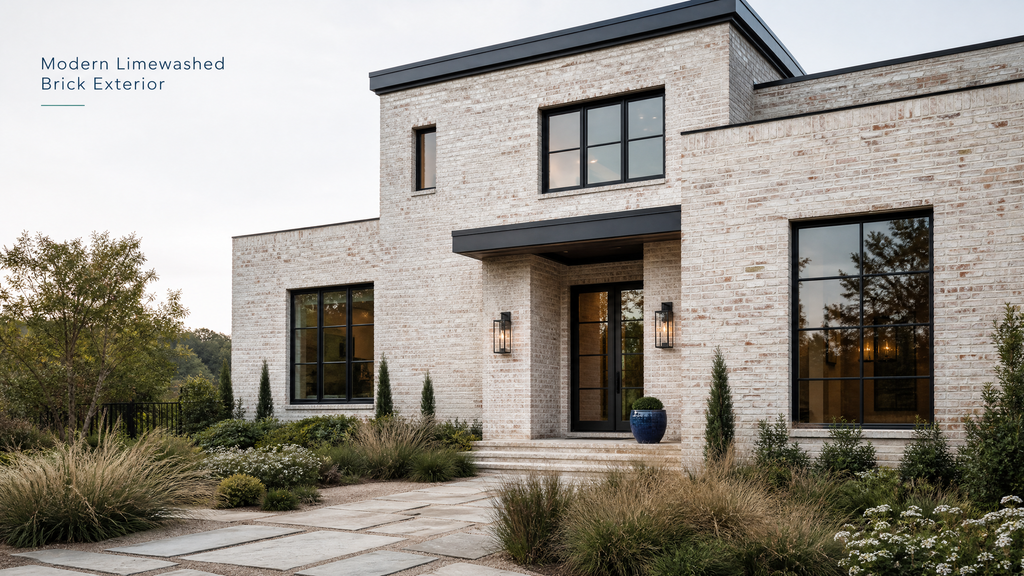
A modern limewashed brick exterior can combine traditional masonry with a simple, contemporary color palette.
Try a soft white, warm gray, or pale neutral limewash with clean-lined windows and minimal exterior decoration. Simple landscaping can reinforce the modern look without making the brick feel sterile.
9. Partial Limewash for a Subtle Update
Partial limewashing is a smart choice when you want to change the appearance of the brick without completely covering its original color.
You can use a lighter application to create a subtle washed effect. This works particularly well when the existing brick is attractive but feels too strong for the rest of the exterior.
10. Limewashed Brick Entryway
A limewashed entryway can create a brighter and more welcoming first impression.
Consider limewashing the brick around the front door while keeping the door itself a contrasting color. A simple porch light, natural wood accents, planters, and a clean walkway can complete the look.
If your entryway is small, you may also find our guide to small entryway ideas useful for making the space feel more open and organized.
Interior Limewash Brick Ideas
11. Limewashed Brick Fireplace
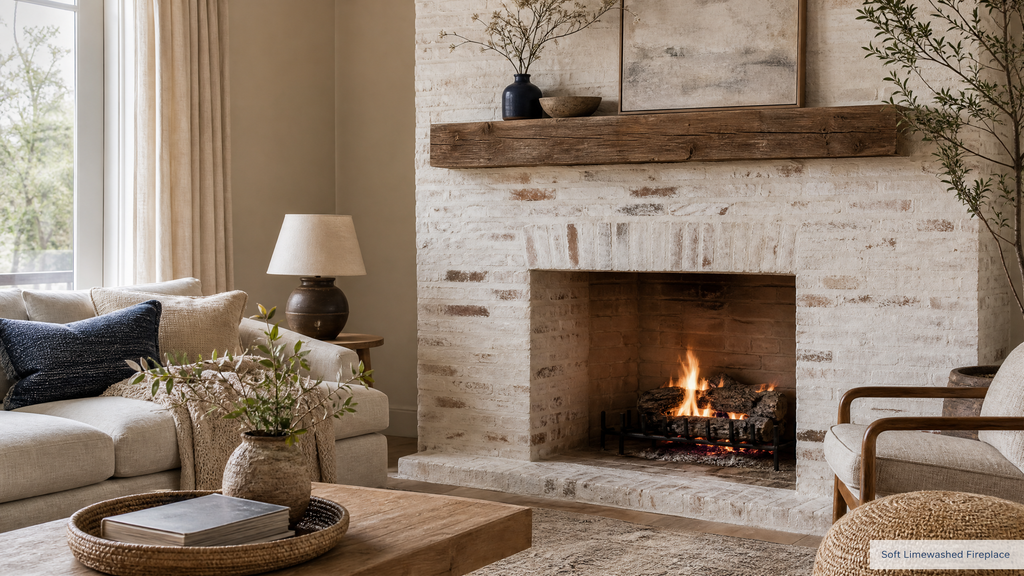
A limewashed fireplace can become a soft focal point without losing the texture that makes brick interesting.
White or cream limewash works especially well in living rooms with neutral furniture and natural materials. For a more rustic appearance, allow some darker brick to remain visible.
Before applying anything to an existing fireplace, make sure the masonry is suitable for the product and follow the manufacturer’s instructions for that specific application.
12. Limewashed Living Room Brick Wall
A limewashed brick wall can give a living room texture and character without overwhelming the rest of the space.
This works especially well behind a sofa, television, bookshelf, or fireplace. Neutral furniture, wood tones, linen textures, and simple lighting can complement the natural appearance of limewashed masonry.
13. Limewashed Kitchen Brick Wall
A limewashed kitchen brick wall can create a warm backdrop that works with both modern and traditional cabinetry.
Soft white limewash pairs nicely with natural wood, white cabinets, muted green cabinets, or simple neutral finishes. If the brick is behind a cooking area, make sure the surface and chosen product are appropriate for that location.
14. Soft Gray Limewashed Brick
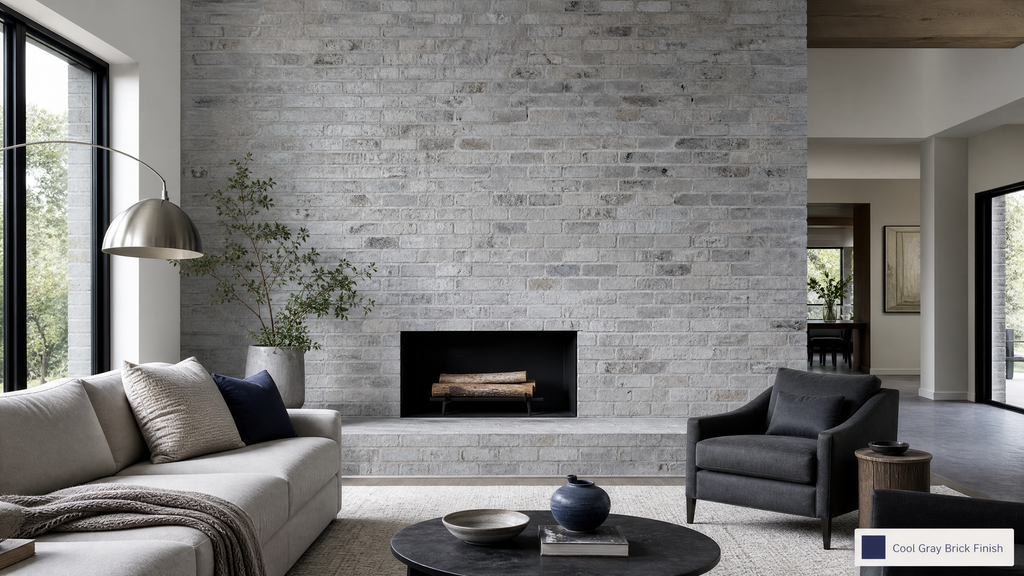
Soft gray limewash creates a cooler and more contemporary version of the traditional limewashed look.
Gray can be especially attractive when your room already contains black, charcoal, silver, or cool-toned materials. Avoid choosing a gray that clashes with the natural undertones of the brick.
15. Warm Cream Limewashed Brick
Warm cream limewash creates a cozy alternative to bright white.
This shade can work beautifully with natural wood floors, beige fabrics, brass hardware, and warm lighting. It is also a good choice when you want the wall to feel softer and less stark.
16. Rustic Limewashed Brick Accent Wall
A rustic limewashed brick wall can add old-world texture without requiring a major renovation.
Letting some areas remain more transparent than others can create a naturally aged appearance. This style works well in dining rooms, kitchens, living rooms, mudrooms, and other spaces where you want more texture.
More Limewash Brick Looks to Try
17. Farmhouse Limewashed Brick
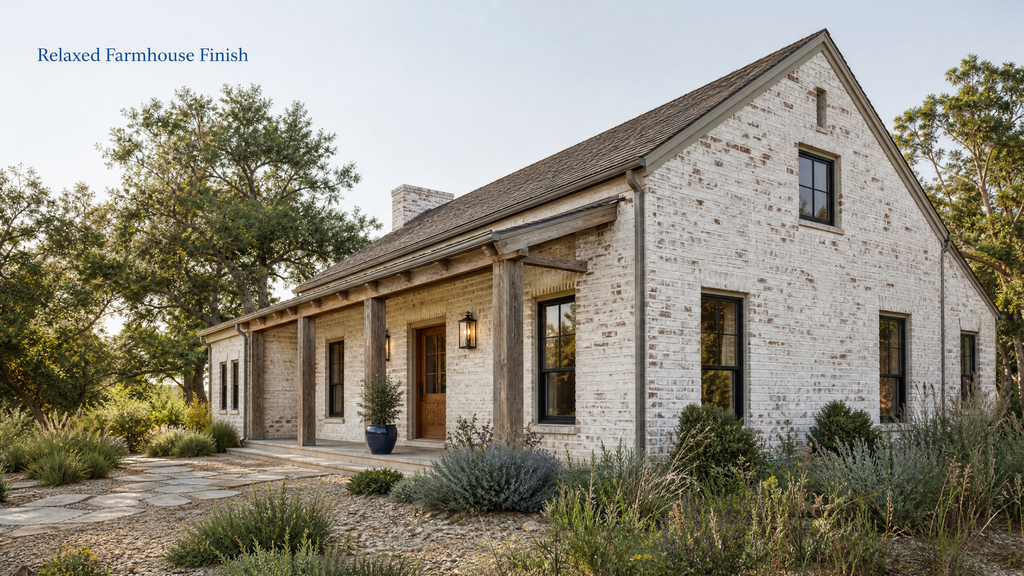
Farmhouse-style limewashed brick looks best when the finish feels relaxed rather than perfectly uniform.
Pair soft white masonry with natural wood, simple black accents, woven textures, and understated landscaping for a classic farmhouse appearance.
18. European-Inspired Limewashed Brick
European-inspired limewash focuses on soft color variation and an aged masonry appearance.
Instead of trying to make every brick look identical, embrace subtle differences in coverage. Natural stone, aged wood, simple greenery, and traditional architectural details can strengthen this look.
19. Minimalist Limewashed Brick
Minimalist limewashed brick works when the masonry becomes a quiet background rather than the main decoration.
Choose a simple neutral color and keep surrounding materials restrained. Clean lines, limited colors, and uncluttered landscaping can make the textured brick feel intentional without looking busy.
20. Two-Tone Limewashed Brick
Two-tone limewashed brick can add more visual depth to a simple masonry surface.
For example, you might use a lighter overall wash with slightly stronger coverage around selected architectural sections. Keep the difference subtle so the result still feels natural.
21. Heavily Distressed Limewash
Heavily distressed limewash creates a weathered appearance where the original brick remains clearly visible in selected areas.
This can work particularly well on older homes, rustic exteriors, garden walls, and fireplaces. The key is controlled variation rather than random-looking patches.
22. Subtle Limewash With Brick Showing Through
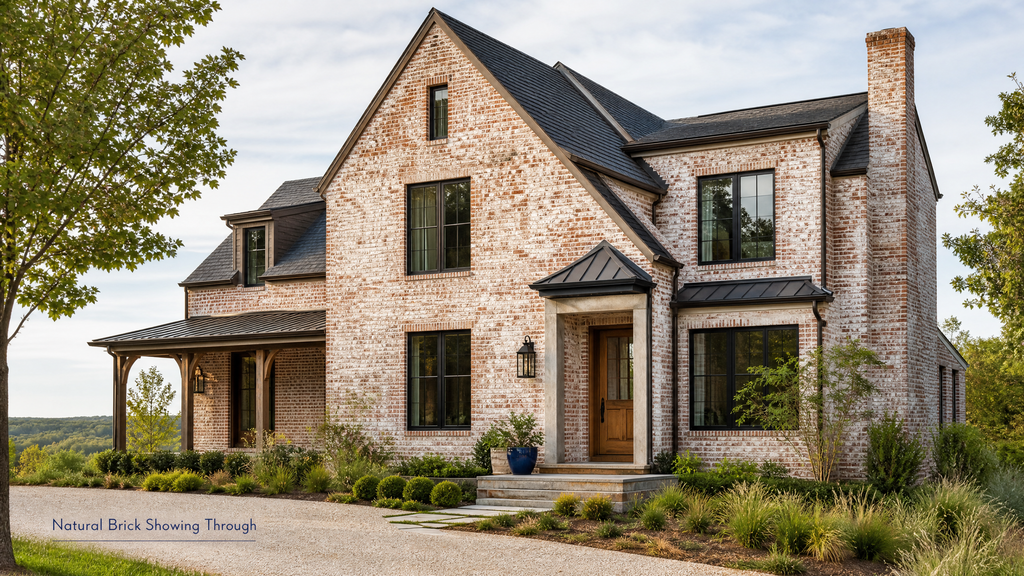
A subtle limewash is ideal when you want to soften the brick rather than completely transform it.
This approach preserves more of the original color and can be a safer visual choice if you are unsure about committing to a bright white exterior.
23. Limewashed Garage Brick
Limewashed garage brick can make a large garage wall feel less visually heavy.
If the garage occupies a large portion of the front elevation, a lighter brick finish can help balance it with the rest of the house. Consider coordinating the garage door color with the front door or window trim.
24. Limewashed Outdoor Fireplace
A limewashed outdoor fireplace can create a relaxed focal point for a patio or backyard seating area.
However, exterior masonry can experience considerable moisture and weather exposure. Use a product specifically suitable for the surface and location, and follow its limitations. Some limewash products are not intended for horizontal or high-traffic surfaces.
25. Limewashed Brick Porch
A limewashed brick porch can give an older masonry area a lighter and more welcoming appearance.
Before choosing this idea, check whether the surface is actually suitable for limewash. Product limitations matter here because some limewash products should not be used on horizontal surfaces, steps, floors, or areas where water pools.
26. Limewashed Brick With Natural Wood
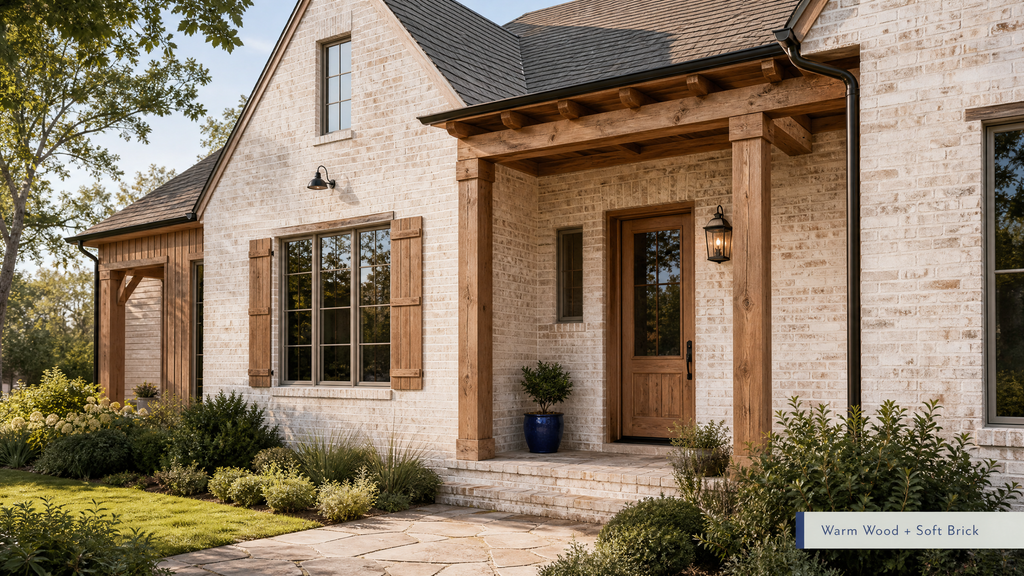
Natural wood and limewashed brick make a warm combination that works across many home styles.
Try pairing a soft white or cream limewash with a wood front door, cedar accents, shutters, or pergola. The contrast between textured masonry and natural wood can make an exterior feel both fresh and welcoming.
How to Choose the Right Limewash Brick Look
The right limewash look depends on how much of the original brick you want to see and how the finish works with the rest of your home.
Choose Between Light, Medium & Full Coverage
Coverage is one of the biggest factors that changes the final appearance of limewashed brick.
A light wash leaves more brick color visible and creates a subtle weathered appearance. A medium application creates a stronger color change while retaining some variation. A fuller application creates a much brighter and more consistent appearance.
If you are unsure, testing a small hidden area first is a sensible step. Brick can vary greatly in absorbency, so the same product can look different from one masonry surface to another. Manufacturer guidance also recommends checking masonry absorbency before application.
Consider Your Home’s Existing Colors
The best limewash color usually works with the colors that are already part of your home.
Look at your roof, siding, stone, windows, doors, gutters, and landscaping before choosing a shade. A warm limewash may work better with brown roofing and warm wood, while a cooler neutral may suit charcoal trim and cooler stone.
Our guide on how to choose a paint color can also help if you are coordinating limewashed brick with other painted areas of your home.
Match the Limewash to Your Home’s Style
Your home’s architecture should influence whether you choose a clean, subtle, or heavily weathered limewash effect.
Traditional and historic homes can often handle more variation and distressing. Modern homes may look better with a cleaner, lighter application. Farmhouse and cottage homes can work well with soft whites, creams, and naturally uneven finishes.
Things to Know Before Limewashing Brick
Preparation matters because limewash is not a shortcut for damaged, dirty, or unsuitable masonry.
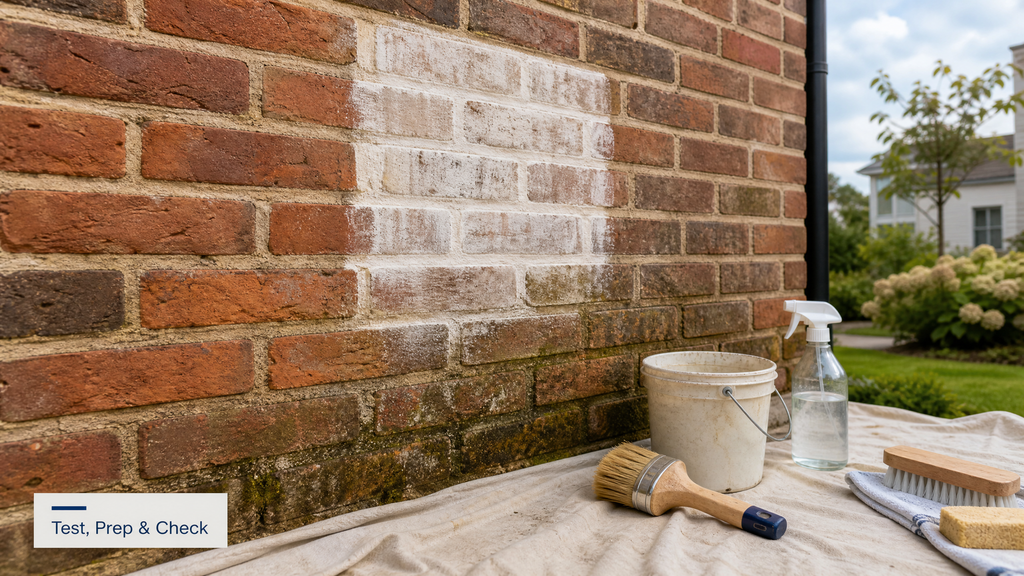
Check the Brick First
Look closely at the condition of the brick and mortar before changing the finish. Dirt, algae, moisture problems, loose material, or damaged masonry should be addressed first.
If you are dealing with other visible home problems at the same time, our guides on wall cracks, cracks in the ceiling, and drywall nail pops can help you understand those issues separately.
Test Before Covering the Whole Surface
A small test area can save you from discovering too late that the color or coverage is not what you expected.
Look at the test area in daylight and from several distances. If possible, check it at different times of day because natural light can make white and neutral finishes look noticeably different.
Consider Moisture and Weather
Weather matters because masonry needs suitable conditions for a consistent limewash application.
For exterior work, follow the product’s instructions for temperature, rain, sunlight, dampness, and drying time. Manufacturer guidance recommends dampening masonry before application and avoiding conditions that cause the surface to dry too quickly.
Limewash Brick vs. Whitewash vs. Paint
These three finishes can look similar in photographs, but they are not the same treatment.
| Finish | General Appearance | Brick Texture | Best Known For |
|---|---|---|---|
| Limewash | Soft, mineral, naturally varied | Usually remains visible | Aged and European-inspired looks |
| Whitewash | Thin white coating | Usually remains visible | Simple, lighter appearance |
| Paint | More solid and uniform | Less visually prominent | Strong color transformation |
The exact performance depends on the product and masonry, so always check the manufacturer’s instructions rather than assuming every product behaves the same way.
One advantage of a suitable limewash system is that some products are designed to remain breathable and work with absorbent masonry rather than simply forming the same type of film as conventional paint.
How to Get the Look You Want
The final appearance of limewash brick depends heavily on surface preparation, product choice, dilution, application, and how much coverage you leave on the masonry.
For many products, the brick needs to be clean and damp before application. Product instructions may recommend a masonry brush or sprayer rather than a standard roller, and dilution can be used to control the level of opacity.
If you want a more transparent appearance, a thinner application may allow more brick to show through. A heavier application creates a more opaque finish. Some limewash systems also allow part of the freshly applied material to be washed back for a distressed appearance.
Do not choose your application method only because you like a photograph online. The brick’s absorbency, age, condition, color, mortar joints, and the specific limewash product can all affect the result.
If you are doing a larger home improvement project at the same time, you may also want to browse our guides on bathroom remodel ideas and LVP vs. laminate for other renovation decisions.
What Reddit Homeowners Say About Limewashing Brick
A Reddit discussion in r/ExteriorDesign shows an important side of limewash brick that inspiration photos often leave out: not everyone agrees that changing attractive original brick is an improvement.
In the discussion you shared, the homeowner was considering limewashing a brick house because the property felt shaded and the goal was to brighten and modernize it. Several commenters suggested cleaning the existing brick first instead of changing it, while others preferred changing the siding, garage door, trim, or landscaping and leaving the brick untouched.
There was also a noticeable disagreement about resale value. Some commenters felt painted or altered brick could hurt buyer appeal, while others pointed out that painted brick is common in certain regional markets and does not necessarily prevent a home from selling well.
My take is that this is a good reminder to separate design preference from a universal rule. If your brick is attractive and simply dirty, cleaning it first may be worth trying before making a permanent-looking change. On the other hand, if the existing brick color genuinely does not work with your home’s architecture or your personal style, a carefully planned limewash can be a reasonable design choice.
The discussion also highlights why resale should be considered in context rather than treated as a guaranteed outcome. Local buyer preferences, neighborhood style, home age, and the quality of the work can all matter.
Final Thoughts on Limewash Brick
The best limewash brick design is the one that improves the character of your home without making the masonry look disconnected from everything around it.
For a subtle transformation, choose a lighter wash that allows plenty of brick to show through. For a brighter exterior, consider heavier coverage. Warm whites and creams can create a cozy traditional appearance, while soft grays and clean neutrals can move the look in a more contemporary direction.
Most importantly, look at the brick before choosing the finish. Its existing color, texture, condition, mortar, and surrounding materials should guide your decision.
And if you are unsure, start small. A test area can tell you much more than a product photo or inspiration image ever will.
Frequently Asked Questions
Is limewashing brick a good idea?
Limewashing brick can be a good choice if you want to brighten or soften the appearance of brick while keeping its natural texture visible. It works particularly well for homeowners who like a weathered, matte, or European-inspired look. However, the brick should be suitable for the product, and you should always test a small area first because the final color and coverage can vary with the masonry.
What are the downsides of limewash?
The main downside is that limewash creates a naturally uneven finish that may not suit everyone. It can also weather and change appearance over time, and some surfaces are not suitable for limewash, especially areas exposed to frequent water or pooling moisture. Proper surface preparation and following the product’s instructions are important for a lasting result.
How long does limewash last on brick?
Limewash can last for years, but its appearance naturally changes as it weathers and develops a patina. How long it looks fresh depends on the product, brick condition, climate, moisture exposure, and application. Exterior surfaces exposed to heavy rain or other moisture may require more attention over time.
How do you limewash brick?
Limewashing brick starts with cleaning and checking the masonry, followed by dampening the surface before applying a suitable limewash product. Depending on the product, it may be diluted with water and applied with a masonry brush or sprayer. Always follow the manufacturer’s instructions because application methods, dilution, drying conditions, and suitable surfaces can vary.
Can you limewash any type of brick?
Not every brick surface is automatically suitable for limewash. The masonry generally needs to be absorbent and free from unsuitable coatings or moisture problems. Reclaimed brick can also produce inconsistent results because its history, condition, and absorption can vary. Check the specific product requirements before starting.
Does limewash change the color of brick permanently?
Limewash changes the appearance of brick, but some limewash finishes can be more changeable than conventional paint. Certain products are designed to create a distressed effect, allowing some of the original brick to remain visible, while the finish can continue to weather and develop character over time.