
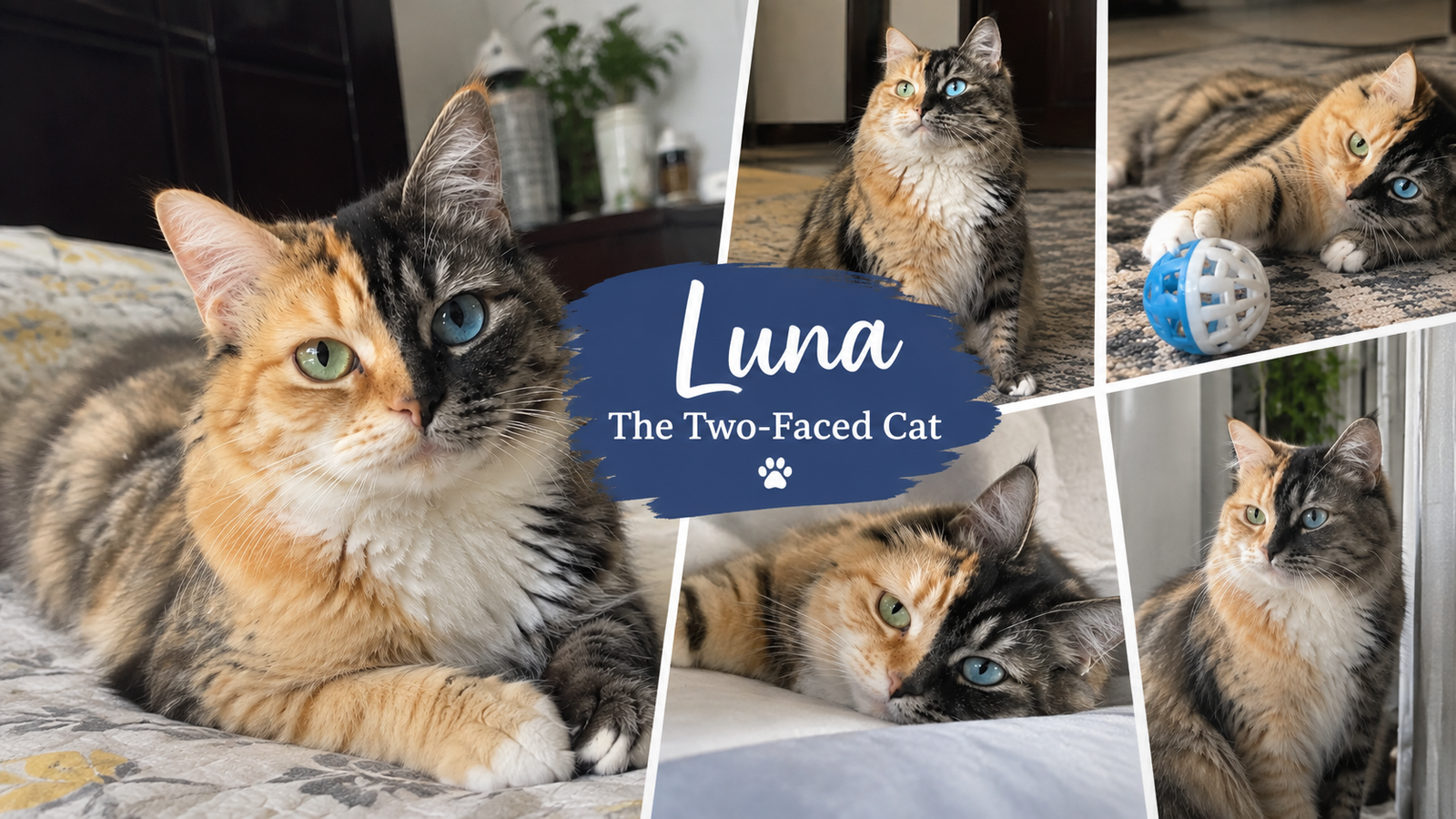
Luna is the kind of cat you notice twice—first because she is beautiful, and then because you realize just how different the two sides of her face look.
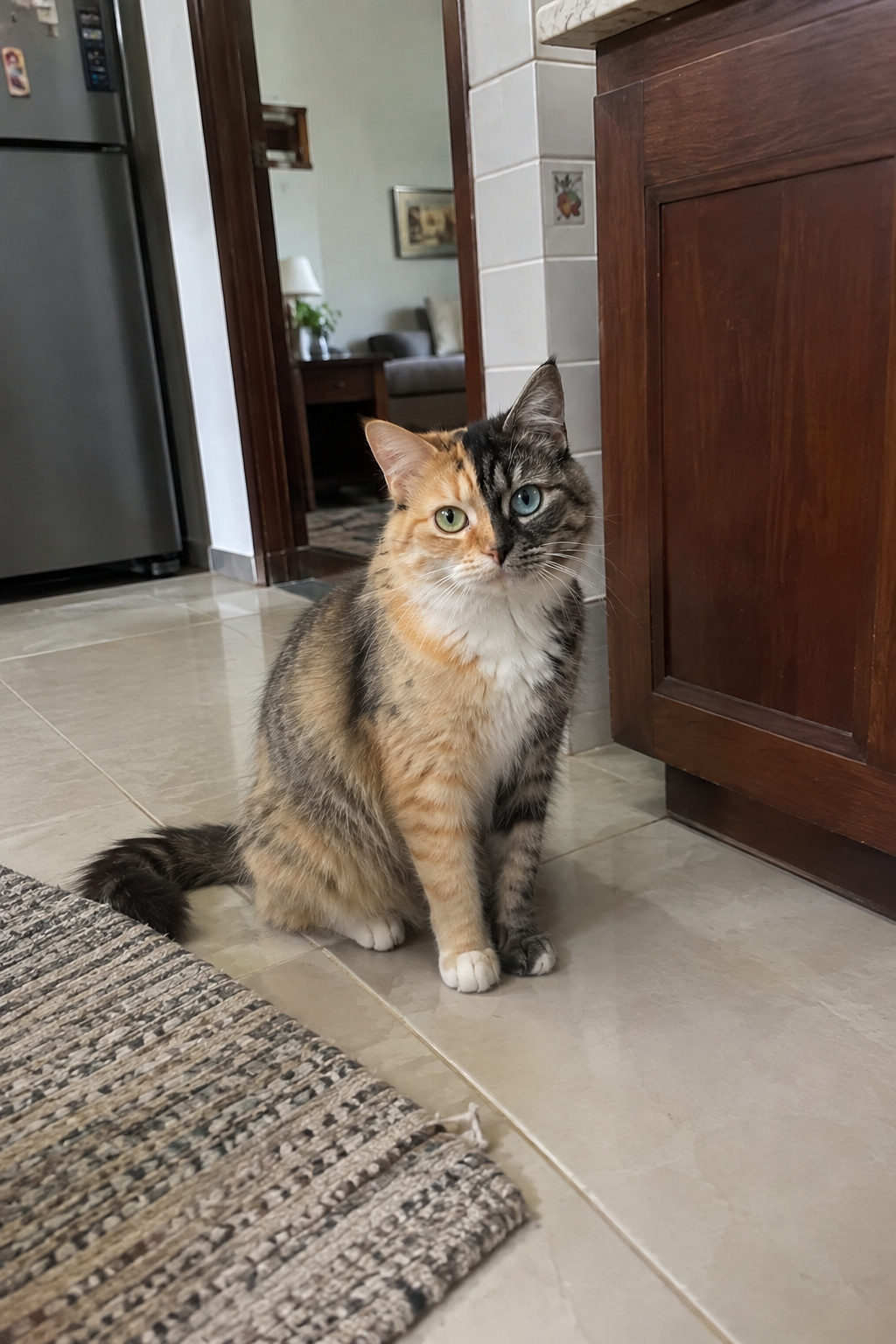
At first glance, Luna looks like an ordinary adorable house cat. But look a little closer and something immediately stands out: her face appears to have two completely different sides. One side has a warm orange and cream coloring, while the other side has a much darker tabby pattern.
Her eyes make the contrast even more noticeable because they are different colors. Together, her facial markings and eyes give Luna a look that is incredibly easy to recognize.
There is no need for a complicated explanation to appreciate what makes her special. My Luna simply has a face that looks unlike any other cat.
And once you see her clearly, it becomes surprisingly difficult to forget her.
What Makes Luna Look So Unique?
Luna’s unusual appearance comes from the striking contrast between the two sides of her face.
The orange and cream side gives her face a warm, soft appearance. On the opposite side, the darker tabby coloring creates a much stronger and deeper look.
When Luna faces the camera directly, the difference becomes especially noticeable because both sides can be seen at the same time.
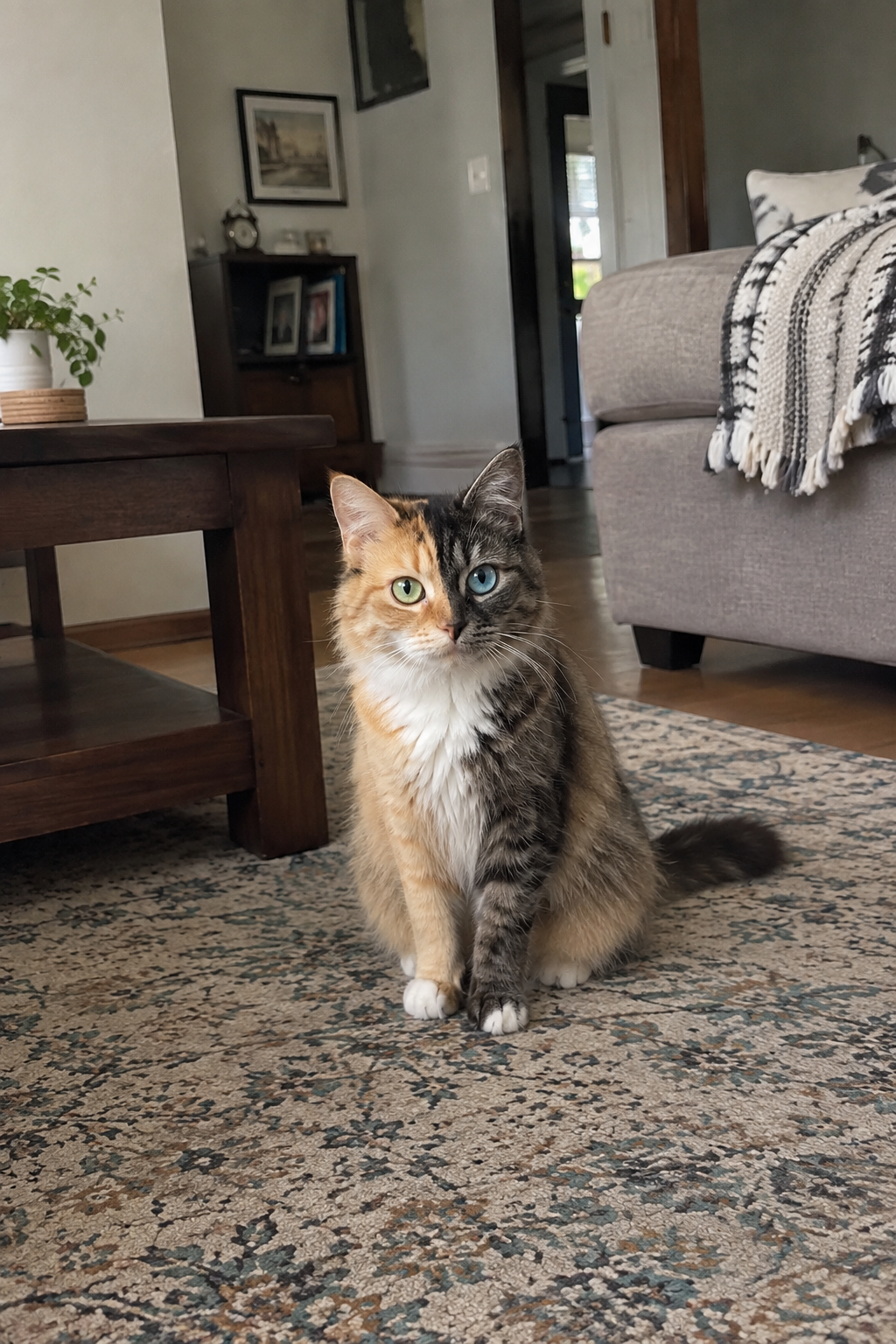
Her Orange and Cream Side
The orange and cream side of Luna’s face gives her a warm and gentle expression.
The lighter coloring stands out against the darker markings on the other side. Depending on the lighting and the angle of the photograph, the orange tones can look softer or more noticeable.
A close-up photograph is one of the best ways to appreciate the small details in this side of her face, including her fur texture, whiskers, nose, and eye.
Her Dark Tabby Side
The darker tabby side gives Luna a completely different appearance from the opposite side.
The deeper markings create a strong contrast with the orange and cream coloring. When Luna turns her head, it can almost feel as though you are looking at a different cat.
That is one of the most interesting things about photographing her. A front-facing photograph shows both sides together, while a side photograph can make one particular pattern stand out.
Her Different-Colored Eyes
Luna’s different-colored eyes add another eye-catching detail to an already unusual face.
When she looks directly at the camera, both eyes become part of the overall contrast. Her eyes also make close-up photographs particularly interesting because the viewer can see her facial markings and eye colors together.
Her eyes are not something that needs to be explained away. They are simply another part of what makes Luna, Luna.
Luna at Home
Luna’s everyday surroundings make her unusual face even more fun to photograph.
A beautiful portrait does not always need a studio, special background, or elaborate setup. Some of the best photographs can come from ordinary moments around the home.
Luna sitting quietly in the living room can look completely different from Luna exploring the hallway or relaxing in the bedroom.
Luna in the Living Room
The living room is a perfect place to capture Luna simply being herself.
A photograph of her sitting on the sofa, resting on a rug, or looking toward a window can show her face naturally without making the photograph feel overly staged.
For a close-up, try photographing her when she is sitting near a window. Soft daylight can help show the difference between her lighter and darker facial markings.
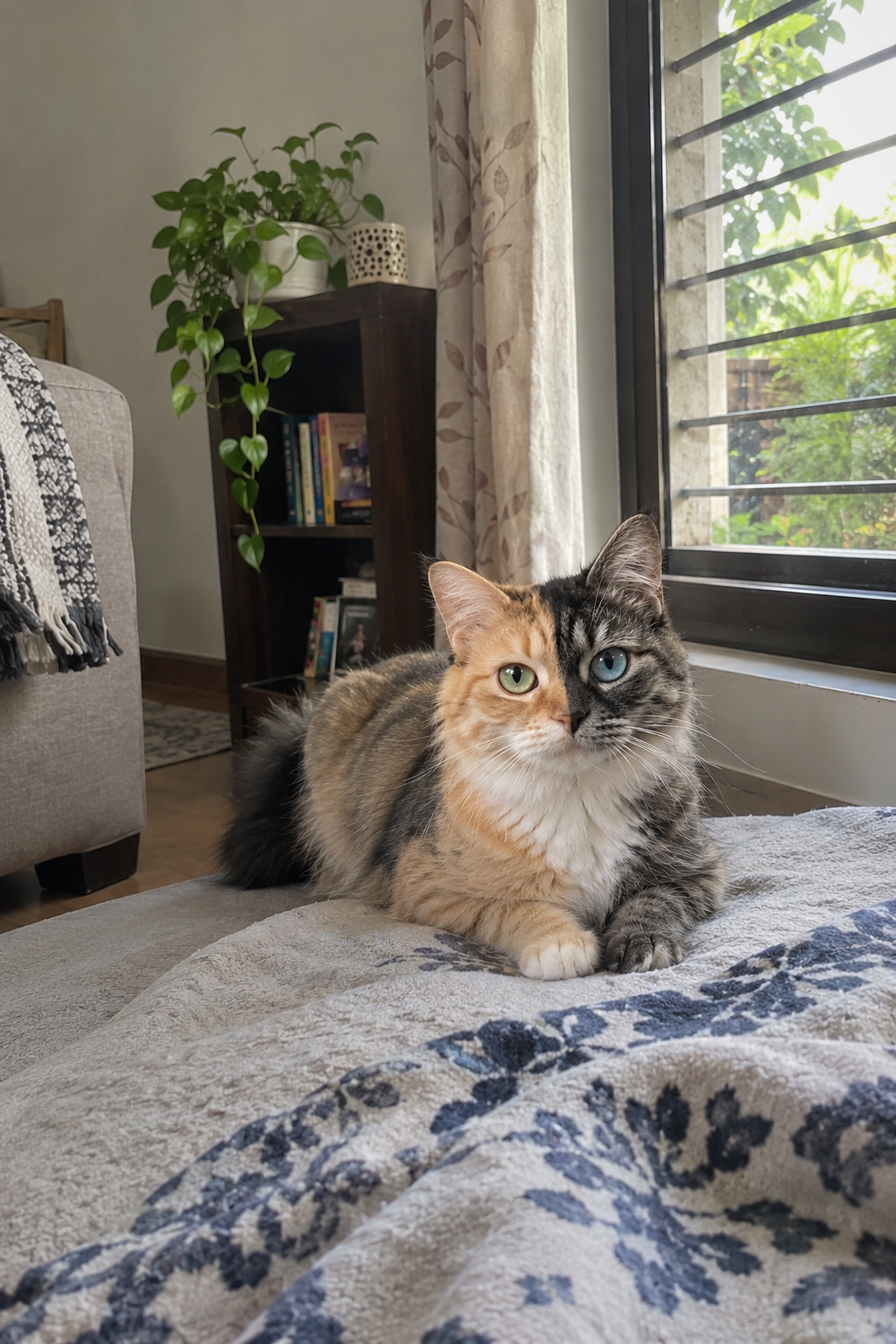
Luna in the Bedroom
A quiet bedroom moment brings out a softer side of Luna’s appearance.
If Luna likes spending time on the bed, a photograph of her sitting or lying on a simple blanket can create a warm and personal image.
Keep the background fairly simple. Luna already has a lot of visual interest, so there is no need for a busy setting.
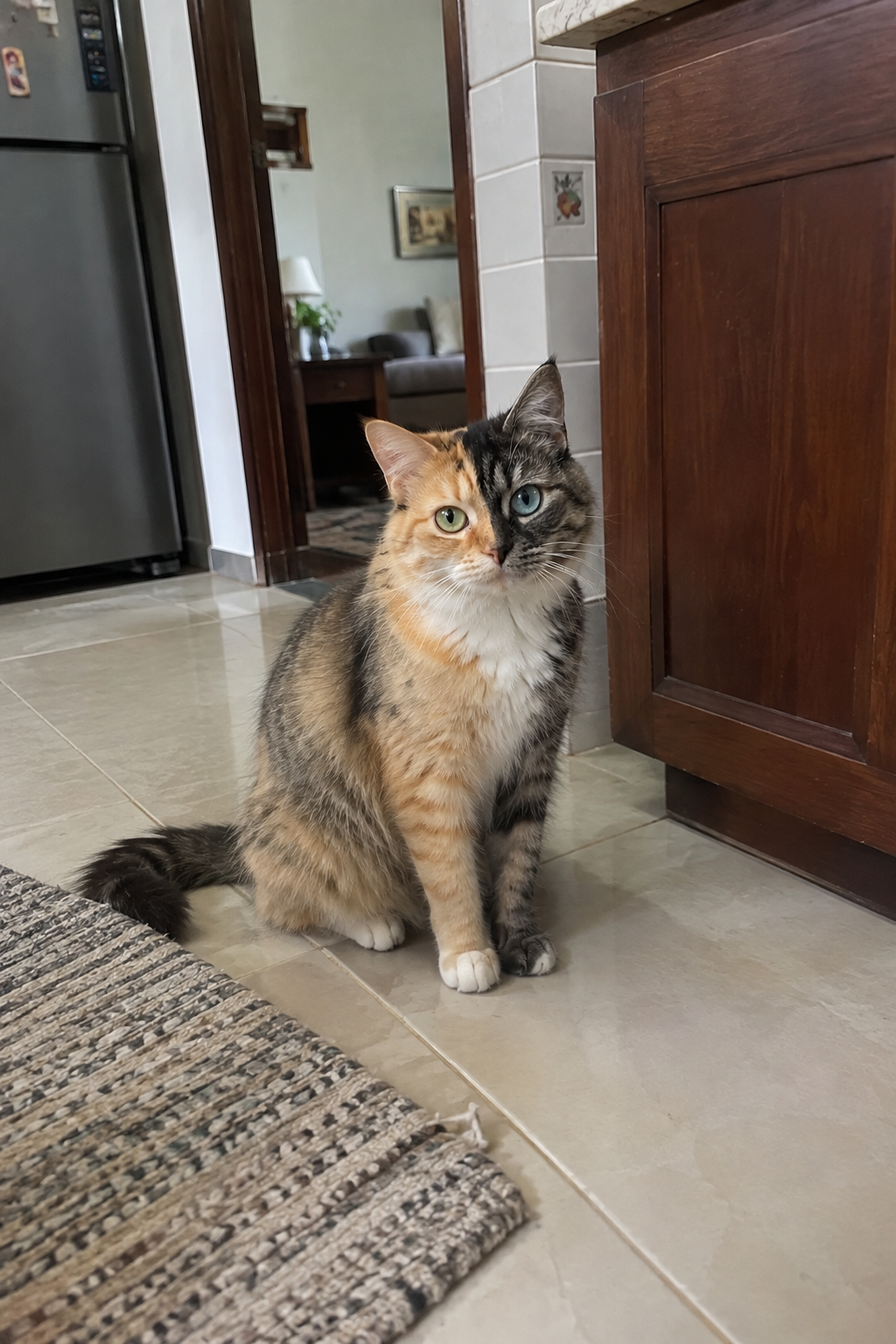
Luna in the Hallway or Kitchen
Luna’s everyday adventures around the house can create some of the most natural photographs.
A hallway photograph can show her walking toward the camera, while a kitchen photograph can capture her curiosity as she looks around.
These photographs do not have to be perfect. A slightly unexpected pose can actually make the image feel more personal.
The important thing is to keep Luna comfortable and make sure the area is safe before taking photographs.
Luna’s Favorite Ways to Play
Luna’s playful moments show that her unusual face is only one part of what makes her fun to photograph.
A cat sitting still gives you time to focus on facial details, but a playful cat gives you completely different photographs.
Sometimes the best image is the one you did not plan.
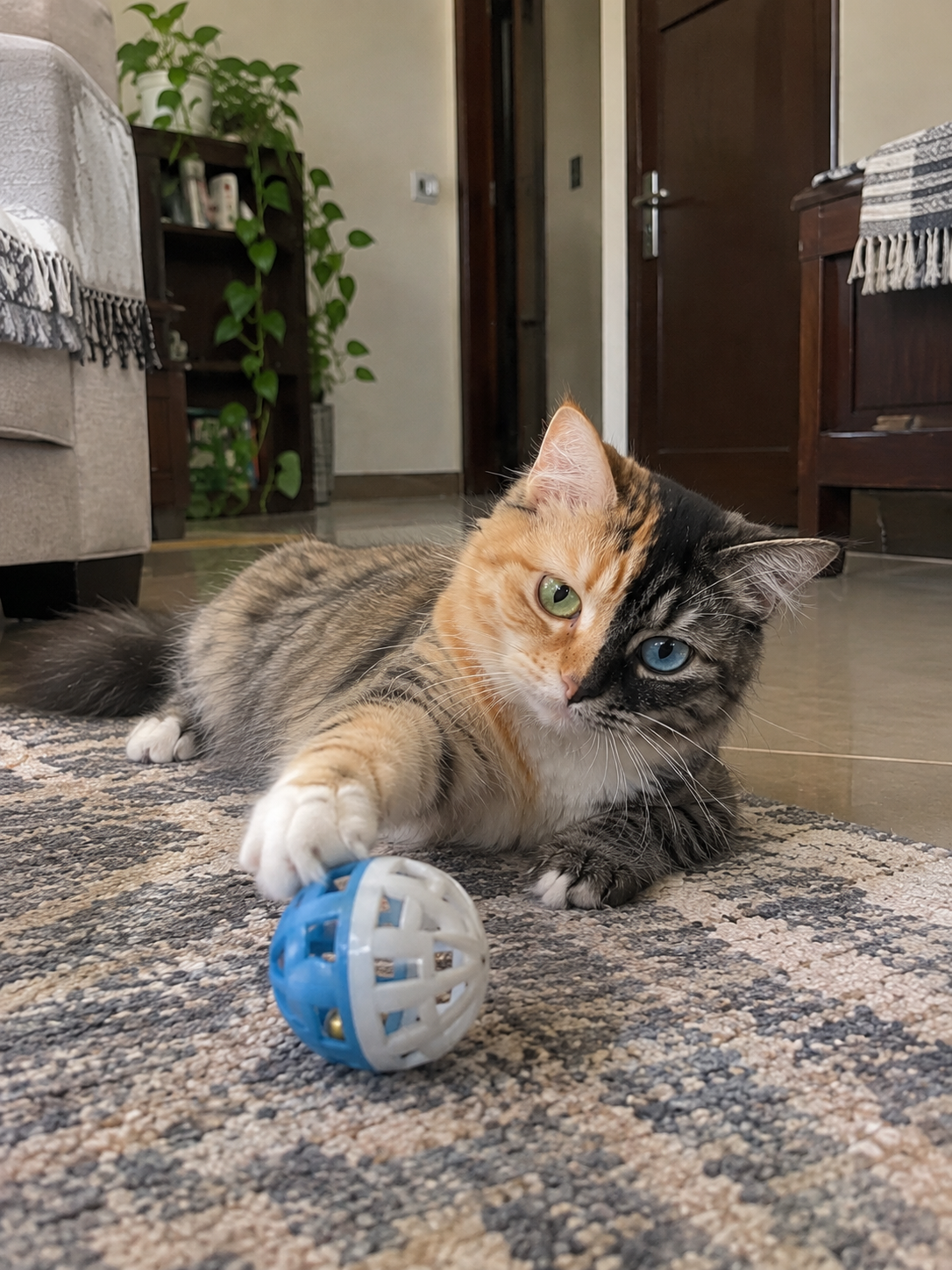
Playing With Her Ball
A simple ball can turn an ordinary moment into a fun Luna photograph.
You might catch her watching the ball, reaching toward it, chasing it across the floor, or stopping suddenly to decide where it went.
Try taking several photographs instead of waiting for one perfect shot. Her expressions can change very quickly.
Chasing a Feather Toy
A feather toy can bring out Luna’s curious and playful side while giving you plenty of interesting poses to capture.
Watch for the moment when she becomes completely focused on the toy. Her ears, eyes, paws, and head position can all change within seconds.
Instead of trying to make Luna look directly at the camera, let her concentrate on the toy. Those natural expressions often make better photographs.
Interactive toys should be used with supervision, especially toys containing string, feathers, or small parts.
Curious Little Moments
Some of Luna’s best photographs may happen when she has no idea that you are taking them.
A quick look around a doorway, a curious glance toward a sound, or a moment when she stops to inspect something can create a much more natural photograph than a forced pose.
Keep your camera or phone nearby and be patient.
You do not always have to call Luna toward you. Sometimes it is better to let her do whatever she was already planning to do.
Luna From Different Angles
Luna’s two-sided appearance becomes even more interesting when you photograph her from different angles.
A straight-on photograph is probably the best way to show both sides of her face together, but it should not be the only type of photograph in the gallery.
Changing the angle gives readers a chance to see details they may miss in the main portrait.
Luna From Different Angles
| View of Luna | What the Photo Shows |
|---|---|
| Front view | Both facial patterns and her different-colored eyes |
| Three-quarter view | How the two facial patterns meet |
| Side view | More detail of one side of her face |
| Sitting | Her face and overall appearance |
| Lying down | A relaxed everyday moment |
| Playing | Her natural movement and playful side |
Front View
The front view is the most important photograph because it shows Luna’s two different facial patterns at the same time.
Try to photograph her at eye level rather than from above. This keeps her face natural and allows both eyes to remain clearly visible.
A simple background works especially well here.
Three-Quarter View
A three-quarter photograph shows Luna’s face from an angle while still keeping both sides visible.
This can be one of the most interesting views because it gives the reader a better idea of how her facial markings look beyond the straight-on view.
Turn the camera slightly rather than moving Luna. Let her choose where she wants to look.
Side View
A side profile gives one side of Luna’s face the chance to take center stage.
This is a great way to photograph the darker tabby side or the orange and cream side separately.
It also gives your article more visual variety because readers are not seeing the exact same portrait repeatedly.
Sitting, Lying Down and Playing
Different poses make Luna’s photo collection feel like a story rather than a collection of identical portraits.
A sitting photograph works well for showing her face clearly. A lying-down photograph feels more relaxed, while a playful photograph adds movement.
If you are creating a gallery for this article, try to mix all three.
Why Do Some Cats Have Unusual Facial Markings?
Cats can naturally have very different coat patterns, and Luna’s unusual face is a beautiful example of how individual a cat’s markings can be.
The colors and patterns we see on a cat’s coat are connected to inherited traits. These traits can appear in many different combinations, which is why even cats with similar colors can have completely different markings.
Luna’s face is especially noticeable because the difference happens so clearly across her face.
Coat Color and Pattern
A cat’s coat pattern is shaped by its inherited characteristics, which can create a wide range of colors and markings.
Some cats have stripes, some have patches, some have solid-colored coats, and others have combinations that are much harder to describe with one simple label.
Her orange and cream coloring on one side and darker tabby appearance on the other create the impression of two faces in one cat.
Calico and Tortoiseshell Patterns
Orange and dark coloring can appear together in several familiar cat coat patterns, but Luna’s appearance should be described by what we can actually see rather than assigning her a specific coat type without more information.
Calico and tortoiseshell cats are well known for combinations of different coat colors, but individual patterns can vary greatly.
This is an important point when looking at unusual cats online: a striking appearance does not automatically tell you a cat’s exact breed or genetic background.
Luna does not need a special label to make her appearance interesting.
What Does Heterochromia Mean?
Different-colored eyes are commonly described as heterochromia, meaning the two irises have different colors.
In Luna’s case, her mismatched eyes add another noticeable feature to her already unusual face.
The important thing is to distinguish a naturally different eye color from a sudden change in an adult cat’s eye. If a cat develops a new change in eye color or appearance, especially along with redness, cloudiness, discharge, or discomfort, that is something a veterinarian should evaluate.
But when different eye colors are simply part of a cat’s normal appearance, they can be one of the features that make that cat especially recognizable.
How to Photograph Luna’s Two Faces
The best Luna photographs are the ones that make the difference between her two facial patterns easy to see without making the image look unnatural.
You do not need expensive camera equipment.
A phone can produce excellent photographs if you pay attention to a few simple details.
Use Natural Light
Soft natural light can make Luna’s coat colors easier to see.
Try photographing her near a bright window rather than using harsh direct sunlight.
Morning or late-afternoon light can create a softer look, while very strong midday sunlight can create hard shadows across her face.
Photograph at Eye Level
Getting down to Luna’s eye level can make her face look much more natural.
Instead of pointing the camera down at her, lower the camera until the lens is roughly level with her eyes.
This also makes her eyes and facial markings the main focus of the photograph.
Keep the Background Simple
A simple background helps Luna’s unusual face become the center of attention.
You do not need a completely empty room. Just remove distracting objects from directly behind her.
Neutral walls, a simple sofa, a clean rug, or a plain blanket can all work well.
Let Luna Move Naturally
Trying to force a cat into the perfect position can make a photograph look less natural.
If Luna gets up and walks away, let her go.
If she turns her head, follow the movement.
If she suddenly looks toward the window, take the photograph.
Some of the most memorable pet photographs happen because the photographer was ready at exactly the right moment.
Common Mistakes When Photographing Luna
Avoiding a few simple photography mistakes can make Luna’s unusual markings much easier to appreciate.
Using Harsh Flash
A strong flash can create distracting reflections in the eyes and make the fur look less natural.
Whenever possible, try soft natural light first.
Taking Every Photo From Above
Photographing Luna from above can make her face look smaller and can hide some of the details that make her special.
Eye-level photographs are usually much stronger for a facial portrait.
Making Every Photo a Close-Up
Close-ups are important, but a gallery made entirely of close-ups can quickly become repetitive.
Include wider photographs of Luna sitting, walking, playing, and relaxing around the home.
Changing Luna’s Position Too Much
If Luna is comfortable sitting in one spot, there is no reason to keep moving her.
Let her position herself naturally and work around her.
That usually creates a more relaxed photograph.
More Photos of Luna
Luna’s photo gallery should show more than just her face—it should show the little everyday moments that make her recognizable and memorable.
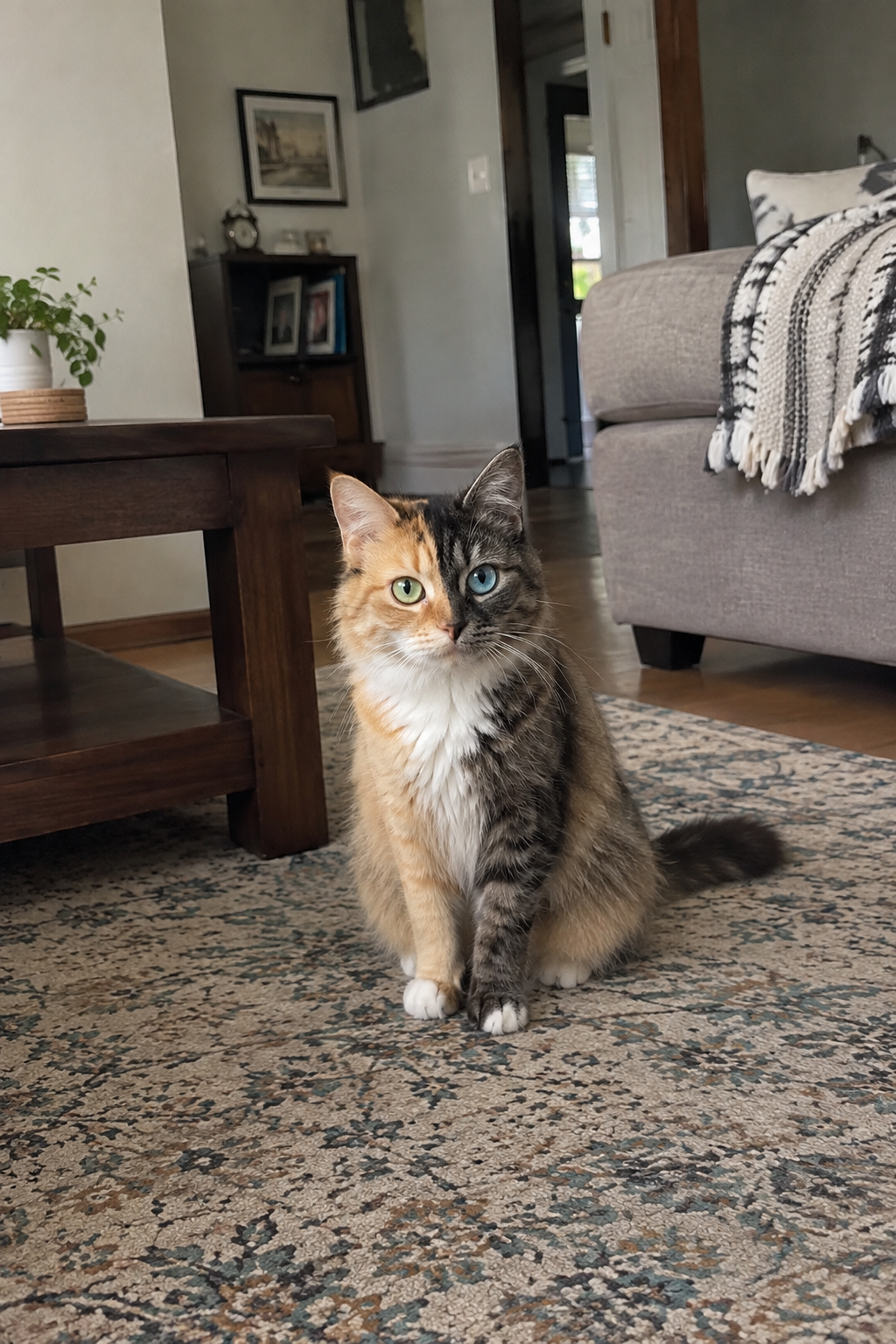
Luna Looking Directly at the Camera
A straight-on photograph is the perfect gallery image because both sides of Luna’s face can be seen together.
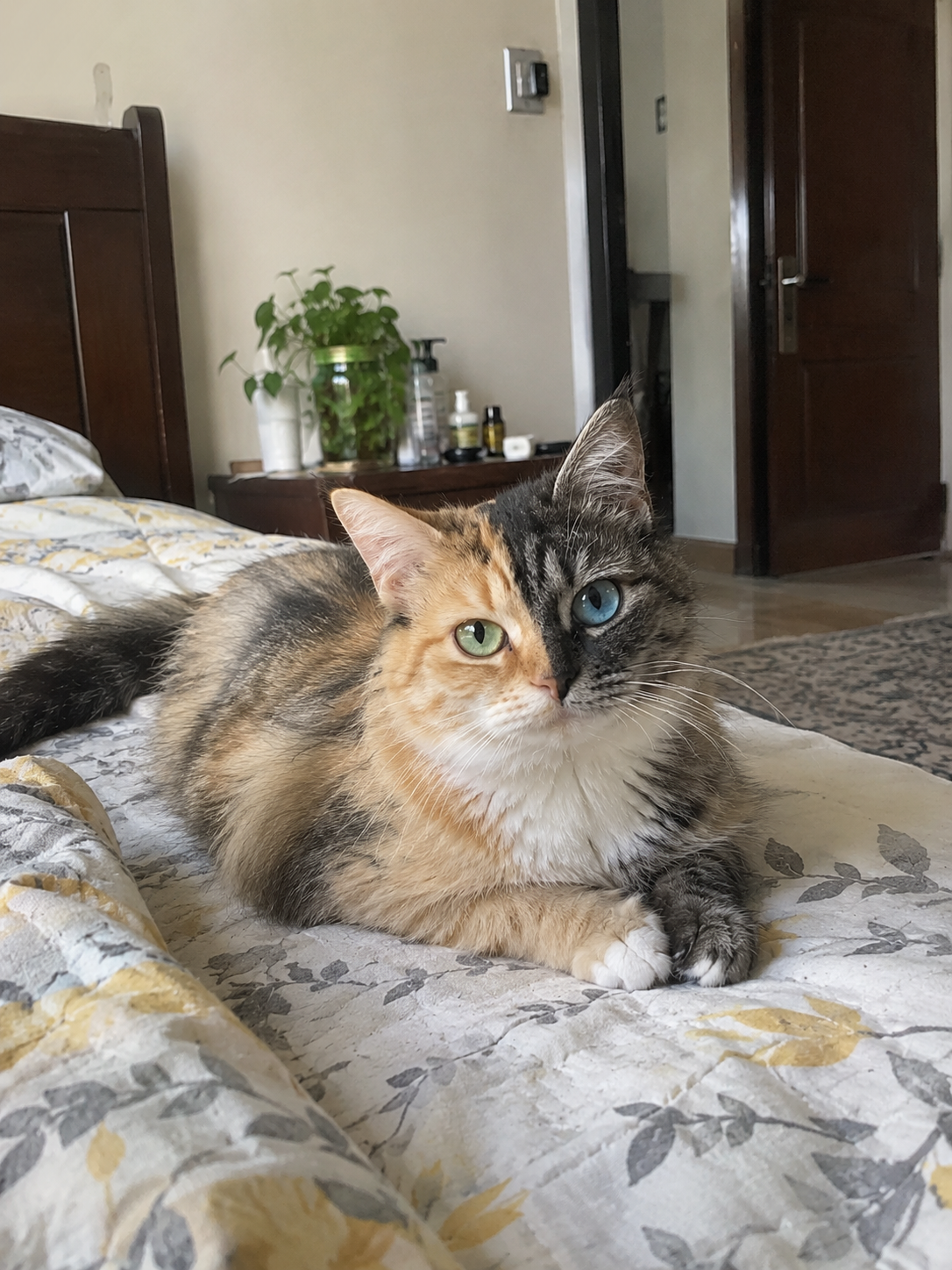
Luna Relaxing at Home
A relaxed home photograph adds a personal touch to Luna’s story.
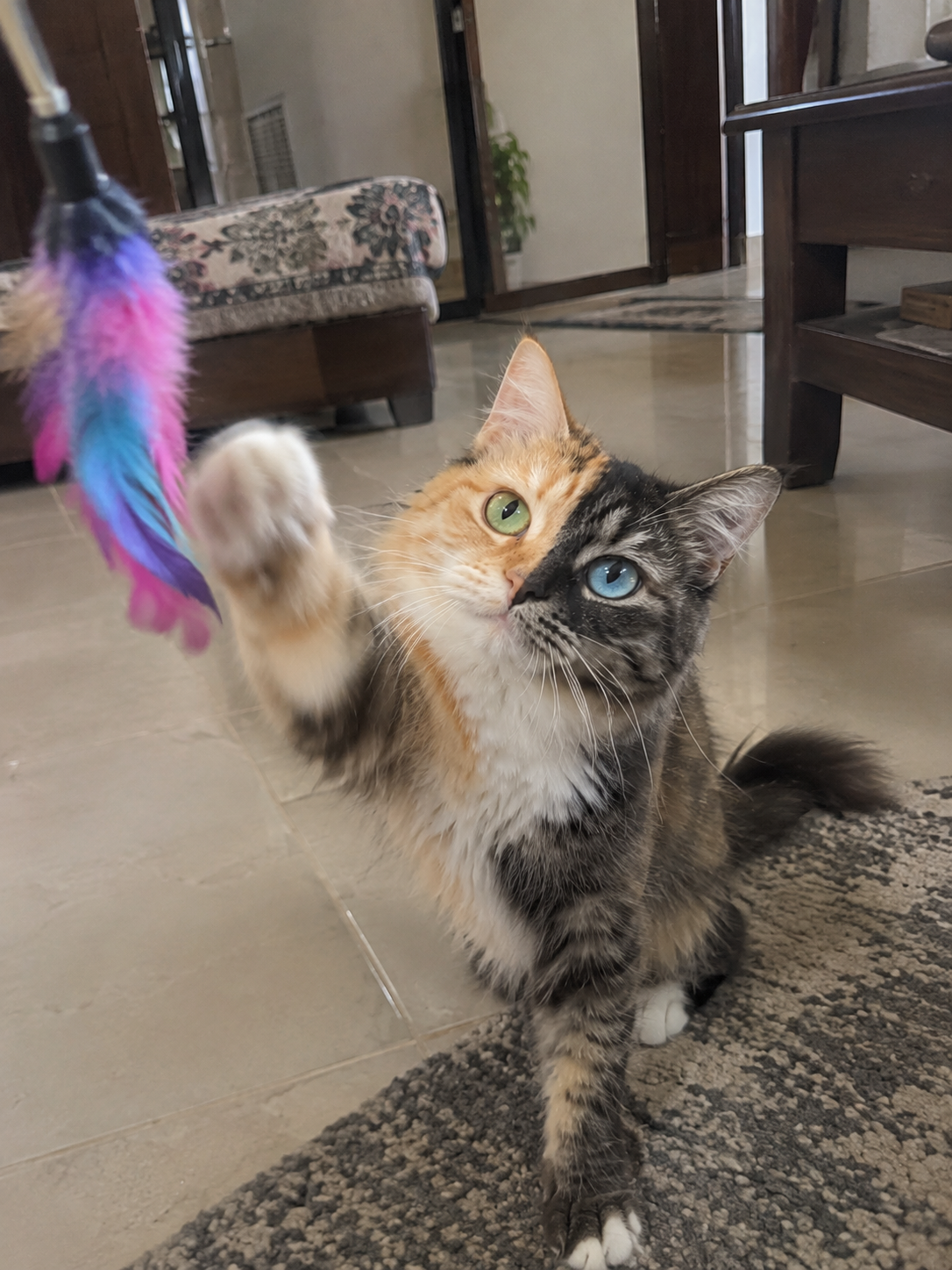
Luna Playing With a Toy
A playful photograph shows Luna’s personality beyond her unusual appearance.
Luna From the Side
A side photograph lets you see one of Luna’s facial patterns in greater detail.
Keeping a Cat-Friendly Home for Luna
A beautiful home for Luna should also be a safe and comfortable place for her to explore.
Because cats naturally investigate their surroundings, it is worth paying attention to things that may be harmless to people but unsuitable for pets.
Plants are one example. If you keep plants around the home, it is useful to check whether they are appropriate for a cat-friendly environment before bringing them within Luna’s reach.
You can also read our related guides on snake plants and cats, whether lavender is safe for cats, and carnations and cats for more pet-related information.
The same idea applies when photographing Luna. Keep cords, small objects, chemicals, hot surfaces, and anything she could chew or swallow away from the area.
A good photograph should never require putting a pet in an uncomfortable or unsafe situation.
What Makes Luna So Memorable?
Luna’s face is memorable because the two sides create a contrast that you can recognize immediately.
One side is warm and orange/cream.
The other is darker and tabby.
Her eyes add another point of contrast.
Put all three details together and you get a cat whose face is incredibly distinctive.
But perhaps the most enjoyable part is that Luna does not have to be posing for a photograph to look special. She can be sitting in the living room, walking through the hallway, relaxing on the bed, or chasing a toy, and her unique face is still there.
That is what makes a personal photo story more interesting than simply showing a collection of unusual cat pictures.
Luna is not just a cat with an unusual face. She is Luna—and that face is one of the easiest ways to recognize her.
Final Thoughts: Luna’s Unforgettable Face
Luna is unforgettable because it genuinely looks as though two different facial patterns came together to create one beautiful cat.
Her orange and cream side has a warm appearance, while her darker tabby side creates a completely different look. Her different-colored eyes add even more character to her face.
From a straight-on portrait, the contrast is immediately obvious. From the side, you notice different details. And when Luna is playing or relaxing at home, her unusual appearance becomes part of an everyday story rather than simply a photograph.
There are plenty of beautiful cats in the world, but every once in a while, you come across one whose appearance makes you stop and look again.
For me, Luna is that cat.
Her two-sided face is what first catches your attention, but it is the little everyday moments—playing, resting, exploring, and simply being Luna—that make her worth remembering.
And that is what makes Luna’s face so special: you can look at her once and immediately know which cat you’re looking at.